
2,315 views ·
4 replies
2k views
4 replies
Spackle joints on slightly uneven tongue and groove plank wall, to install drywall?
Hello
We have an old wooden house from the 1930s, where almost all walls consist of 6-7 cm thick tongue and groove planks.
Previously, masonite has been used over these, but they are now uneven practically everywhere, so where we are going to renovate, we thought of replacing it with drywall.
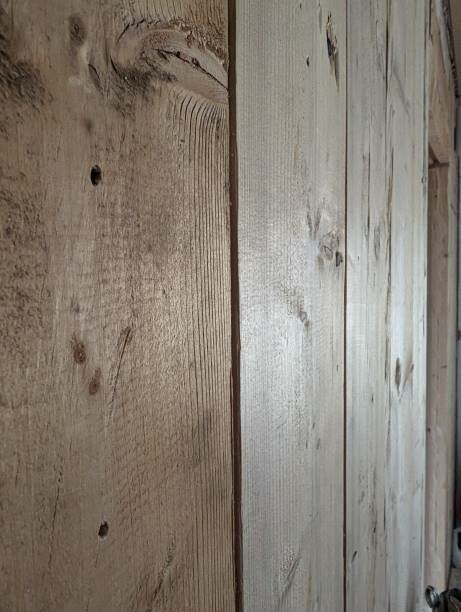
The planks are quite wavy, with dips at the joints. The waves are roughly like ordinary drywall joints in depth and width, just more of them.
My idea is to simply fill these with a type of coarse filler and then place renovation drywall over everything, mainly to prevent the drywall from bending or breaking. It doesn't need to be super even and nice either.
Does that sound like a sensible idea? Or is there a more clever solution? 😶
Thank you!
We have an old wooden house from the 1930s, where almost all walls consist of 6-7 cm thick tongue and groove planks.
Previously, masonite has been used over these, but they are now uneven practically everywhere, so where we are going to renovate, we thought of replacing it with drywall.
The planks are quite wavy, with dips at the joints. The waves are roughly like ordinary drywall joints in depth and width, just more of them.
My idea is to simply fill these with a type of coarse filler and then place renovation drywall over everything, mainly to prevent the drywall from bending or breaking. It doesn't need to be super even and nice either.
Does that sound like a sensible idea? Or is there a more clever solution? 😶
Thank you!
Hobby carpenter
· Västra Götaland
· 1 496 posts
The wood will eventually draw all the moisture out of the filler, and the wall risks moving a lot. I've drywall several walls here at home that are of the same caliber and chose to use a thin 11mm wood panel as furring strips for the drywall. I fixed any irregularities with strips of masonite behind the strips. When the wall is as straight as possible, you can drywall and screw with longer drywall screws to go through both materials.
Sorry for the late response!S Småbrukaren said:The wood will eventually absorb all the moisture from the filler, and the wall is at risk of moving significantly. I've drywalled some walls here at home that are of the same caliber and have chosen to use thin wood paneling 11mm as battens for the drywall. I fixed unevenness with strips of masonite behind the battens. When the wall is as straight as possible, you can drywall and use longer drywall screws to go through both materials.
Do you mean that the moisture causes the wood to move? Is there possibly filler that isn't as wet? I'm thinking the only function of the filler would be to fill against the drywall, so it doesn't warp if you screw right there.
The hope is to avoid building out much more than the old masonite; hence the idea of renovation drywall (about 6mm). 20-30mm with battens and drywall becomes quite a bit.
The wall is relatively straight except for the "valleys" at the jointing. But I'm now thinking that maybe I should just staple some wood fiber boards/strips where needed for some backing, and directly attach 12mm drywall instead. And avoid attaching in the valleys.
Hobby carpenter
· Västra Götaland
· 1 496 posts
I would probably still paint the wood with a barrier primer to seal the wood, but it's unclear if you'll get the filler to stick/hold. You can sand the wall, but some type of primer is probably good.
There are probably better products than filler for leveling wood.
There are probably better products than filler for leveling wood.
Click here to reply