
11,065 views ·
5 replies
11k views
5 replies
Some questions about a troublesome wall.
S
SueCia
Electronics enthusiast
· Dalarna
· 5 508 posts
SueCia
Electronics enthusiast
- Dalarna
- 5,508 posts
My house was built in 1969 and is a prime example of all the construction shortcuts taken during that time. I have a few questions that I hope to get answers to from those who might know 
The wall is built with 50 mm studs and then 9mm Masonite on both sides. I have removed the Masonite on the side that is to be renovated; unfortunately, the other side has already had its surface replaced and cannot be damaged.
I have a threshold and door that I need to replace; the frame is 93mm "deep." How should I align the frame with the wall? I was thinking of adding 22x45 battens to all the studs to extend them to 72mm.
9 + 72 + 13 makes 94 mm, so that would be perfectly acceptable, but is it sensible to extend the studs with battens? Will the frame sit well even if it's not centered on the stud it's supposed to be attached to?
The studs are not placed at any particular center-to-center distance, so how should I mount the gypsum board, horizontally?
The wall is built with 50 mm studs and then 9mm Masonite on both sides. I have removed the Masonite on the side that is to be renovated; unfortunately, the other side has already had its surface replaced and cannot be damaged.
I have a threshold and door that I need to replace; the frame is 93mm "deep." How should I align the frame with the wall? I was thinking of adding 22x45 battens to all the studs to extend them to 72mm.
9 + 72 + 13 makes 94 mm, so that would be perfectly acceptable, but is it sensible to extend the studs with battens? Will the frame sit well even if it's not centered on the stud it's supposed to be attached to?
The studs are not placed at any particular center-to-center distance, so how should I mount the gypsum board, horizontally?

22 x 45 works well for sistering. You can glue (& screw) the battens so it becomes more like a homogeneous stud.
The frame will sit well if you attach it to the stud.
Install new studs next to the old ones, (or sister onto the existing ones with glue & screws), so that they are 60 cm on center. Considering how thin and rickety the wall probably is, you can surely benefit from installing extra studs so it becomes 30 cm on center.
The frame will sit well if you attach it to the stud.
Install new studs next to the old ones, (or sister onto the existing ones with glue & screws), so that they are 60 cm on center. Considering how thin and rickety the wall probably is, you can surely benefit from installing extra studs so it becomes 30 cm on center.
S
SueCia
Electronics enthusiast
· Dalarna
· 5 508 posts
SueCia
Electronics enthusiast
- Dalarna
- 5,508 posts
Thanks for the response, but I chose a different path anyway. I ended up using 45x45 battens laid horizontally and attached them to the vertical studs, the wall became much more stable, so I'm quite satisfied. I'll include some pictures so you can see how I did it
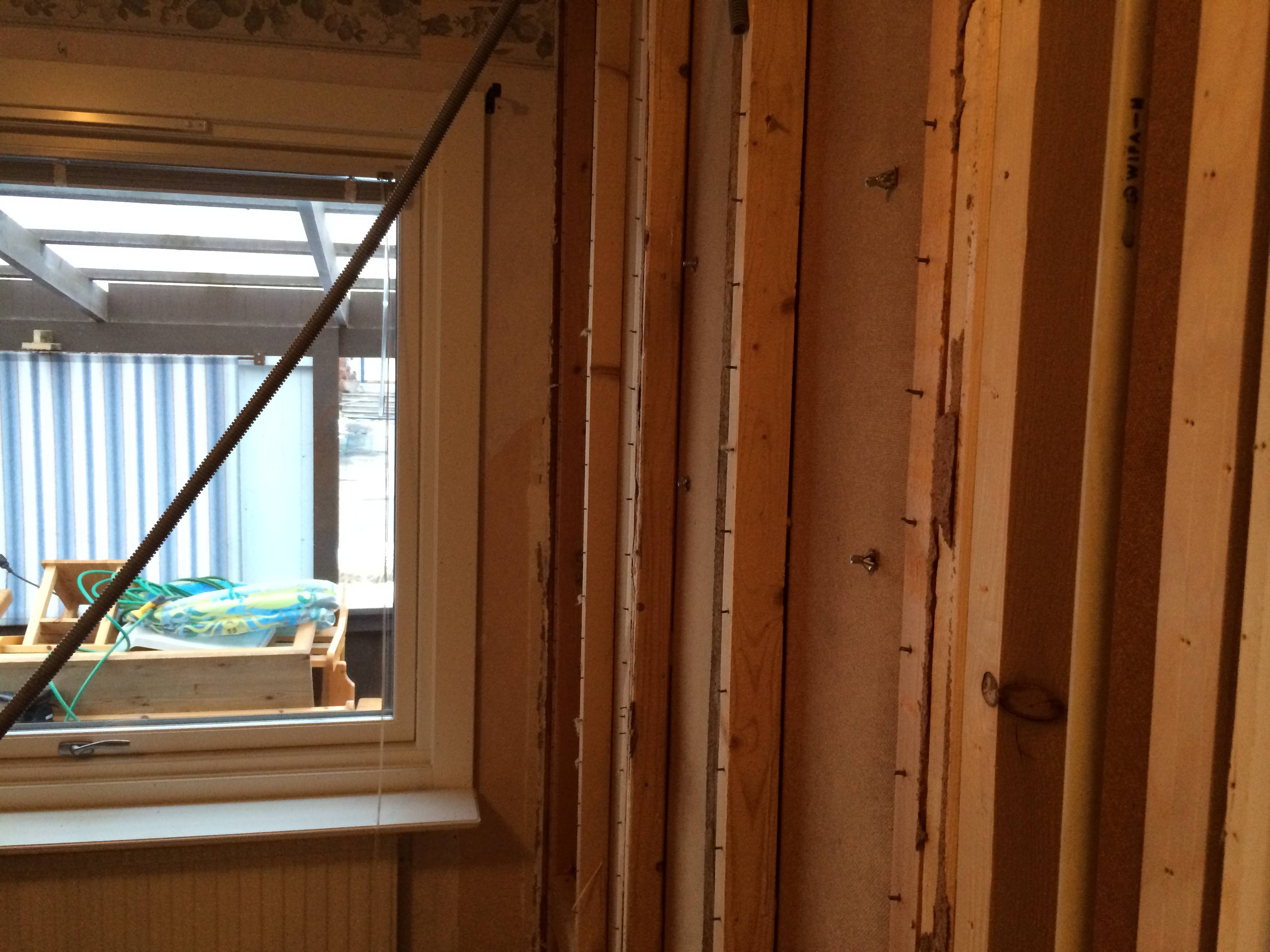
This is how it looked when I tore it down, the nails sticking out are the ones fastening the masonite on the other side of the studs, incredibly the masonite is nailed with 75mm nails :O
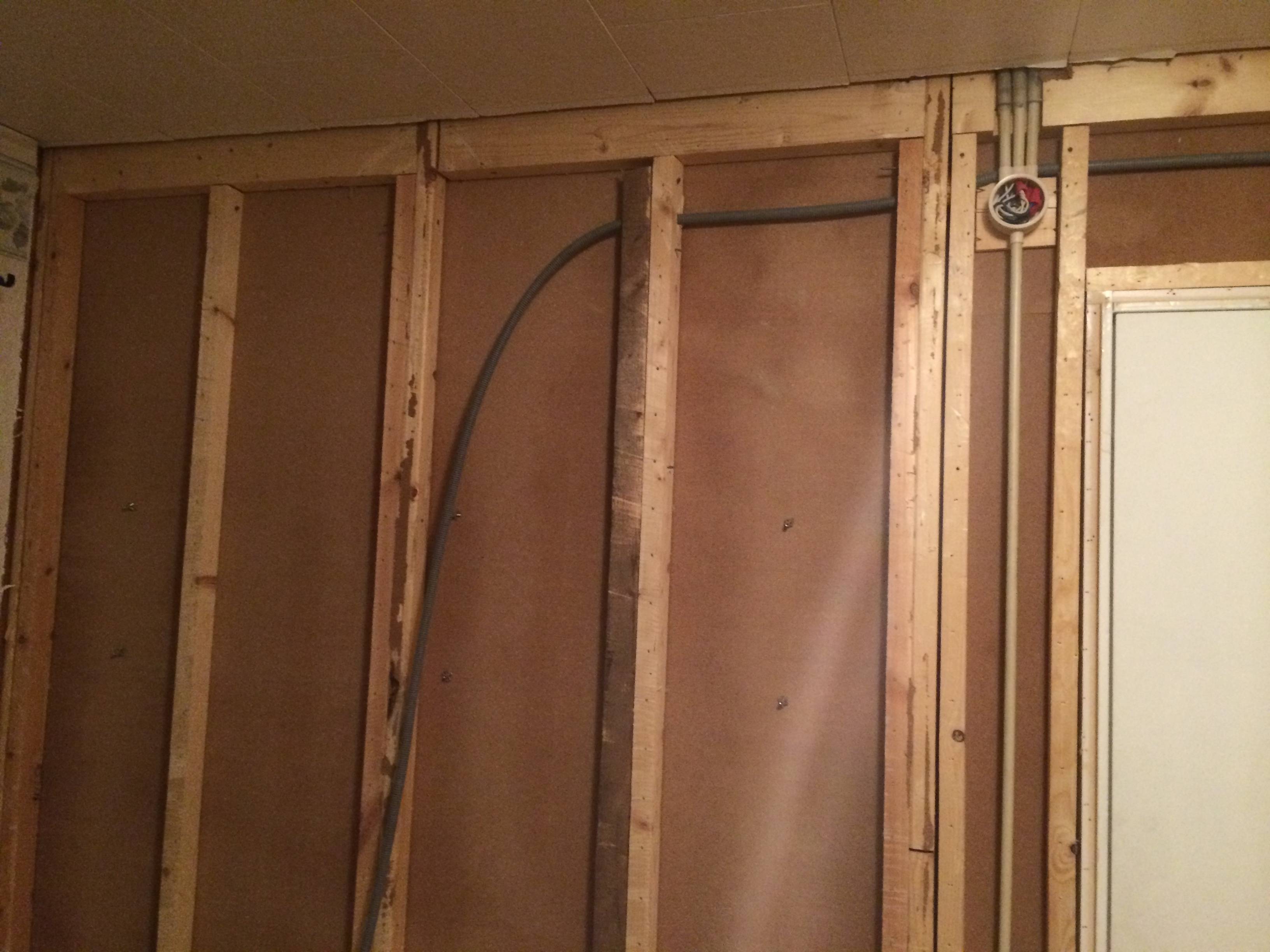
A picture of the wall's stud construction. I don't understand why there are three studs everywhere and why the top plate is broken at every "middle" stud.
This is how it looked after I worked on the studs for an evening, I glued and screwed the studs in the doorway, otherwise, they're only screwed.
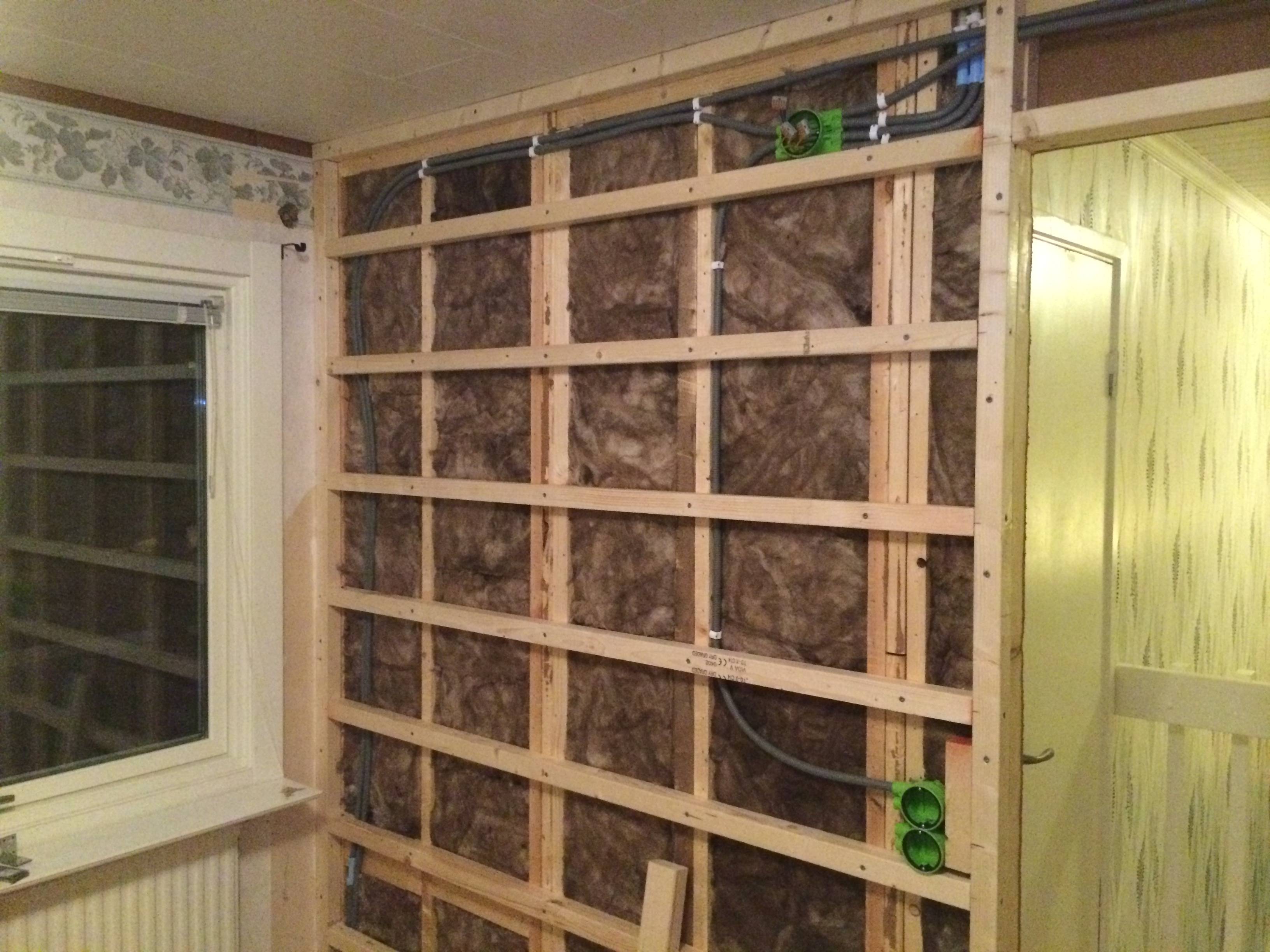
This is how it looked insulated and ready for drywall. The studs situated for the existing doorway had a gap of 81CM at the bottom and 80CM at the top. So the margin for adjustment was completely gone, I set up the new studs to the correct measurements and then sawed off the crooked parts from the existing studs with a reciprocating saw.
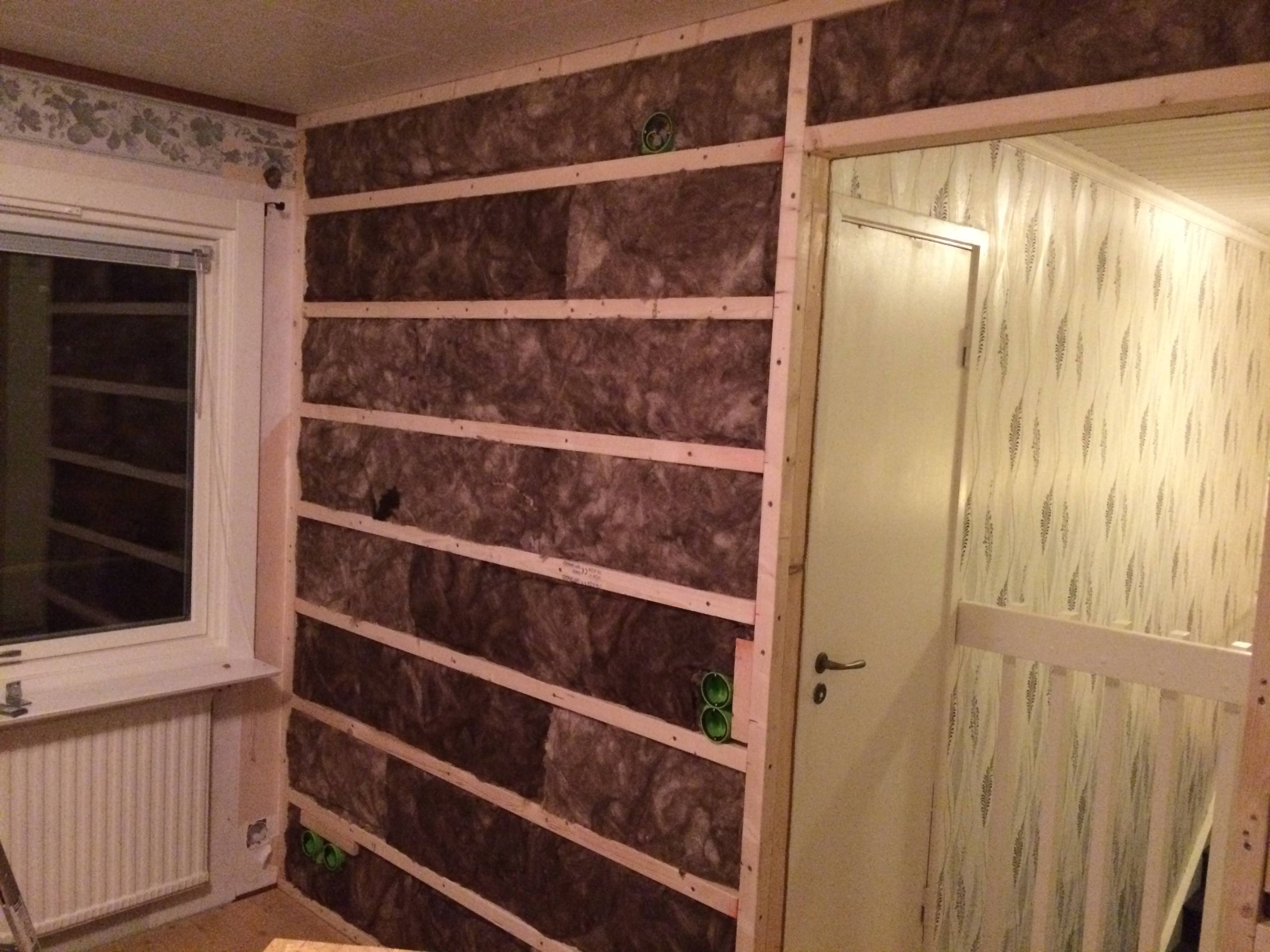
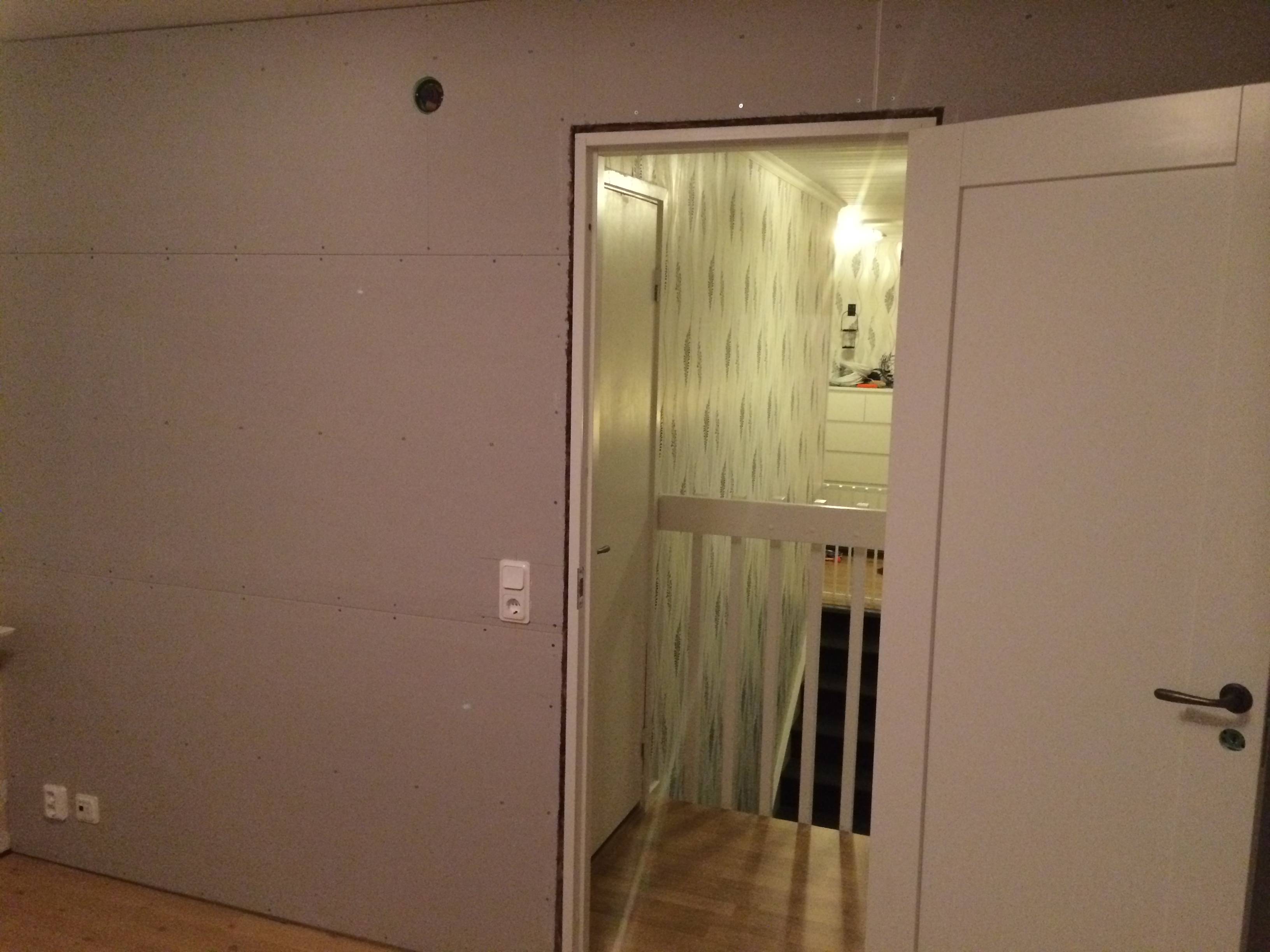
Drywalled and ready, more screws need to be added but otherwise, it's ready for wallpapering, the door frame was mounted in about 2 hours, the first time I'm mounting a frame though so it took a while to adjust it
This is how it looked when I tore it down, the nails sticking out are the ones fastening the masonite on the other side of the studs, incredibly the masonite is nailed with 75mm nails :O
A picture of the wall's stud construction. I don't understand why there are three studs everywhere and why the top plate is broken at every "middle" stud.
This is how it looked after I worked on the studs for an evening, I glued and screwed the studs in the doorway, otherwise, they're only screwed.
This is how it looked insulated and ready for drywall. The studs situated for the existing doorway had a gap of 81CM at the bottom and 80CM at the top. So the margin for adjustment was completely gone, I set up the new studs to the correct measurements and then sawed off the crooked parts from the existing studs with a reciprocating saw.
Drywalled and ready, more screws need to be added but otherwise, it's ready for wallpapering, the door frame was mounted in about 2 hours, the first time I'm mounting a frame though so it took a while to adjust it

Click here to reply