
I am decorating the upper floor of a 1.5-story house. According to the plans, the roof trusses should be extended with a vertical 95x45 for sufficient insulation. Then plastic, and finally battens and gypsum in the usual manner.
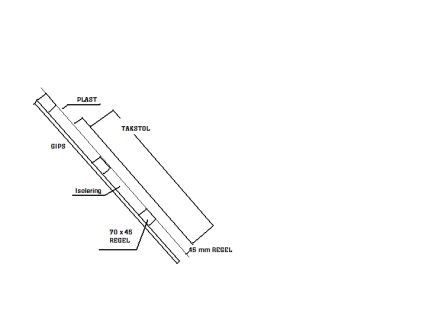
I had an idea that instead of 95x45, one could extend with a 45x45 along the rafters and then lay plastic. After this, you could lay 70x45 perpendicular to the rafters, between which you add additional insulation (45mm) while screwing the gypsum directly into the 70x45. This would save both labor, materials, and ceiling height.
A while ago, a carpenter advised placing the plastic 45mm into the construction to allow for wiring without having to make holes in the plastic. According to him, this was standard practice and would be a positive outcome of doing it as described above.
What negative consequences are there?
I had an idea that instead of 95x45, one could extend with a 45x45 along the rafters and then lay plastic. After this, you could lay 70x45 perpendicular to the rafters, between which you add additional insulation (45mm) while screwing the gypsum directly into the 70x45. This would save both labor, materials, and ceiling height.
A while ago, a carpenter advised placing the plastic 45mm into the construction to allow for wiring without having to make holes in the plastic. According to him, this was standard practice and would be a positive outcome of doing it as described above.
What negative consequences are there?


The problem is the spacing of the studs. Gypsum in the ceiling requires c-c 30 cm, slanted roofs can perhaps manage with c-c 40 cm, i.e., only walls can manage with c-c 60 cm.
So it's just about placing the studs closer together, which does involve a bit more work with cutting insulation... If you choose c-c 30 cm, it becomes easier since you just need to split the insulation boards in half. It's important to be precise when cutting the insulation to ensure no gaps occur.
So it's just about placing the studs closer together, which does involve a bit more work with cutting insulation... If you choose c-c 30 cm, it becomes easier since you just need to split the insulation boards in half. It's important to be precise when cutting the insulation to ensure no gaps occur.
Click here to reply