
Hello everyone. I have a cabin that needs to be straightened up. It stands on a slope and currently rests on 9 piers that have shifted a bit. The house was built around 1962.
The dimensions of the house are approximately 5x4m.
My idea is to perhaps place joists on edge underneath (as a beam) to support the existing joists (to get better weight distribution across the cabin). Then cast piers with adjustable beam shoes. In this way, "lift" the entire structure and place it on new piers again, if you understand what I mean.
But the question is, how large joists would I need to take the weight of the house?
I'm thinking of maybe using double 45x?
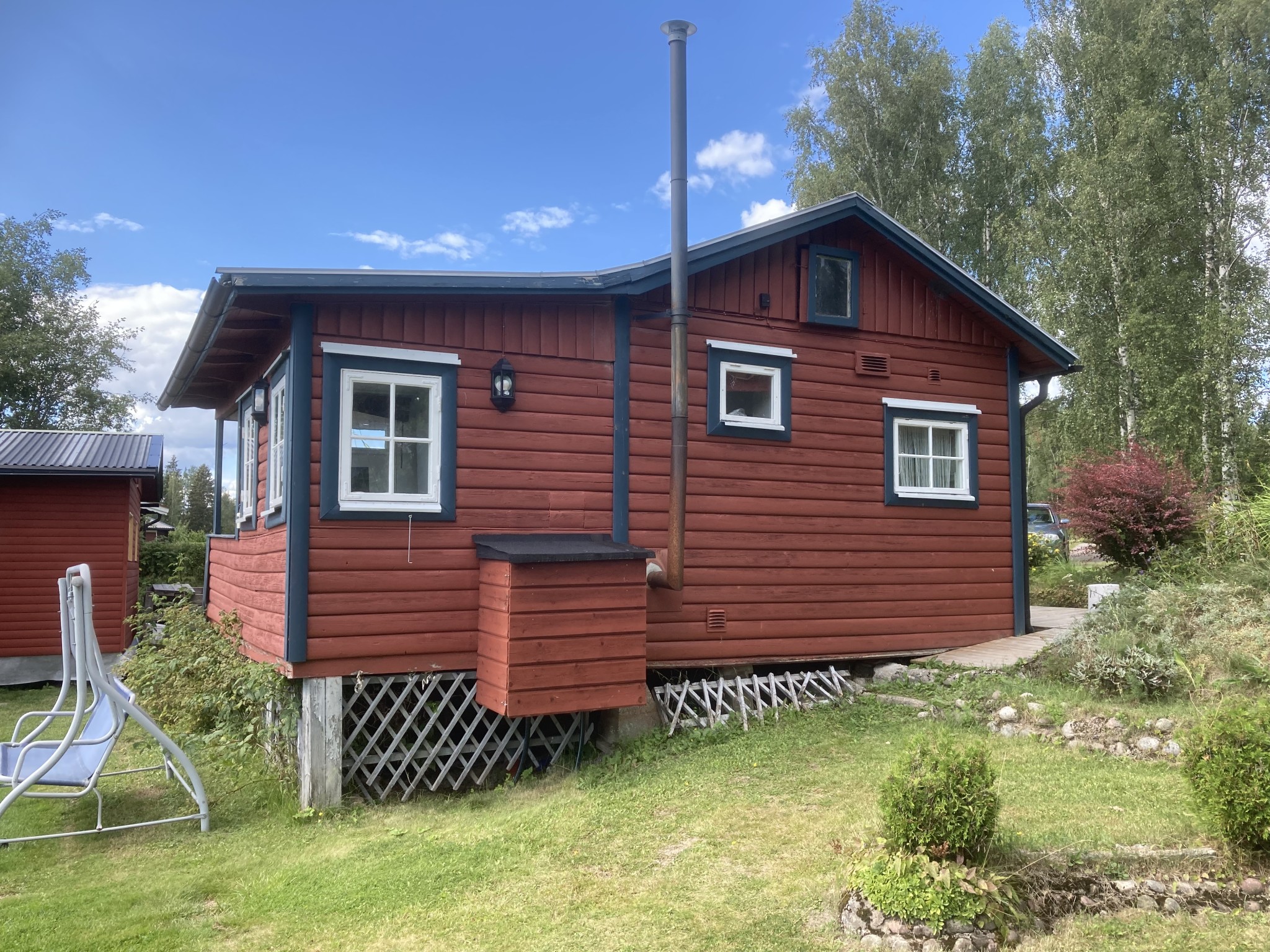
This is what the house looks like that needs to be lifted.
The dimensions of the house are approximately 5x4m.
My idea is to perhaps place joists on edge underneath (as a beam) to support the existing joists (to get better weight distribution across the cabin). Then cast piers with adjustable beam shoes. In this way, "lift" the entire structure and place it on new piers again, if you understand what I mean.
But the question is, how large joists would I need to take the weight of the house?
I'm thinking of maybe using double 45x?
This is what the house looks like that needs to be lifted.
Here is a good table from the Wood Guide.N Nygge72 said:Hello everyone. I have a cabin that needs to be straightened up. It is situated on a slope and currently rests on 9 piers that have shifted a bit. The house was likely built around '62.
The dimensions of the house are approximately 5x4m.
My idea is to maybe put joists on edge underneath (as a bearer) to brace the existing joists (to get a better weight distribution over the cabin). Then cast piers with adjustable joist hangers. In this way, “lift” the entire structure and put it on new piers again, if you know what I mean.
But the question is what size joists I would need to bear the weight of the house?
I’m thinking maybe placing double 45x?
Here is what the house that should be lifted looks like
https://www.traguiden.se/konstrukti...dbalkar-till-1-planshus/?previousState=100000
Were you thinking of casting the piers twice? Were you planning to lift the house with the adjustable joist hangers and then pour new ones where the old ones stand?
I was thinking of replacing the old footings with new ones with a slightly better construction in that case, so the footing stands on a base of 500x500m, then goes as close to the subfloor as possible with the footing, and adjustable beam shoe closest, so you can adjust later if needed.T Tompafix said:
Then add braces between the footings so they support each other and can't easily tip/move away.
In this way, I think you can replace them while still resting on the current footings, except for the outermost row where it slopes the most. There, you'll need to lift the house first with temporary supports, and pour the footing on-site so it comes as close to the floorboards as possible.
N Nygge72 said:I plan to replace the old foundation blocks with new ones with a slightly better construction in that case, so the block stands on a base with dimensions of 500x500m, then go as close to the subfloor as possible with the block, and an adjustable joist hanger closest, so you can adjust later if you want.
Then, place braces between the blocks so they support each other and can't tilt/move away easily.
In this way, I think you can replace while it still rests on the current blocks, except for the outermost row where it slopes the most. There, you need to lift the house first with temporary supports and cast the block in place so it comes as close to the floorboards as possible
How do you plan to attach the joists along the entire length of the house, won't the old foundation blocks be in the way then?N Nygge72 said:I plan to replace the old foundation blocks with new ones with a slightly better construction in that case, so the block stands on a base with dimensions of 500x500m, then go as close to the subfloor as possible with the block, and an adjustable joist hanger closest, so you can adjust later if you want.
Then, place braces between the blocks so they support each other and can't tilt/move away easily.
In this way, I think you can replace
Click here to reply