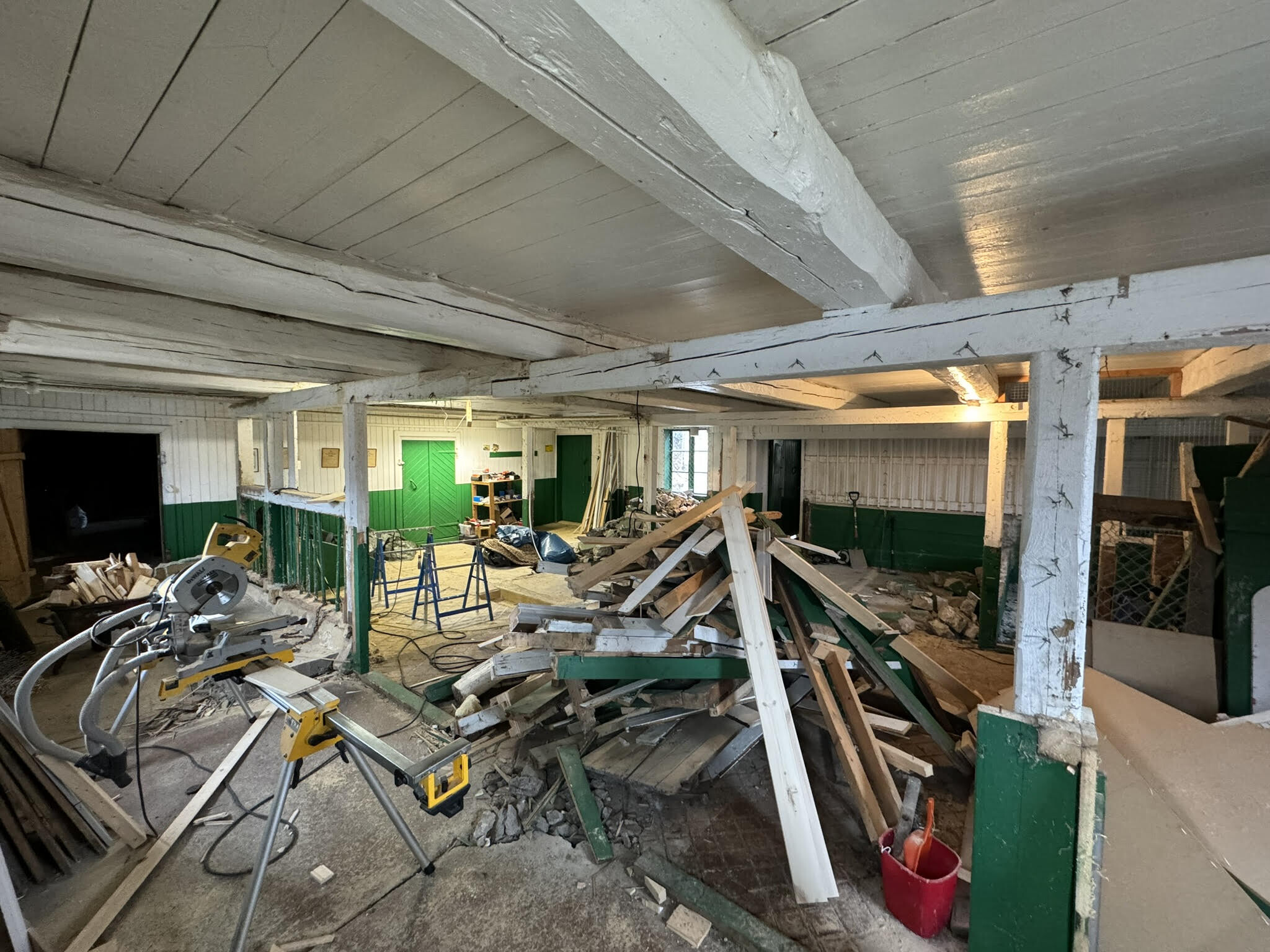
We have an older barn on the property in which I wish to build a small woodworking/workshop for hobby activities. The space (which I will refer to as the workshop henceforth) I want to use has a number of columns that I would like to avoid as much as possible to freely move around in the workshop with machines and larger materials. I would therefore appreciate any tips on how to transfer loads in the most effective way possible.
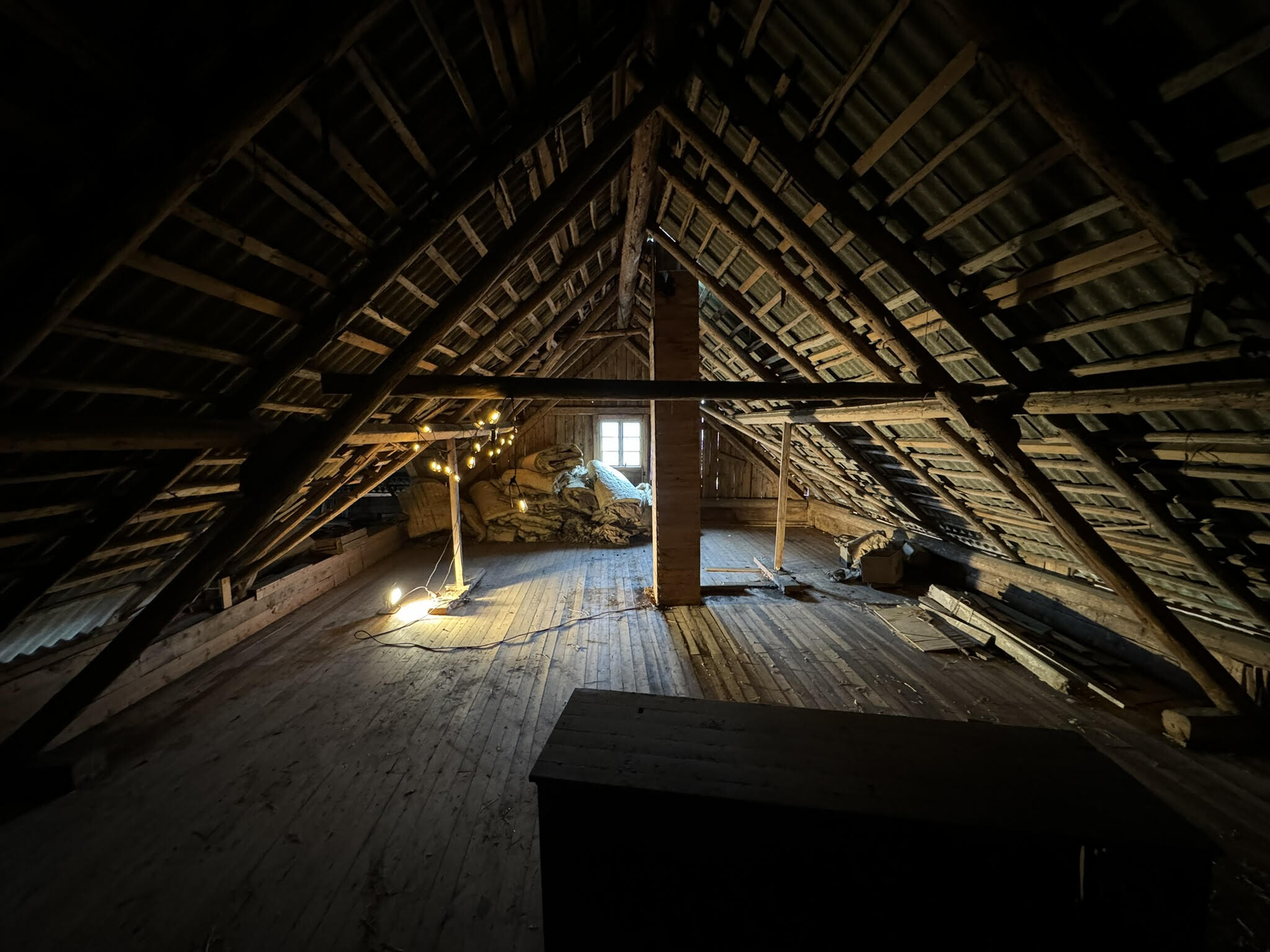
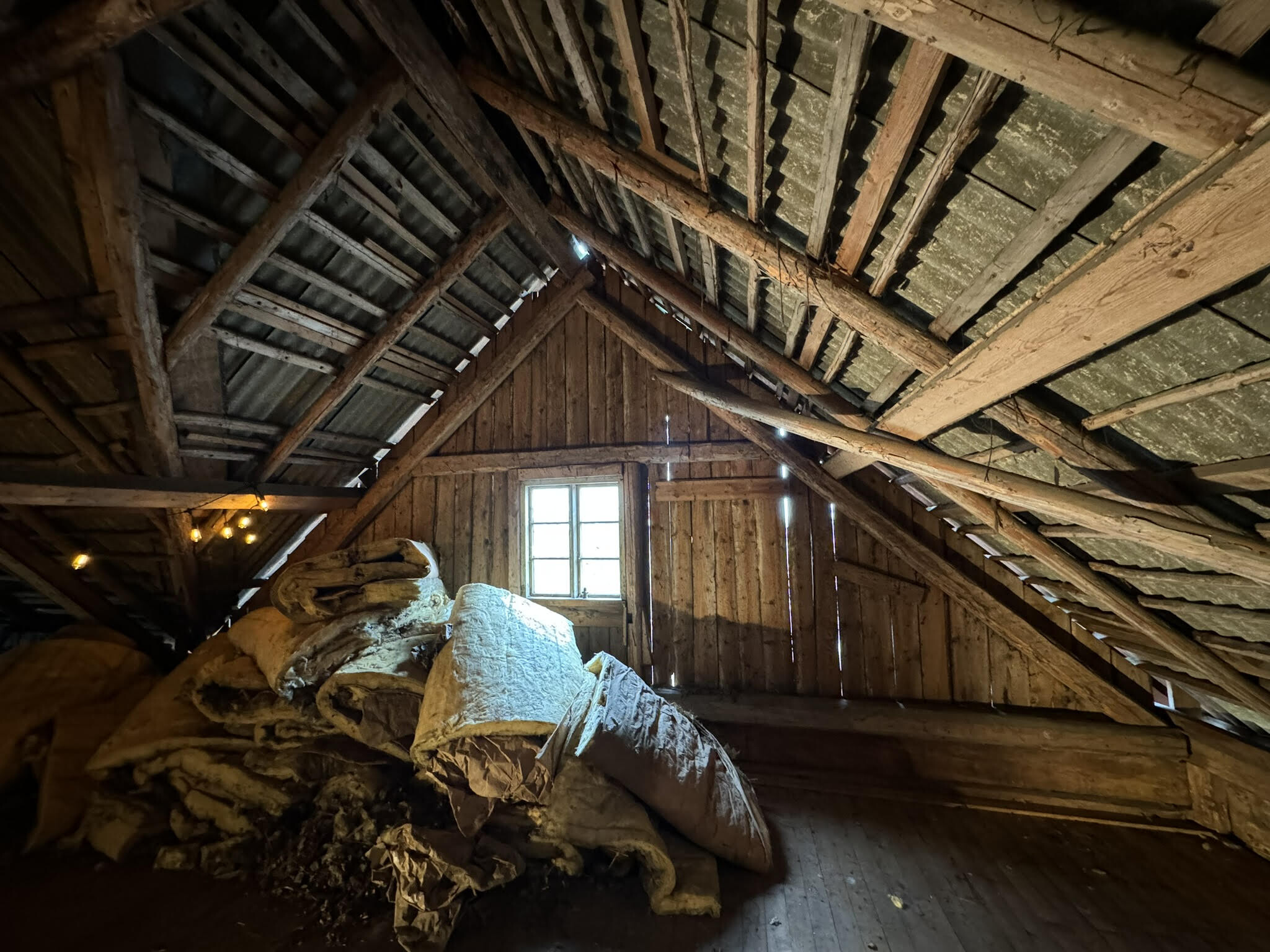
The workshop has previously been used for many years for livestock with various stalls/divisions of the room. Above the workshop, there is a loft that was probably used for storing hay. We have no grand future plans for the loft and wish to use it as storage for simpler furniture and children's toys. The loft can only be accessed via a ladder, so we are highly unlikely to place heavier items there.
We live south of Gothenburg, which places us in snow zone 1.5. The barn is uninsulated with an asbestos cement roof.
Overview image, the part of the barn marked with the red rectangle is what is relevant for the load transfer:
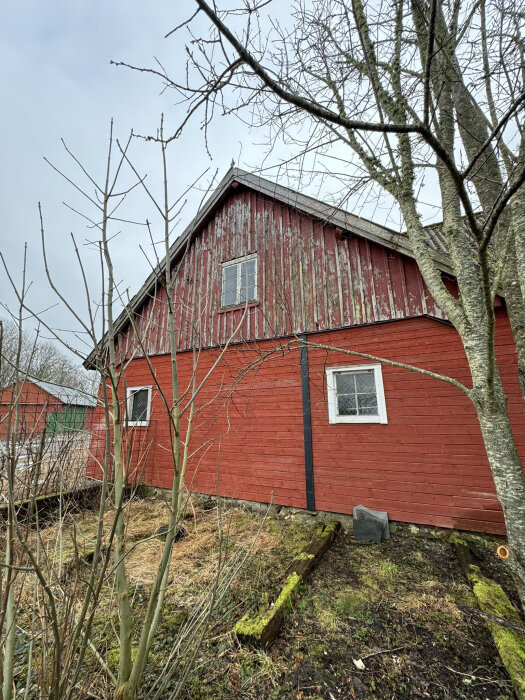
I estimate the roof angle to be about 40 degrees. I believe the roof rests on the outer walls. I'm unsure about the construction of the outer walls as it's hidden behind paneling on both the inside and outside, but I think it might be horizontal timber logs.
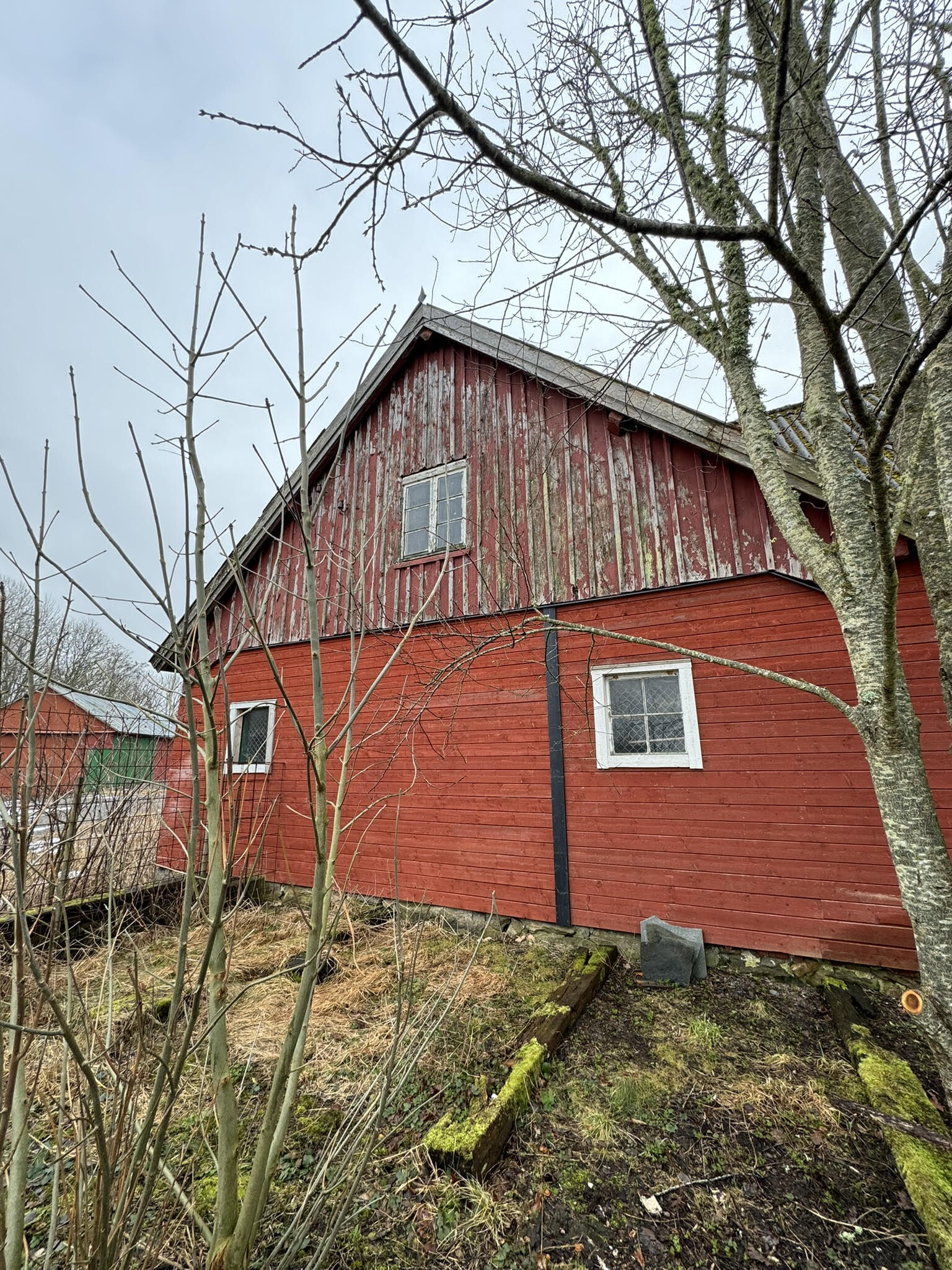
Image of the far gable from the outside, the workshop is located behind the lower windows, and the loft is behind the top window.
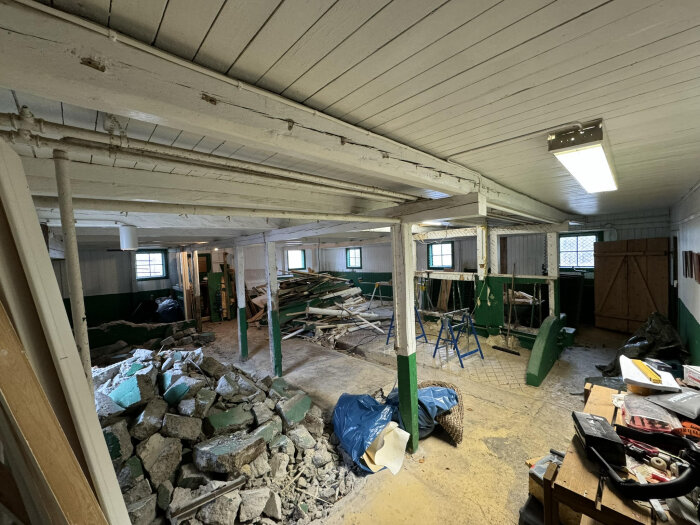
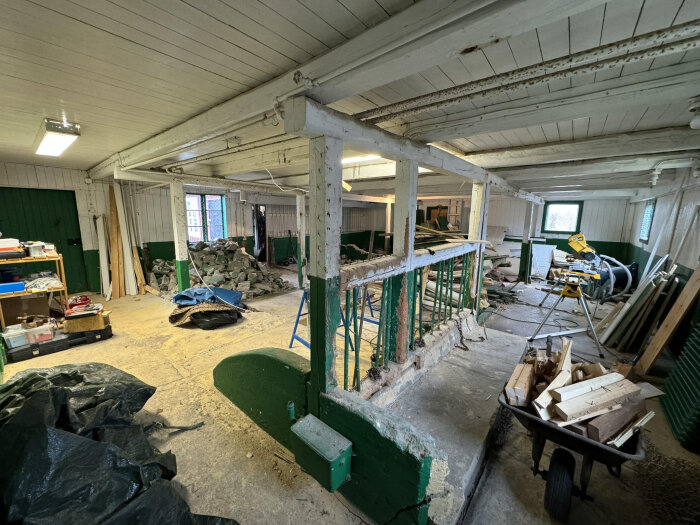
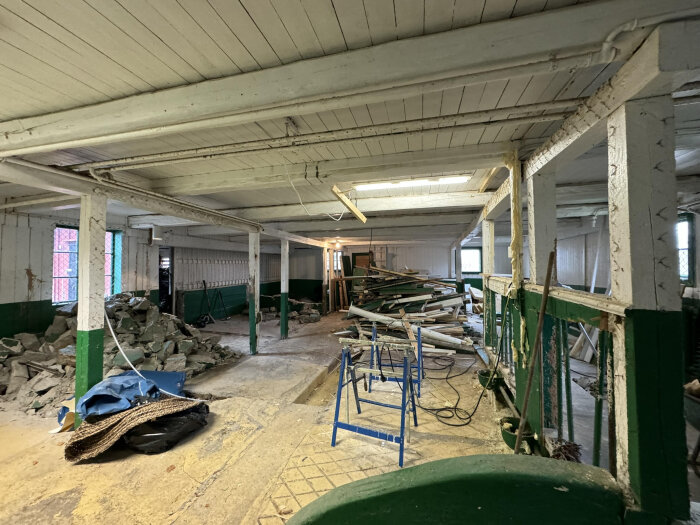
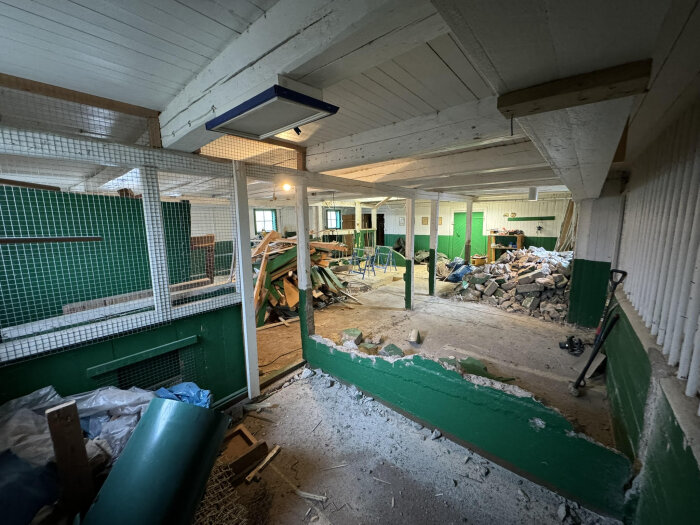
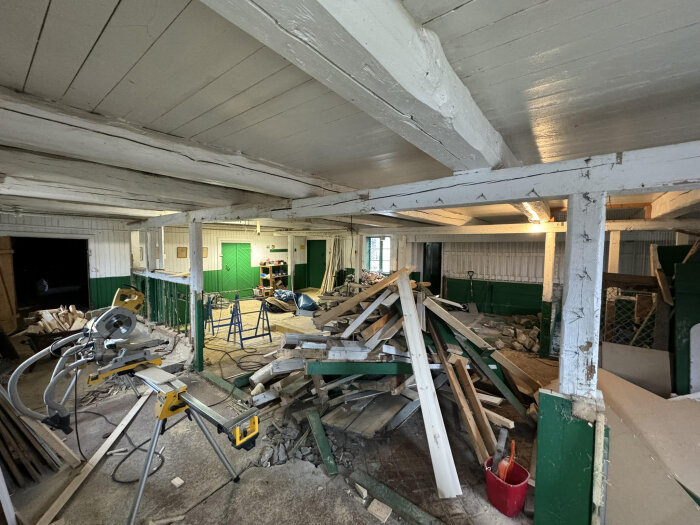
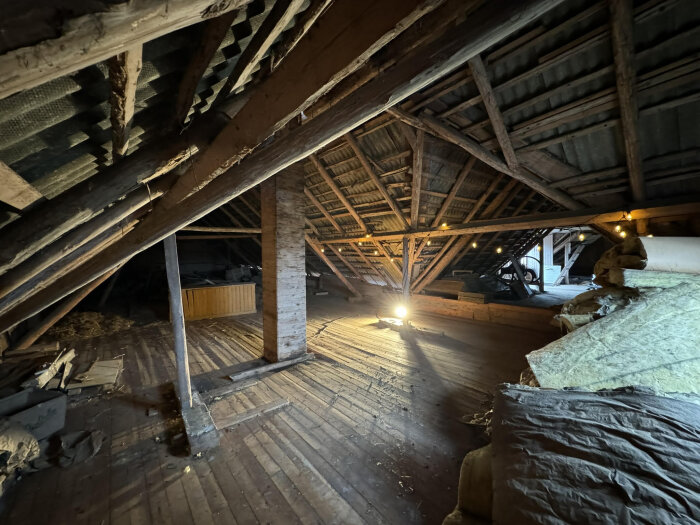
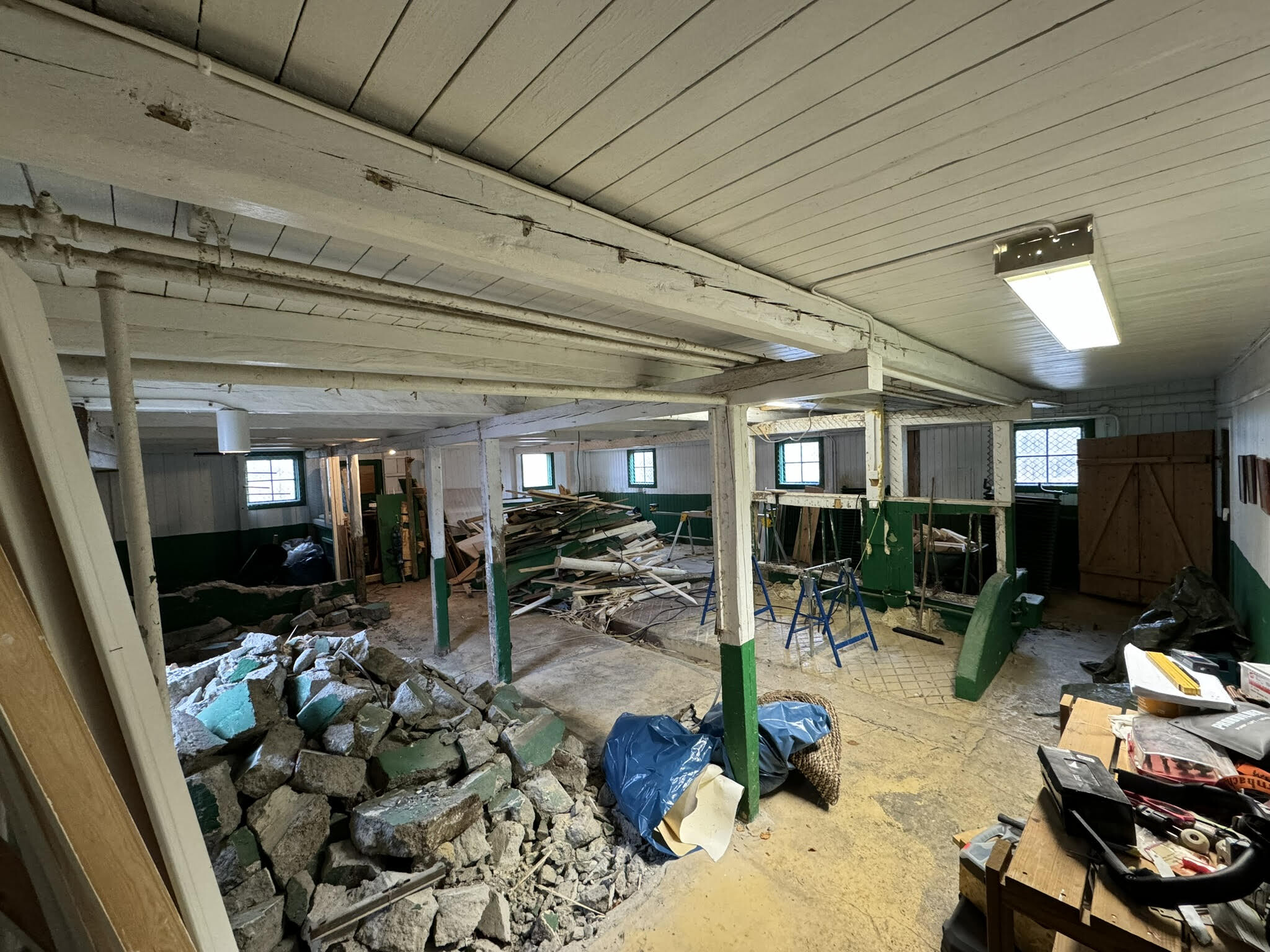
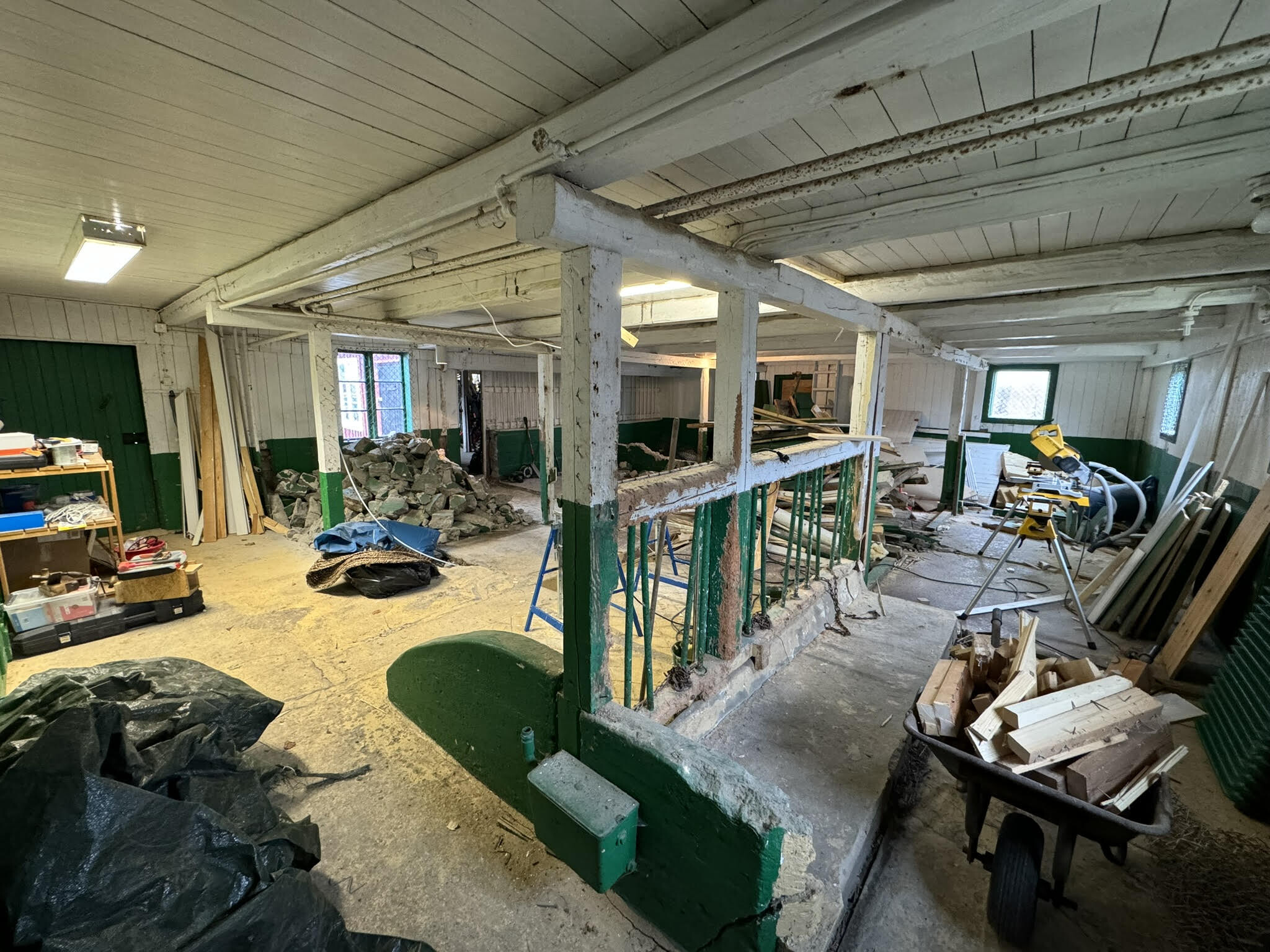
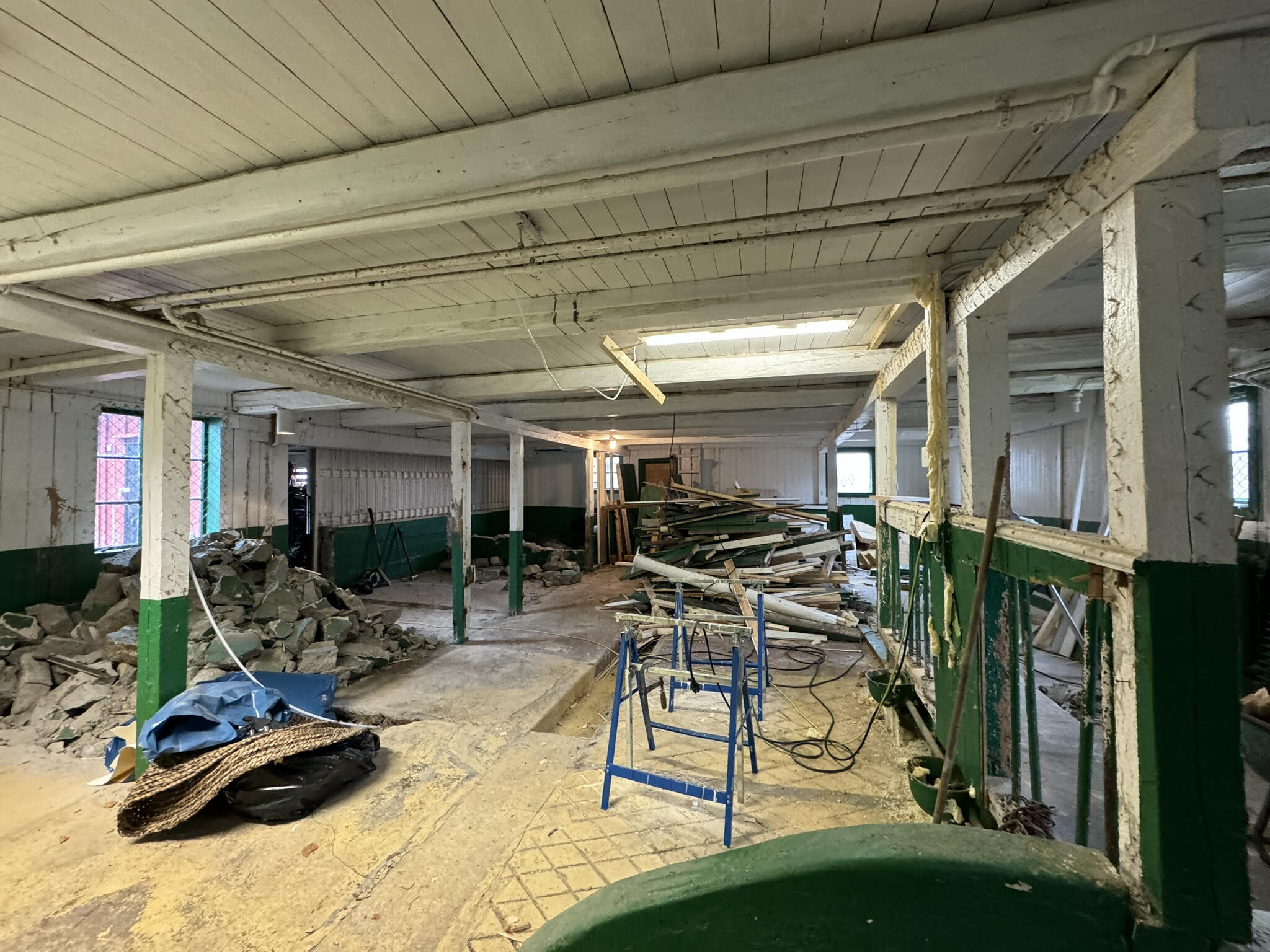
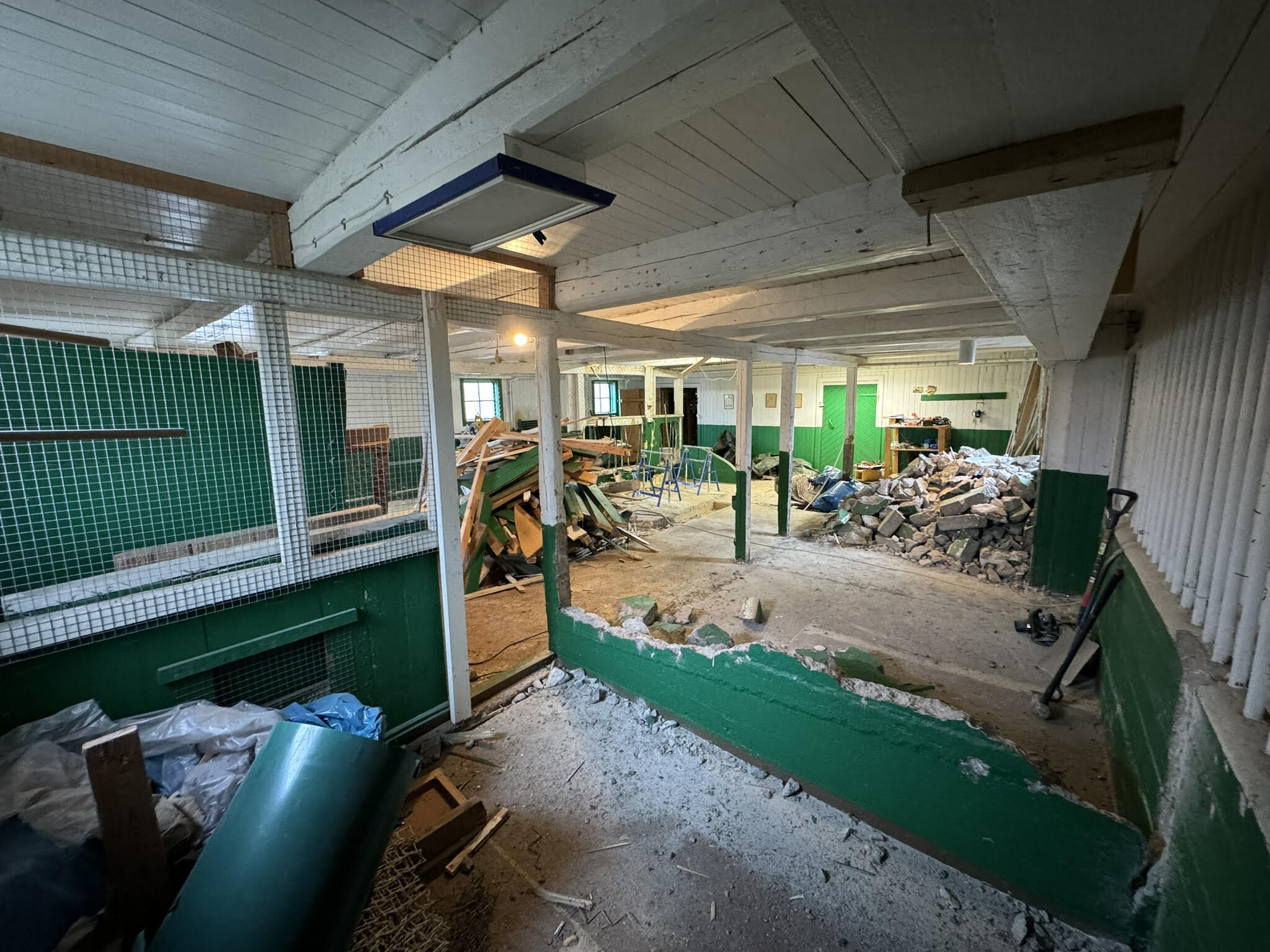
Here are five images from inside the room to give an overview of its appearance. The pictures are a few months old, so all interior walls/concrete walls have been demolished, and all debris cleared out.
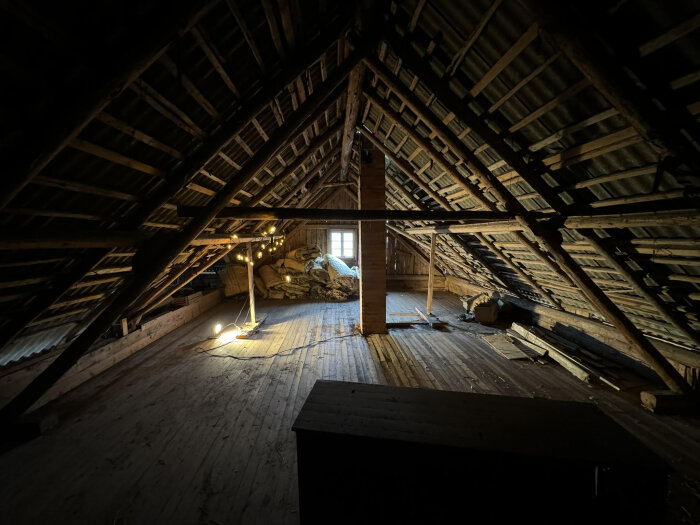
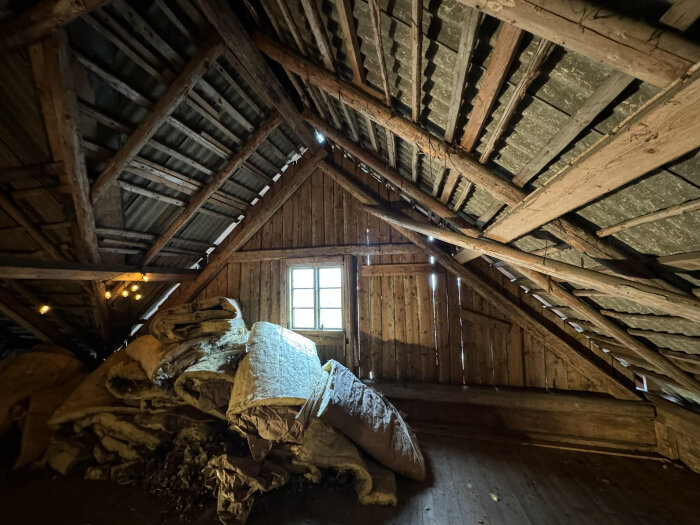
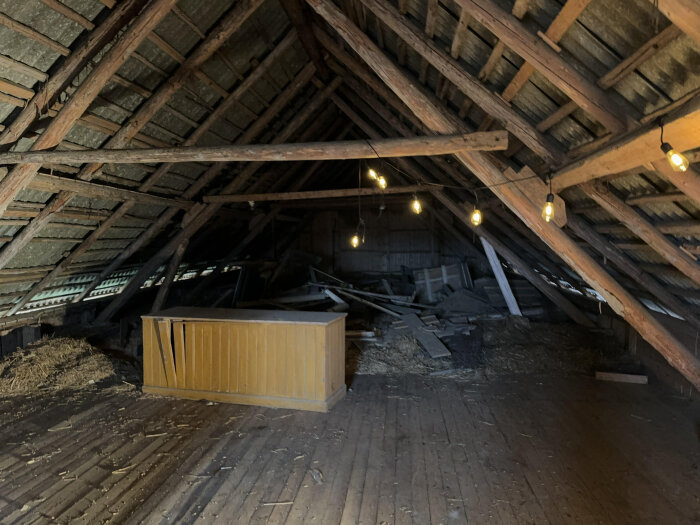
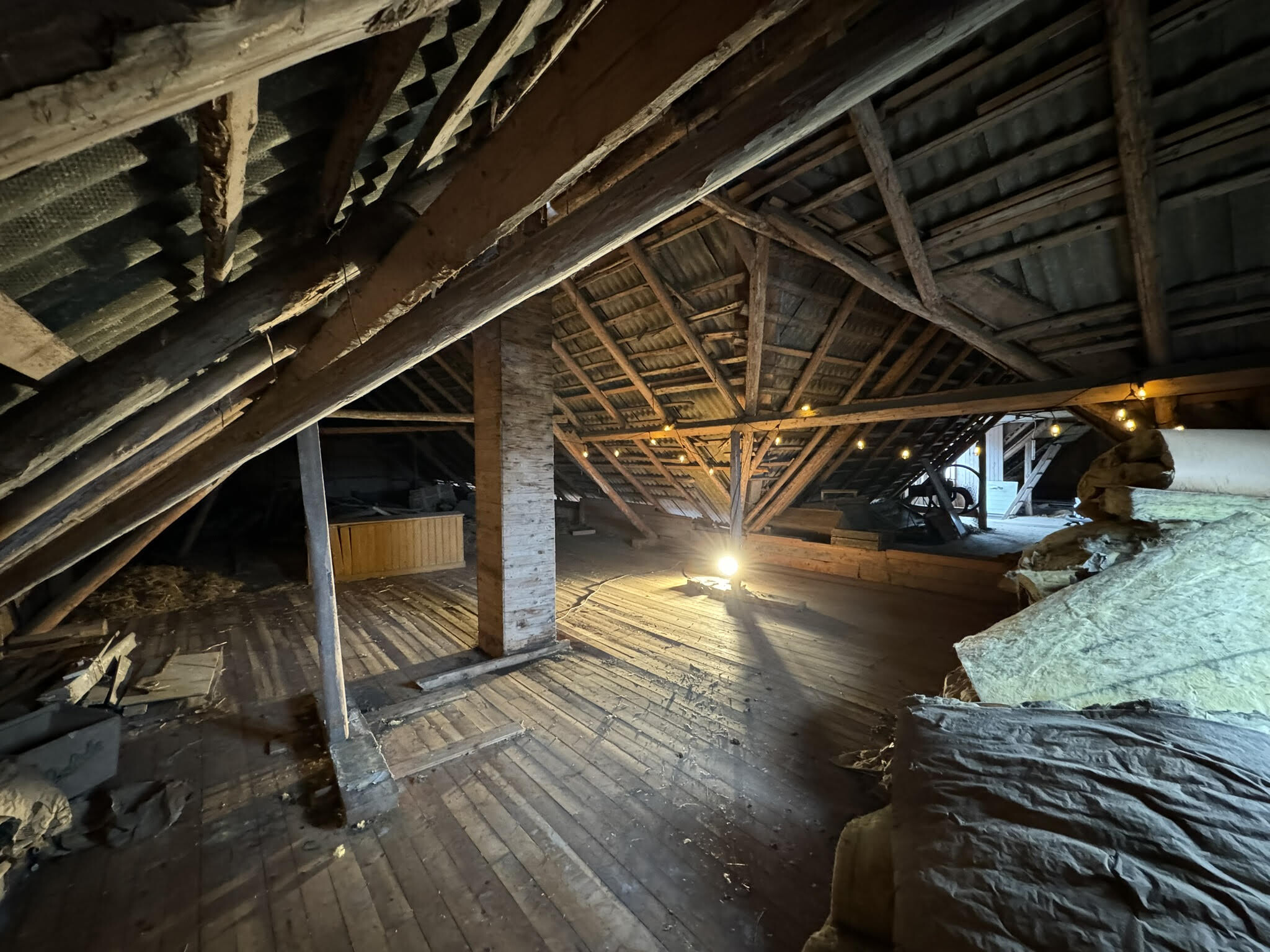
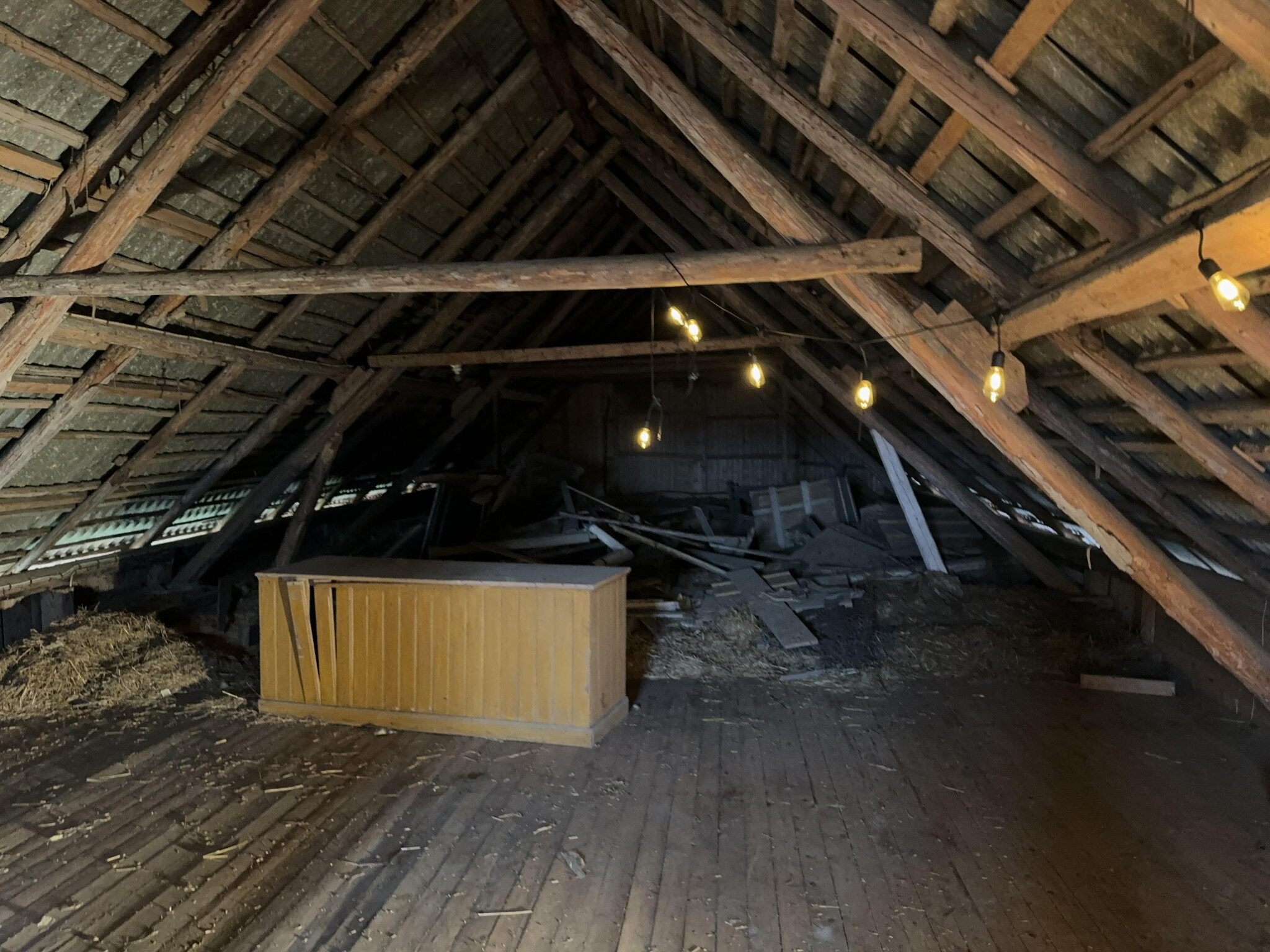
Here are some pictures from the loft above the workshop:
The large "column" in the middle of the room is a ventilation duct that will be removed.
Two posts are placed protruding from the roof; I think these were added later.
It is only the area up to just after the bench in the image above that needs to be transferred. The area where the debris is located leads to other spaces underneath.
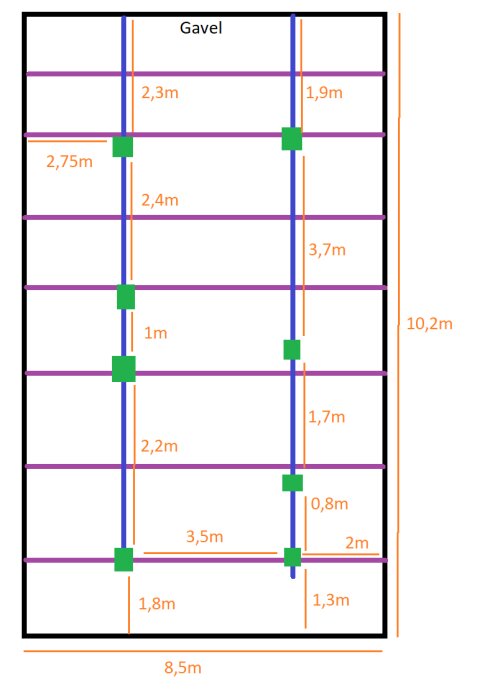
The total area inside the workshop is 10.2m long and 8.5m wide. Ceiling height to the joist is approximately 2.22m.
Joist between loft and workshop:
7 visible beams with dimensions from approx 22x22cm down to 15x15cm. CC measurement is about 130cm.
Support beam (lying under the joist):
Dimension approx 15x15cm
Columns the support beam rests on:
A total of 8 pieces with dimensions approx 13x13cm
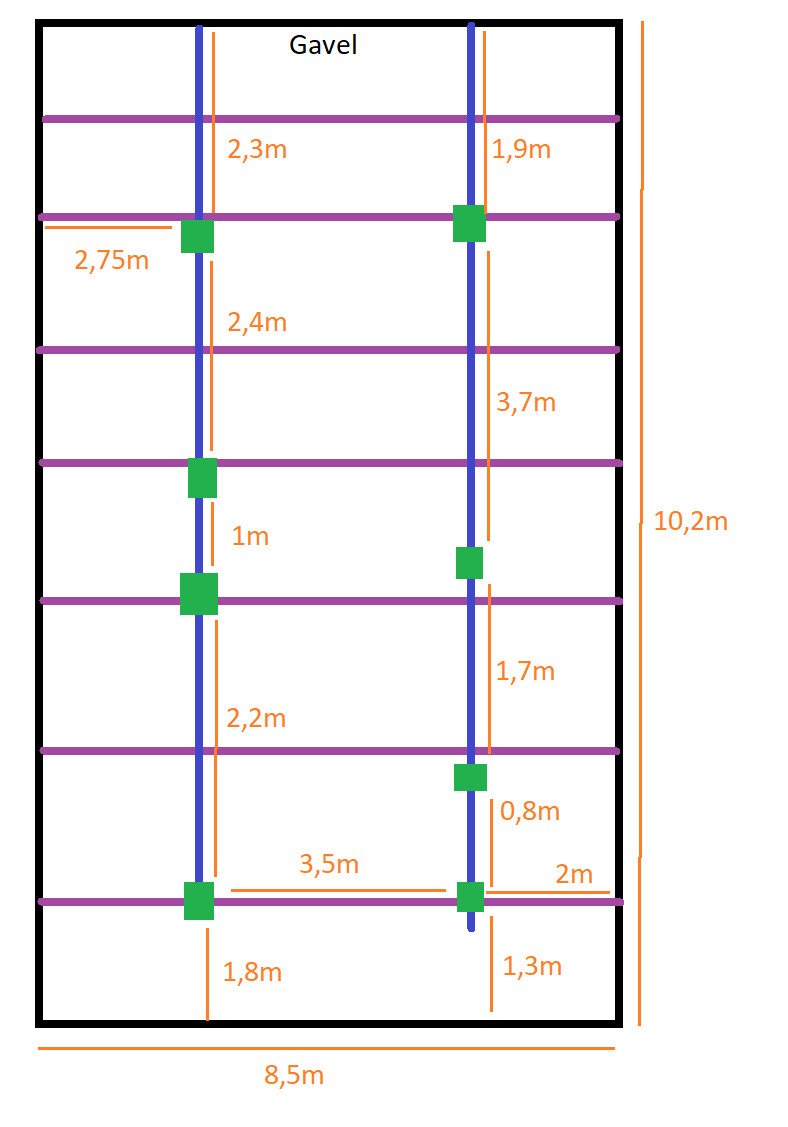
Sketch of how the support beam and columns are positioned in relation to each other and the outer walls.
All measurements are indicated in orange, joist in purple, support beam in blue, and columns in green.
Goal for load transfer:
To reduce the number of columns as much as possible out in the room.
To minimize downward construction from the ceiling with any potential load transfer. With a ceiling height of approximately 2.22m to the joist, I would ideally not want to build down more than a max of 16-17cm.
Unfortunately, we have a limited budget for this project, which means I am looking for the cheapest solution possible. We have a sawmill within the family and thus the opportunity to mill our own materials in the form of columns, support beams, and more, but I am not opposed to using steel beams if that option means more ceiling height and fewer columns.
If one or more columns are required inside the room, I am interested in shifting them and the support beam as far to the left as possible in the sketch above. This will provide a larger space on the right side of the room where I can handle larger materials.
All tips and ideas on how I can transfer loads cheaply with few or no columns and with minimal impact on ceiling height are greatly appreciated!