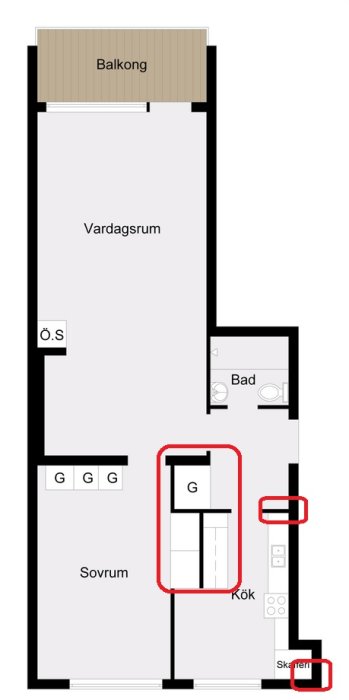
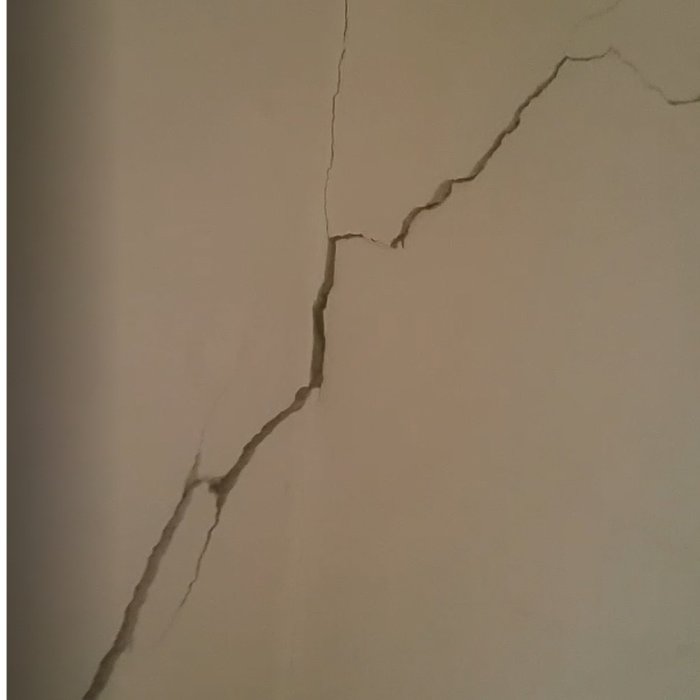
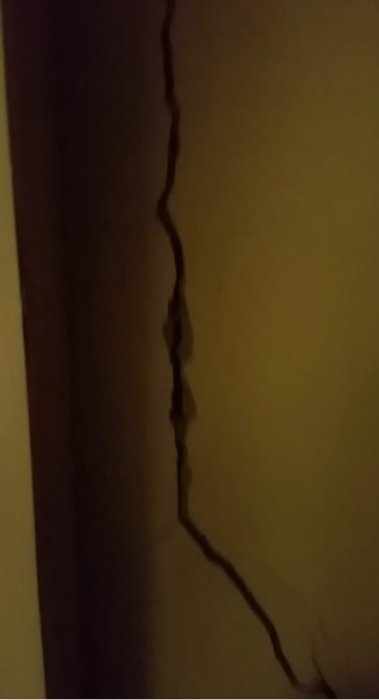
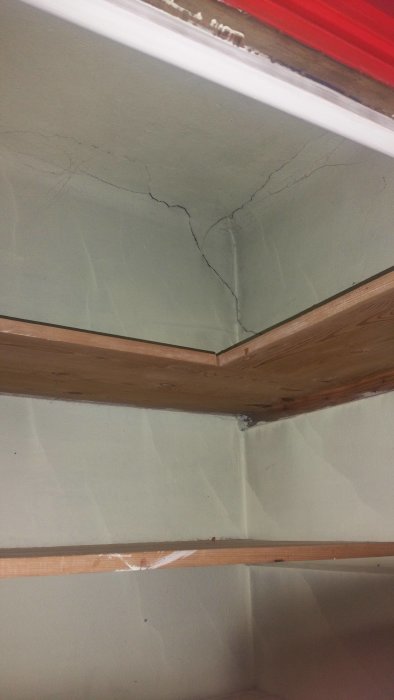
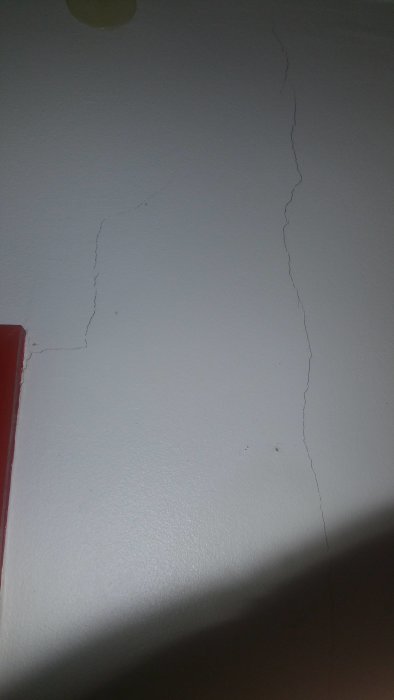
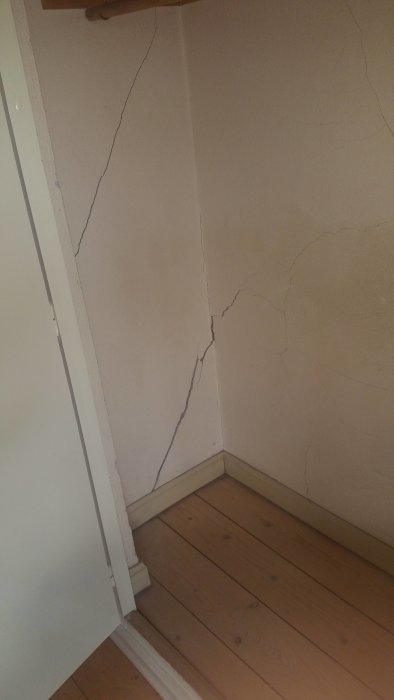
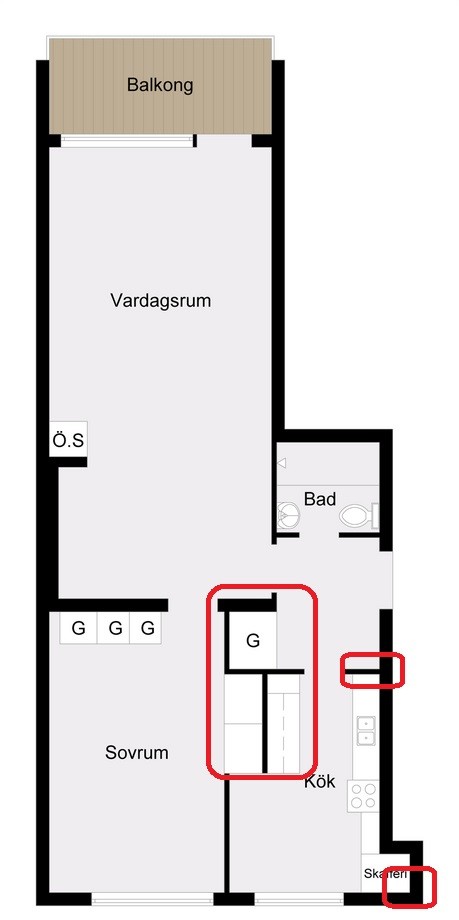
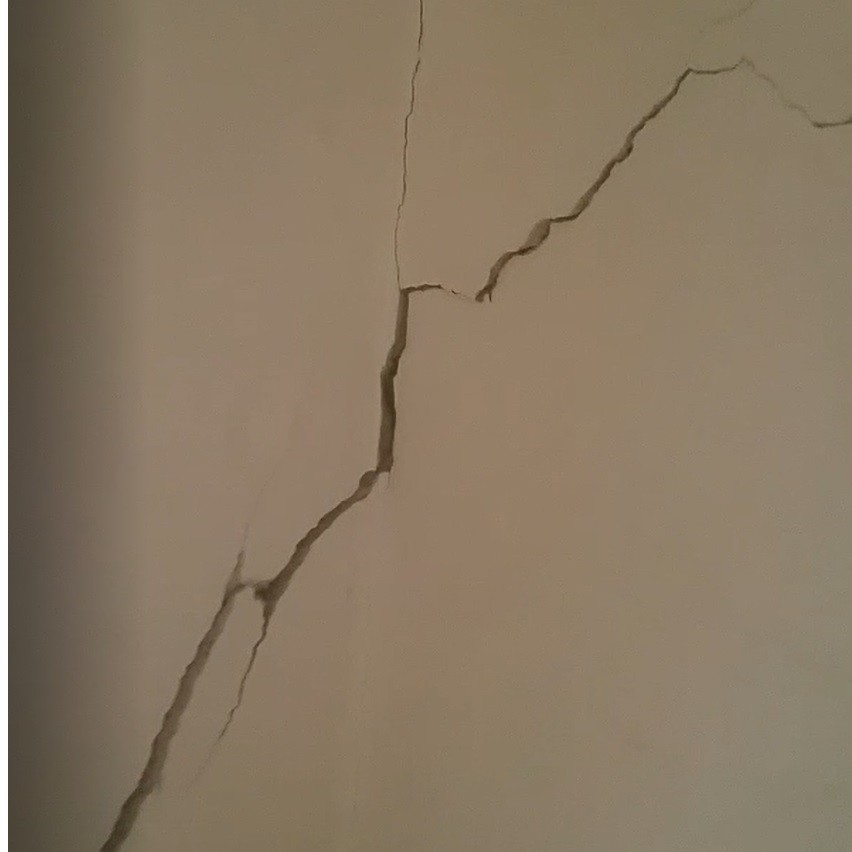
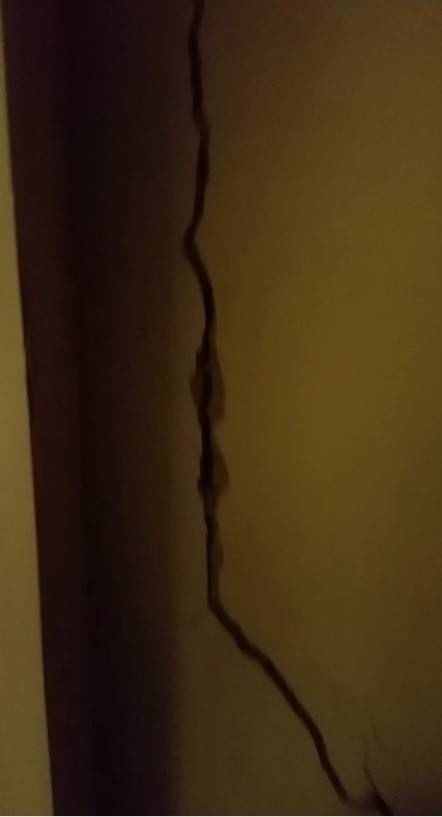
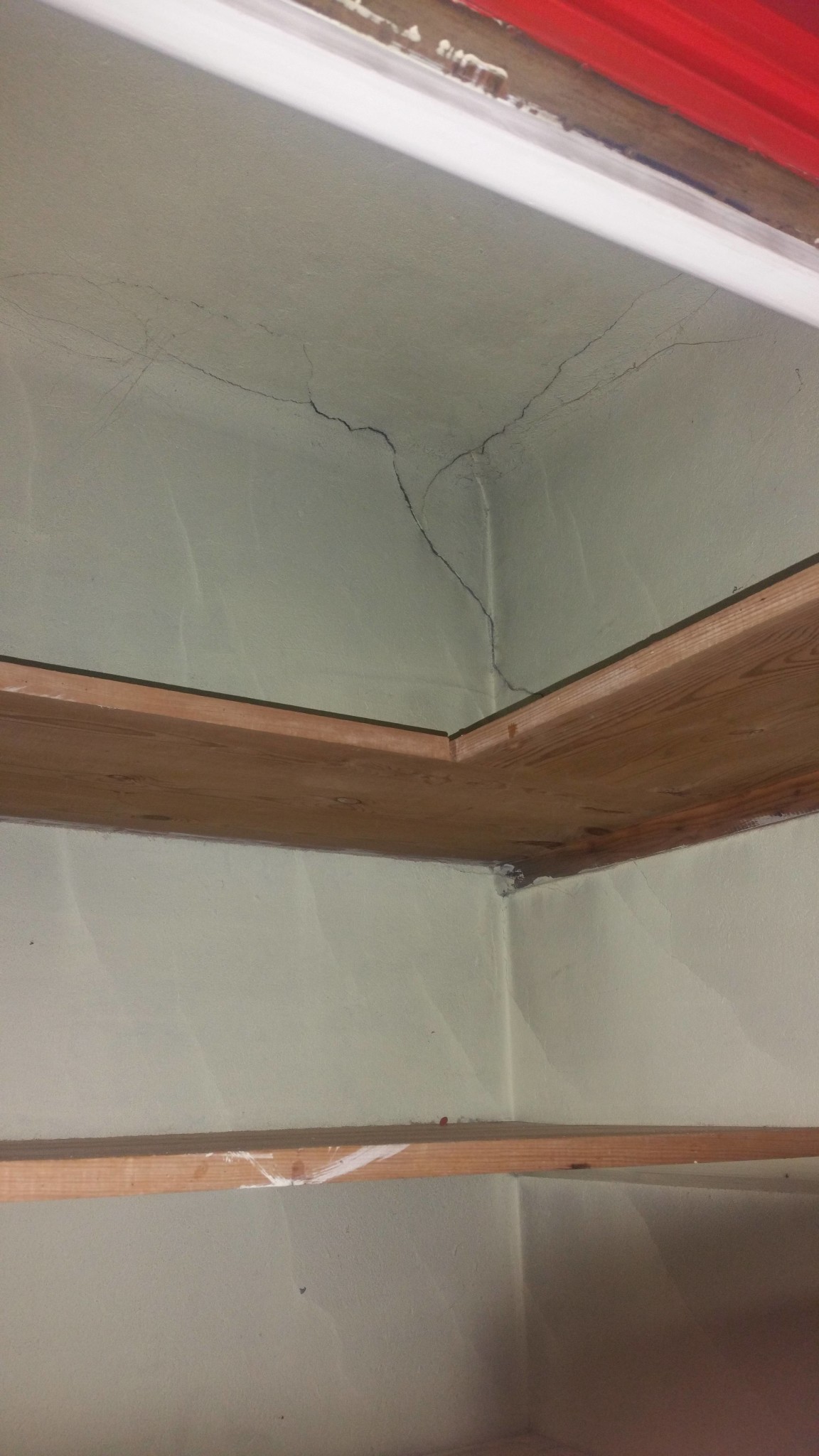
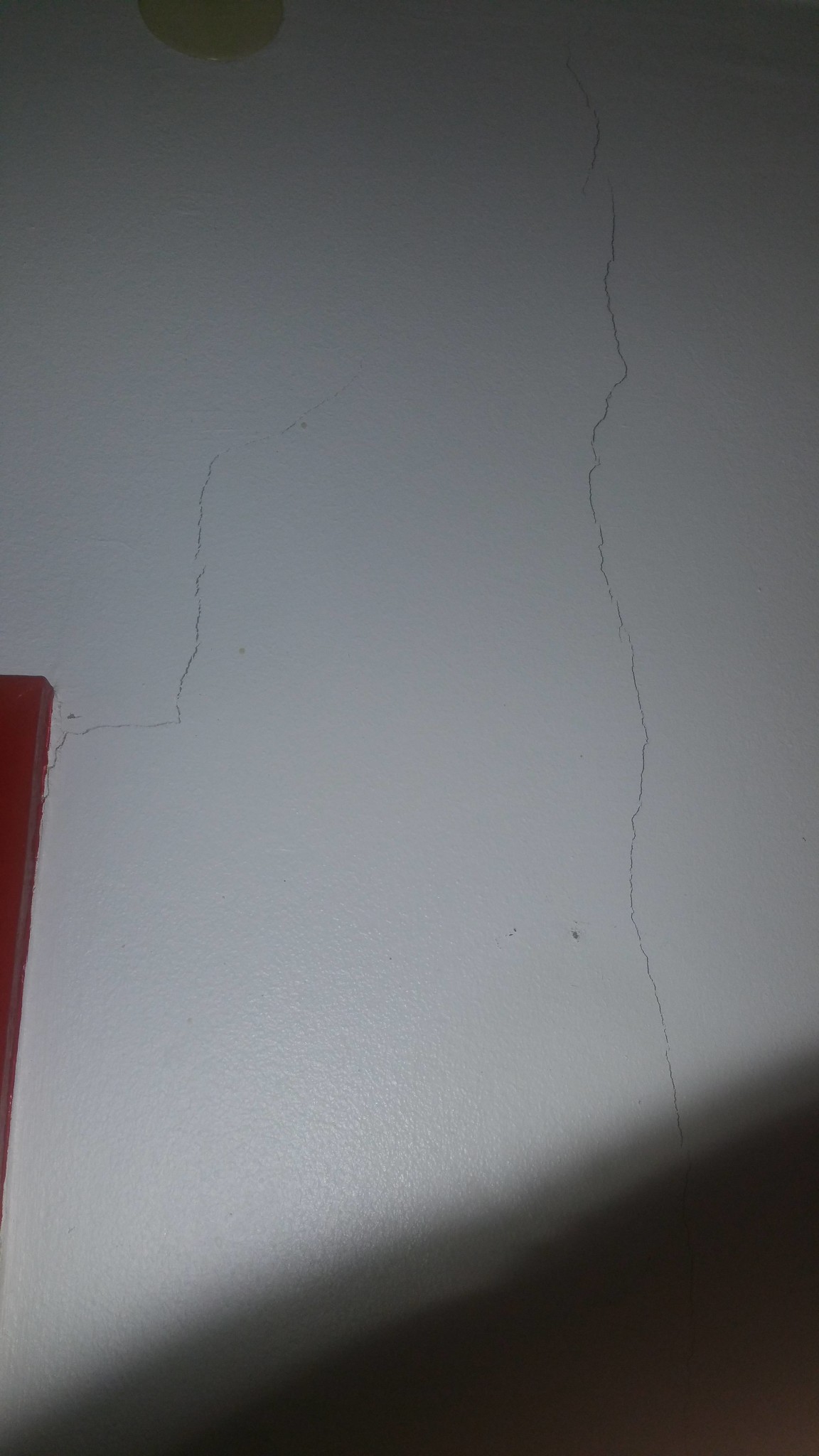
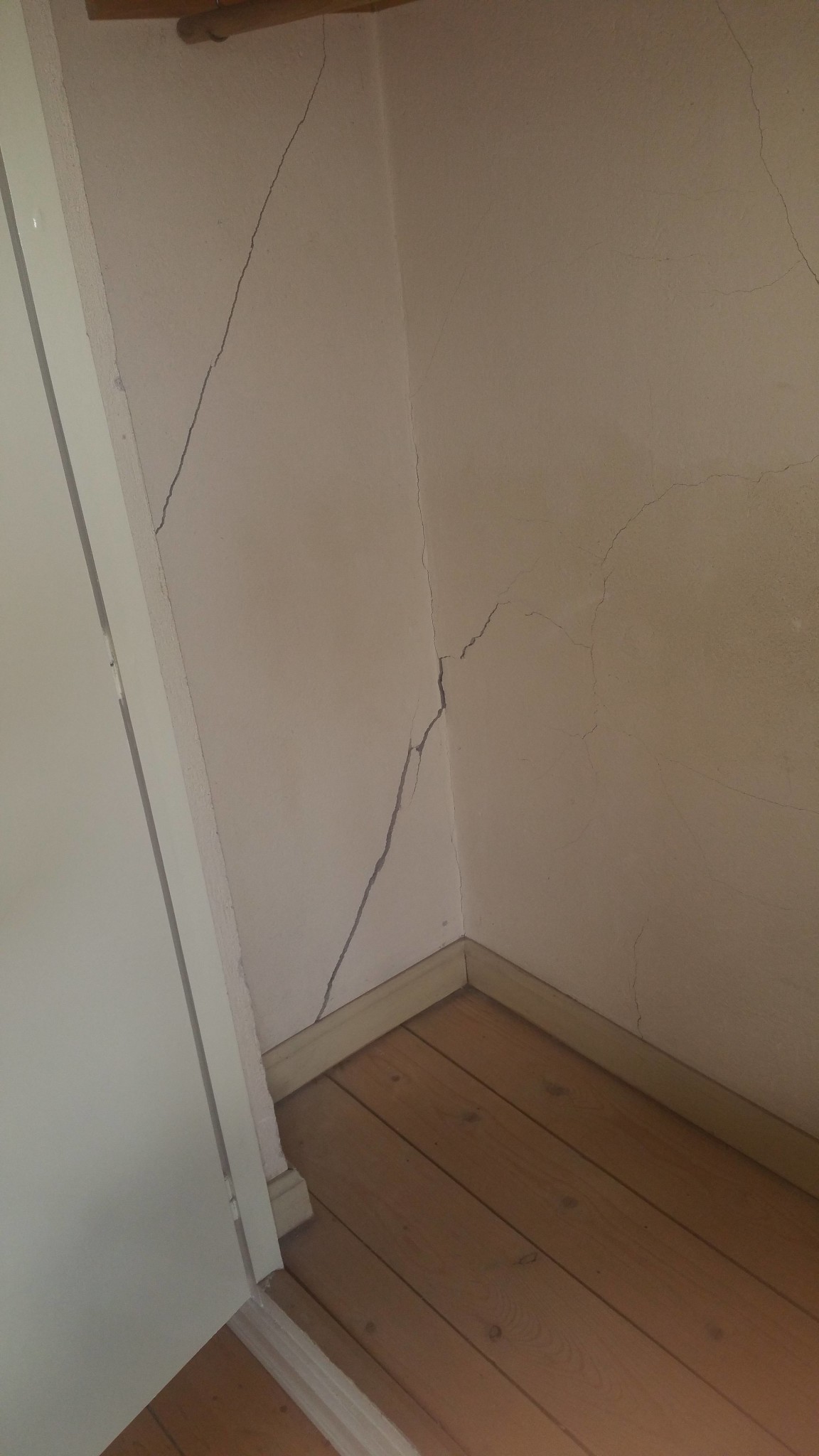
I'm about to place a bid on a cooperative apartment, a significantly renovated object from the 1930s (concrete/stone house), where I noticed several cracks in the walls during the viewing. The worst were perhaps 1.5 meters of continuous crack and 1-3 cm wide. There were also more "minor" cracks in the apartment. The cracks, the ones I could see, are within the red-marked areas on the floor plan, the worst cracks were within the large area, the cracks appeared from both directions so to speak. It's not impossible that there are more cracks behind closets or in areas that are inaccessible to view.
See pictures:
According to the real estate agent, it's the responsibility of the apartment owner to address this, meaning it's not something the association has any responsibility for.
I believe these are some type of settlement damages. Are these cracks a sign of a much more serious problem in the building? Or are they more of a cosmetic nature?
Anyone with any wise thoughts and ideas regarding this?
According to the broker, it is the responsibility of the condominium owner to address this, i.e., it is not something the association has any responsibility for.
Those cracks are not something a condominium owner can fix permanently. They indicate that something with the foundation or possibly the floor slab needs to be addressed. Is there any construction happening nearby the property? Have there been any groundwater level reductions in the area? Maybe some tunnel construction?
The condominium association should really do something about this. If they don't take responsibility, I would look for another property. Because with such large cracks and the angle they have (as "fahlis" also writes about), there is something "serious" going on. They can be repaired, but there is a very high risk that they will reappear quite quickly if the cause is not addressed, which should be the responsibility of the association.
Don't think it's being built directly adjacent like that, there is a house from the 50s built directly next to this property. The apartment has been within the same "family", like since it was built, so it's possible these cracks have been there for a very long time.
I'm also thinking that if the housing association has to address this, it sounds like a relatively expensive situation, right?
But what is the risk, besides the cracks reappearing after a while? How bad can it get in the worst-case scenario?
When investigating this kind of cracking, one usually finds out when it occurred and how quickly it happened through interviews. Then follow up with measurement programs to see if it is still moving or has stopped. Often it is due to subsidence in the foundation, many recent cases are due to low groundwater levels. Measures can cost millions and it is the association that is responsible. I would avoid this object like the plague...
When there is an object with some fundamental flaw, there are usually a bunch of bidders who have either not noticed the flaw or do not understand its extent. A technical flaw, that is. People tend to have better insight into the wrong location or wrong price.
There is a high probability that the final price will not reflect the risks associated with the purchase. I might keep a goat eye on the bidding and throw in a lowball offer if no one else bids, but otherwise, I would pass.
P.S. Furthermore, real estate agents and sellers are usually not very interested in discussing flaws and are more than happy to dump the object on someone who does not "argue." So it's not very meaningful to spend energy on dwelling on it either.
The object is on the ground floor, so it's unlikely that something has been torn down beneath.
But it sounds like a high risk with this, even if it now falls on the association, it feels like an enormous cost to rectify it and in the end, it may reflect on the monthly fees, as you the hempulare indicate.
Then again, it could also be that the cracks have been there for 30-90 years and haven't gotten worse, but that's highly unclear.
From an investigation standpoint, it feels like a time-consuming task that won't happen before any potential bidding starts. The price is relatively low for objects in that area, given the renovation needs.
Click here to reply
Vi vill skicka notiser för ämnen du bevakar och händelser som berör dig.