
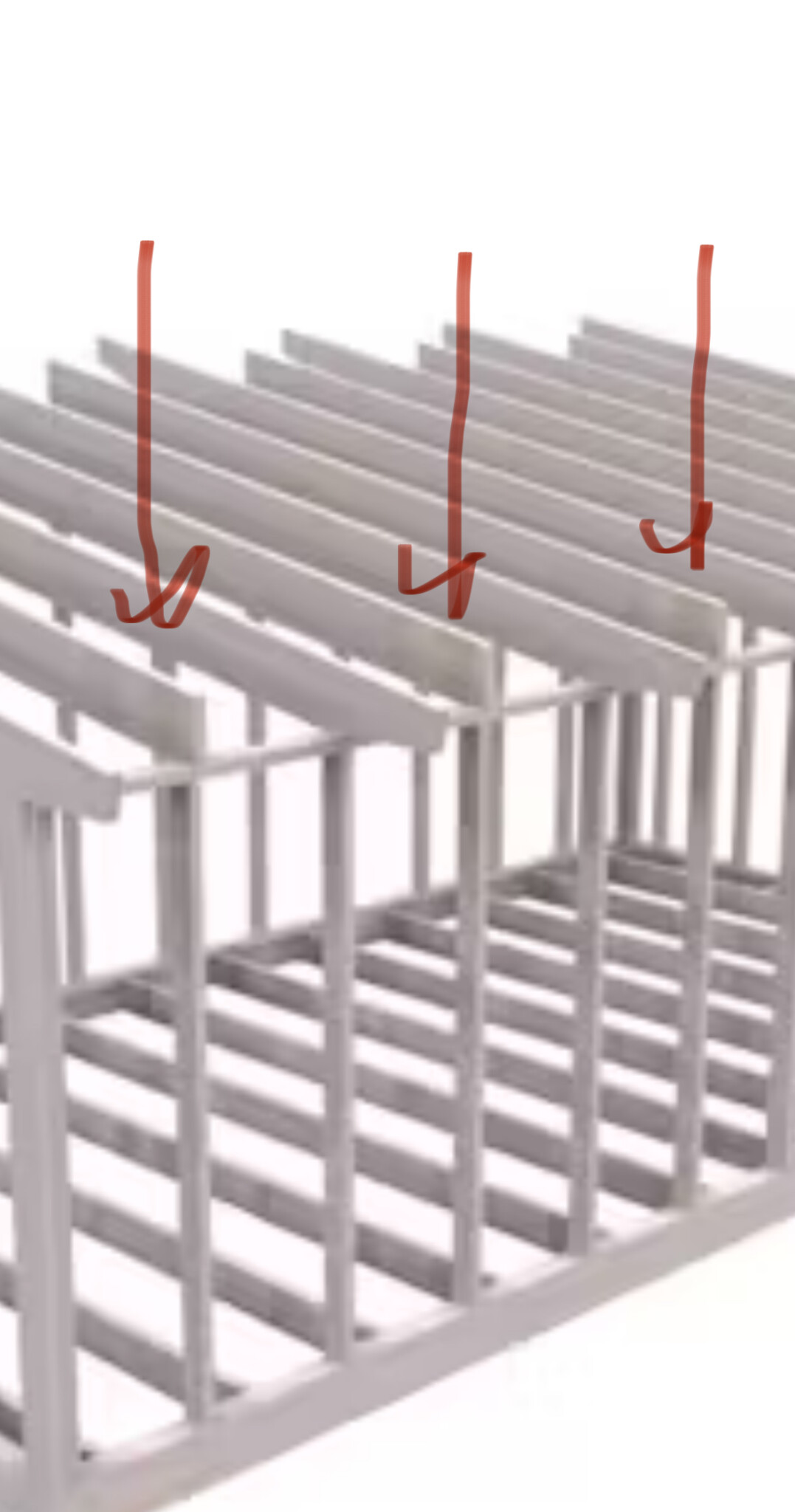



It is not common to have cc600 on roof rafters, usually cc1200 is used. Why this roof has it, we don't know. Must be weak rafters or accounting for a tremendous load.
Roof sheeting is not screwed into them but onto battens that lie in the other direction. Typically 45x70/95 unless there is a load-bearing under-roof. Dimension depends, among other things, on the snow zone.
Roof sheeting is not screwed into them but onto battens that lie in the other direction. Typically 45x70/95 unless there is a load-bearing under-roof. Dimension depends, among other things, on the snow zone.
45x70 feels weak if you cut every other rafter at the bottom. It doesn't take much load for a 45x70 to bend when the span is 120ccT Tjrex said:You don't usually have cc600 on rafters but cc1200. We don't know why this roof has it. Must be weak rafters or if you are accounting for a tremendous load.
Roof sheeting is not screwed into them but into battens that run the other way. Usually 45x70/95 if there is no supporting underroof. Dimension depends among other things on the snow zone.
Perhaps I'm thinking wrong
Click here to reply