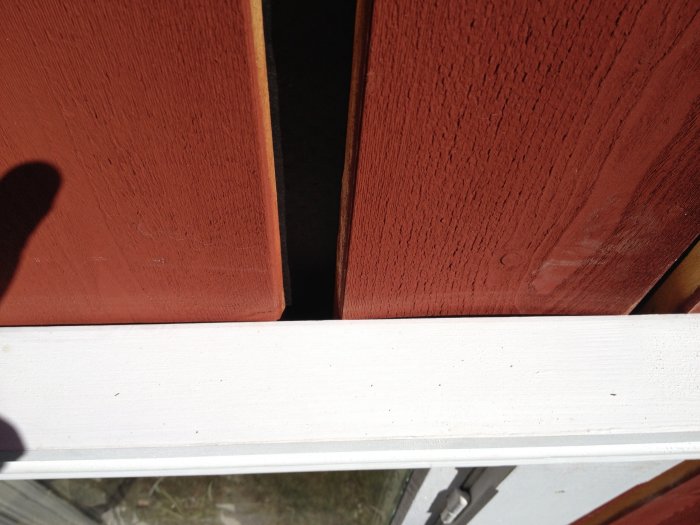
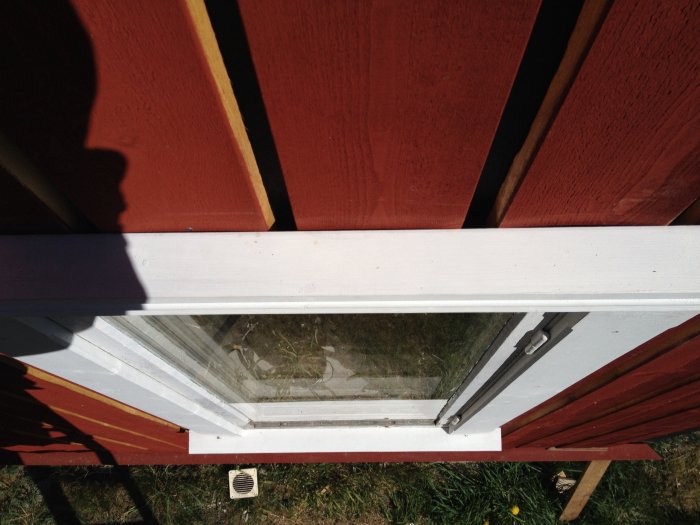
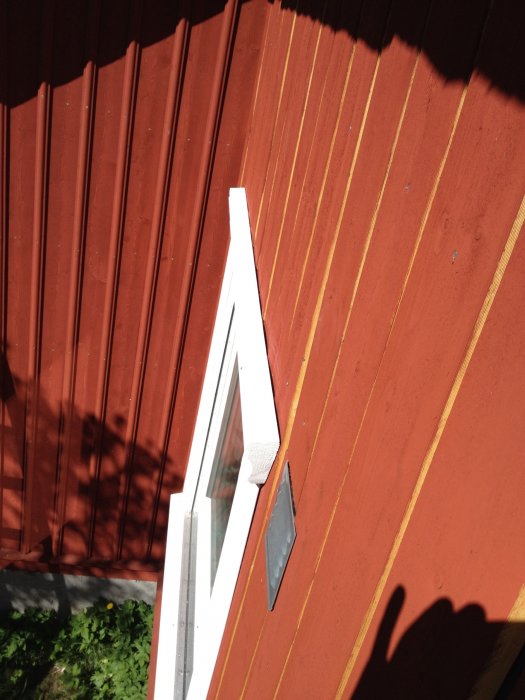
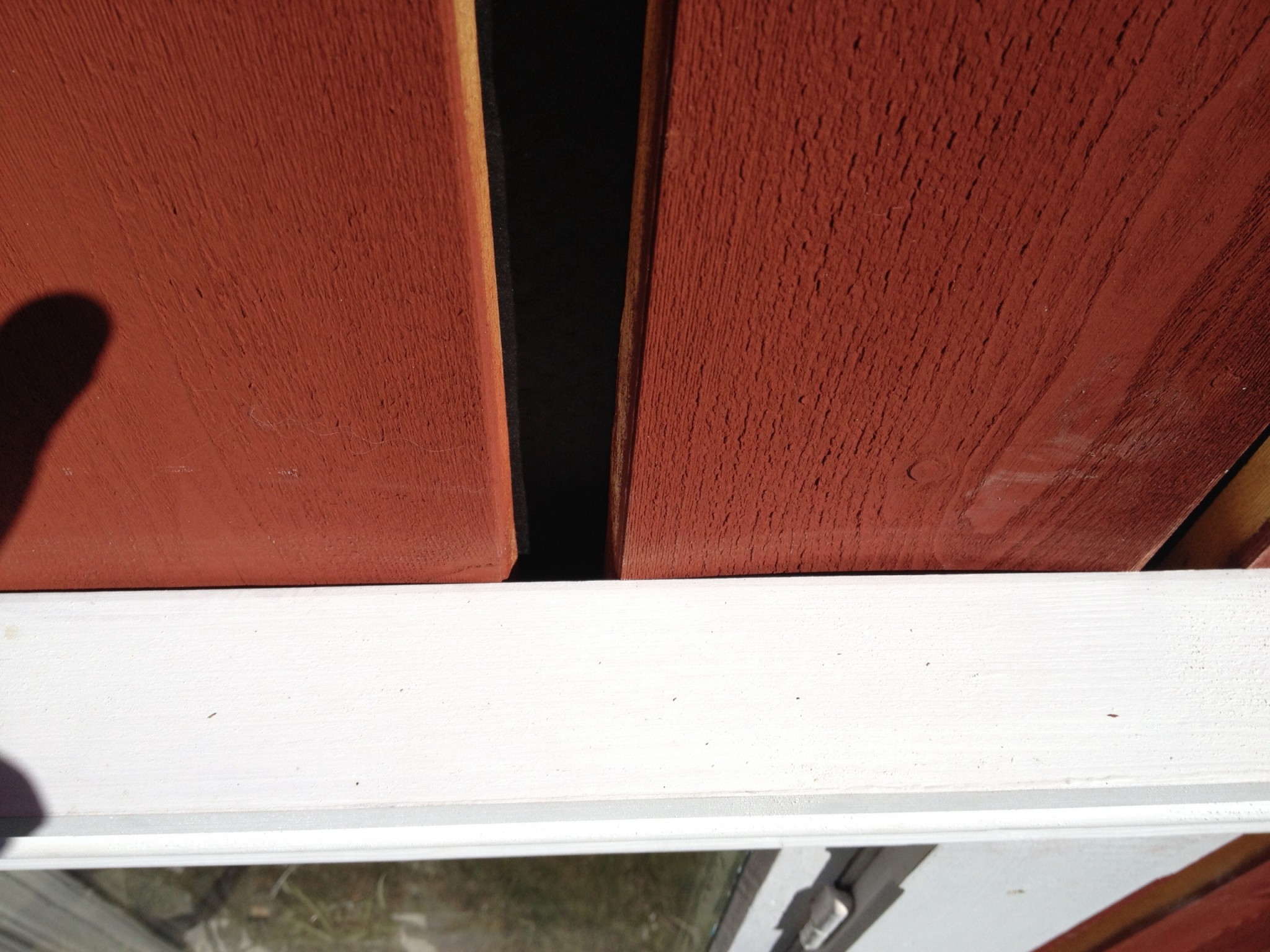
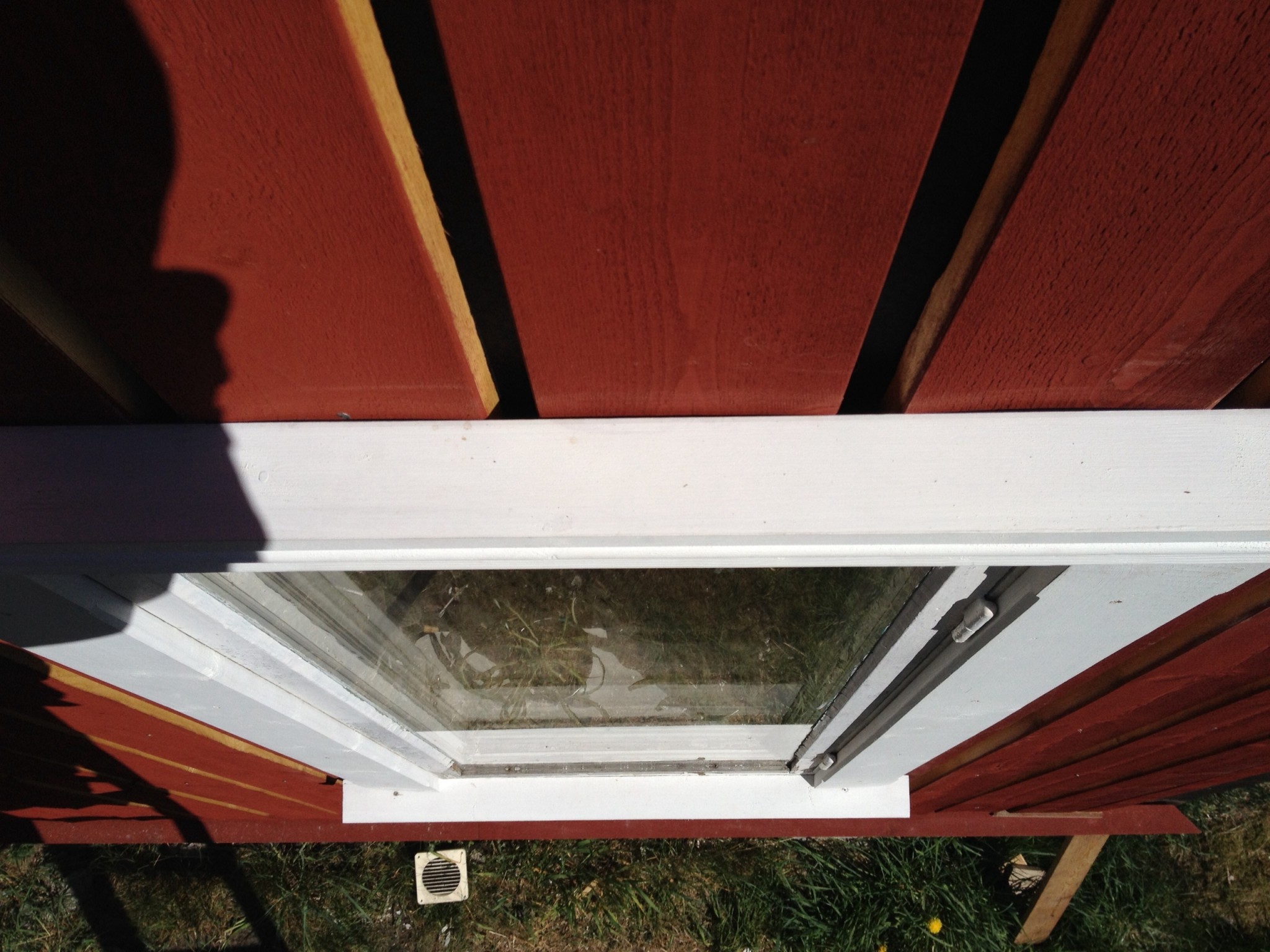
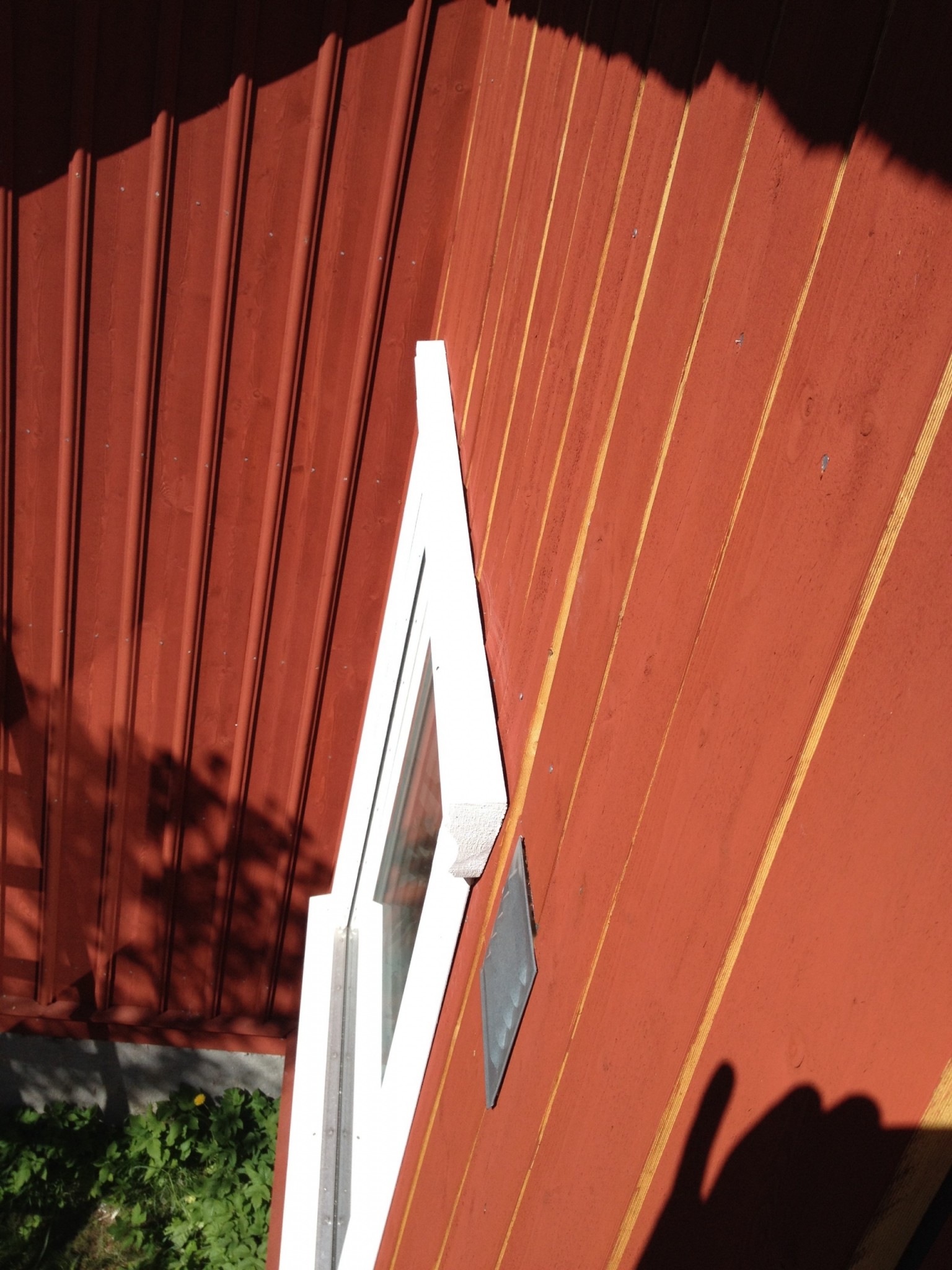
I'm in the process of replacing panels and window trims and have chosen an older style with some woodworking and decorations. For example, I've deliberately avoided using metal for rain caps. I'm placing my cap on the primary panel, which I've seen done on older houses with this type of cap. My issue is that it's not watertight, and rainwater will get in behind the cap. See pictures.
I need your advice and wisdom. Am I being unnecessarily worried, or is this a risky construction that I should avoid? How can I construct it better while retaining my idea?
You should place the overliggarn before the underboards, but it still doesn't become completely tight if the wind is strong. Place a metal sheet that goes up 10 cm and extends past the cover board, but not all the way out so it doesn't show. Leave 5mm between the panel and the metal sheet.
Cut a groove approximately 10 mm deep (sloping downwards/outwards) in the bottom boards just above the top edge of the underlying window trim and install a small narrow metal strip that ends with a bend down 5 mm over the window trim. You can either cut this metal strip yourself or have it custom-made. It will look best (in keeping with the old style) if it is hot-dip galvanized but unpainted, so you can paint it yourself with linseed oil paint. It will be small and neat and won't be noticeable unless you get relatively close to the window to inspect it, but then "everything" is visible anyway, so it doesn't matter.
That is the principle we have on our house and it is (not too) rotten in the wood after just over 130 years, so without metal it seems to be able to function for a while at least... even though the metal provides a safer construction. The location, wind and weather exposure, and the size of the roof overhang probably also play a role.