
6,485 views ·
7 replies
6k views
7 replies
Replace vapor barrier in existing house

Hello
I am in the process of renovating an exterior wall (inside) in a 1970s house. The house has a heated basement and a cold attic.
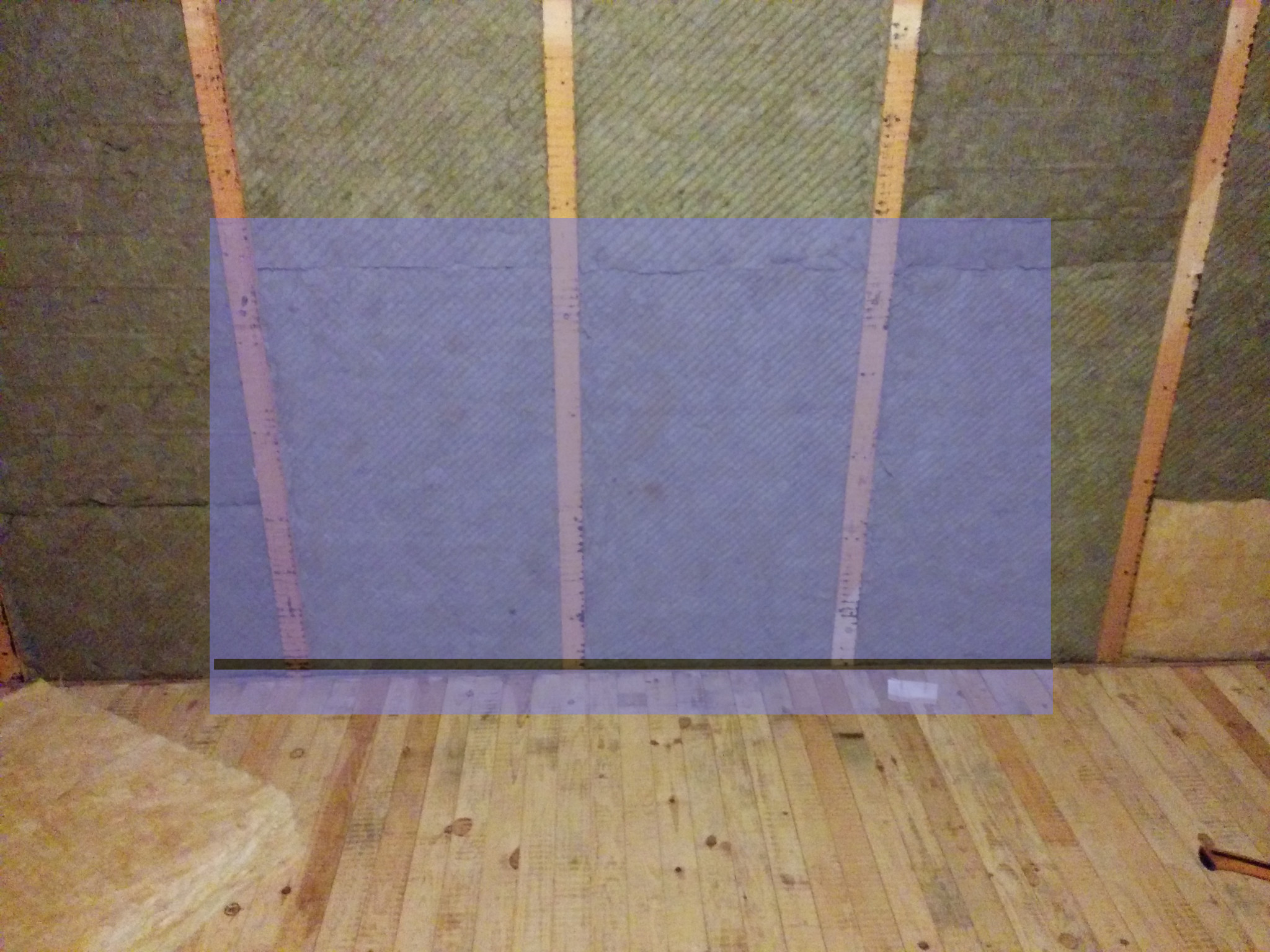
I removed the old masonite boards from the wall to replace them with drywall. Behind the boards was an old vapor barrier (not visible in the picture) that I think was oil-based and smelled terrible (asphalt???). It was damaged when removing the boards, so it needs to be replaced. I bought a new blue vapor barrier/plastic 0.2mm and plan to install it before continuing to put up the drywall.
What I am wondering is how the plastic should be positioned at the floor and ceiling. I thought about folding a few centimeters up at the ceiling and down at the floor as I tried to show in the picture. If I place it flush with the ceiling and floor, I think moisture could travel through to the insulation. By folding it up/down, I believe it won't be able to do that. Am I thinking wrong, or can it be done this way?
I am in the process of renovating an exterior wall (inside) in a 1970s house. The house has a heated basement and a cold attic.
I removed the old masonite boards from the wall to replace them with drywall. Behind the boards was an old vapor barrier (not visible in the picture) that I think was oil-based and smelled terrible (asphalt???). It was damaged when removing the boards, so it needs to be replaced. I bought a new blue vapor barrier/plastic 0.2mm and plan to install it before continuing to put up the drywall.
What I am wondering is how the plastic should be positioned at the floor and ceiling. I thought about folding a few centimeters up at the ceiling and down at the floor as I tried to show in the picture. If I place it flush with the ceiling and floor, I think moisture could travel through to the insulation. By folding it up/down, I believe it won't be able to do that. Am I thinking wrong, or can it be done this way?


If the house is from the 50s-60s, a cardboard-like paper with a tar layer and an aluminum foil was used. The aluminum foil functions as a vapor barrier but is brittle and easy to scratch. Today, this technique is used in food packaging when it must be absolutely airtight. So if there was aluminum foil, it was vapor tight!
Last edited:

If it was a black tar-like paper, it was probably an old windproof paper. It is not diffusion-tight.
You don't have a plank at the bottom of the wall, so there's nothing to staple the paper/plastic to, nor anything to screw the gypsum into. I would have cut out the insulation and added strapping between the studs, a 45x45 should suffice. Nice when you have to set the baseboard as well.
You don't have a plank at the bottom of the wall, so there's nothing to staple the paper/plastic to, nor anything to screw the gypsum into. I would have cut out the insulation and added strapping between the studs, a 45x45 should suffice. Nice when you have to set the baseboard as well.
Since it has 120 mm insulation, the house was likely built in 1975 or later. What you previously had on the wall was probably a type of asphalt felt, such as AC 350. It is not diffusion-tight according to today's definition but is diffusion-resistant, meaning it has relatively high vapor resistance. If the wind barrier board on the other side of the insulation is completely diffusion-open and you cannot detect any moisture damage inside the wall, I suggest you acquire new asphalt felt and use that instead of plastic. It's probably what you have in the roof against the cold attic behind the surface layer.
Click here to reply