
The weight of the stove has pressed on the surface, causing it to settle a bit, nothing unusual, it also happens with new chimneys that are not well anchored to the foundation. Just add something new that stays at the right level and withstands more pressure, XPS is more pressure-resistant.
That's good, I had also considered pouring it up. But it's definitely easier if you can just replace a few tiles and then put the floor back on.L Liteavvarje said:
Now it's just a matter of how to remove the stove, since the chimney is standing on it.
Problem  the chimney is on the stove and needs to be lifted, it is usually not easy, heavy things. Then there's how it looks at all passages to the roof, that's another thing, it might be anchored in the beams to be steady sideways. It probably needs to be lifted at least 5 cm (depending on how much it goes down into the stove) as well as how it looks with insulation. Take a picture so everything is included.
the chimney is on the stove and needs to be lifted, it is usually not easy, heavy things. Then there's how it looks at all passages to the roof, that's another thing, it might be anchored in the beams to be steady sideways. It probably needs to be lifted at least 5 cm (depending on how much it goes down into the stove) as well as how it looks with insulation. Take a picture so everything is included.L Liteavvarje said:Problem
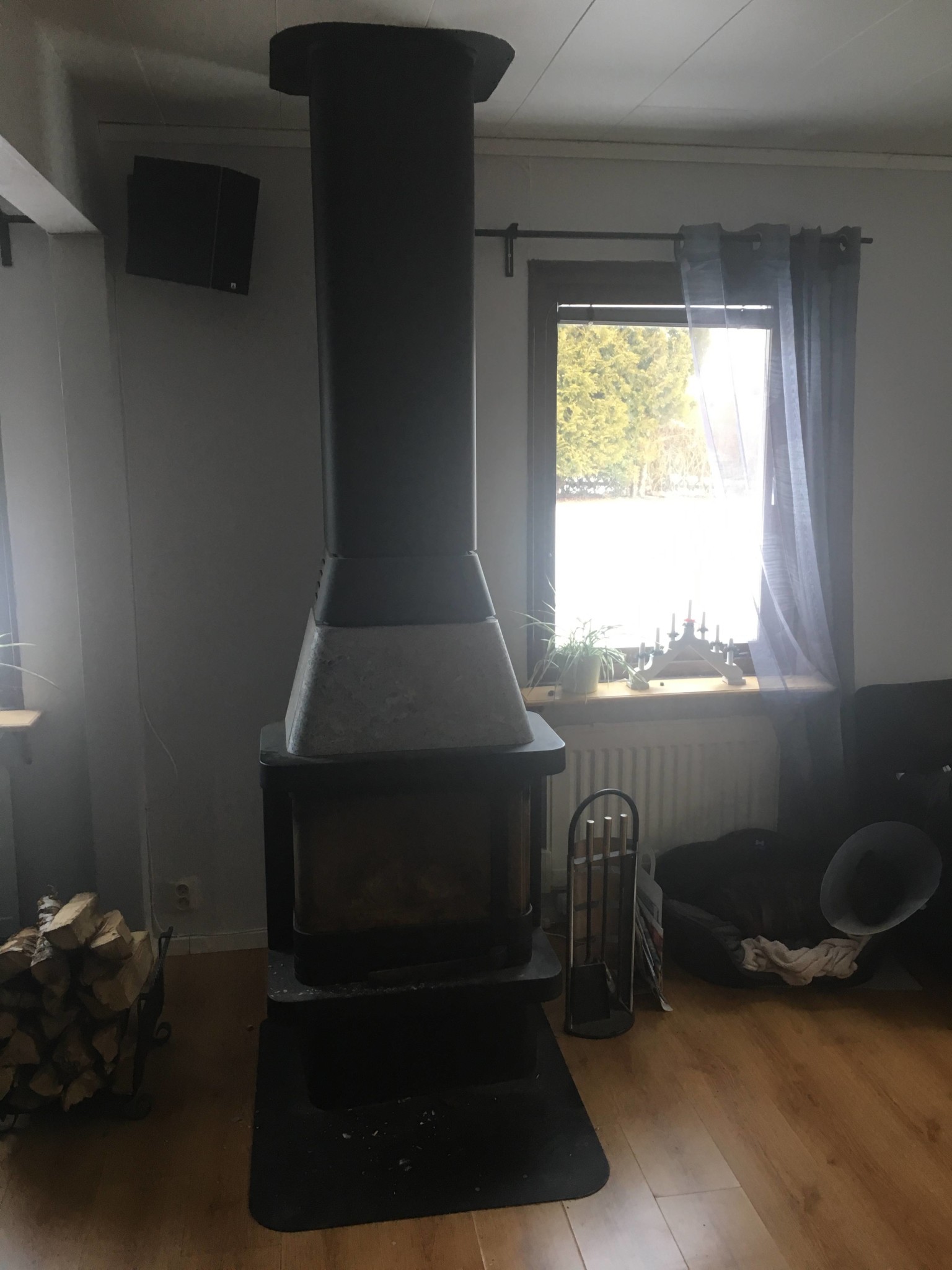
Decent piece there, you should probably cast something underneath. How does it look under the stove, are there holes or a whole foot? It seems like you might need to lift everything at once somehow. You should check if it can be lifted according to the sketch. Now only the front side of the sketch is visible, but you should have the same on the back. If that doesn't work, maybe on the sides. You lift with a jack a little at a time and put thin pieces underneath, gradually moving to thicker pieces as you go higher. Very small lifts all around, making a few rounds around it. The sheet underneath, is it directly on the wooden floor? If it is, you'll need to try to remove the floor to lay a concrete pad as recommended, about 5-10 cm in from the outer edge of the sheet. A simple sketch, but I hope you understand. PS: If the sheet in the ceiling is attached to the chimney, you must loosen it.
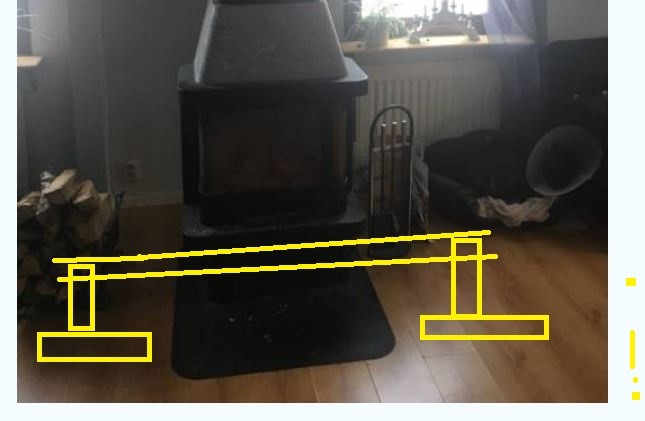
Shouldn't be a problem to lift it that way. But wouldn't xps be enough? If you take xps300 it can handle 130kpa compared to the usual 24-30kpa.L Liteavvarje said:Decent piece there, you should probably cast something underneath, how does it look under the stove, is it a hole or a whole foot, as it appears you probably need to lift everything at once somehow. You need to check if it can be lifted as per the sketch, now only the front is visible on the sketch but you should have the same on the back, if not then maybe on the sides. You lift with a jack a little at a time and place under thin pieces, as you go up with slightly thicker pieces, Very small lifts all around, takes a few rounds around it. The sheet metal underneath, is it directly on the wooden floor, if it is then you have to try to remove the floor to lay a disc of concrete as recommended, about 5-10 cm from the edge of the sheet metal. A simple sketch but hope you understand. PS if the sheet metal in the ceiling is attached to the chimney you must loosen it
Regarding XPS or concrete, if there's concrete underneath, you have a rigid base, hopefully quite even. In that case, XPS can work well. With concrete, it might be a bit difficult to get it completely even, tending to become somewhat wavy, as it can't be leveled underneath.
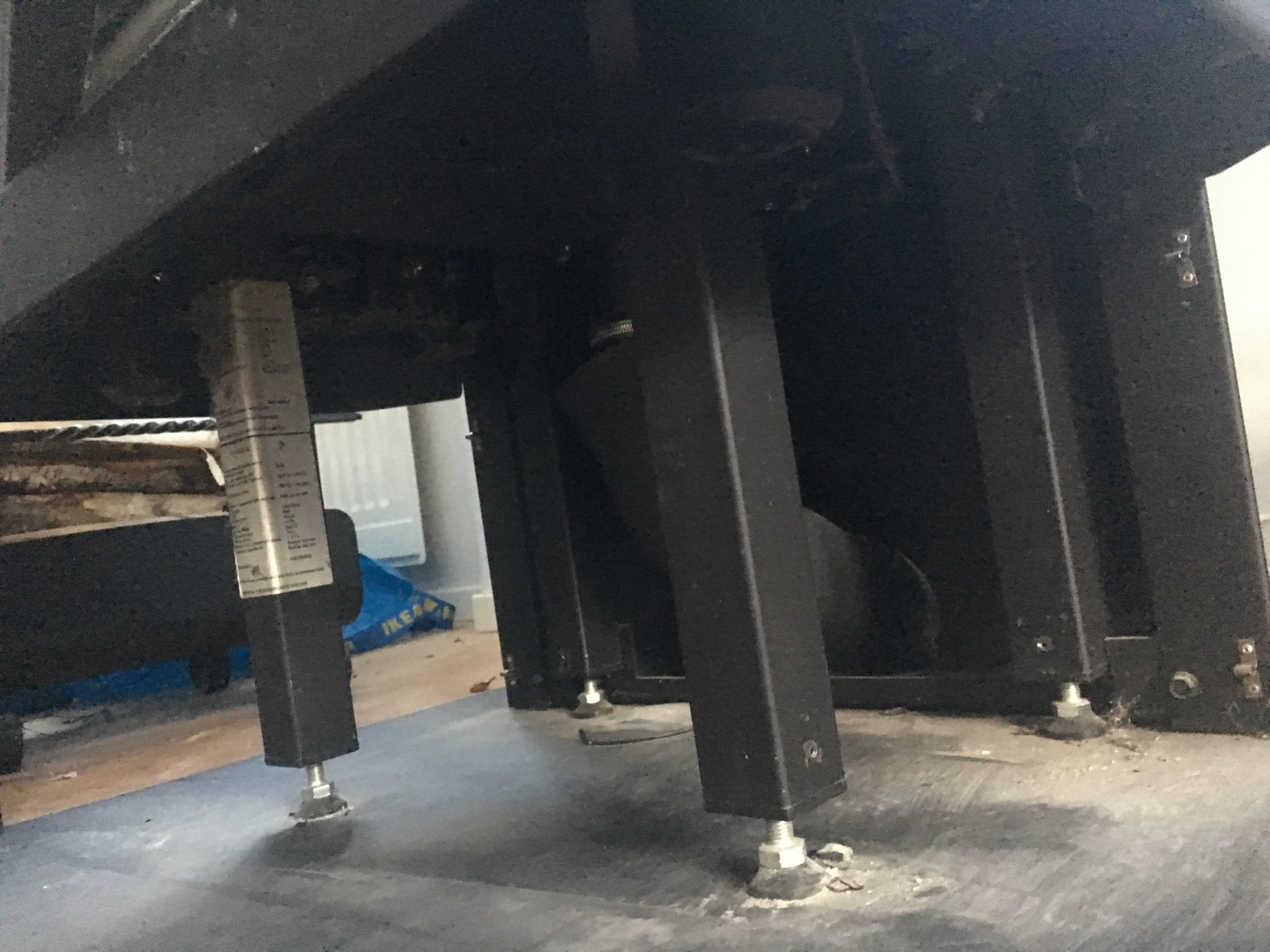
It seems to be good to lift in that manner because there are legs underneath. Just make sure to use wide timber or double 22 chipboards against the floor, as large as possible, perhaps chipboard plus a board on it to distribute the pressure over a larger area, reducing the load per cm2. This way, you won't press down the floor.
Feel free to take some pictures when you've lifted it. It might provide ideas on lifting techniques to others in different situations.
It seems to be good to lift in that manner because there are legs underneath. Just make sure to use wide timber or double 22 chipboards against the floor, as large as possible, perhaps chipboard plus a board on it to distribute the pressure over a larger area, reducing the load per cm2. This way, you won't press down the floor.
Feel free to take some pictures when you've lifted it. It might provide ideas on lifting techniques to others in different situations.
What does the rest of the floor construction look like, besides having foam on top of concrete? How thick is the floor chipboard/subfloor? It seems unlikely that the subsidence is due to the foam; rather, it's due to insufficient stiffening (floor chipboard) or surface layer. 30 kPa long-term load means you should be able to have a ton on one-third of a m^2. In any case, XPS can certainly help, but the reason I'm asking is that in the picture it looks like the subsidence is very concentrated under the feet.
I might be wrong, and if it has settled over a larger area, then XPS should be more than sufficient. Good luck! (I also want to raise the stove using the traditional lever principle according to suggestion/advice)
Regards, Plundraren
I might be wrong, and if it has settled over a larger area, then XPS should be more than sufficient. Good luck! (I also want to raise the stove using the traditional lever principle according to suggestion/advice)
Regards, Plundraren
I have never seen it myself but have been told that it's a slab then sand then there's styrofoam. I will see what needs to be done when I rip everything up. I think I might not even need to move the stove, just lift and unscrew the adjustable feet. I will start this at the beginning of next year, currently refreshing the stairs. Painting them white and putting in a new carpet, so I'm quite busy at the moment.P Plundraren said:What does the rest of the floor construction look like, apart from having foam plastic on top of concrete? How thick is the floor chipboard/subfloor? It seems unlikely that the subsidence is due to the foam plastic, rather due to too thin stiffening (floor chipboard) or surface layer. 30 kPa long-term load should allow you to have a ton on a third of an m^2. Regardless, XPS can of course help, but the reason I'm asking is that it looks in the picture as if the subsidence is very concentrated at the feet.
I may be seeing it wrong, and if it has settled over a larger area then XPS should be more than sufficient. Good luck! (I also want to lift the stove with the classic lever principle according to the suggestion / notice)
Regards, Plundraren
Click here to reply