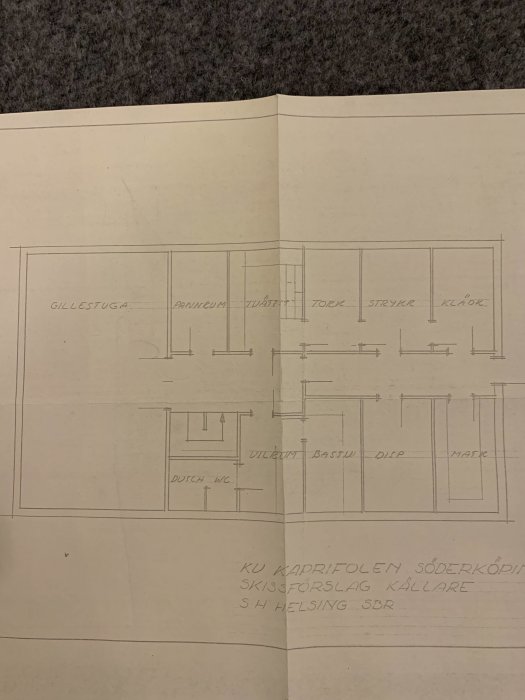
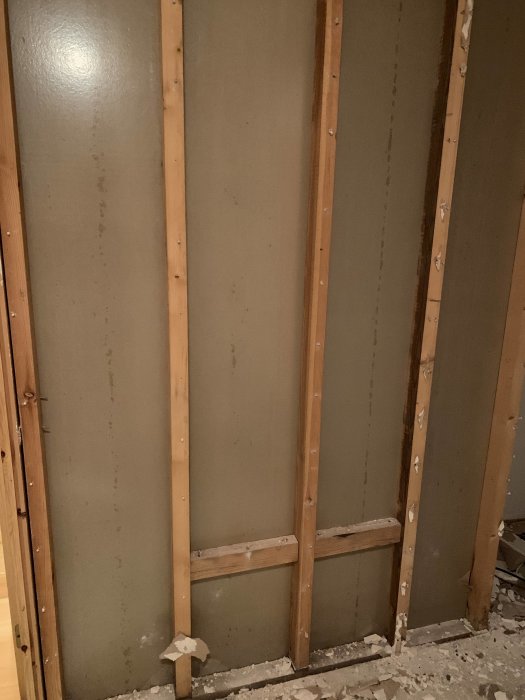
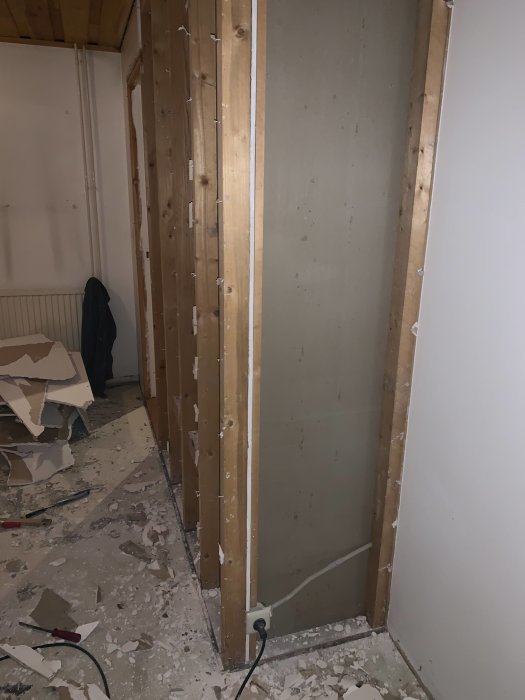
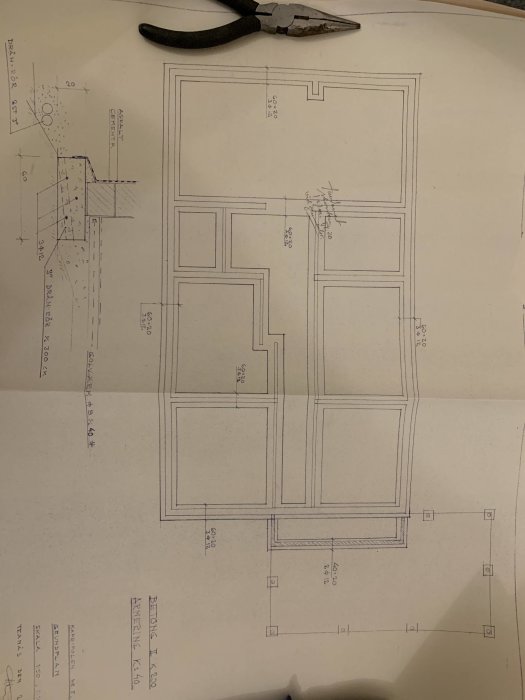
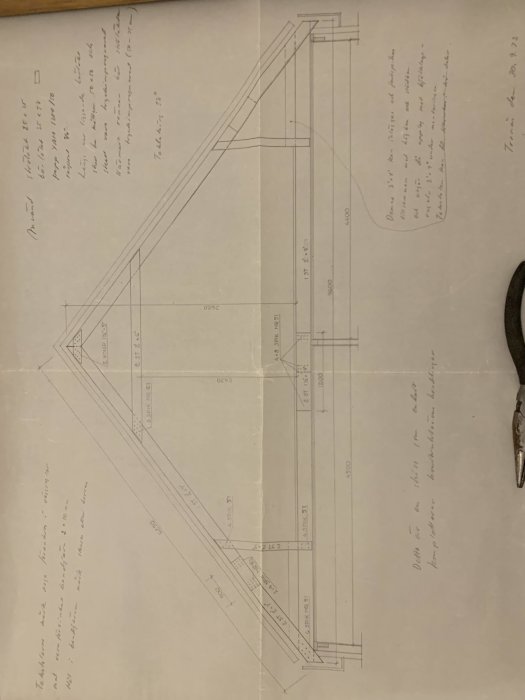
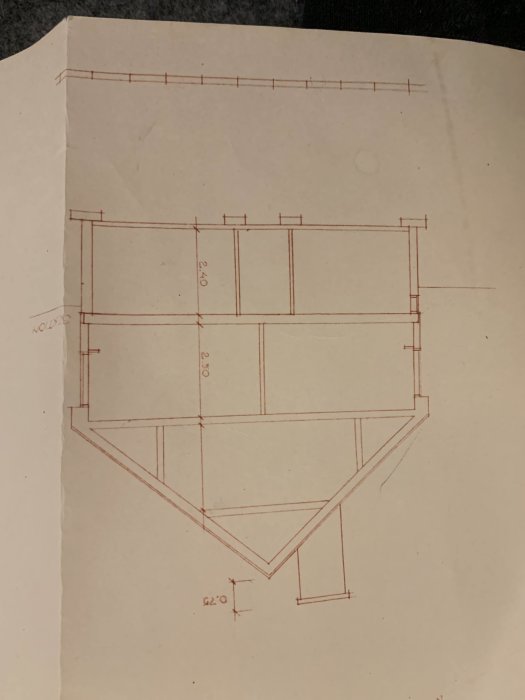
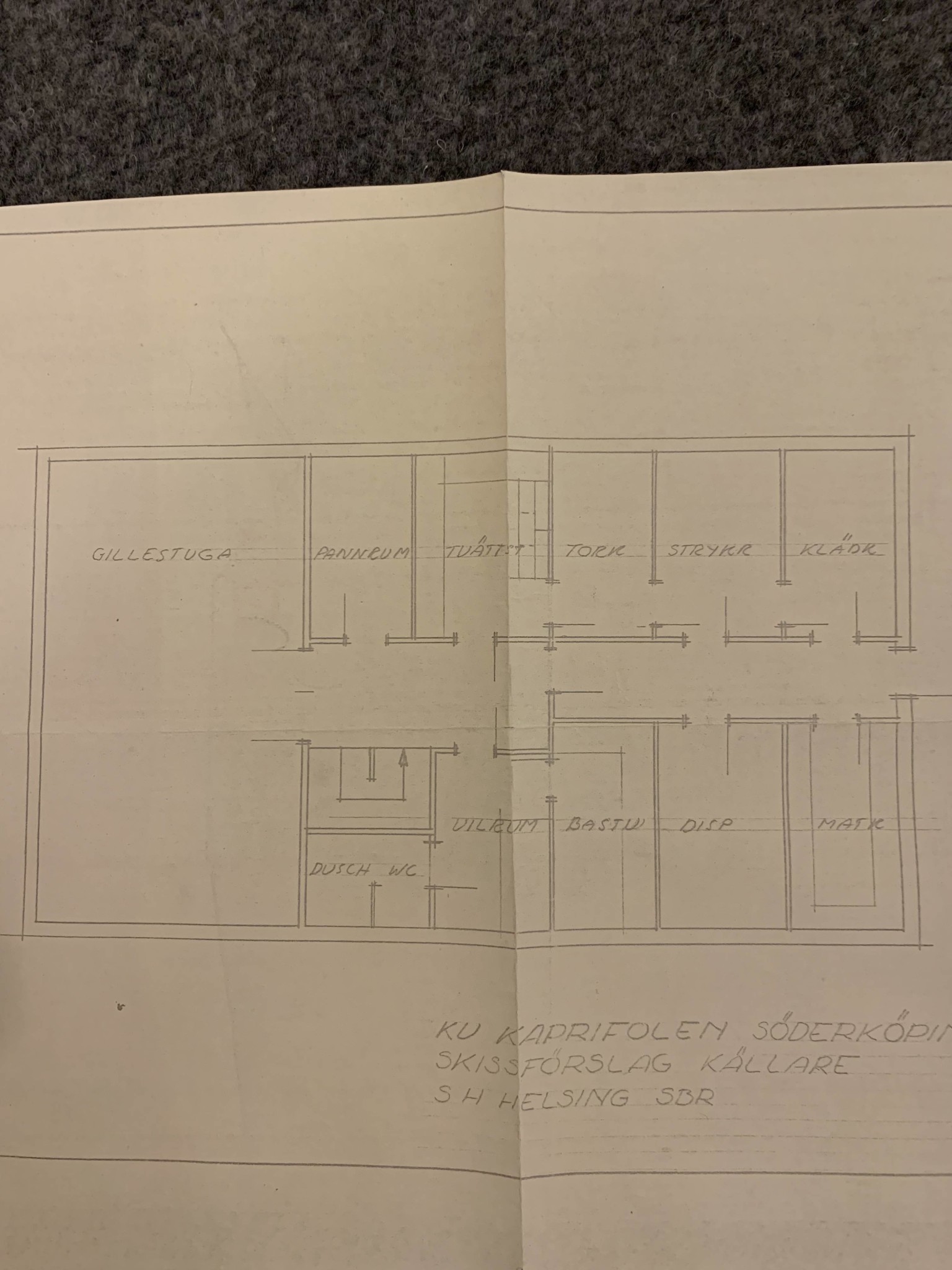
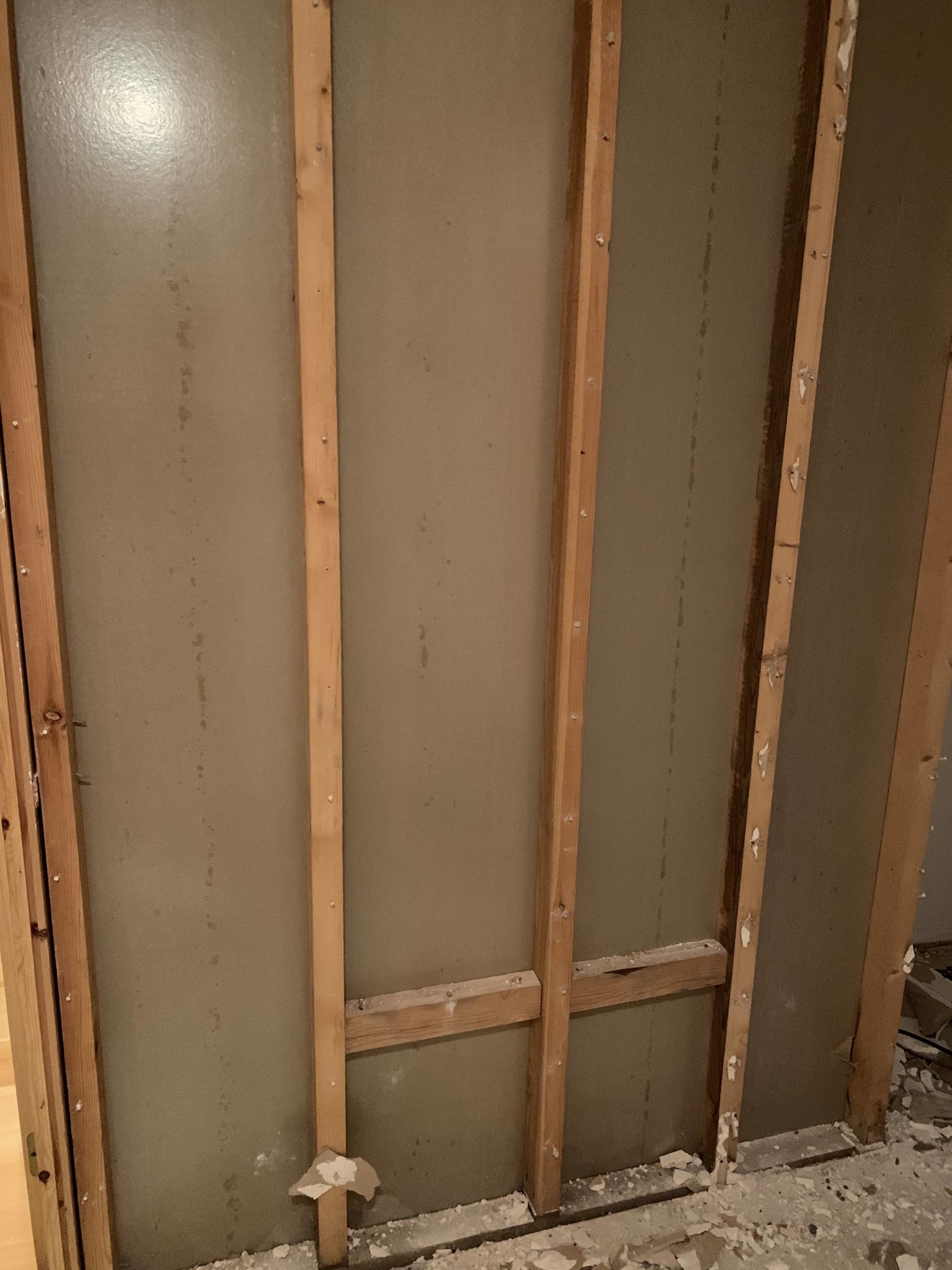
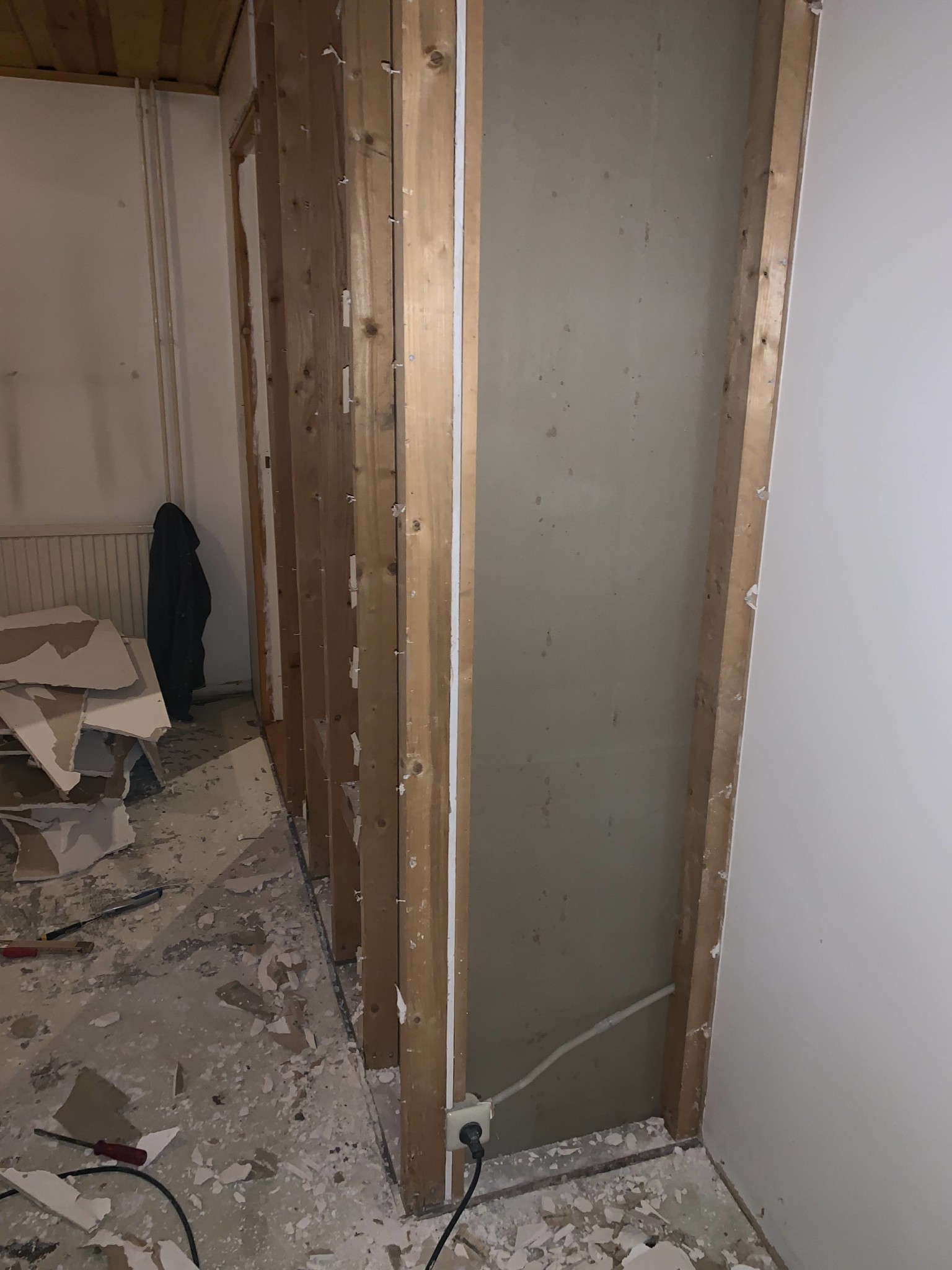
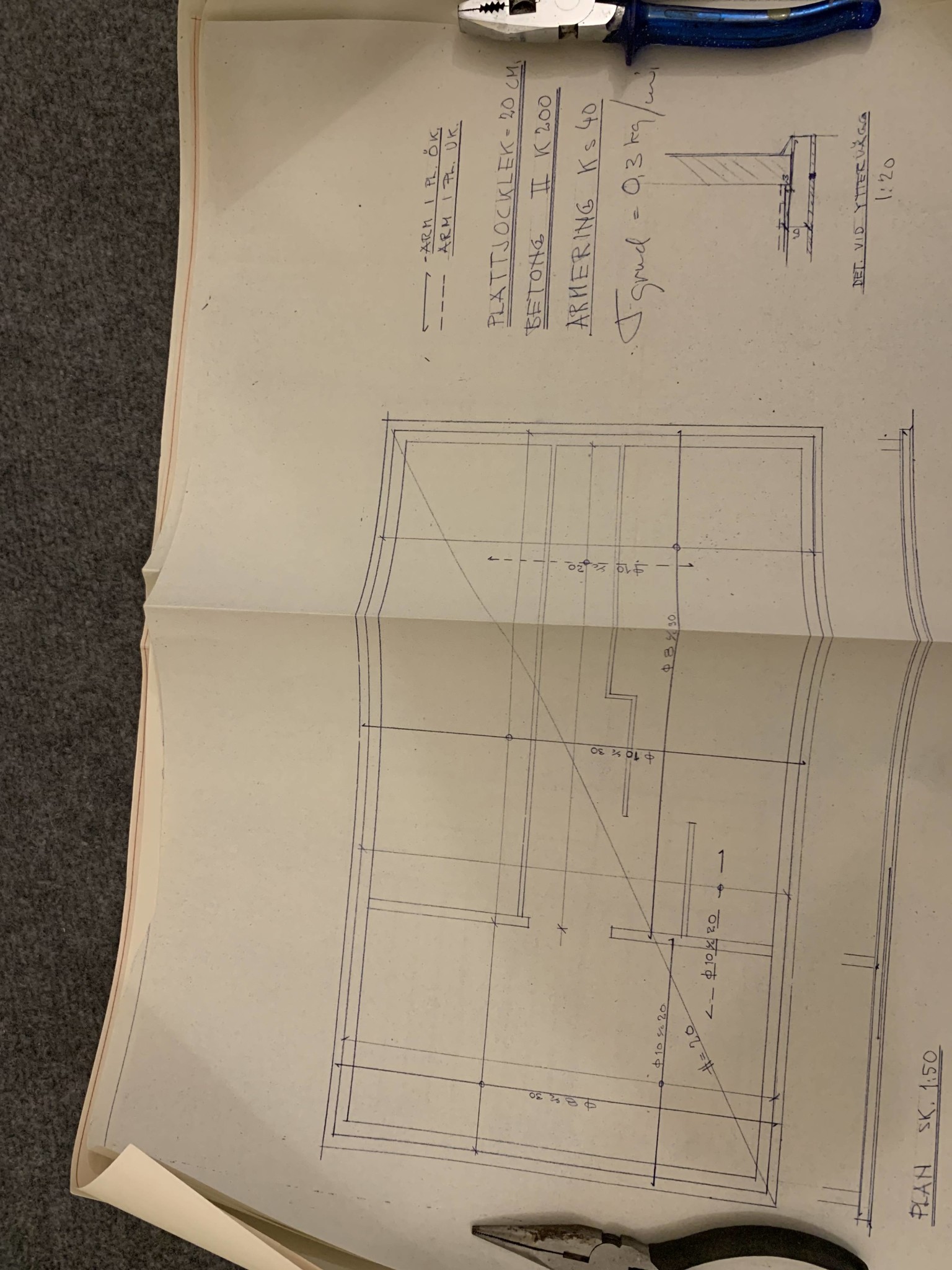
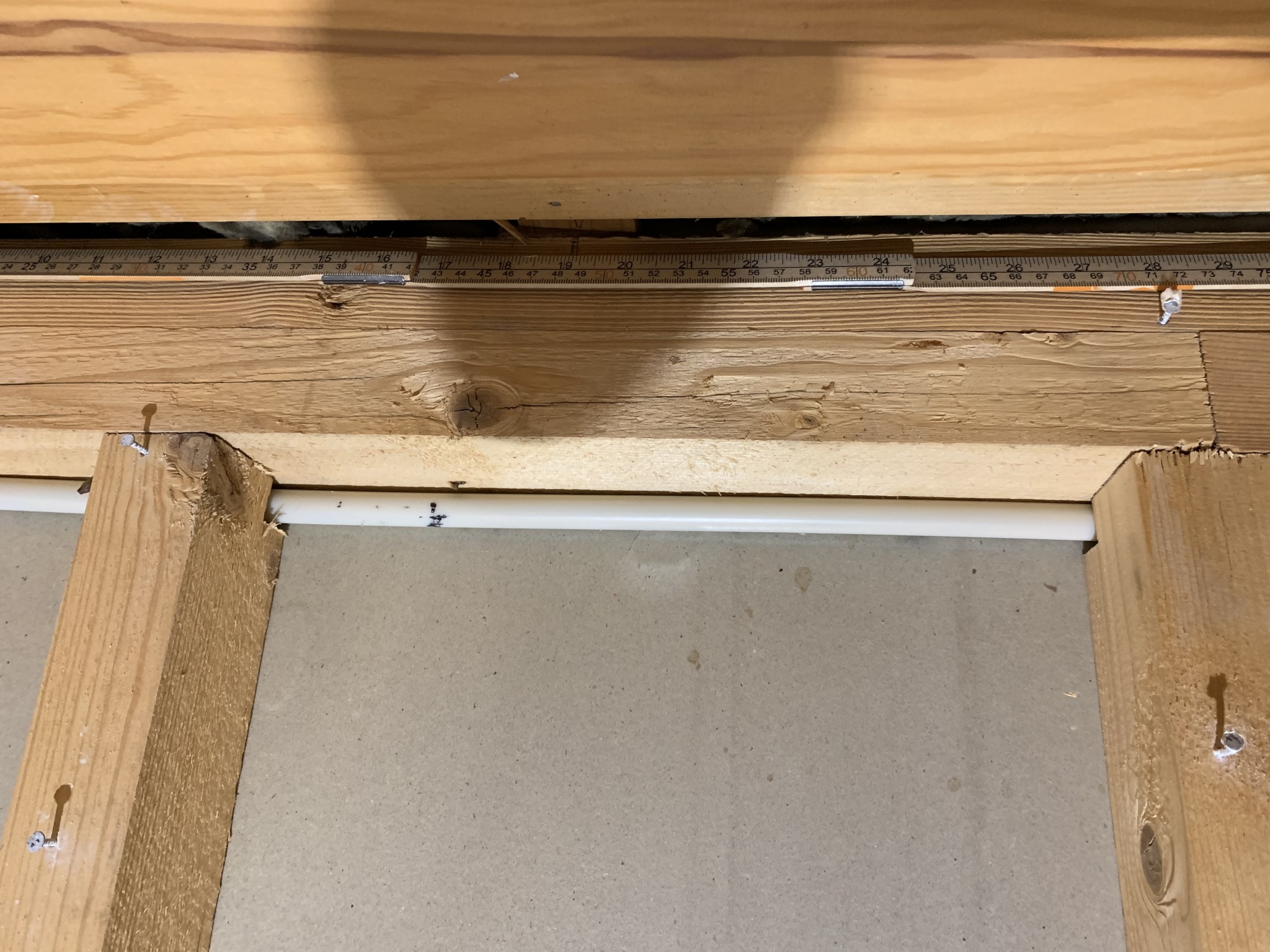
I previously started a thread with several questions here https://www.byggahus.se/forum/threads/rad-ang-kaellare.354993/#post-3445690 but received advice to ask the question about replacing load-bearing wooden walls in the basement with, for example, leca, in this part of the forum instead. I will check with a structural engineer when I have demolished a bit more so the construction becomes visible but at the same time, I want to get some ideas and tips along the way through the collective knowledge available on the forum. I'll post a couple of pictures and some drawings. It concerns the wall between what is labeled as the rest room and hall where I have removed the drywall.
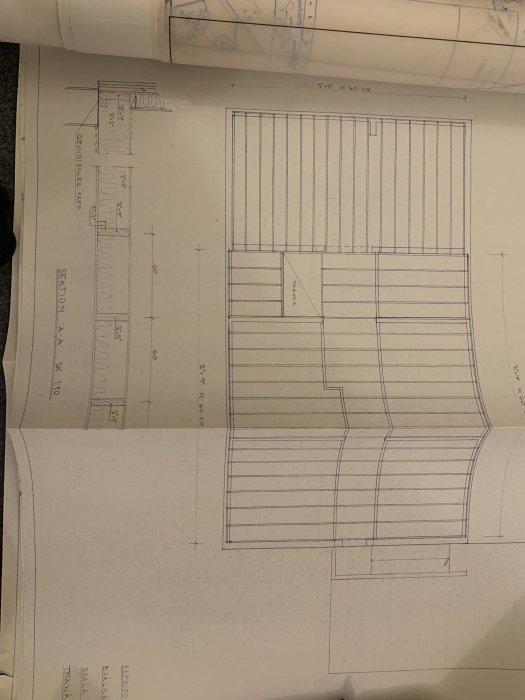
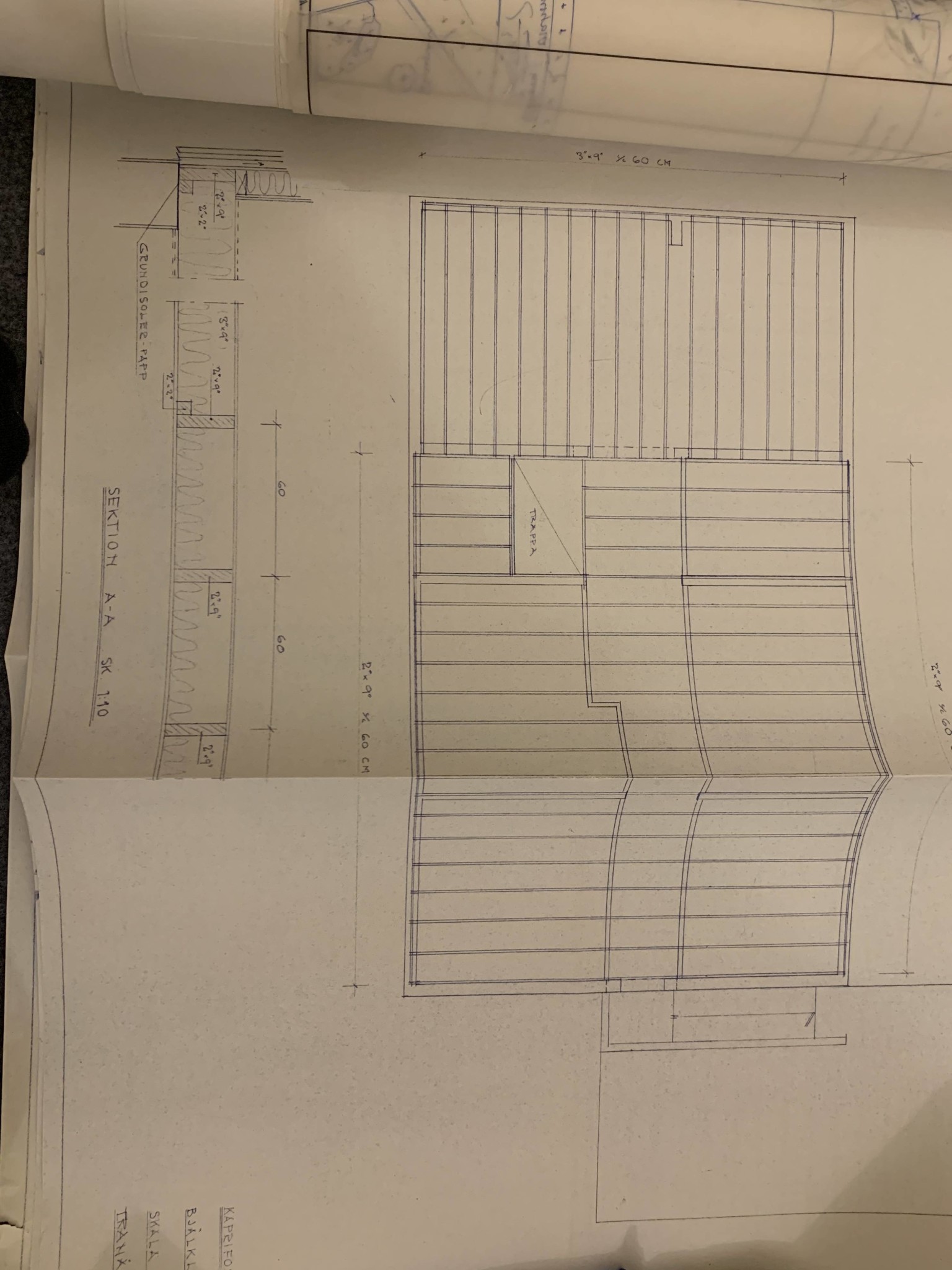
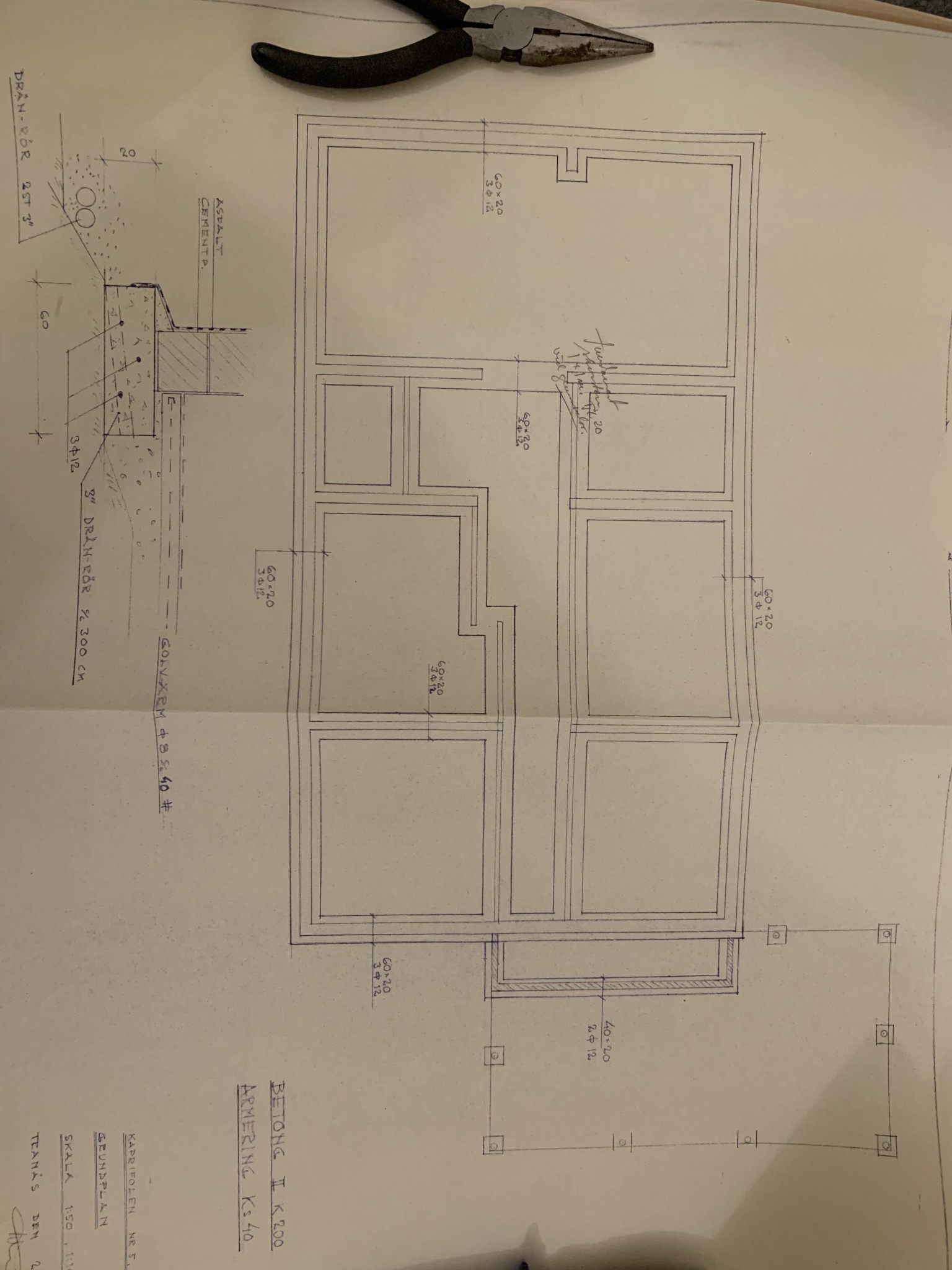
Here are some drawings:
Given that everything in the basement essentially constitutes a risk construction everywhere and that we have found moisture in the now torn-up floor in the recreation room, it doesn't feel very good to have load-bearing walls made of wood, even though they haven't been affected yet based on where we've been able to measure. I would like to get suggestions and tips on how we should think about replacing the walls with moisture-resistant materials. The load-bearing walls running parallel to the joists are in concrete, probably due to earth pressure perhaps? But both “heart walls” are framed with wood, 2 by 3 inches at 45 cm centers. Feels a bit flimsy... if anyone is interested, please visit my other thread too and support me with the thoughts I have there.
The drawings do not seem to be entirely accurate. The floor joists appear to be about 51-52 cm center-to-center and the posts are mostly at 40 cm center-to-center, I notice now that I have taken down a few more panels.
There are no theoretical problems with replacing a load-bearing stud wall with one made of Leca blocks, but there are some practical ones. The difficulty lies in getting the Leca wall to fill the space vertically so that the floor joists above do not settle. A temporary support with a prop is needed, preferably pressing the joists up a bit more. Then there should be room for base paper between Leca and joists. I would hire someone who knows masonry.
However, I suspect the entire project is based on an incorrect problem description. Moisture problems in the floor are due to indoor air condensing in the construction because the concrete is uninsulated underneath. If the stud walls' bases are insulated against the concrete, there's no reason to believe anything similar would happen with the interior walls. The moisture does not come from below but from the indoor air.
Thanks for the response. The stud walls are puzzling me since they don't show any indication of moisture when I measure it, not even in the base plate. However, I can't see any sill paper under them. It is difficult to check as they have leveled the floors after the boards were placed, which means I only have a 1 cm margin to try to see the underside of the sills. The hallway floor on the other side of the wall I am currently demolishing, I am quite sure, has the same construction as in the den, see my other thread, so I will likely have to tear it up there too and then I should be able to see more of the sills. But if there is no sill paper, the sills should at least be moisture-damaged considering how the studs in the den look.
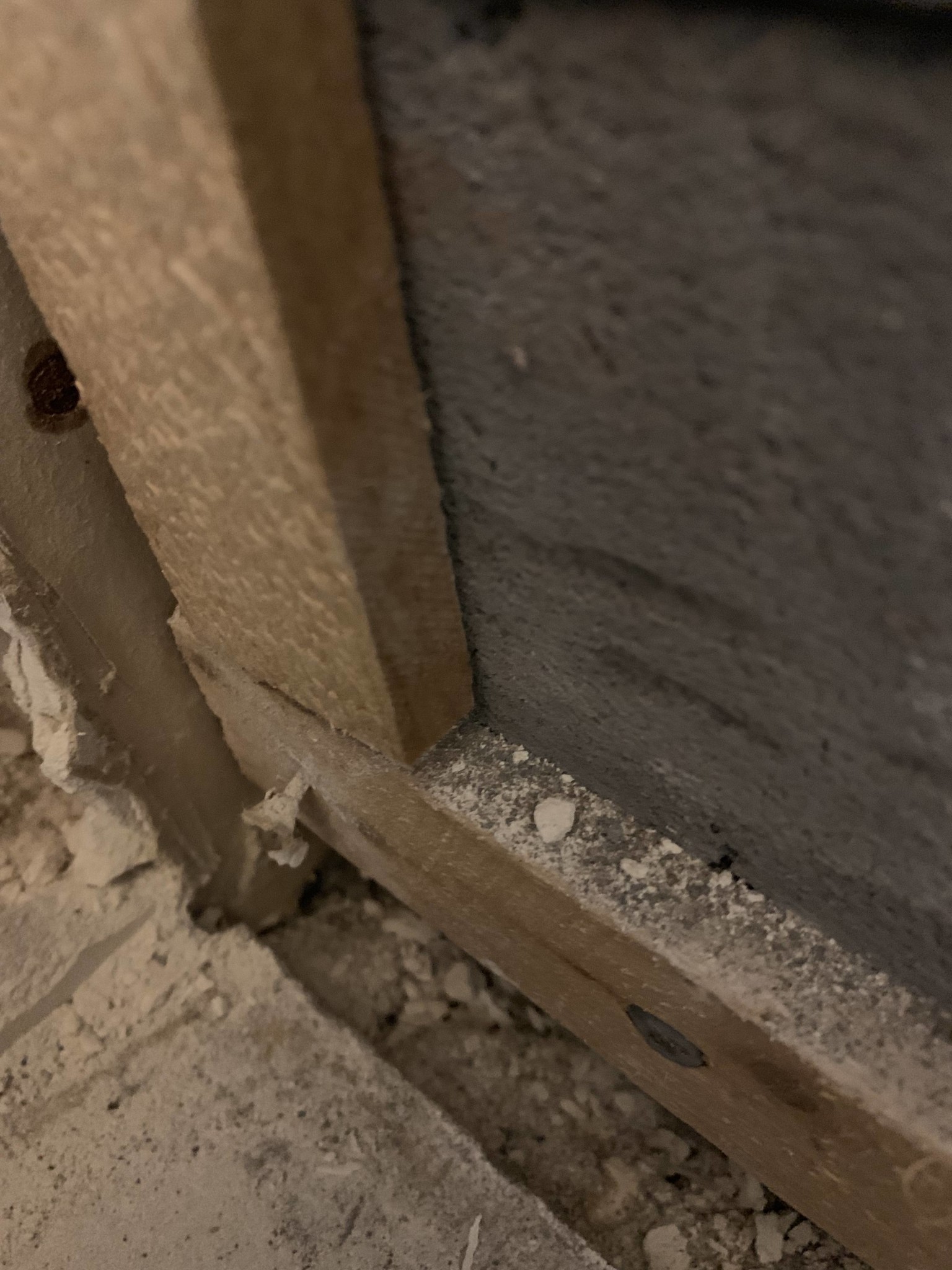
Bone-dry nail batten directly onto the concrete interior wall. Actually considering stopping the demolition, as it has apparently worked for almost 50 years.
Click here to reply
Vi vill skicka notiser för ämnen du bevakar och händelser som berör dig.