

Hello!
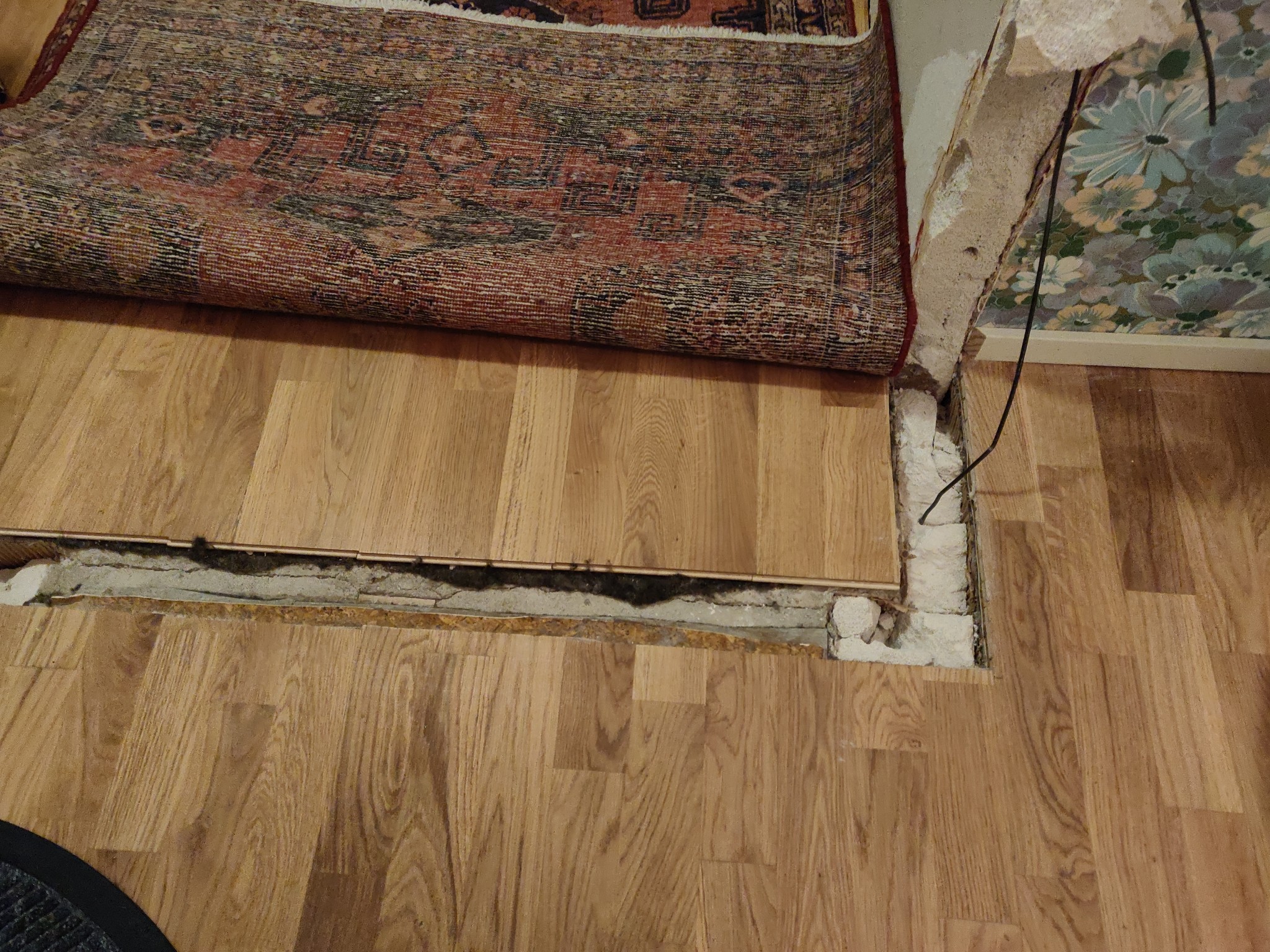
I tore down a lightweight concrete wall to open up the hallway. After a while, the reciprocating saw broke, so I used a hammer and crowbar for the rest. Too much lightweight concrete came off at the corner that was meant to remain, so I need to repair the wall. Now I need help to know what to use for repairing the wall. I have read a bit about this in recent days and believe that gypsum plaster might be suitable. The deepest part is about 90mm that needs filling. I panicked a bit when I realized how much had come off, how much have I messed this up? Gypsum plaster seems to be usable for the wall and ceiling, but what should I use for the floor? We plan to lay tiles on the floor. Are there better alternatives? Thank you in advance.
I tore down a lightweight concrete wall to open up the hallway. After a while, the reciprocating saw broke, so I used a hammer and crowbar for the rest. Too much lightweight concrete came off at the corner that was meant to remain, so I need to repair the wall. Now I need help to know what to use for repairing the wall. I have read a bit about this in recent days and believe that gypsum plaster might be suitable. The deepest part is about 90mm that needs filling. I panicked a bit when I realized how much had come off, how much have I messed this up? Gypsum plaster seems to be usable for the wall and ceiling, but what should I use for the floor? We plan to lay tiles on the floor. Are there better alternatives? Thank you in advance.
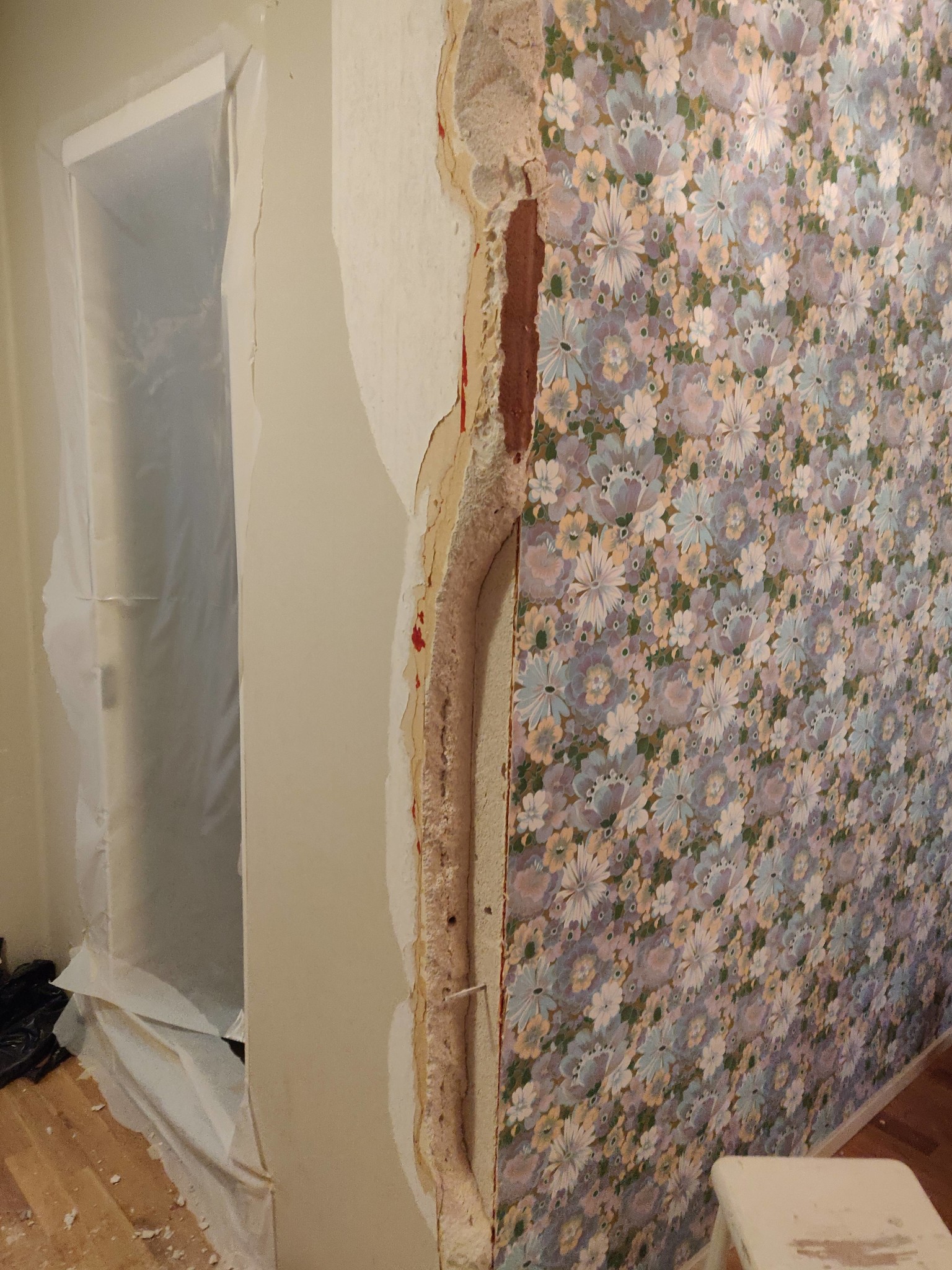
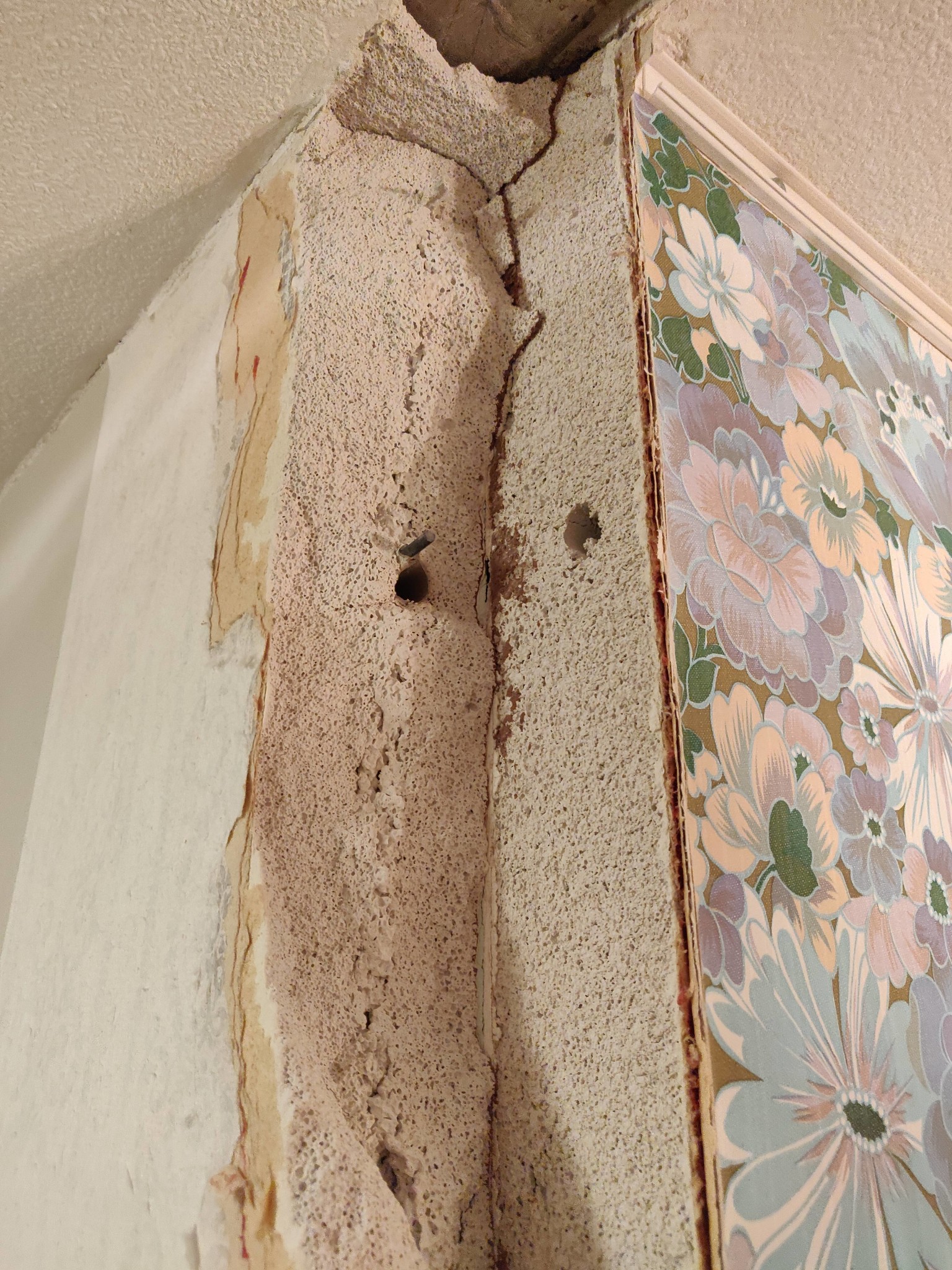
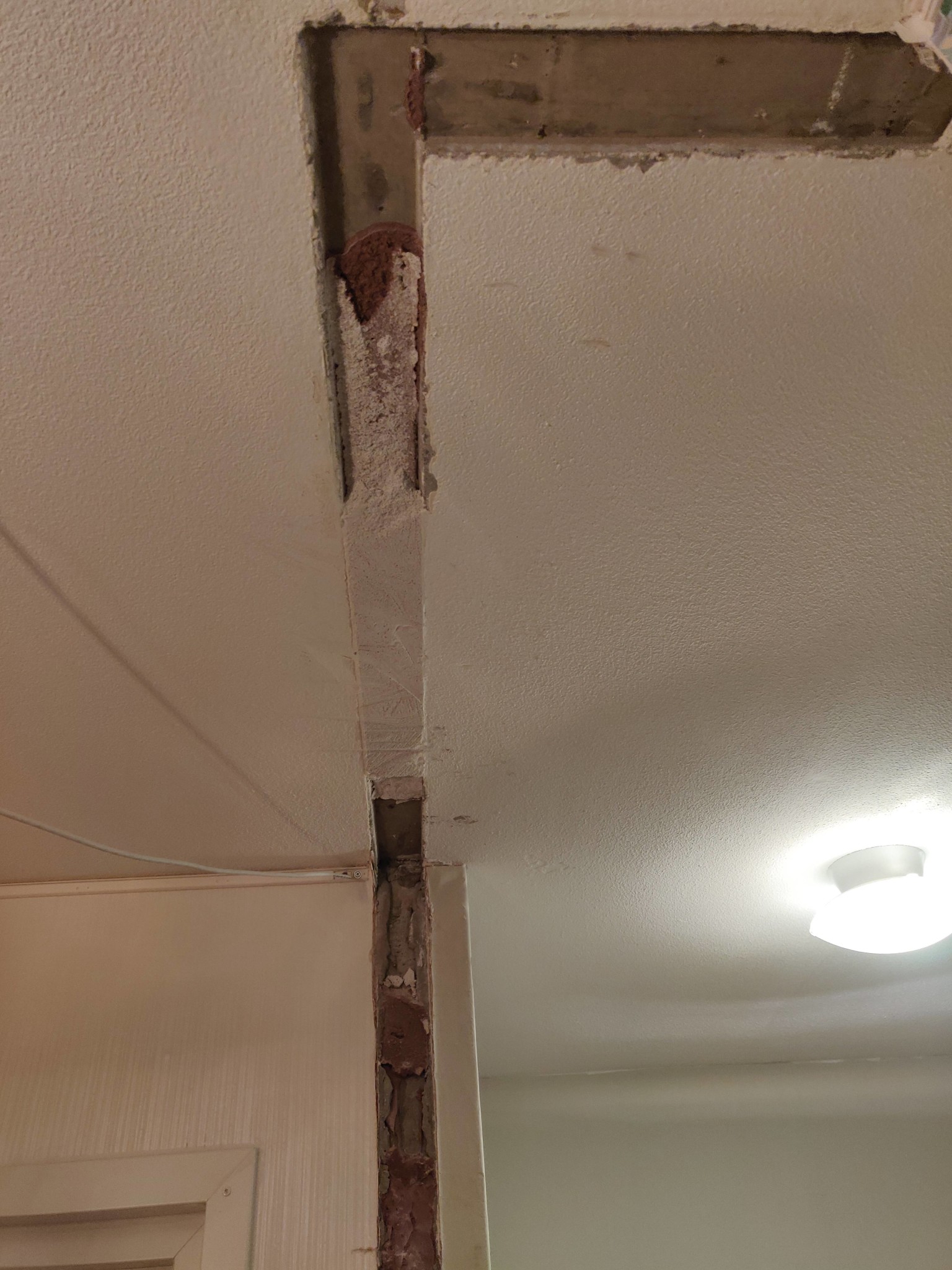
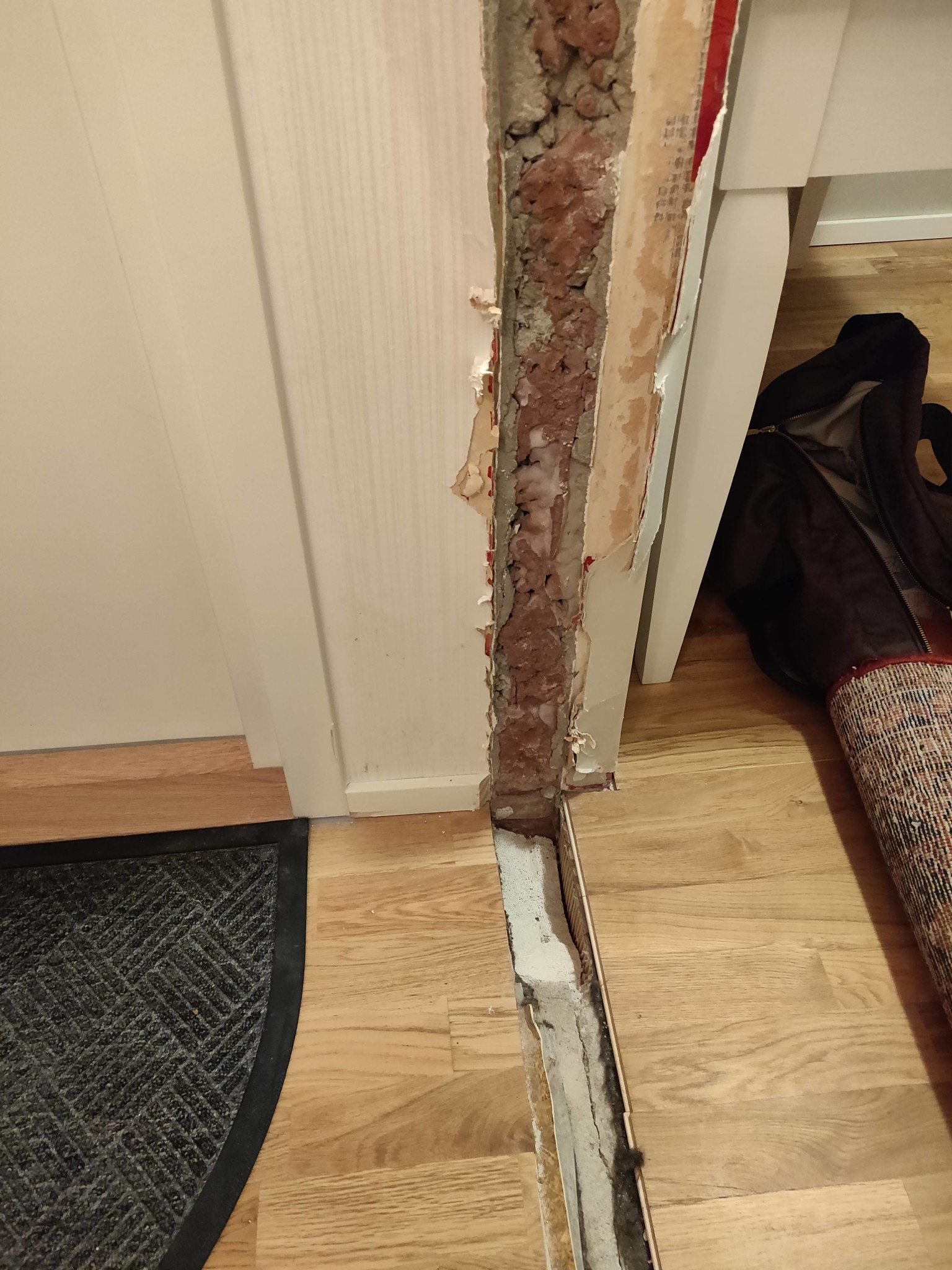
Attaching a few more pictures where it's more visible, but I believe it's lightweight concrete and not plaster.
I've thrown away almost all the material I've removed, and it feels a bit too complicated to put back small pieces?
But if you think it's plaster, it should be okay to use plaster putty and apply it in two layers?
I've thrown away almost all the material I've removed, and it feels a bit too complicated to put back small pieces?
But if you think it's plaster, it should be okay to use plaster putty and apply it in two layers?
Buy a corner profile like this,
https://www.bauhaus.se/hornprofil-for-armering-12x34x2500mm
Then a gypsum mortar type,
https://www.bauhaus.se/smp-gipsputs-25-kg
Fill up the corner with the mortar and place the strip in the mortar so it is plumb and sticks out 2-3mm beyond the extension of existing walls.
See,
When it has hardened a little and the strip is firmly in place, fill up the rest and smooth it out, then you can finish it with regular wall filler.
The ceiling, floor, and other wall can also be filled with gypsum mortar.
If you're inexperienced, mix a little at a time instead of risking ending up with a 25 kg lump of gypsum in a bucket before you know it.
https://www.bauhaus.se/hornprofil-for-armering-12x34x2500mm
Then a gypsum mortar type,
https://www.bauhaus.se/smp-gipsputs-25-kg
Fill up the corner with the mortar and place the strip in the mortar so it is plumb and sticks out 2-3mm beyond the extension of existing walls.
See,
The ceiling, floor, and other wall can also be filled with gypsum mortar.
If you're inexperienced, mix a little at a time instead of risking ending up with a 25 kg lump of gypsum in a bucket before you know it.
Exactly the kind of answer I needed! Thank you so much Per!P Per_Eriksson said:Buy a corner profile like this,
[link]
Then a type of gypsum plaster,
[link]
Fill in the corner with plaster and place the strip in the plaster so it is vertical and protrudes 2-3mm beyond the extension of existing walls.
See, [media]Once it has set a bit and the strip is steady, fill in the rest and smooth it out, then you can fine putty it with regular wall putty.
The ceiling, floor, and other wall can also be filled with gypsum plaster.
If you're inexperienced, mix a little at a time instead of risking ending up with a 25 kg gypsum lump in a bucket unexpectedly.

Regarding the corner, a tip is to cut a piece of plywood or a wider plank and level it in the corner, attach it to one wall, fill the cavity as best as you can, and scrape against the board you mounted. It's nearly impossible to get a good straight corner otherwise. Once the gypsum plaster has set, remove the plank/board and fill any cavities and irregularities on the other side.
Don't forget to use primer before applying gypsum plaster for better adhesion.
Regarding the floor, it's possible to use gypsum plaster even there, provided it's not on-ground slab with rising moisture. The challenge is getting it level with the wooden floor in place. Another product could be self-leveling compound for the channel in the floor.
Don't forget to use primer before applying gypsum plaster for better adhesion.
Regarding the floor, it's possible to use gypsum plaster even there, provided it's not on-ground slab with rising moisture. The challenge is getting it level with the wooden floor in place. Another product could be self-leveling compound for the channel in the floor.
Thanks for the tips. I was thinking of fitting the corner profile and following it, then sanding and puttying it neatly. But if I use the board, I might save myself a lot of dust and effort.
I was planning to use primer, but it's good that you mentioned it.
Regarding the base, I don't know what it looks like, so I'll use self-leveling compound to be on the safe side.
The wooden floor will be removed so it will just be level with the concrete underneath, then I'll lay tiles.
I was planning to use primer, but it's good that you mentioned it.
Regarding the base, I don't know what it looks like, so I'll use self-leveling compound to be on the safe side.
The wooden floor will be removed so it will just be level with the concrete underneath, then I'll lay tiles.
Click here to reply