Hello!
We live in an old railway house from 1878. Generous ceiling height and all the ceilings are in concrete/plaster or whatever you want to call it.
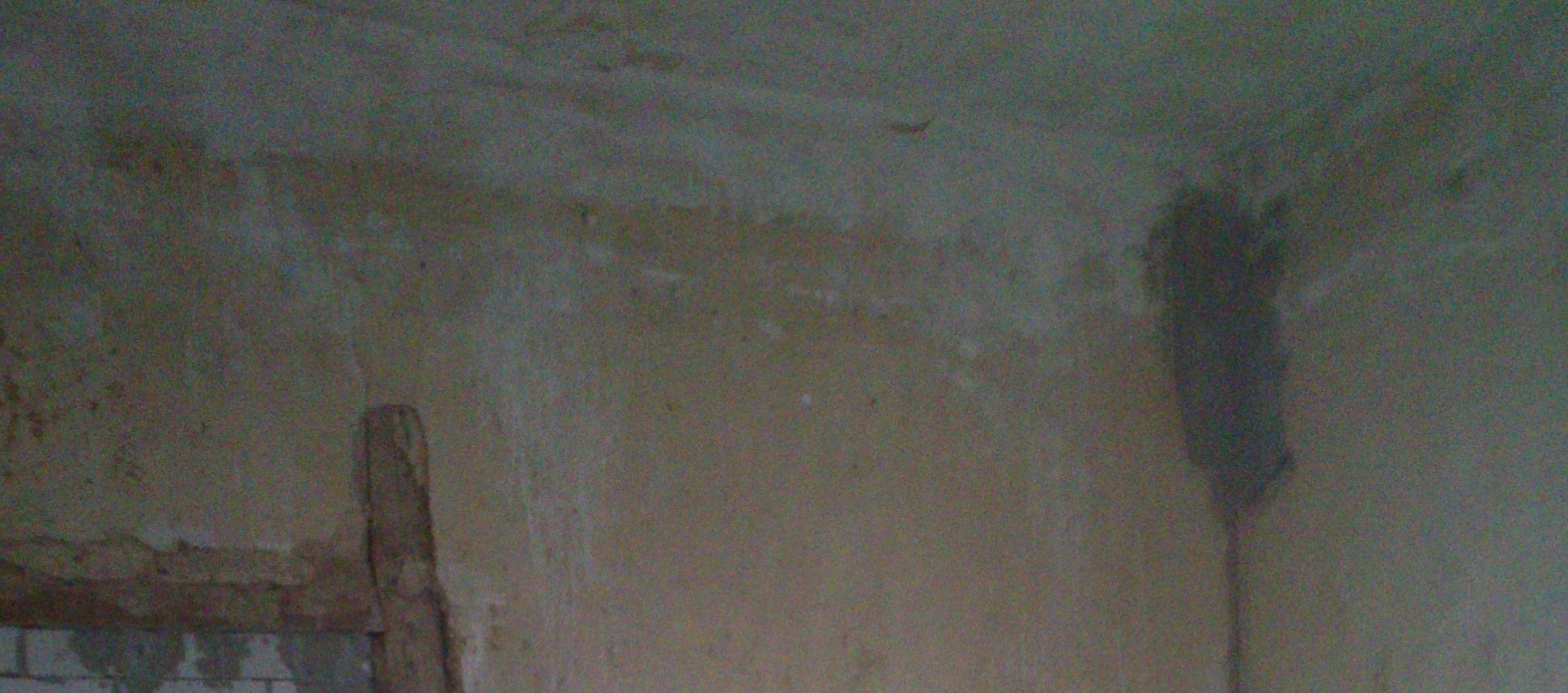
The ceilings have cracked and the paint is peeling. Where it's not original moldings, we have put new ceilings but in the living room, everything is original, including the moldings which are cast and they are very beautiful, hence we don't want to start tearing and install entirely new ones.
I heard from an acquaintance that there is a type of fabric that can be glued over. Not structured weave but a smooth one that you then paint just like with ceiling fabric.
Oh no I wanted it to be super easy hahaha! The concrete itself hasn't cracked, it's just the paint. If you scrape and fill it, do you think you can use the paint fabric on it without it showing through?
Is the plaster on wooden joists or concrete? In either case, the answer is yes. Tear down everything loose, carefully fill with filler, and glue felt. As long as the substrate is even and level, nothing shows through.
I am absolutely not as sure that it's just about spackling and gluing up fabric/microlit. Unfortunately, it’s not that simple.
The reason the ceiling paint is flaking is likely because the ceiling was originally painted with glue paint and later/modern times painted with latex paint without first completely removing the glue paint (difficult).
The weak glue paint can no longer hold thick layers of hard paint and starts to peel off due to aging.
It will not get better by using latex-based filler, the same thing will continue to happen, and it will further peel off including the newly glued microlit.
Unfortunately, it's a big job to make such ceilings nice again, and it requires scraping off all the paint, which usually works pretty well with a thin spatula that can get between the layers of paint. Then you need to wash away the glue paint residues and prime with a good alkyd oil paint before you can install any microlit. If you're lucky, the ceiling will be good enough that you only need to fix a few cracks and then just paint it without microlit.
Microlit does not hide imperfections but prevents cracking.
Take a piece of paint to the local paint dealer and he will analyze it for you. My ceiling was not painted with limfärg but still cracked because, like other plastered timber joists, it moved. I did not use microlit but a similar cellulose-based alternative. Now it’s good.
Take a piece of paint to the local paint shop, and they'll analyze it for you. My ceiling wasn't painted with distemper but still cracked because, like other re-rendered wooden beam frameworks, it moved. I didn't use microlit, but a similar cellulose-based alternative. Now it's fine.
TS ceiling from 1878 is peeling, which is a bit different from cracking. Cracks in the plaster can very well occur due to the framework shifting. But the peeling/flaking of the paint is because the underlying old paint is detaching from the base, which happens when a weakly bound layer of, for example, glue or lime paint releases.
You don't need to go into the paint shop; it's enough to wet the original paint on the ceiling under a flake and see if it chalks, i.e., dissolves or darkens with water.
Analyzing the flake is quite pointless because it's probably of a more modern paint type. Possibly if there is a bit of the original paint left on the back, but you can better see that on the ceiling in that case.
The ceiling from 1878 is peeling, which is a bit different from it cracking. Cracks in the plaster can very well occur because the joists move. But the paint peeling/flaking is because the underlying old paint is coming off the substrate, which happens when a weakly bonded layer like glue or lime paint comes off.
You don't need to go into the paint store; it's enough to wet the original paint on the ceiling under a flake and see if it chalks, i.e., dissolves or darkens from the water.
Analyzing the flake is quite pointless because it's probably of a more modern paint type. Possibly, if there were a bit of the original paint left on the backside, but you would see that better on the ceiling in such a case.
Just as you write, there haven't been cracks; it's just peeled :/ However, it's very little in the room I'm writing about, it's worse in 2 of the other rooms that will also be renovated eventually... we're talking about real flakes there! But there are certainly not several layers of paint. And yes, it's timber beams It looks great to reveal them, as we did in one bedroom
But at the same time, I can't say that it's peeling because no pieces have come off, but you can see that it's on the way, if you put it that way
Had exactly the same problem, old lime paint that was peeling and cracking along some beams.
Started ambitiously with a spatula to chip away the top (bottom) layer. Gave up after 50 m² and used a milling disc on the angle grinder for the rest. Ceiling height is 3.20m, so the working position was not optimal.
After that, we applied fiberglass fabric and plastered the entire ceiling with lime plaster again. If the ceilings are original, you probably do not have a cement-based plaster.
Our result turned out well=)
before
I have been taught by the local paint dealer that you should insulate the old glue paint with diluted linseed oil before applying the modern "plastic paint". If not, there will be surface tensions and flaking as described above. This procedure has worked excellently in a house from 1910 that was renovated 5-6 years ago.
Click here to reply
Vi vill skicka notiser för ämnen du bevakar och händelser som berör dig.



 It looks great to reveal them, as we did in one bedroom