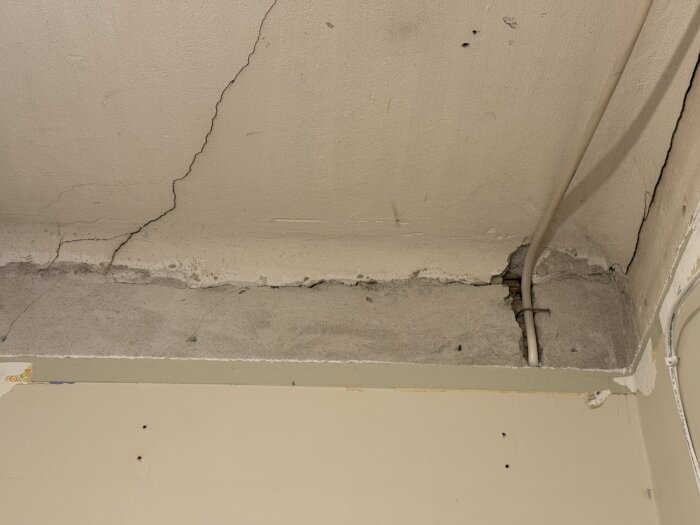
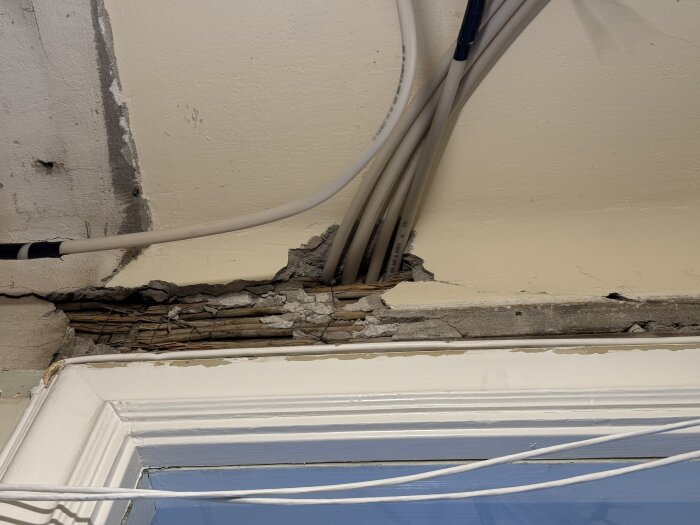
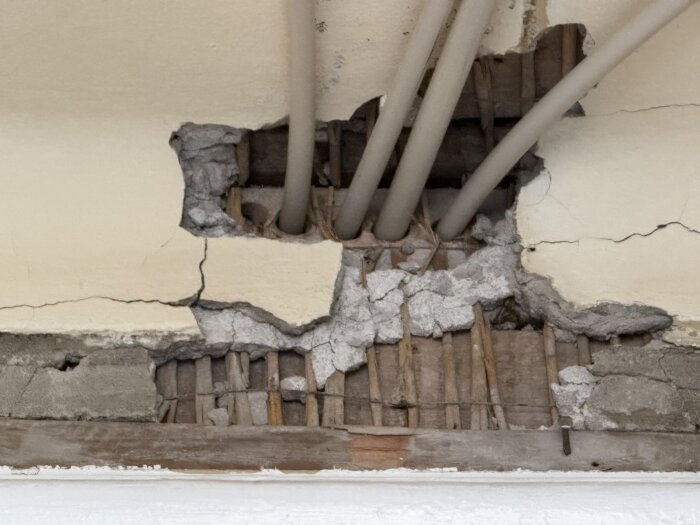
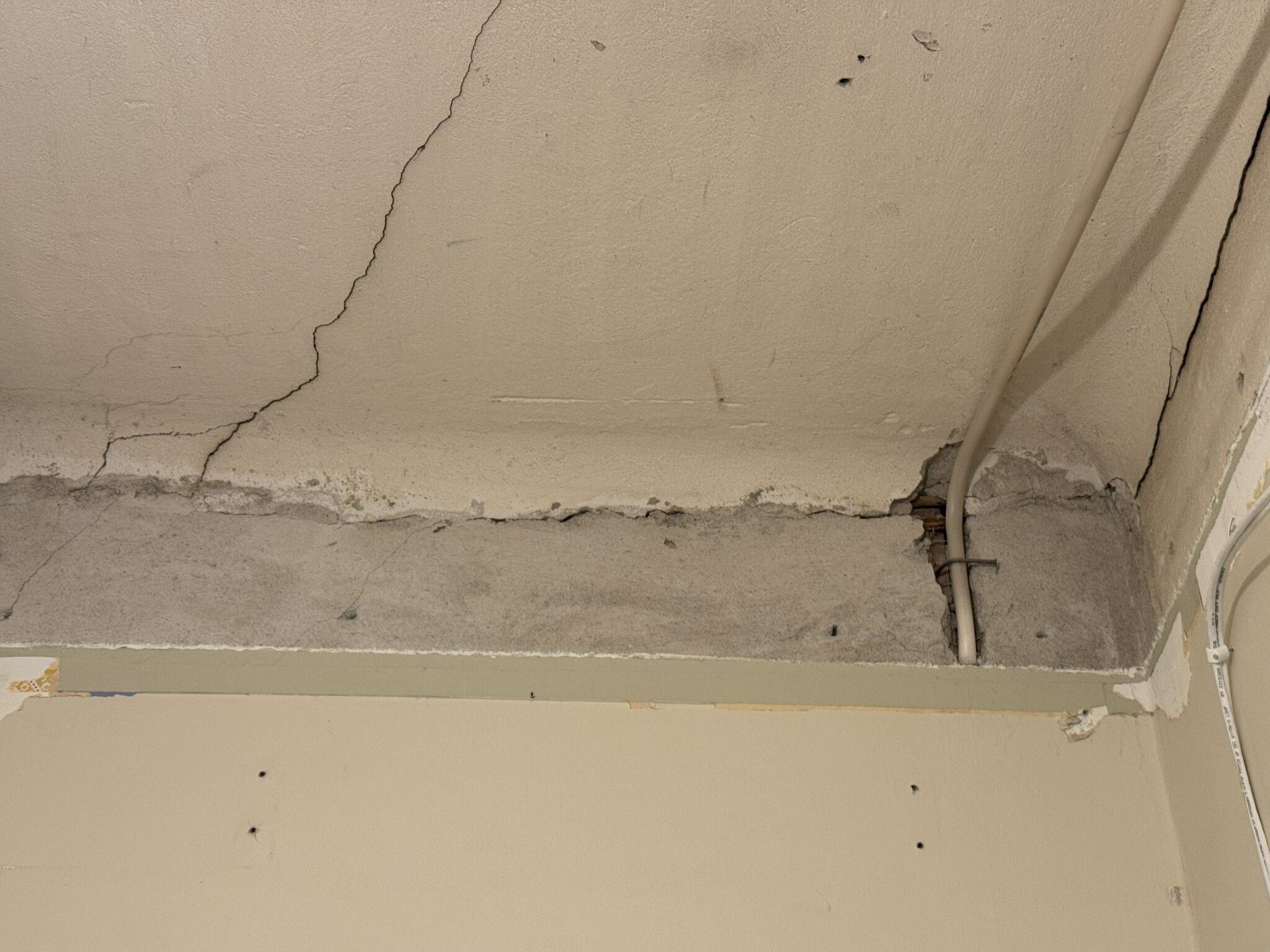
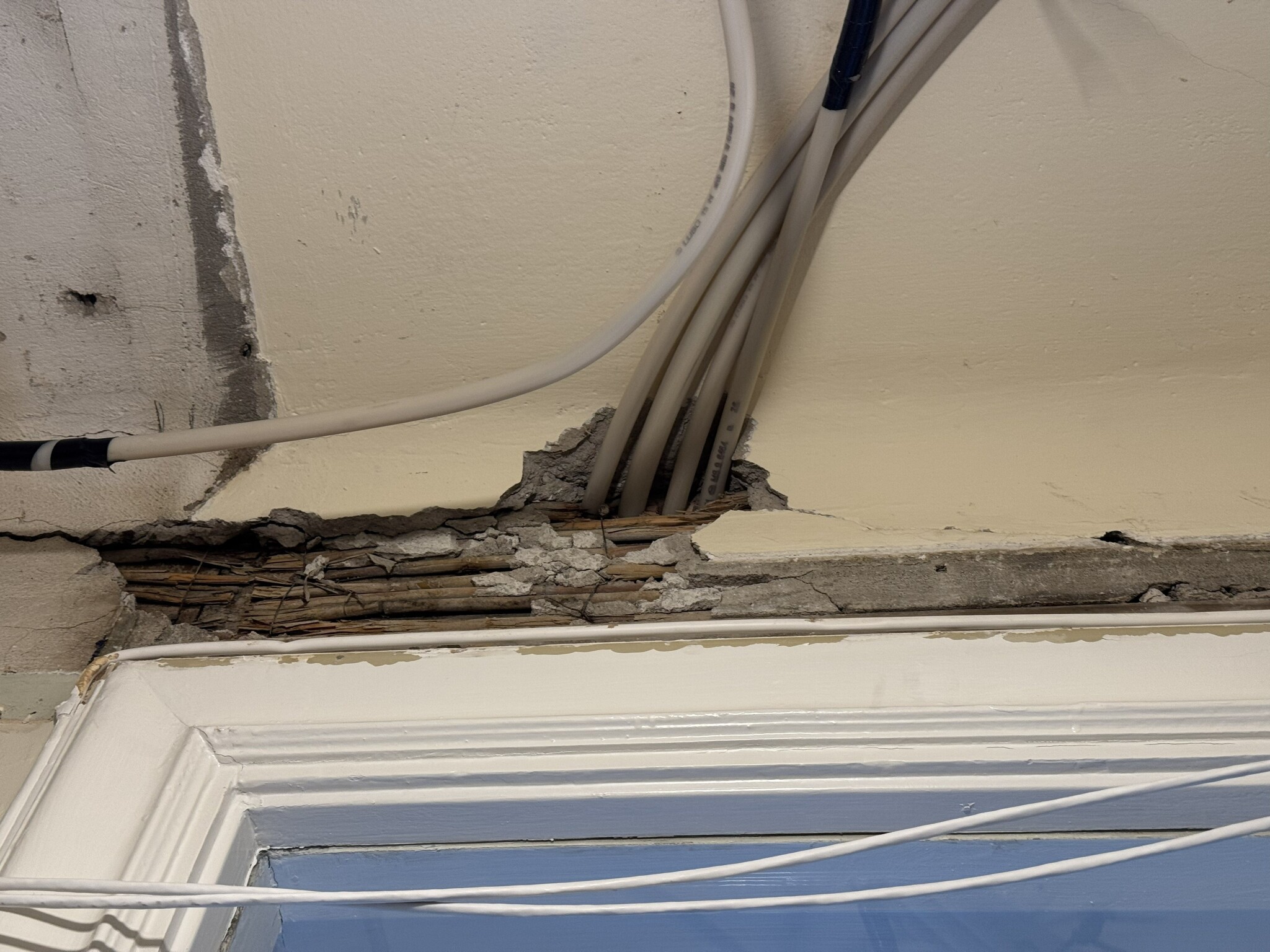
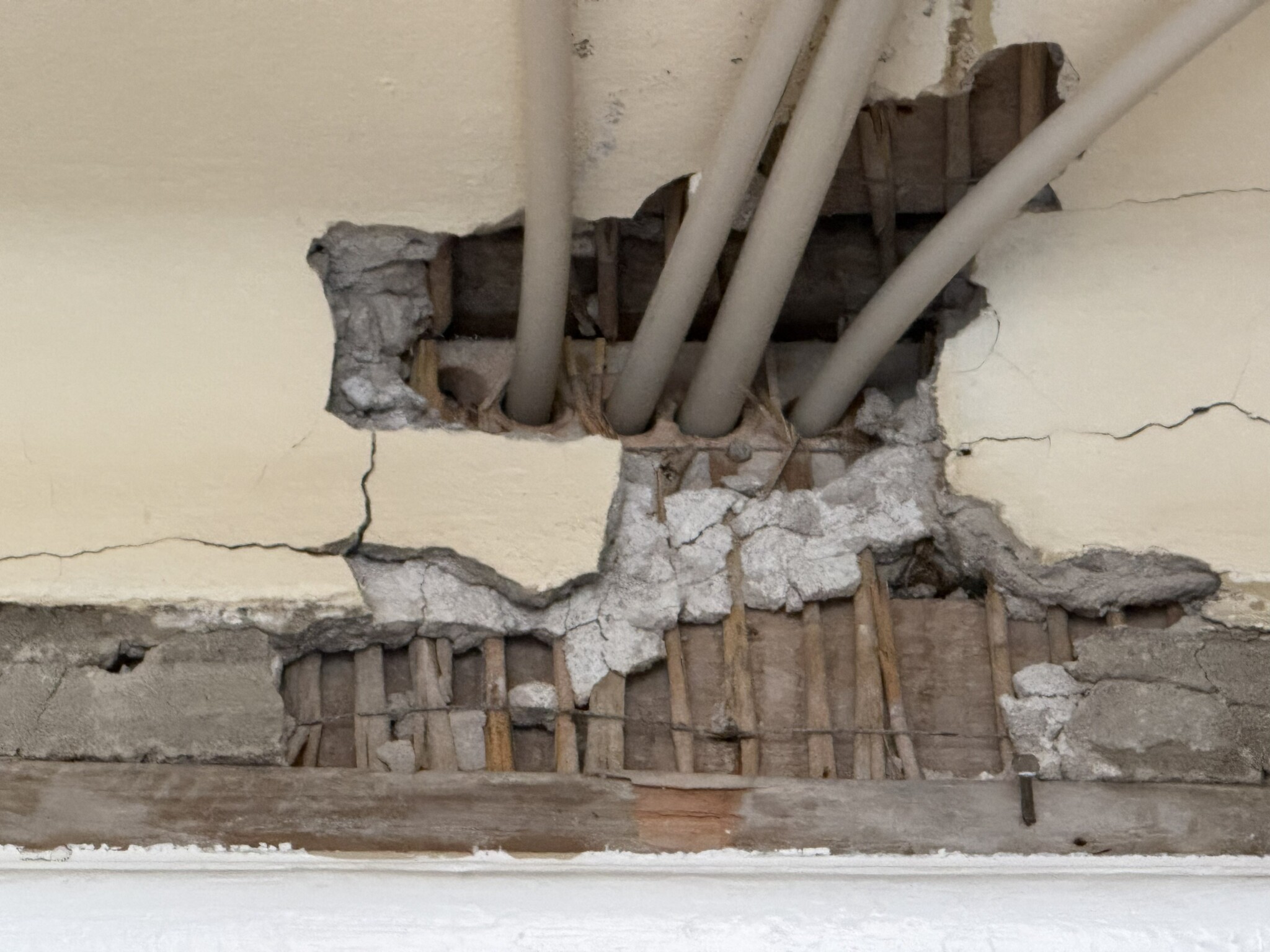
I live in an apartment where the building was constructed in 1916. At some point, likely in the 1980s-1990s, new ceilings made of plasterboard were installed 20 cm below the original ceiling. This was likely done to facilitate the installation of new electrical wiring. We now want to try to restore the ceiling height but, of course, we find lots of major damage in the ceiling, attaching some examples. We need suggestions on how, and with what, this can be repaired. After discussing with an electrician, the plan is to run the wiring in new grooves cut into the ceiling. We understand that restoring the ceiling is overall a huge job but wonder if it is even feasible. We have also understood that there can be issues when painting old ceilings with modern paints. Can anyone tell us more?
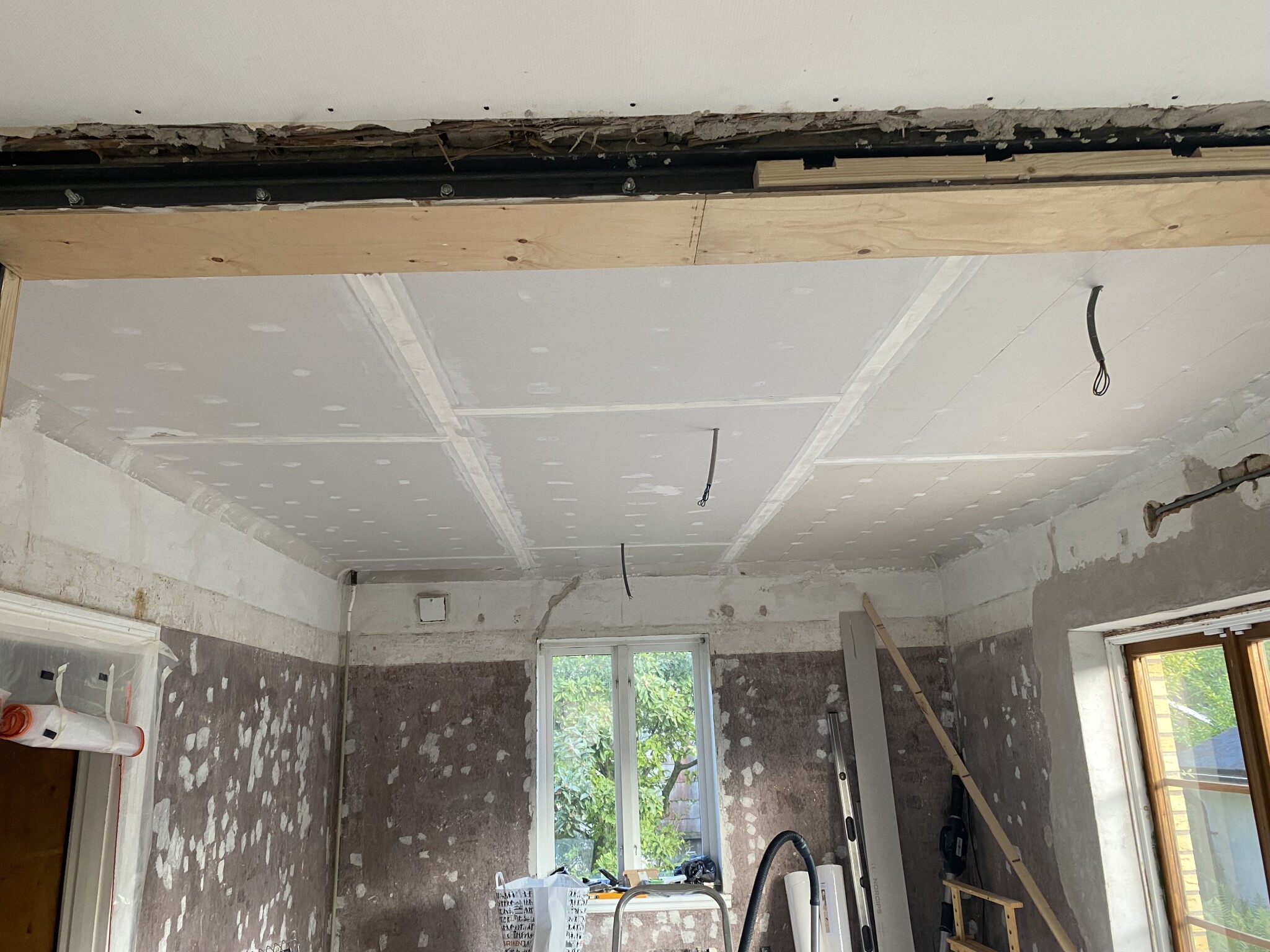
We had the exact same situation where we removed a dropped ceiling and found damaged plaster underneath. We placed gypsum boards directly against the plaster and repaired the gap that formed between the gypsum and the cornice with gypsum mortar. Then we sanded with a rolled-up sleeping mat with sandpaper around it.
If the plaster is generally in good condition, it might be possible to fill out with plaster after repairing larger holes. Or what does the forum think?
I have repaired 2 roofs that were similarly damaged. It's likely lime plaster, which is quite difficult to mix and make pliable enough to apply, get it to adhere, and smooth in one go.
I cheated and mixed in some gypsum plaster, so far it has held. If you use ONLY gypsum plaster, it feels like the gypsum is very different and I'm unsure how well the "joint" will turn out.
Applying gypsum is probably "easier"—I would still repair the plaster decently first, as I believe the plaster acts very well as a seal against drafts, etc.
You also need to solve all the electrical wiring they've done somehow. One way is to chisel away the plaster in a trench as wide as the pipes so you can lay the pipes in the plaster, apply plaster over the pipes, and then place gypsum on top.
If the house moves a lot, I think plaster works better than gypsum.
In my basement, I have a room with a plastered ceiling where I installed gypsum, after first repairing the plaster. Then I used the thin glass fiber reinforced version, as it's "easier" and especially thinner (I didn't want to lose much ceiling height as it's exactly 2m).
I don't believe in "just" using filler; filler probably won't work on such thick sections. As I understand it, filler dries, while gypsum and lime plaster "sets."
Click here to reply
Vi vill skicka notiser för ämnen du bevakar och händelser som berör dig.