
1,533 views ·
10 replies
2k views
10 replies
Repair mortar / wall from underneath
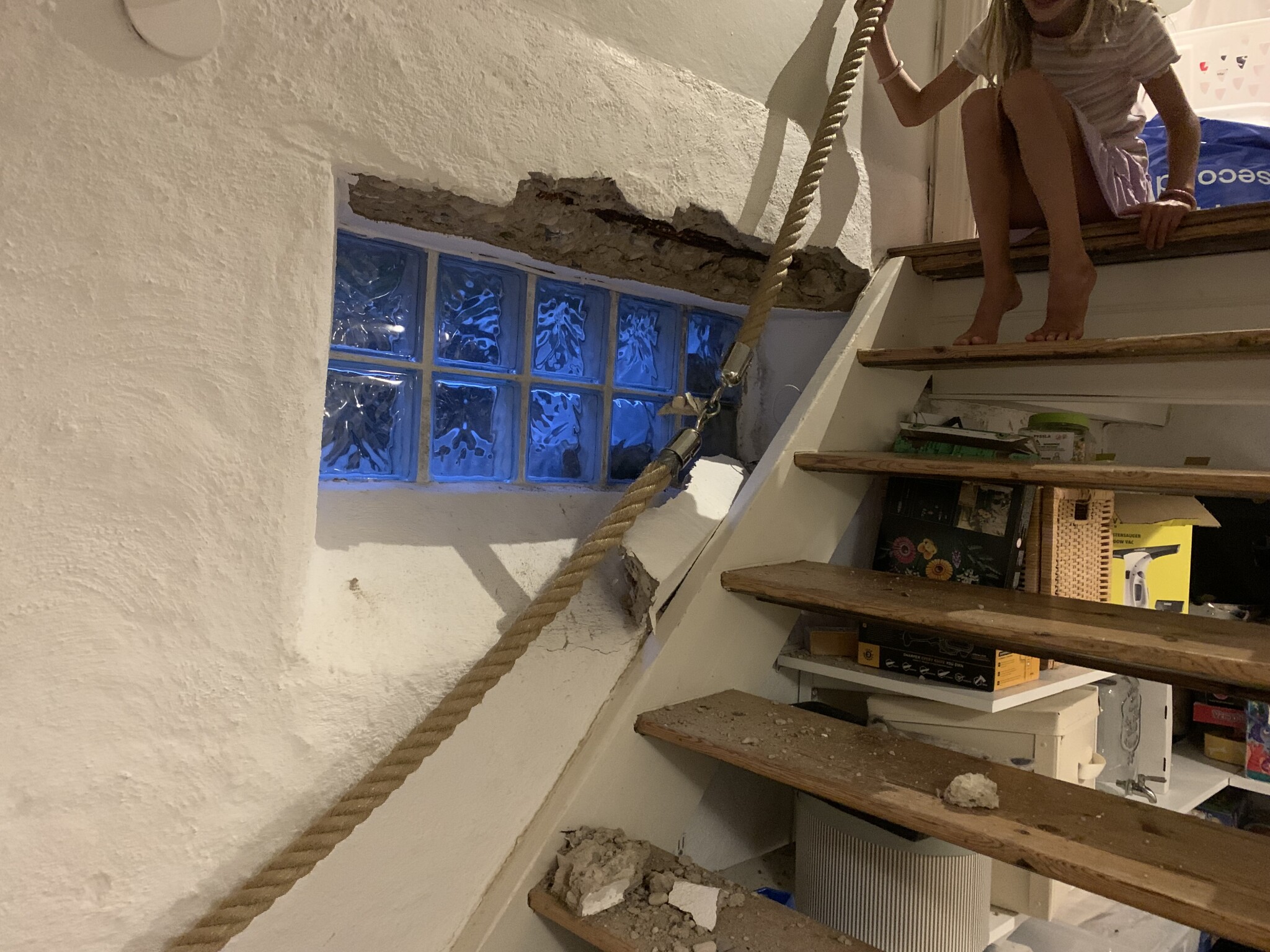
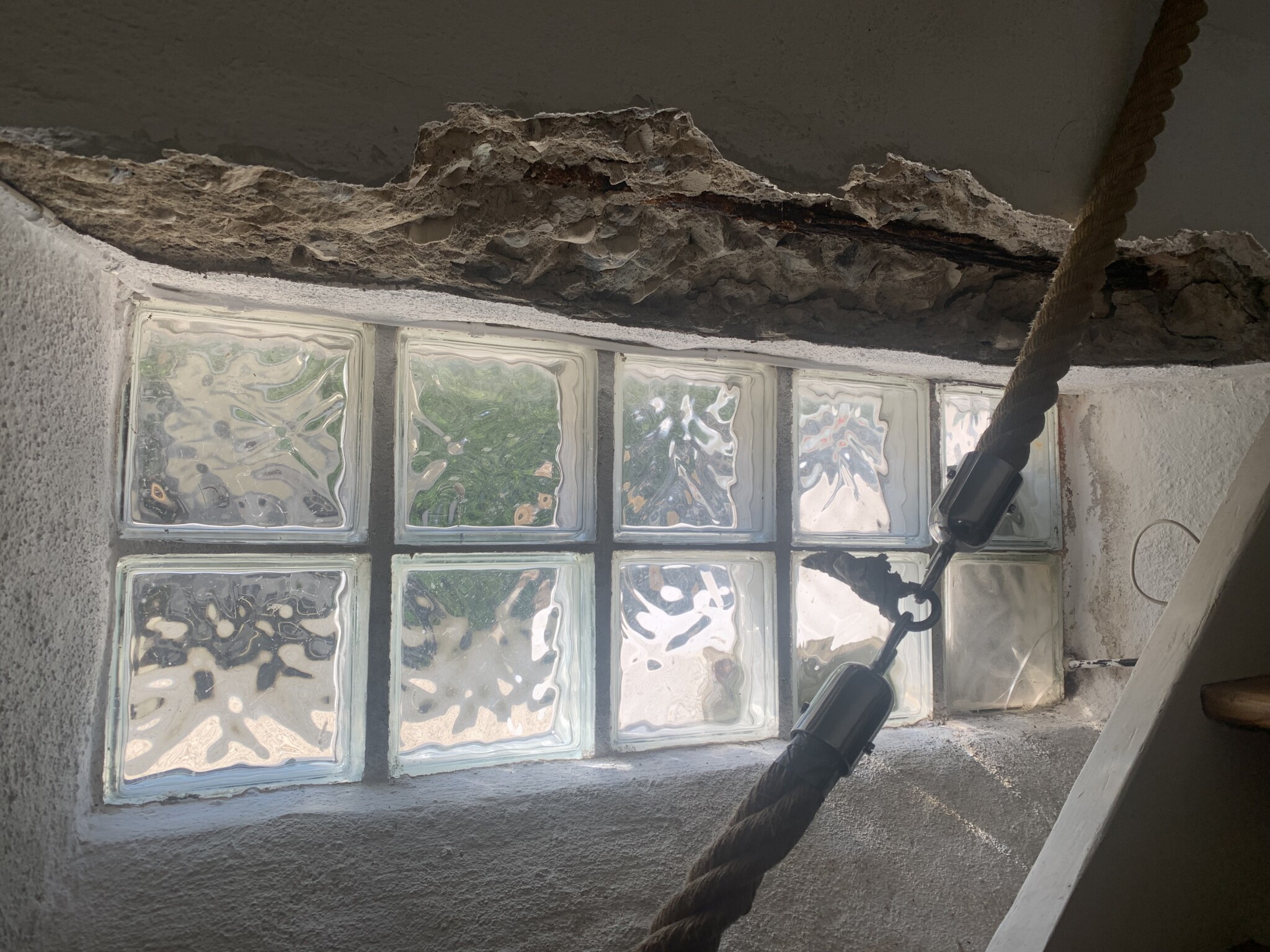
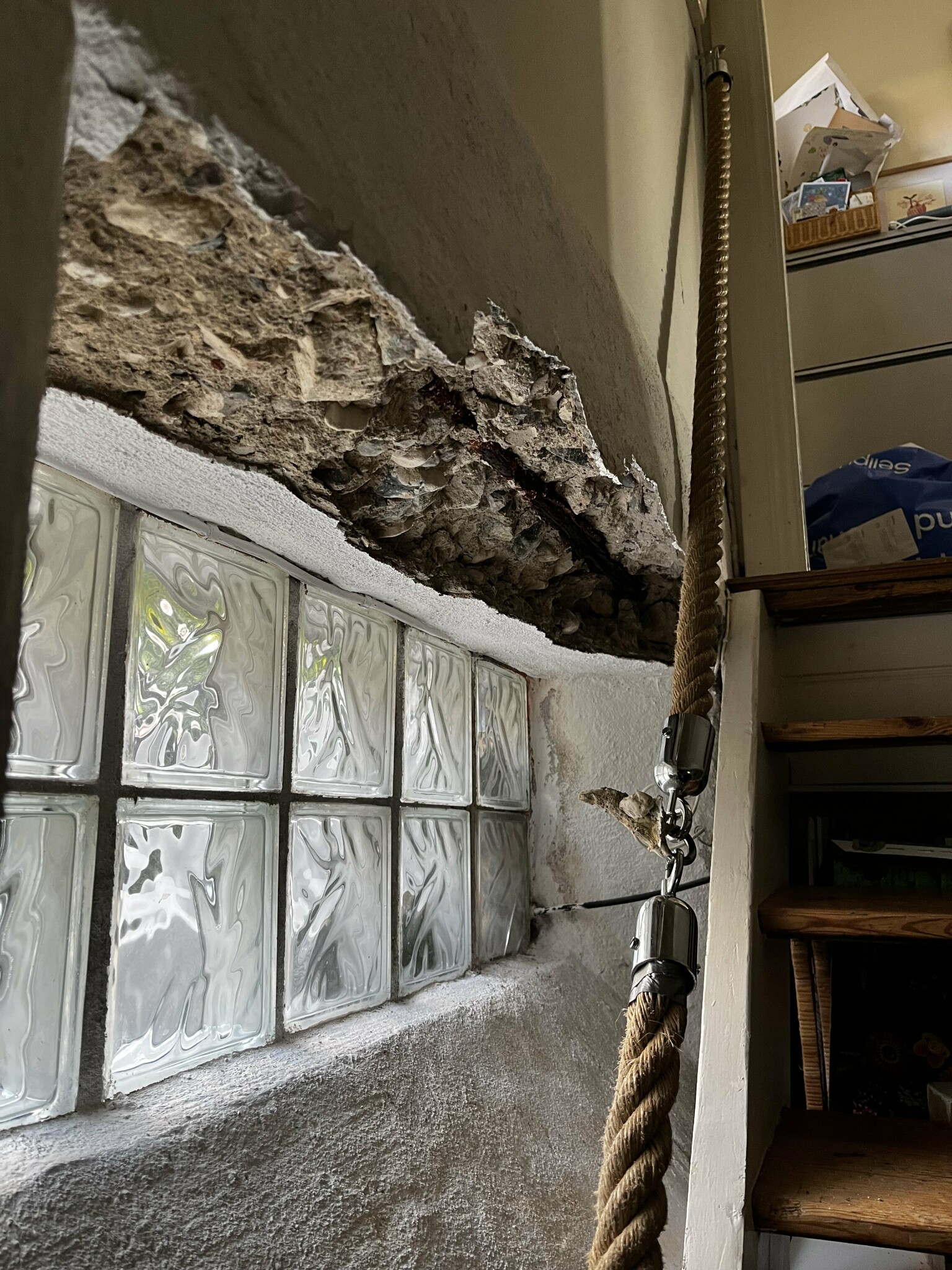
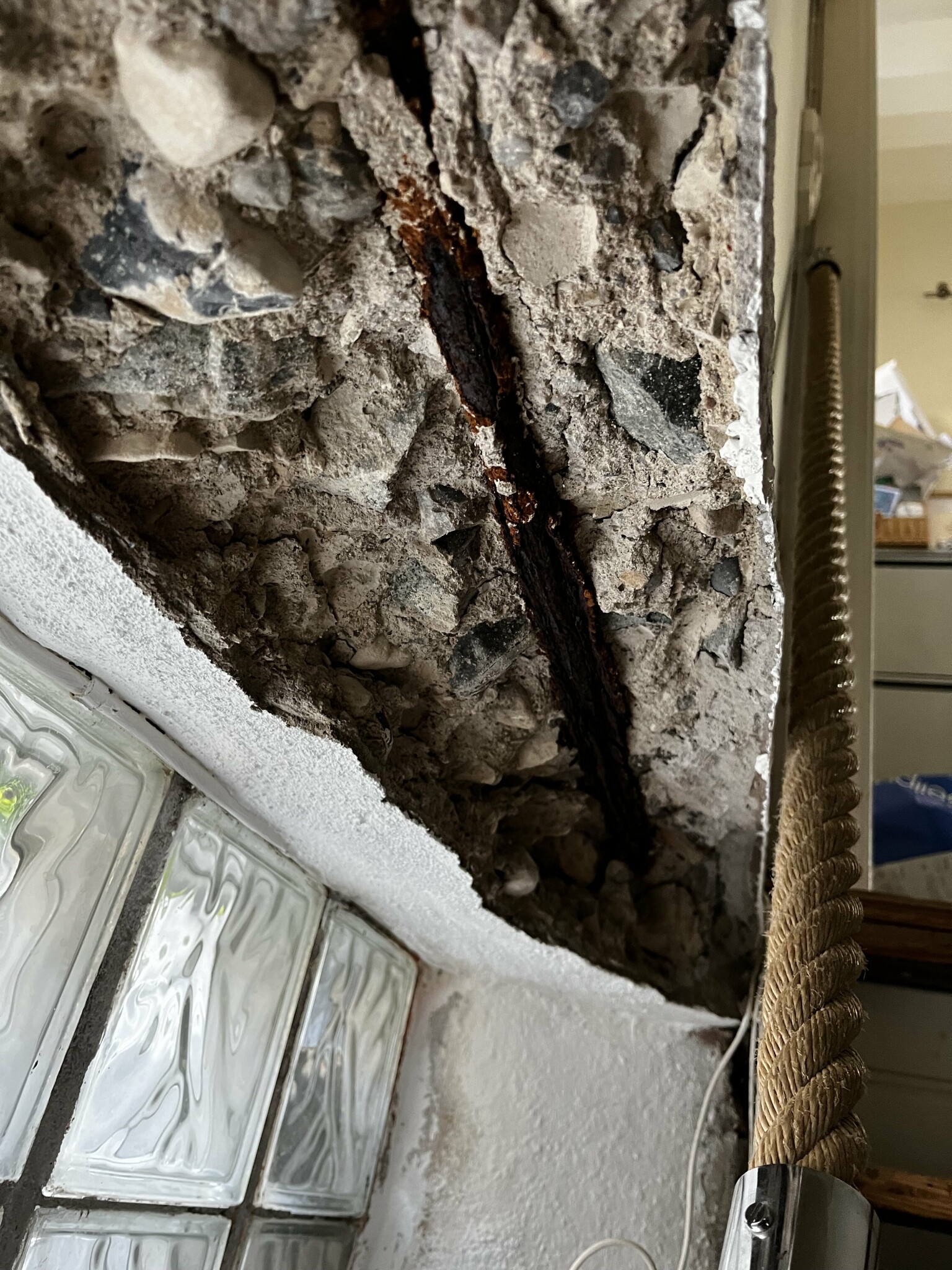
That looks like a spalling damage, meaning the beam has started to rust, increased in volume, and burst the concrete around the beam. There must be penetrating moisture in the wall that has caused the beam to start rusting.
There are different ways to proceed. But simply applying new mortar will only hide the damage for a while before the "repair" also falls off. In the best case, it is possible to remove the cause of the wall's moisture, remove all loose concrete, clean and check that the beam is not damaged, and cast the beam again with repair mortar.
Addition, upon closer inspection, it seems to be a rebar and not a beam that lies there.
There are different ways to proceed. But simply applying new mortar will only hide the damage for a while before the "repair" also falls off. In the best case, it is possible to remove the cause of the wall's moisture, remove all loose concrete, clean and check that the beam is not damaged, and cast the beam again with repair mortar.
Addition, upon closer inspection, it seems to be a rebar and not a beam that lies there.
Thanks! That could be right. The last straw was when a drunk and heavy friend held onto the rope attached to the wall while going down the stairs 😂B Boxer63 said:That looks like a spalling damage, i.e., the beam has started to rust, increased in volume, and burst the concrete off the beam.
There must be penetrating moisture in the wall causing the beam to rust.
There are different ways to proceed. But just applying new grout will only hide the damage for a while before the "repair" also falls off. At best, it is possible to remove the cause of the dampness in the wall, remove all loose concrete, clean, and check that the beam is not damaged, then recast the beam with repair grout.
Additionally, upon closer inspection, it appears to be a rebar and not a beam lying there.

Yes, that doesn't look good. Additionally, it's a very interesting concrete mix with extreme amounts of small stones. The strength of concrete greatly depends on the composition of the aggregate, and I would guess that it couldn't get much worse than that.B Boxer63 said:
Actually, one should probably build a form, chisel out some of the old, reinforce properly, and cast a new "arch" over the window with expanding concrete.

Düsseldorff
Building conservationist
· Bromma
· 3 254 posts
Düsseldorff
Building conservationist
- Bromma
- 3,254 posts
Do you have pictures of the outside so we can see the beam and the facade above?Monik84 said:
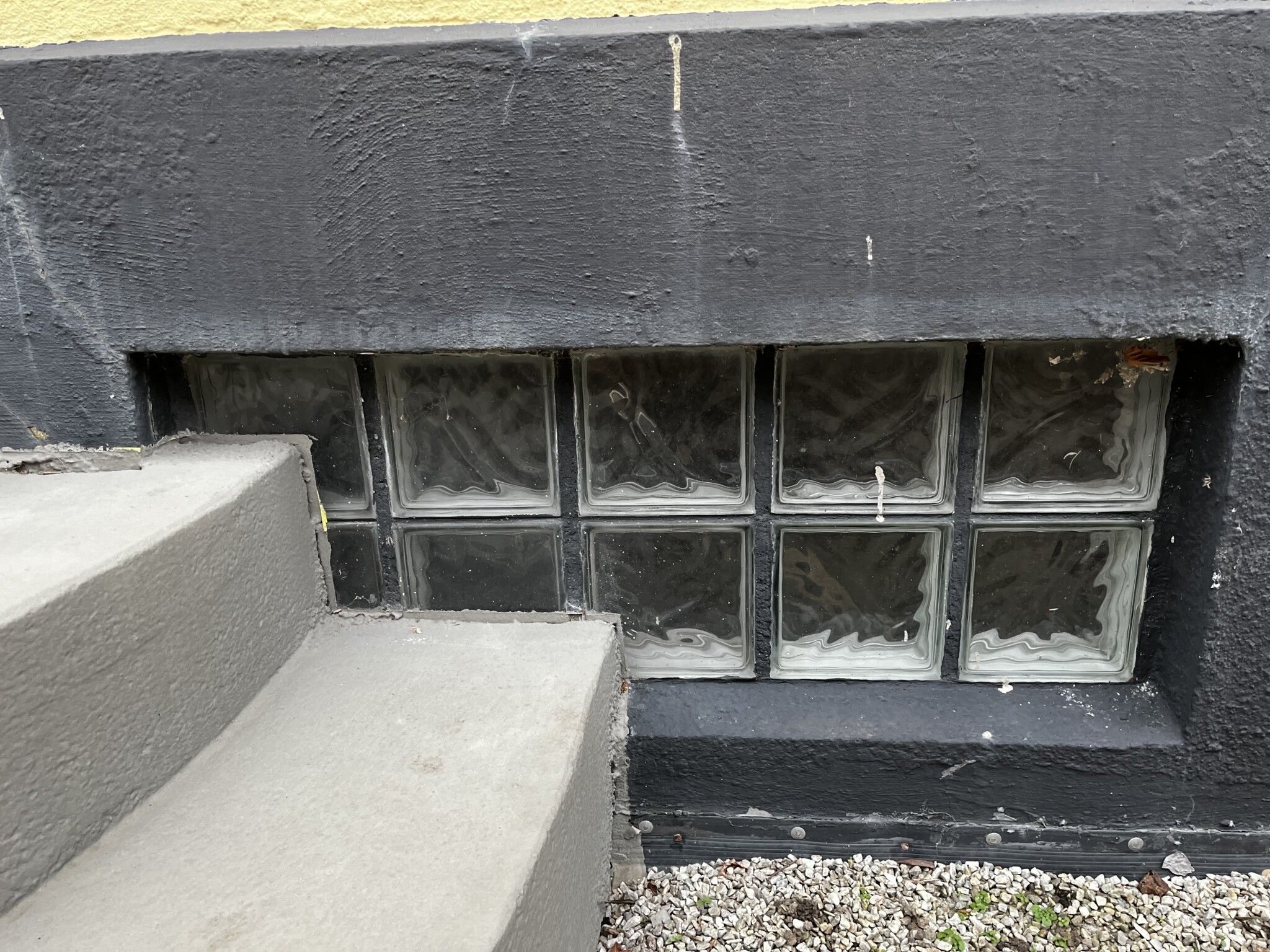


If you want to repair, you have to prop up a board from underneath and throw in adequately mixed coarse concrete from the side and press it in. Before you do that, you can apply loosely mixed (like porridge) concrete with a large brush on the rough concrete surface for better grip.
When the concrete has set after a couple of hours, remove the board and work on the surface. For example, fill in any holes that have formed because you didn't get the concrete between the board and the rough concrete surface, or remove any excess, for instance, if the board was set too low.
I agree that the rebar has rust problems that should be addressed. It is probably because the wall absorbs water from the stairs outside. This should be remedied by altering the stairs so that water runs away from the foundation.
When the concrete has set after a couple of hours, remove the board and work on the surface. For example, fill in any holes that have formed because you didn't get the concrete between the board and the rough concrete surface, or remove any excess, for instance, if the board was set too low.
I agree that the rebar has rust problems that should be addressed. It is probably because the wall absorbs water from the stairs outside. This should be remedied by altering the stairs so that water runs away from the foundation.
Click here to reply