My partner and I have recently bought and moved into a Västerbottensgård built in 1928. In 1949, a basement was dug out (by hand, what a job). The basement is unfinished, and the walls are entirely plastered with what I assume is lime plaster (it's quite light and can be crumbled with fingers) and painted with lime wash. Some rooms are painted with some plastic paint, and in those places, the plaster has indeed started to come loose.
In a room that the previous owners used as a hobby room/workshop, we plan to use as a home gym. The room has also been used as both wood and potato storage, so the walls were really dirty (dirt and the like). To tackle that, I went at it with the remediation grinder that I built according to a thread here on the forum, so now the walls are free from any coating.
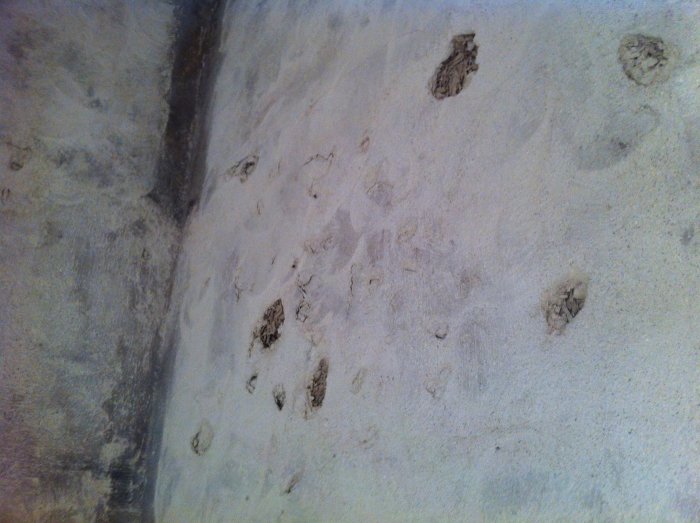
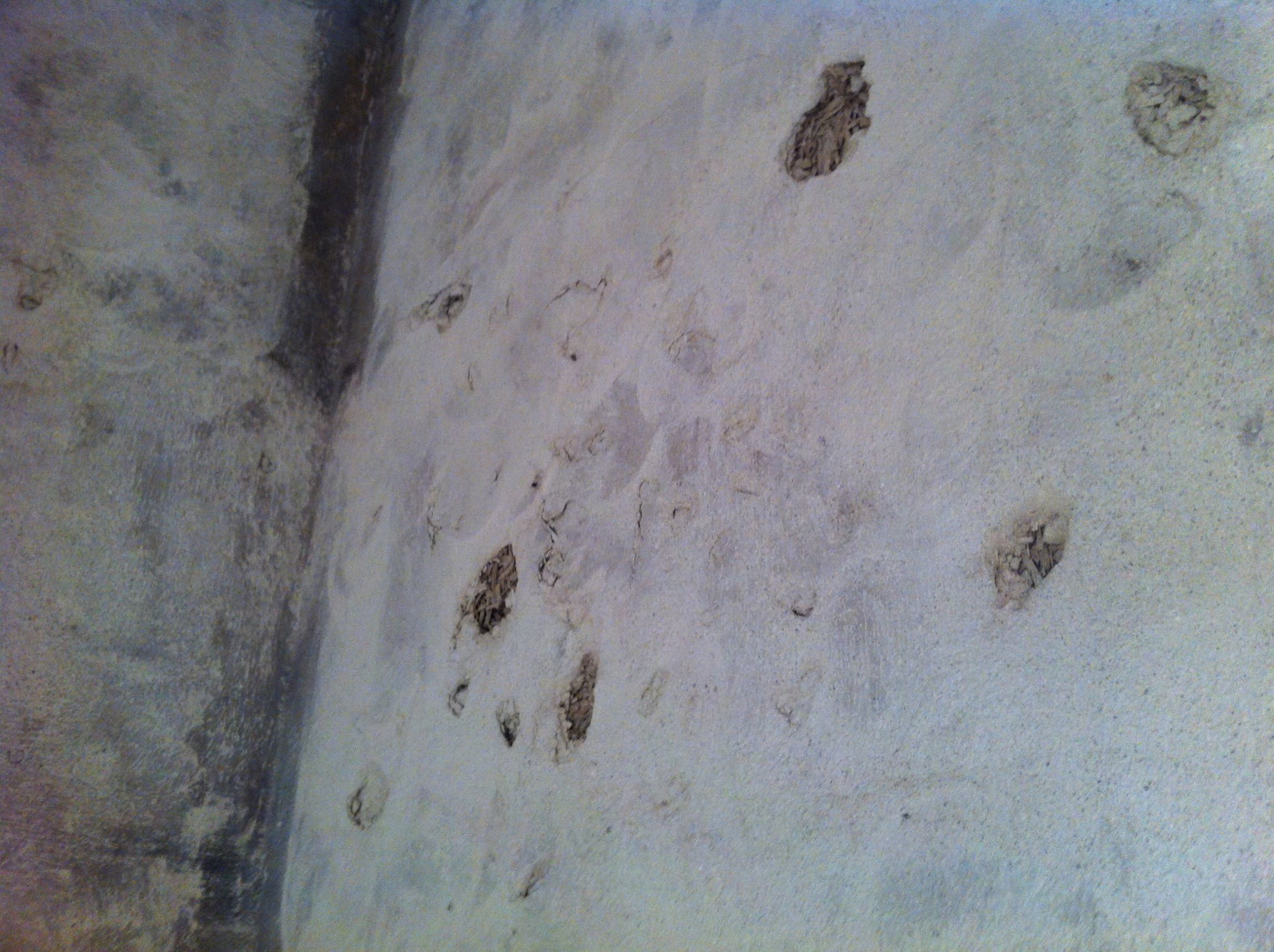
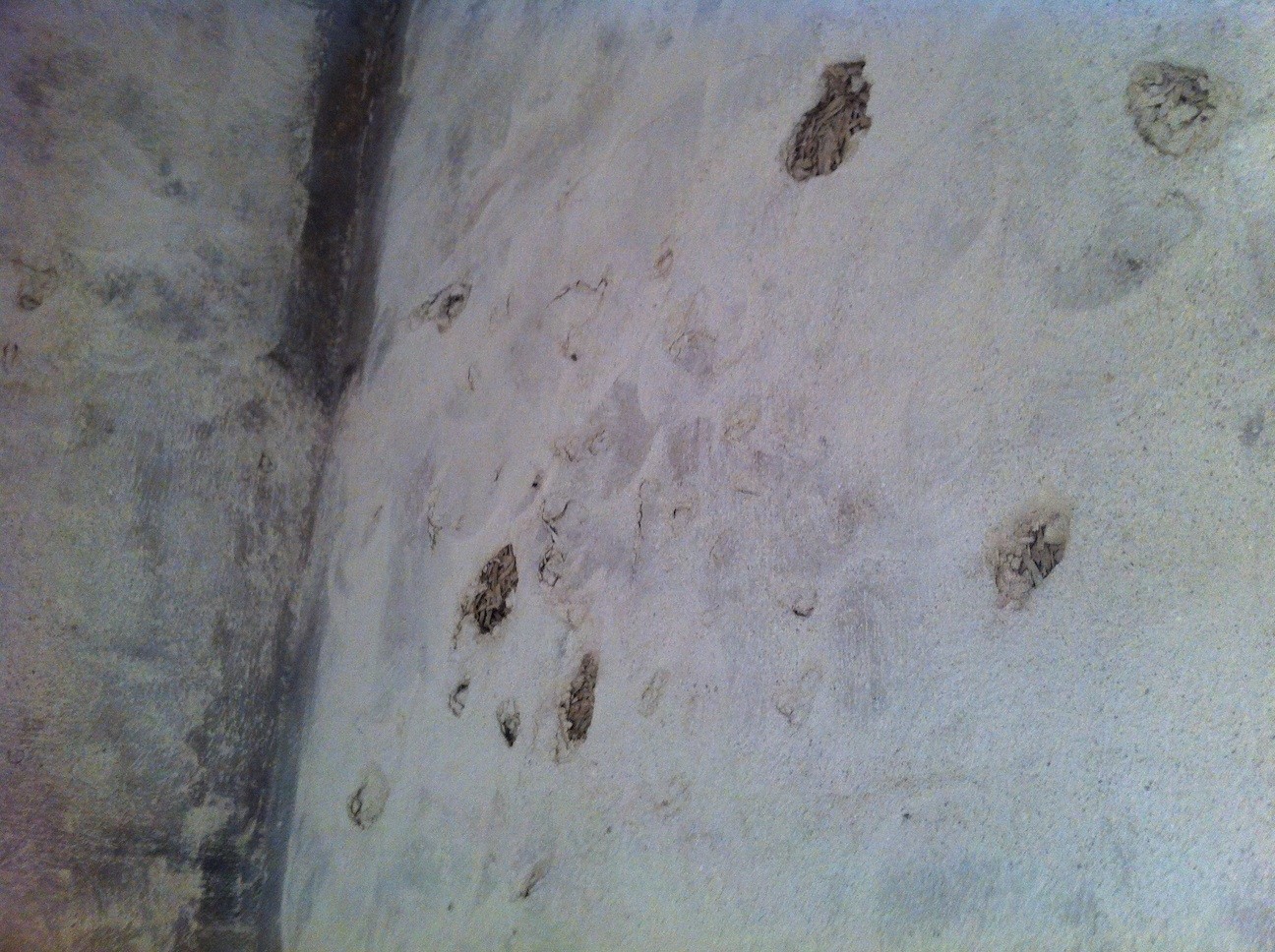
Just under a meter from the floor and up towards the ceiling, it seems some material that I assume is träullit was used as insulation/plaster carrier. In some spots, there are holes in the centimeter-thick plaster layer, which I believe are due more to rough treatment than moisture (see image). The holes as a whole can be 2-3 cm deep as some of the träull has come loose in some places.
I’ve read virtually all the threads about lime plaster that I could find, and most seem to agree that replastering should be done with lime plaster. I was thinking a thin layer of Weber Cal 142 and then a layer of Cal 144 on top of that.
However, I am a bit unsure whether it is possible to repair such deep holes with lime plaster or if it’s better to use husfix or something similar?
In response to the question: Yes, you can fill the holes with kalkbruk but in layers of a maximum of 10mm. It should dry between layers. Don't forget to water before and after, neither too much nor too little; it should be moist without running. Kalkbruk is pleasant to work with, but a bit more sensitive to "rough treatment" compared to cement-based mortar in my experience.
If it cracks, it's too thick and/or not properly pre-watered, but if - it is early in the drying process - it can be pushed with your thumb along with a splash of water. A crack where it is dry should be scraped out, watered, and filled in.
Then I'll try filling the small holes with a patch, and the large ones I'll do in 2-3 rounds, then I'll patch the entire wall.
One more question, the träull under the existing plaster is quite porous in some places, will it be okay to plaster over it anyway, provided that I remove träull that is completely loose?
Then I'll try to fill in the small holes with a plastering, and the large ones I'll do in 2-3 rounds, then I'll plaster the entire wall.
Another question, the wood wool under the existing plaster is quite porous in some places, will it be okay to plaster on it anyway, provided I remove wood wool that is completely loose?
Yes, I think so since the plaster should bind well to the surrounding material.
Trying a thread lift: How did it go? I also have an old basement wall in Västerbotten that is plastered with lime mortar and has wood wool in the wall that is visible in deep cavities left after cement-based repairs fell off. I was thinking of ordering Weber 142 (since it doesn't seem to be stocked anywhere) and I'm curious about how it went for you.