
1,559 views ·
7 replies
2k views
7 replies
Repair interior wall? (previous repair exists)
First, I want to clarify that I'm completely new to home repairs, so please don't use too technical language in your answers because I won't understand, thanks! 
After removing all the wallpaper and moldings, I've discovered that I have quite a shabby part of an interior wall.
There's a previous repair that I believe is renovation plasterboard (at least a thin plasterboard) and filler. It's a bit unclear how large it is, but in the middle of the repair, at the height of the red edge, it sounds "hollow."
How do I go about fixing this?
Clean out everything loose and just fill it with housefix?
Knock it down so I can put plasterboard on the lower part as well?
Bring out the hammer and remove everything loose and the old repair and start completely from scratch?
Grateful for all the help and tips I can get!
After removing all the wallpaper and moldings, I've discovered that I have quite a shabby part of an interior wall.
There's a previous repair that I believe is renovation plasterboard (at least a thin plasterboard) and filler. It's a bit unclear how large it is, but in the middle of the repair, at the height of the red edge, it sounds "hollow."
How do I go about fixing this?
Clean out everything loose and just fill it with housefix?
Knock it down so I can put plasterboard on the lower part as well?
Bring out the hammer and remove everything loose and the old repair and start completely from scratch?
Grateful for all the help and tips I can get!
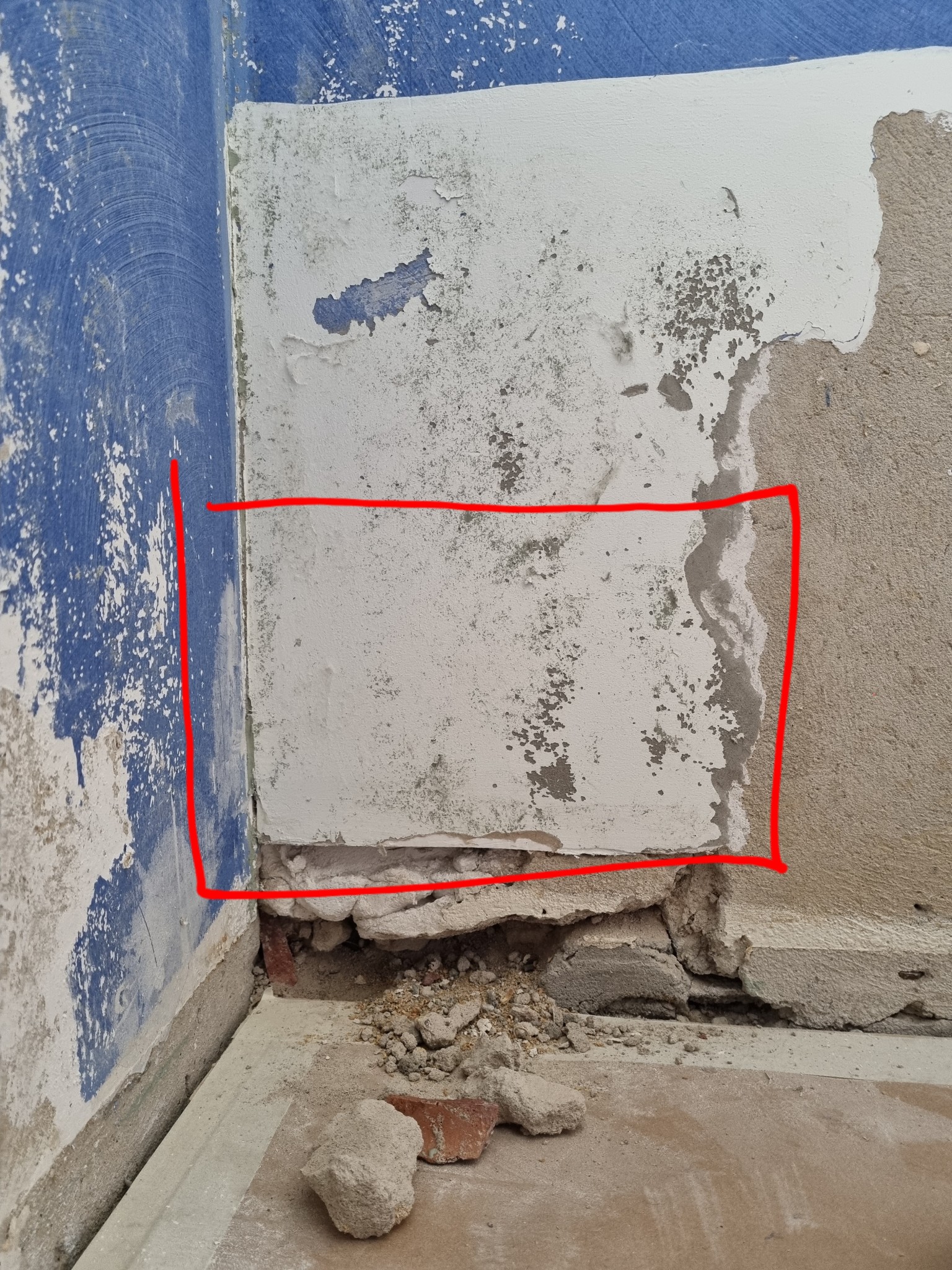
Last edited:
Start by knocking loose everything and brush/vacuum clean (use a construction vacuum cleaner and not your regular home vacuum cleaner as it will soon break otherwise!).
You can use husfix but also gypsum plaster (e.g. https://www.hornbach.se/shop/Gipsputs-BAUMIT-25kg/7196557/artikel-detaljer.html). Mix it to a thickness like toothpaste approximately.
Use a plant spray to moisten the wall a little before applying the plaster and be careful not to apply too thickly as the plaster cannot be sanded down!
Finish with regular hand putty and sand it flat.
You can use husfix but also gypsum plaster (e.g. https://www.hornbach.se/shop/Gipsputs-BAUMIT-25kg/7196557/artikel-detaljer.html). Mix it to a thickness like toothpaste approximately.
Use a plant spray to moisten the wall a little before applying the plaster and be careful not to apply too thickly as the plaster cannot be sanded down!
Finish with regular hand putty and sand it flat.
So if I understand correctly, both husfix and plaster become very hard and are extremely difficult to sand down if applied too thickly?anders07 said:
Start by knocking off all loose material and brush/vacuum clean (use a construction vacuum cleaner and not your regular home vacuum cleaner as it will soon break otherwise!).
You can use husfix but also plaster (e.g. [link]). Mix it to a thickness similar to toothpaste.
Use a spray bottle to slightly dampen the wall before applying the plaster and be careful not to apply it too thick as the plaster cannot be sanded down!
Finish with regular hand putty and sand it smooth.
When I googled, gypsum mortar also came up, is that an option?


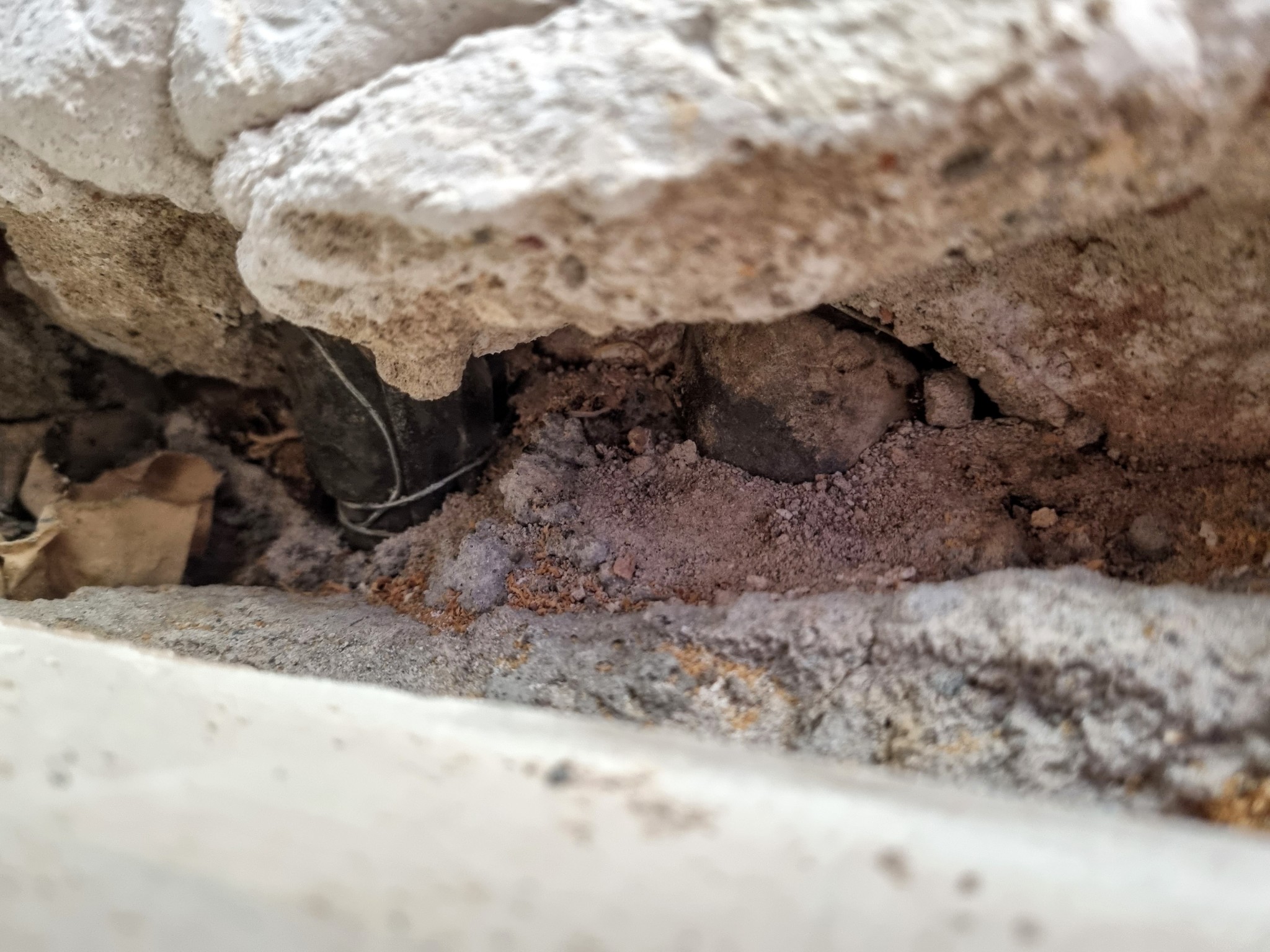
That's how old radiator pipes can look, the black is insulation tied with wire. Could it be that you have that in the wall?tbgbg said:
Yes, that might be reasonable, the house was built around 1961.J john.h said:
The wall to the left (in the photo from the first post is an exterior wall), and maybe that's why the wall has "cracked" there, due to the temperature difference?
And if they are radiator pipes, do I need to do anything special when I try to fix the hole?
Click here to reply
Similar threads
-
How to repair and plaster interior walls in a basement floor?
Building Materials and Construction Technology -
Repair interior walls in 1920s basement
Building Materials and Construction Technology -
How do I best repair plaster detachment on a basement interior wall in a 40s house
Building Materials and Construction Technology