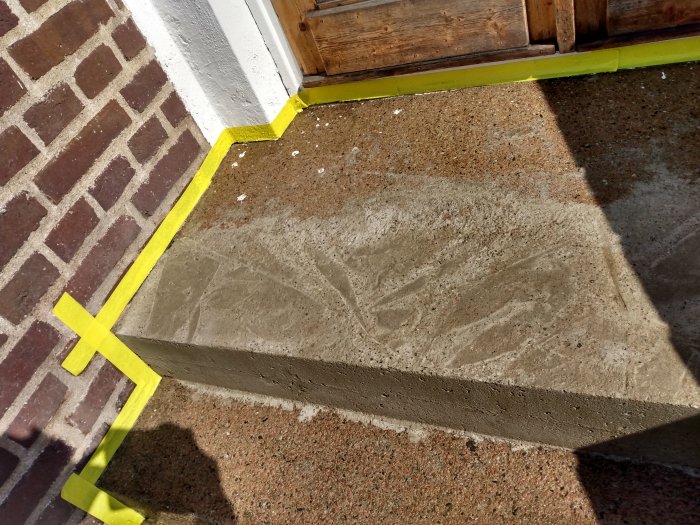
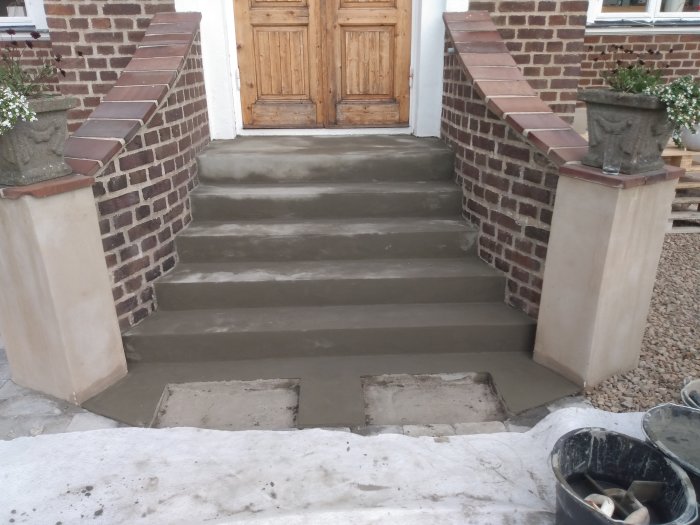
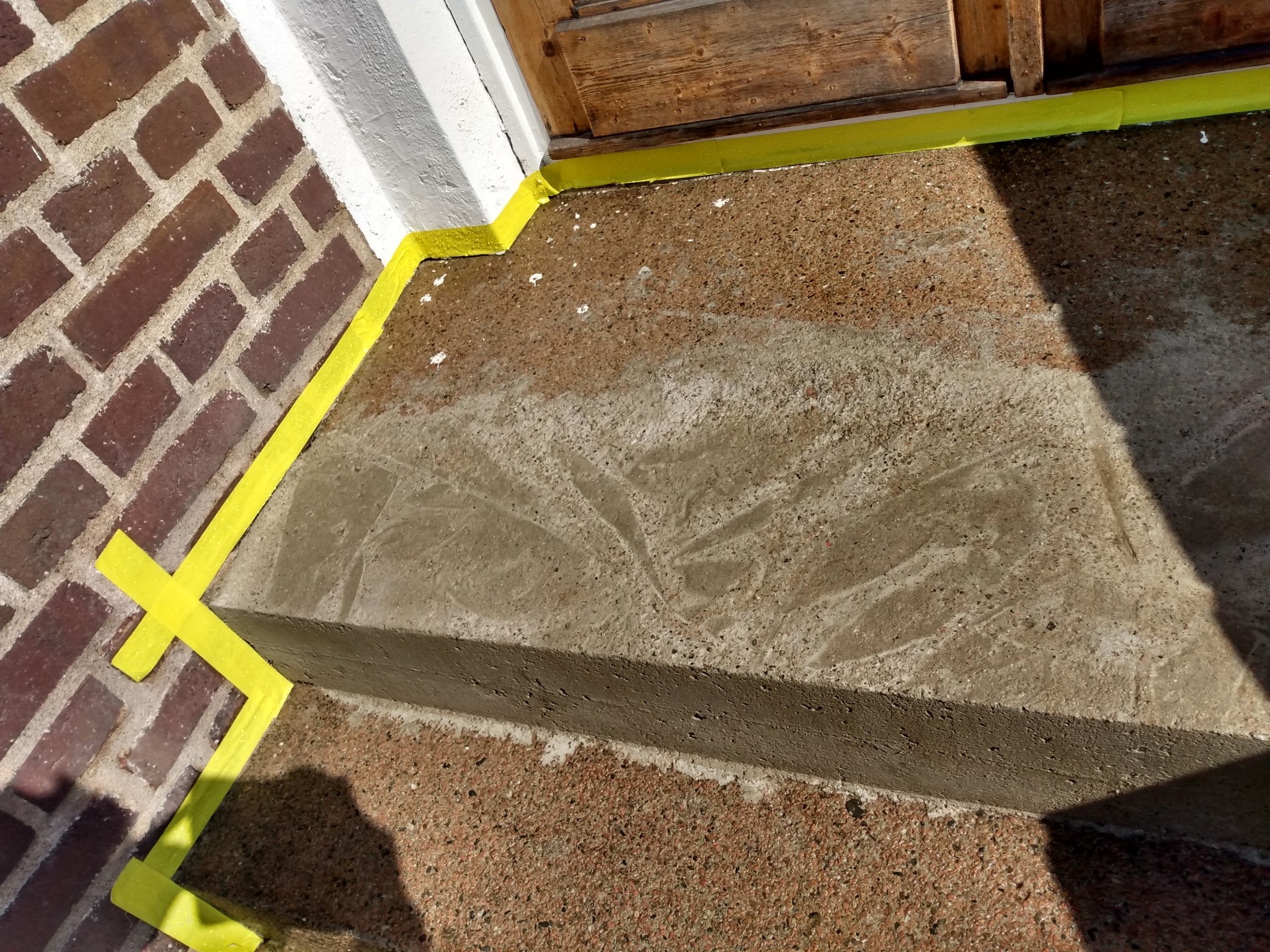
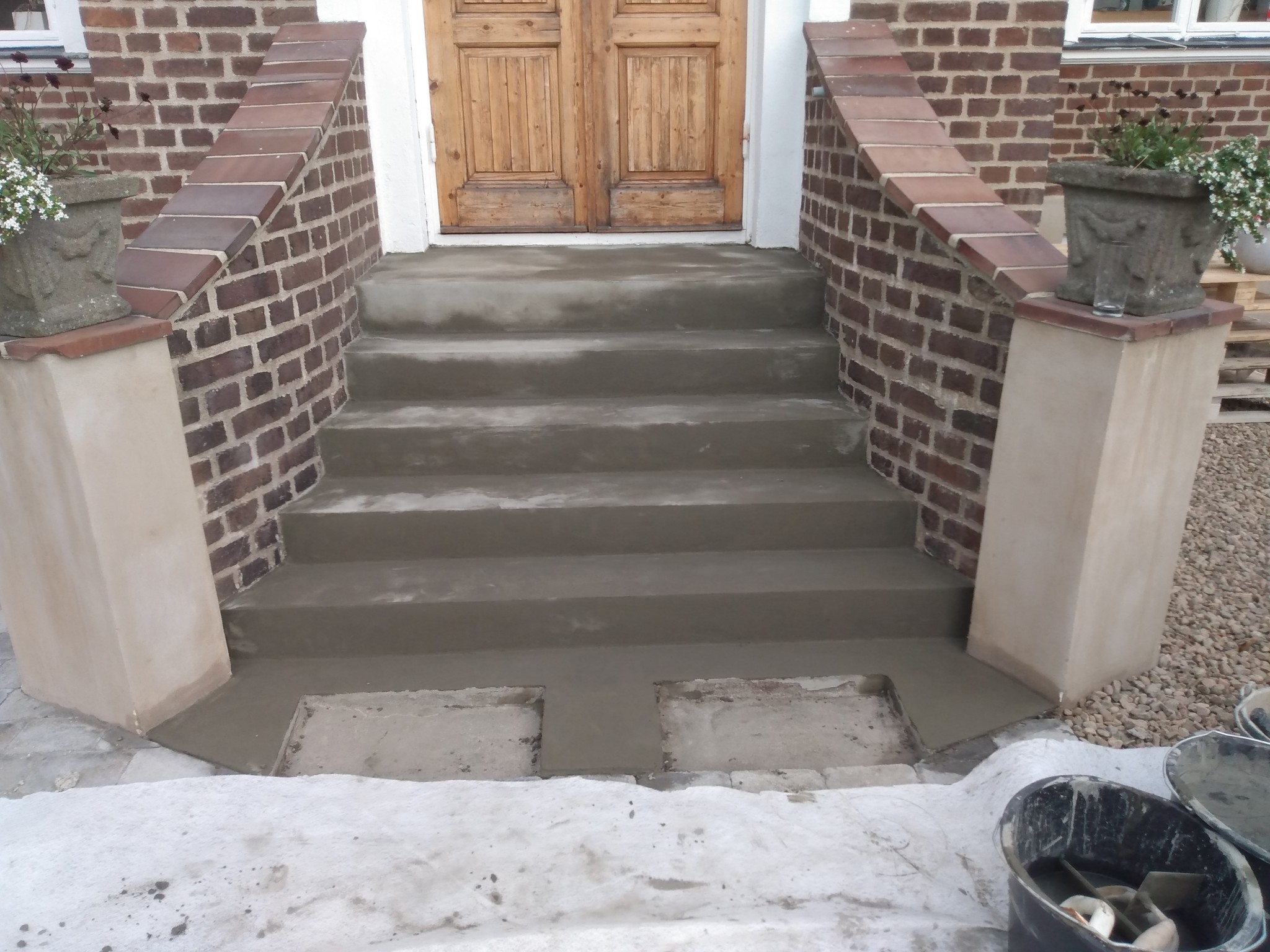
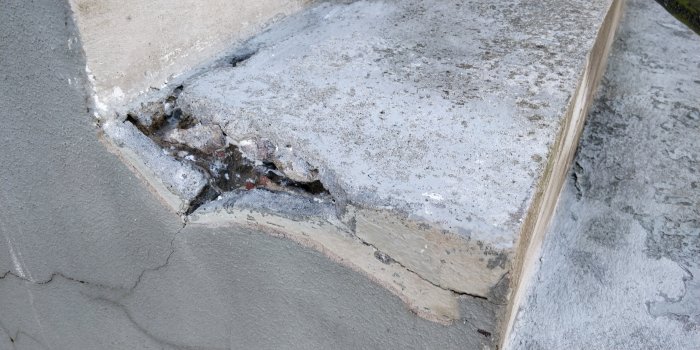
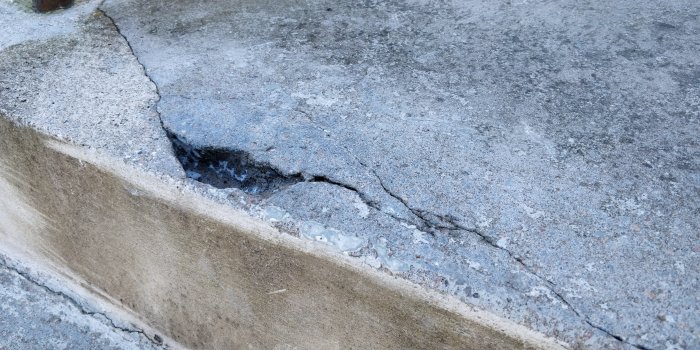
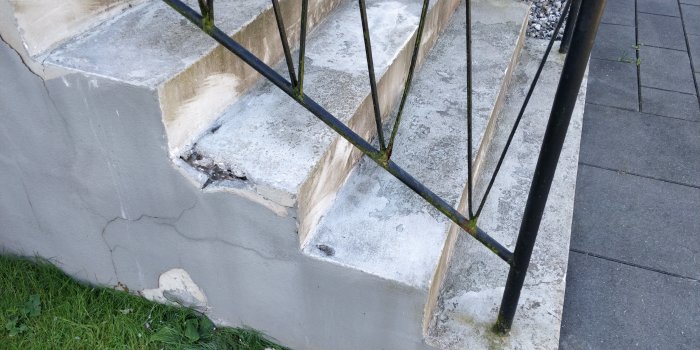
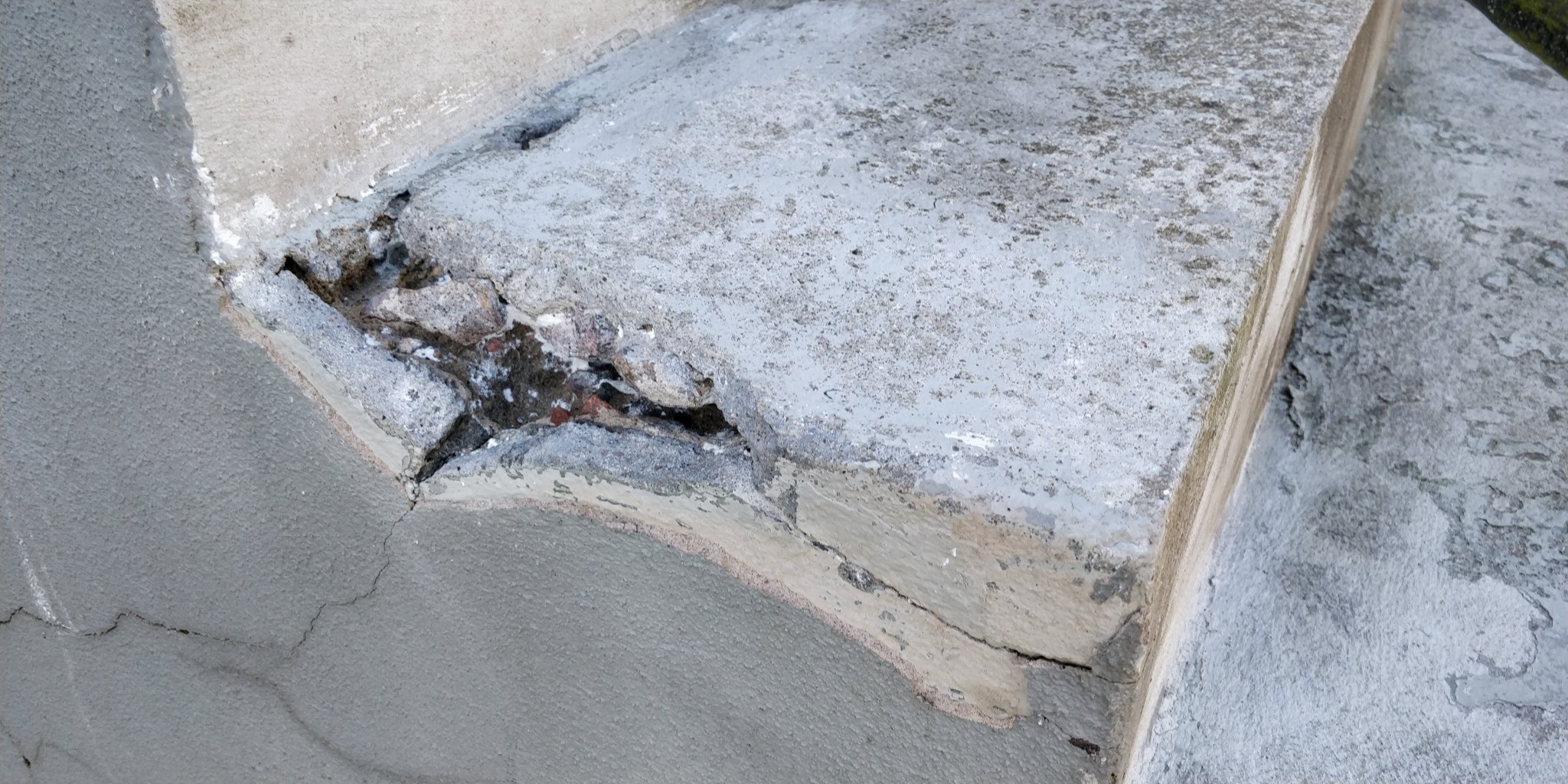
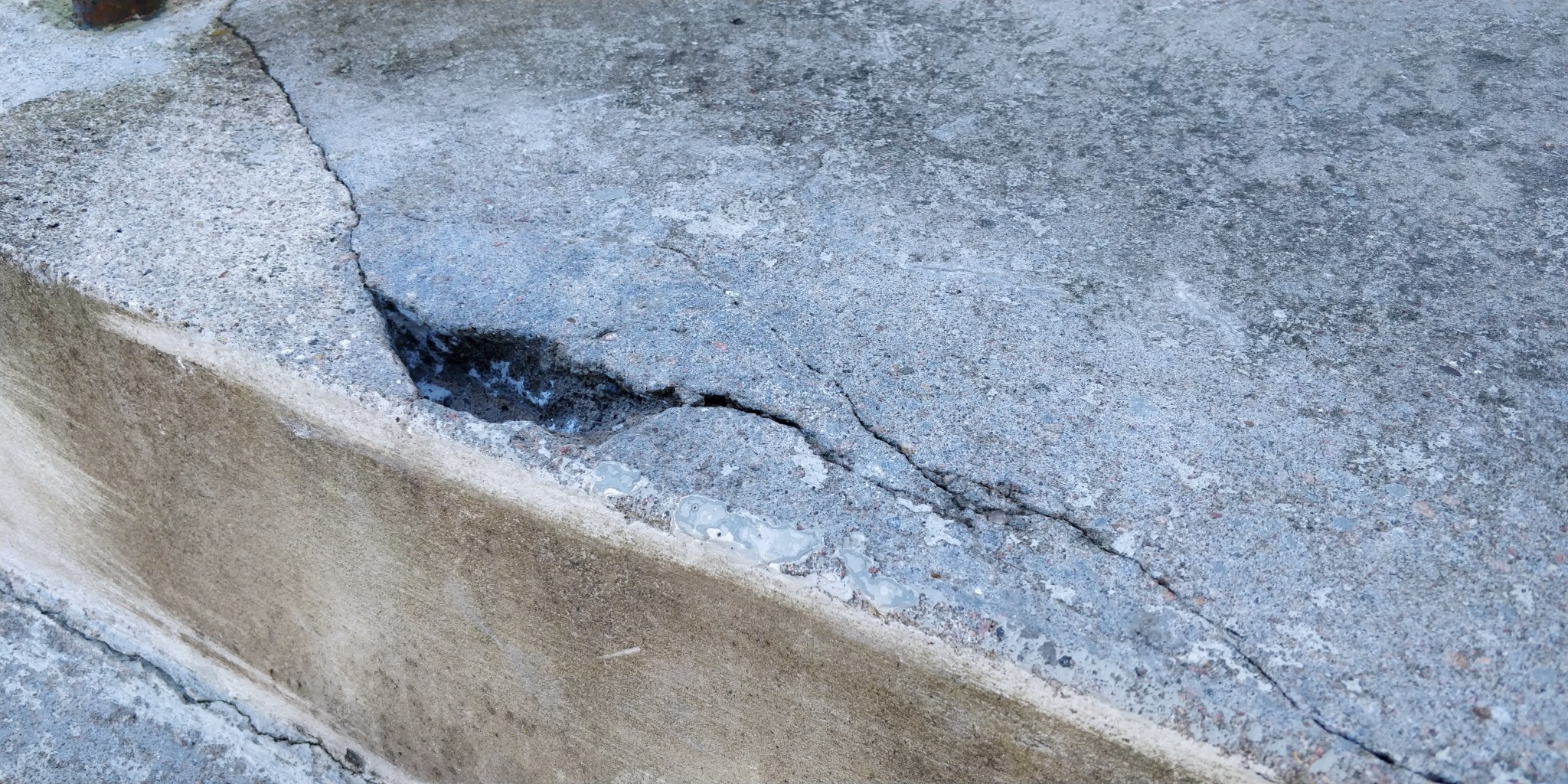
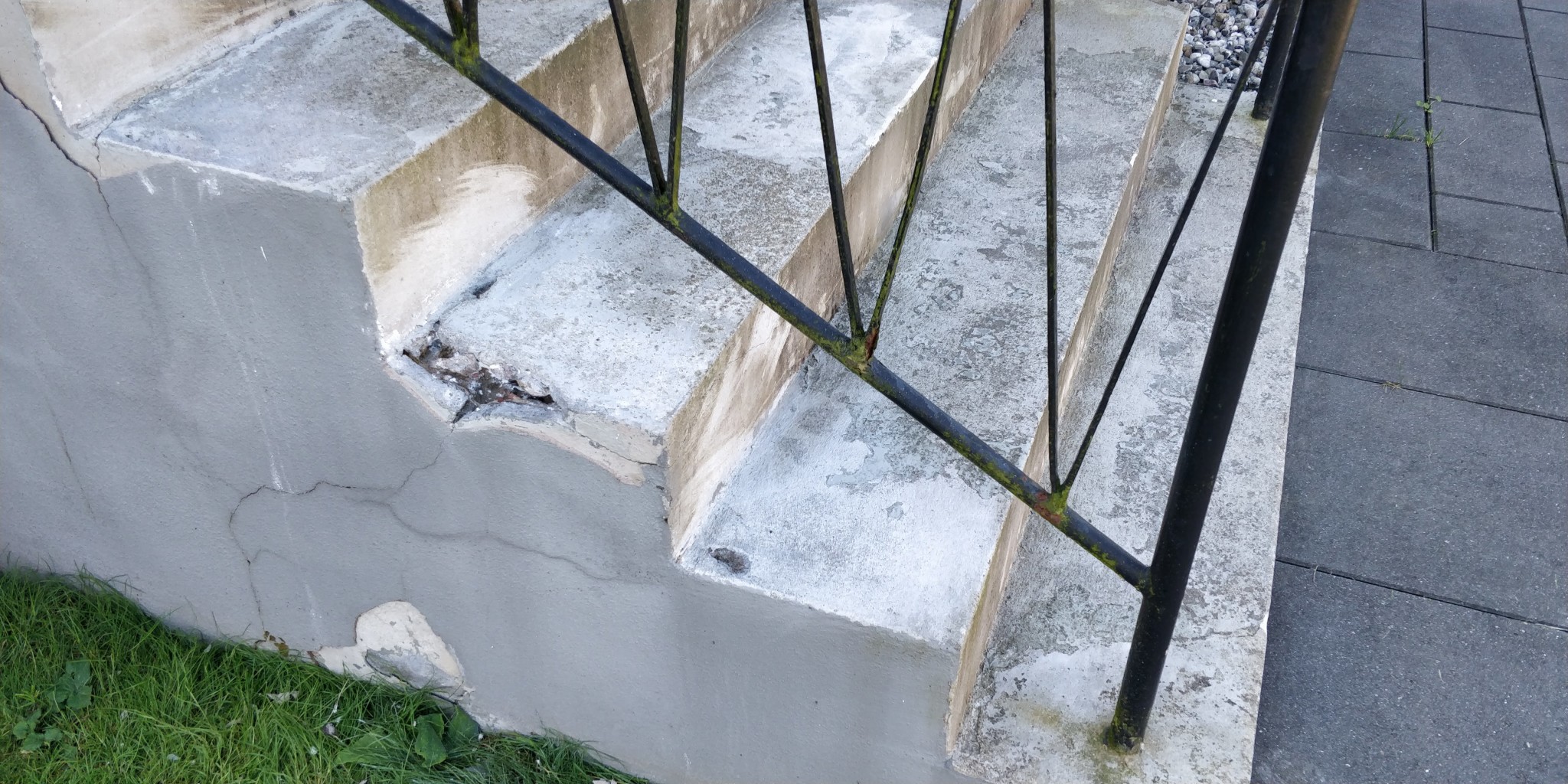
I recently bought a house with an old concrete staircase, presumably from the fifties, which has been patched and repaired over the years. We don't plan to do a full renovation yet, but there are a couple of larger damages I would like to fix, both for aesthetic reasons and to reduce the risk of frost damage.
I have chipped away all the loose material and made an attempt to repair it with CASCO HusFix, following a recommendation from the local hardware store. However, it turned out very white and not particularly attractive, so I ended up scraping and brushing it off before it hardened properly.
So, what, which is concrete-colored and still relatively easy to handle for an enthusiastic amateur, should I use instead? StoCrete SM S? One of Finja's products?
Have used Weber concrete filler Snabb to fix similar damages on our concrete stairs. Matching the same color is difficult, but it has held up well for many years. Even chipped edges on the stairs have maintained their style after being filled and shaped with boards as a form and then smoothed out with a steel spatula before it cured. We are talking about a type of concrete mix here, it's important to keep it moist for a few days with water and plastic wrap so it cures properly.
For the large patch, place a board and lay fine concrete, smoothing it evenly with the other surface. The other areas you cut open and repair with sto gm1.
Then you must let the casting dry for at least two, preferably three weeks in this temperature to prevent discoloration of the surface later.
Since you're repairing, you have no choice but to go over the entire surface if you want it uniform.
Here is a staircase I did with gm1, steel troweled and floated twice after repairing a cracked step.
Edit:
I just noticed the large patch wasn't so big; you can do everything with gm1, so you avoid waiting for weeks, but it's a bit more expensive.
For the cracks on the sides, you need a mesh, so I would have scraped off the paint that's already loose. Opened up the cracks and repaired them. Use the same mortar as for the mesh, ef therm 261, and then float with the same.
Thanks for the answers! A bit of mixed signals, but I interpret it as being able to achieve good results with different methods.
But, what is really the difference between finbetong, lagningsbruk, and betongspackel? I feel like I read and read, but I can't quite wrap my head around it.
I chipped away the plaster on my large concrete staircase that looked similar to yours. The more you chipped away, the worse it looked underneath.
It turned out that nearly two steps had frost damage so severe that the entire steps had to be recast.
First, rough casting of new steps after setting up the forms.
Then plastering of the sides and steps using Finja 4010. It turned out great and is now in its 3rd year without any visible flaws.
My points:
When you start chipping away at the side, more and more will come off, and you'll see the true condition...
If you're just doing a temporary repair, make it easy for yourself; Husfix works well then
Chip away and clean so that there is no old moss and dirt left.
Mix a small amount of Husfix
Brush/apply a slurry of Husfix/water mixture to improve adhesion between old and new mortar
Apply Husfix and try to smooth it as well as possible
Do it in stages, i.e., mix smaller amounts at a time
Follow instructions regarding consistency and aftercare and cover to reduce evaporation.
Again, this is a quick fix solution for a year or so...
Thanks for the answers! A bit mixed advice, but I interpret it as you can do well with different methods.
But, what is really the difference between fine concrete, repair mortar, and concrete filler? I keep reading and reading, but I'm not really getting it.
Check what thickness it can be applied at, minimum/maximum. Some can handle 0 mm while others need at least 10 mm thickness.
Thanks for the responses! A bit of mixed messages, but I interpret it as meaning you can achieve good results with different methods. But, what is really the difference between finbetong, lagningsbruk, and betongspackel? I keep reading and reading, but I don't quite understand it.
Finbetong must be cast, even though it's called "fin," it is very coarse and is virtually impossible to repair things with since it doesn't hold form. It's only meant to pour in molds or holes several cm deep. Lagningsbruk for concrete is full of additives so they dry quickly and you can build high with them, most have at least 3cm per application. Since you can build up so much, some are full of coarser grains, but there are also products that are as smooth as betongspackel (Sika Quick 506/sto SM/Gm) that you can still build up a lot at once with.
Click here to reply
Vi vill skicka notiser för ämnen du bevakar och händelser som berör dig.

 Is there any specific concrete you would recommend?