
3,172 views ·
9 replies
3k views
9 replies
Repair 5cm deep carved channels in aerated concrete
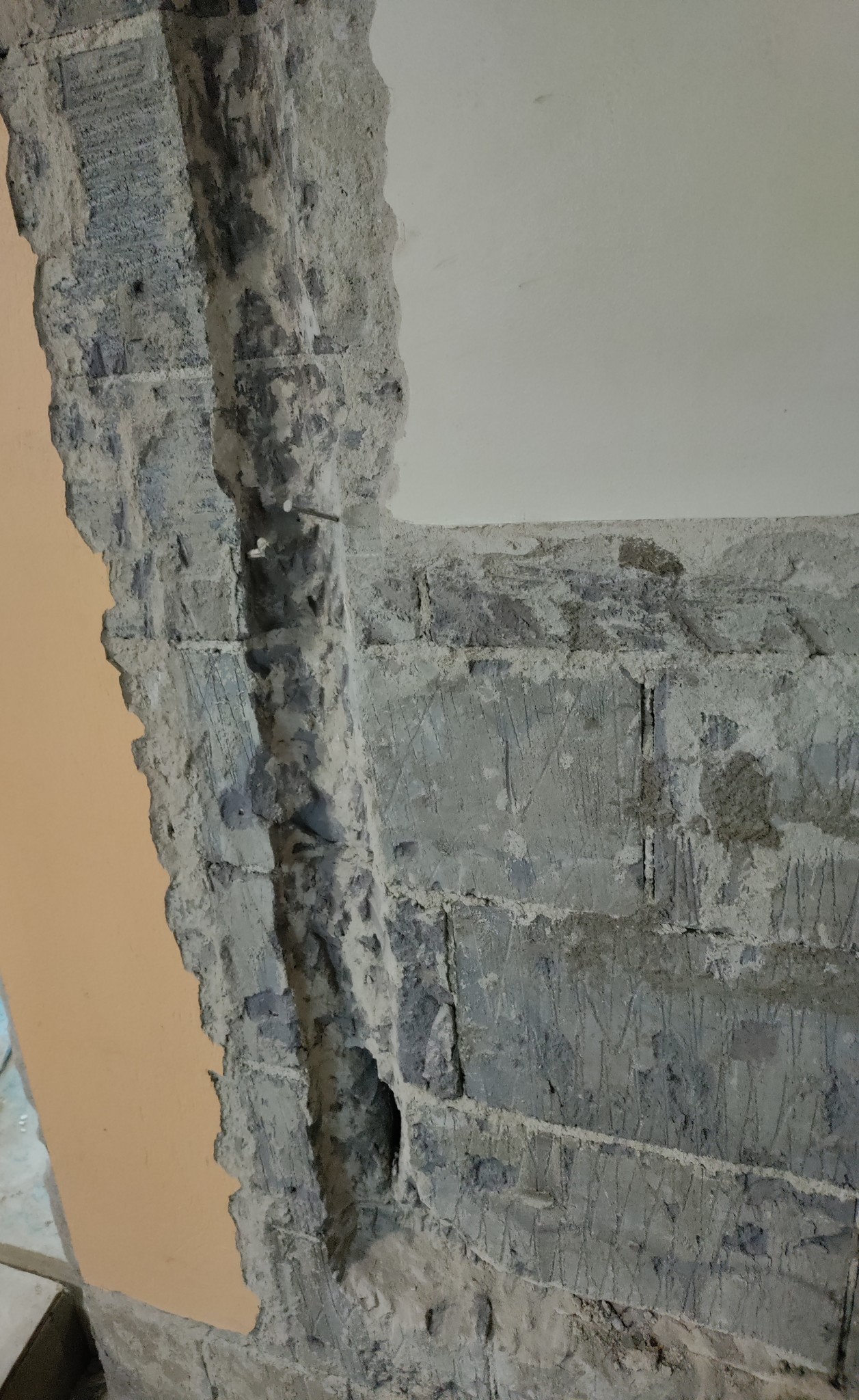
I have switched to underfloor heating in the basement. The old radiator pipes (2-pipe system), which are now removed, were "embedded" in the wall. The carving is about 5-7 cm deep and 10 cm wide and several meters long per room... The wall material is blue concrete.
How do you fix this in the most efficient way? Building up layer by layer with plaster C will take time. Cutting pieces of ytong/siporex and then attaching them with mortar/plaster C might be a way, but it feels cumbersome and will take a long time.
If I brush/prime the carving with, for example, priming mortar A, is there then any filler I can use instead (besides gypsum plaster)? For example, some repair filler like repair wall indoor https://www.hornbach.se/shop/Vaggspackel-FINJA-laga-Vagg-15kg/8835586/artikel-detaljer.html
"Low-dust wall filler for filling, levelling, and smoothing walls and ceilings indoors. Layer thickness: up to 100 mm in one layer. Suitable as a substrate for tiles, wallpaper, and painting."
Best regards
Richard
How do you fix this in the most efficient way? Building up layer by layer with plaster C will take time. Cutting pieces of ytong/siporex and then attaching them with mortar/plaster C might be a way, but it feels cumbersome and will take a long time.
If I brush/prime the carving with, for example, priming mortar A, is there then any filler I can use instead (besides gypsum plaster)? For example, some repair filler like repair wall indoor https://www.hornbach.se/shop/Vaggspackel-FINJA-laga-Vagg-15kg/8835586/artikel-detaljer.html
"Low-dust wall filler for filling, levelling, and smoothing walls and ceilings indoors. Layer thickness: up to 100 mm in one layer. Suitable as a substrate for tiles, wallpaper, and painting."
Best regards
Richard
Same here, gypsum plaster is convenient to work with. I have plastered basement walls with gypsum plaster and filled similar channels as requested by ts. Filled out with lightweight concrete pieces that I cut to suitable sizes and plastered the entire wall afterwards.MickeTyr said:
I have repaired similar with mortar b and crush from lecablock/ytong (cut waste and the like). Packed it into the hole. The outermost part, about the last 1cm, is saved and finished with plaster mortar C or gypsum plaster (the same as the rest of the wall, to get the same finish). Naturally, the mortar must cure before plastering the surface.
Did it that way now. Applied a bit of primer A, then the time-consuming task of cutting ytong pieces, mortaring with mortar b. Plastering will come later...B BSOD said:I have repaired similar with mortar b and crushed pieces from lecablock/ytong (cut-off waste and such). Packed it into the hole. The outermost part, the last 1cm or so, is reserved and filled with plaster mortar C or gypsum plaster (the same as the rest of the wall, to achieve the same finish). Naturally, the mortar must cure before plastering the surface.
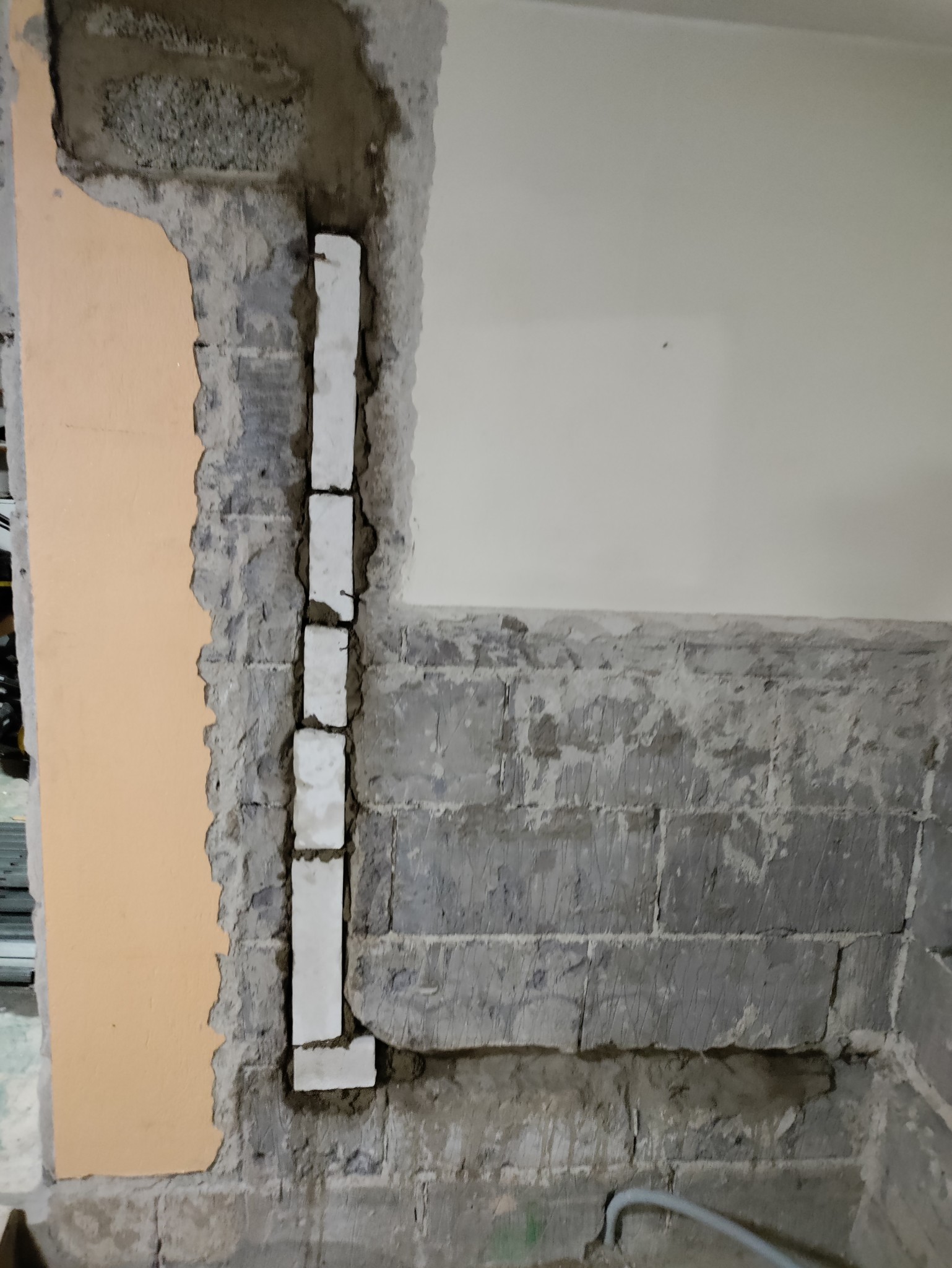
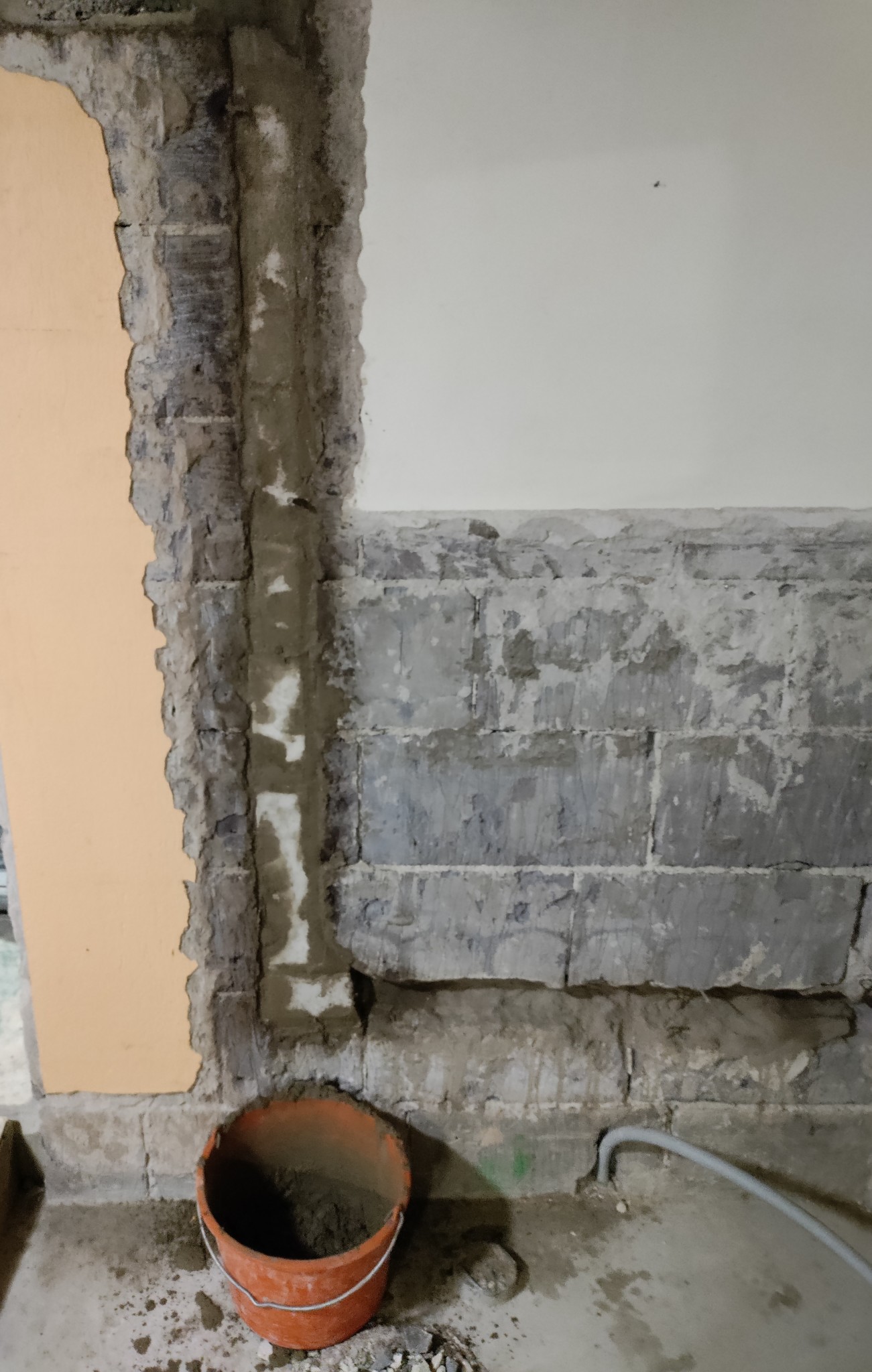
I've read/heard a lot of good things about gypsum plaster. This particular wall is between the hallway and garage, but the other walls are uninsulated exterior walls. For that type of damage/holes, like in my case where there are chiseled channels, would you repair it only with gypsum plaster? That is, fill the entire damage only with plaster? Or am I mixing up gypsum mortar and gypsum plaster for that purpose?anders07 said:
Best,
Richard
Only gypsum plaster... I've repaired countless of my lightweight concrete/ytong walls with gypsum plaster...R RichardRR said:I've read/heard many good things about gypsum plaster. This particular wall is between the hall and garage, but the other walls are uninsulated exterior walls. The type of damage/holes, such as in my case where channels are carved, would you repair it solely with gypsum plaster, i.e., fill the entire damage only with plaster? Or am I confusing gypsum mortar and gypsum plaster for that purpose?
Regards, Richard
As an addition, mix the plaster to a toothpaste-like consistency so that it stays on the spatula even if you turn it upside down.
Wet the wall thoroughly (but not so it drips) with a spray bottle before applying the plaster.
You can apply multiple layers, but preferably unevenly in the lower layer for better adhesion.
Do not wet between layers.
Scrape the final surface with wood, plastic, or metal depending on how smooth you want it.
You can moisten the surface when you scrape/smooth, but be careful with the water as it can easily become glossy and spotty if you apply too much or unevenly.
Click here to reply