
1,932 views ·
5 replies
2k views
5 replies
Renovation of bedroom in summer house from 1929, how to do?
Hello dear forum,
we are renovating a bedroom at our country house (built around 1929) and have some questions on how to go about it.
We have torn down everything that needs to go (I think) and are now going to start rebuilding the room.
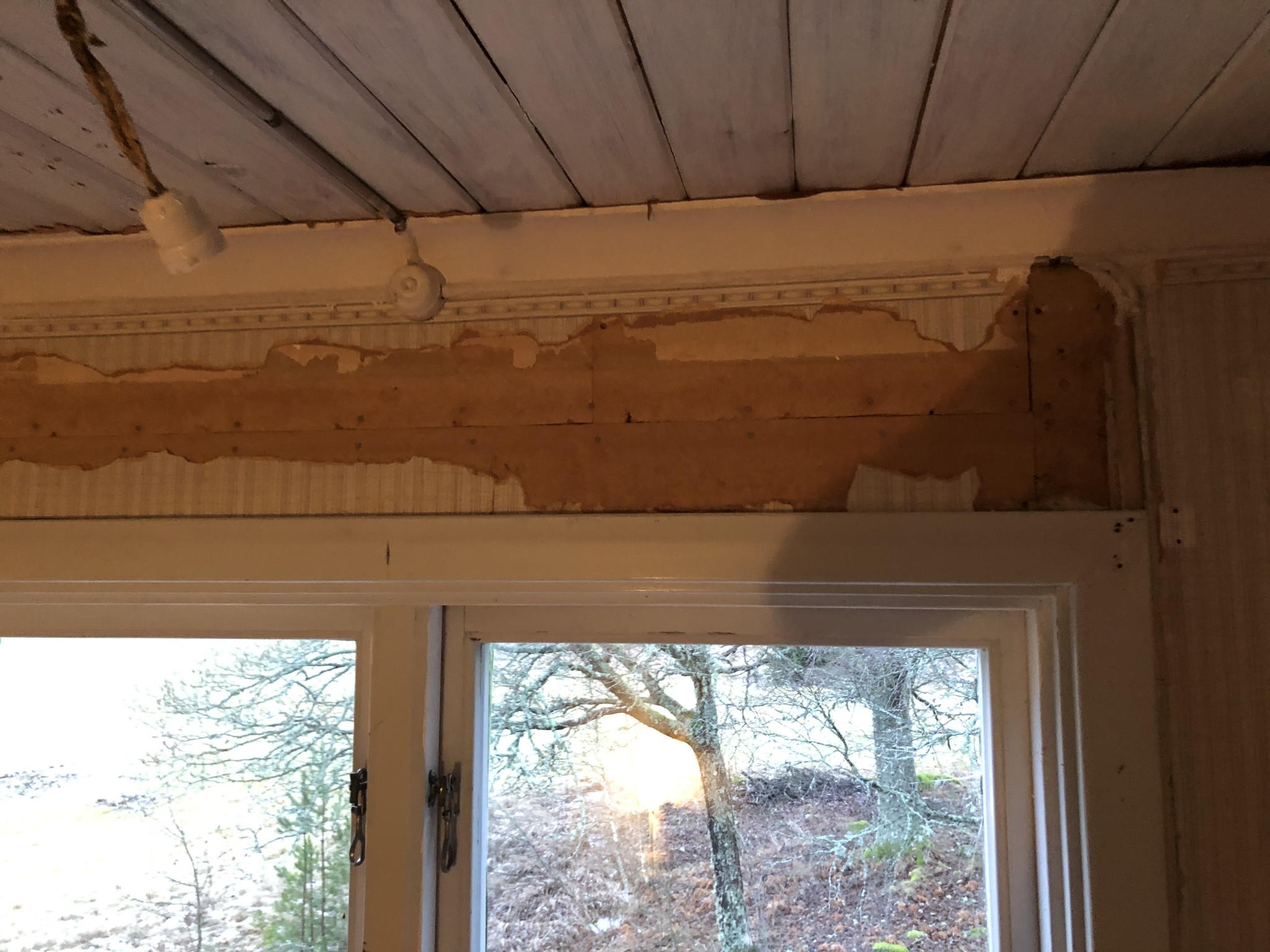
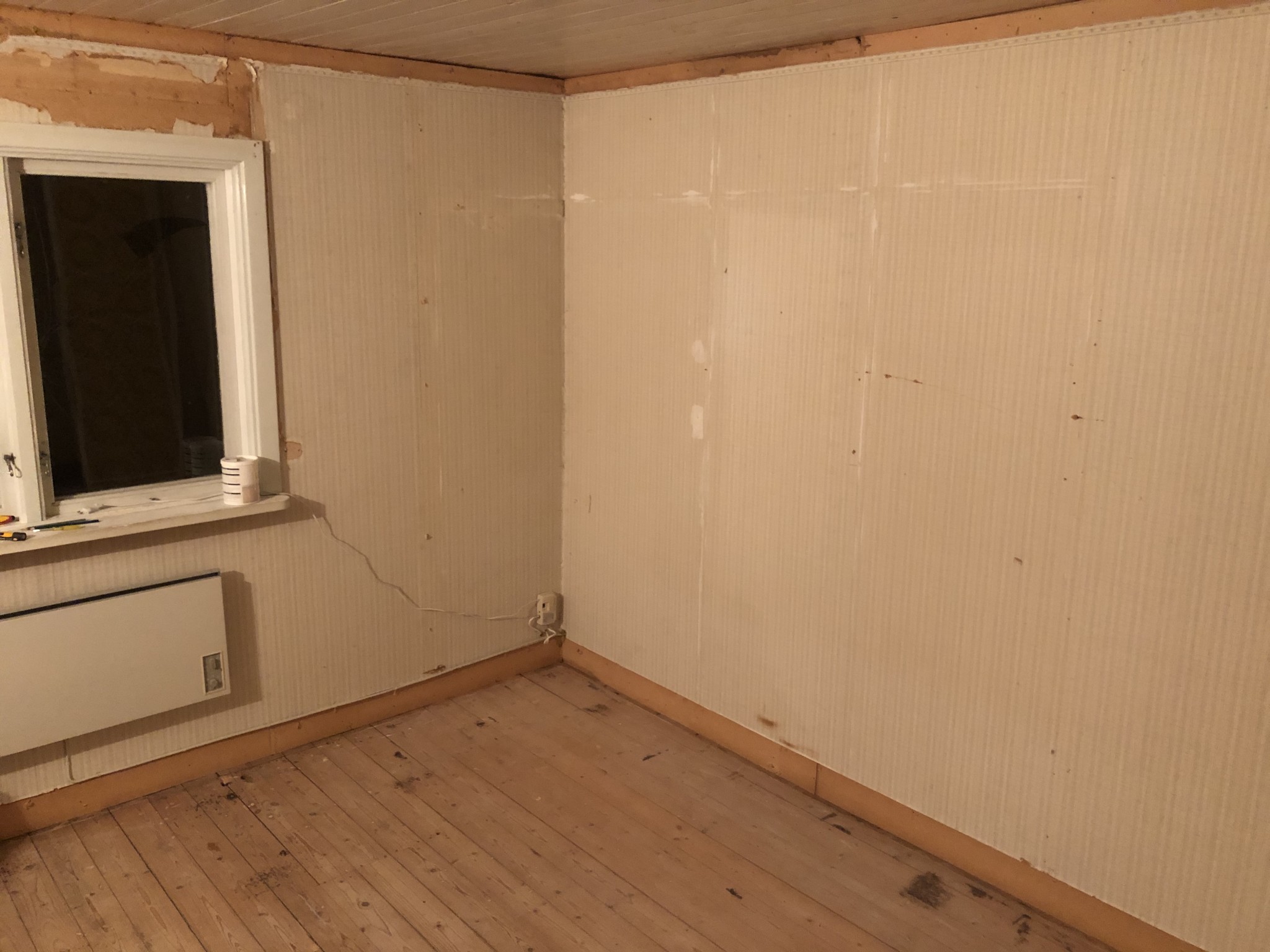
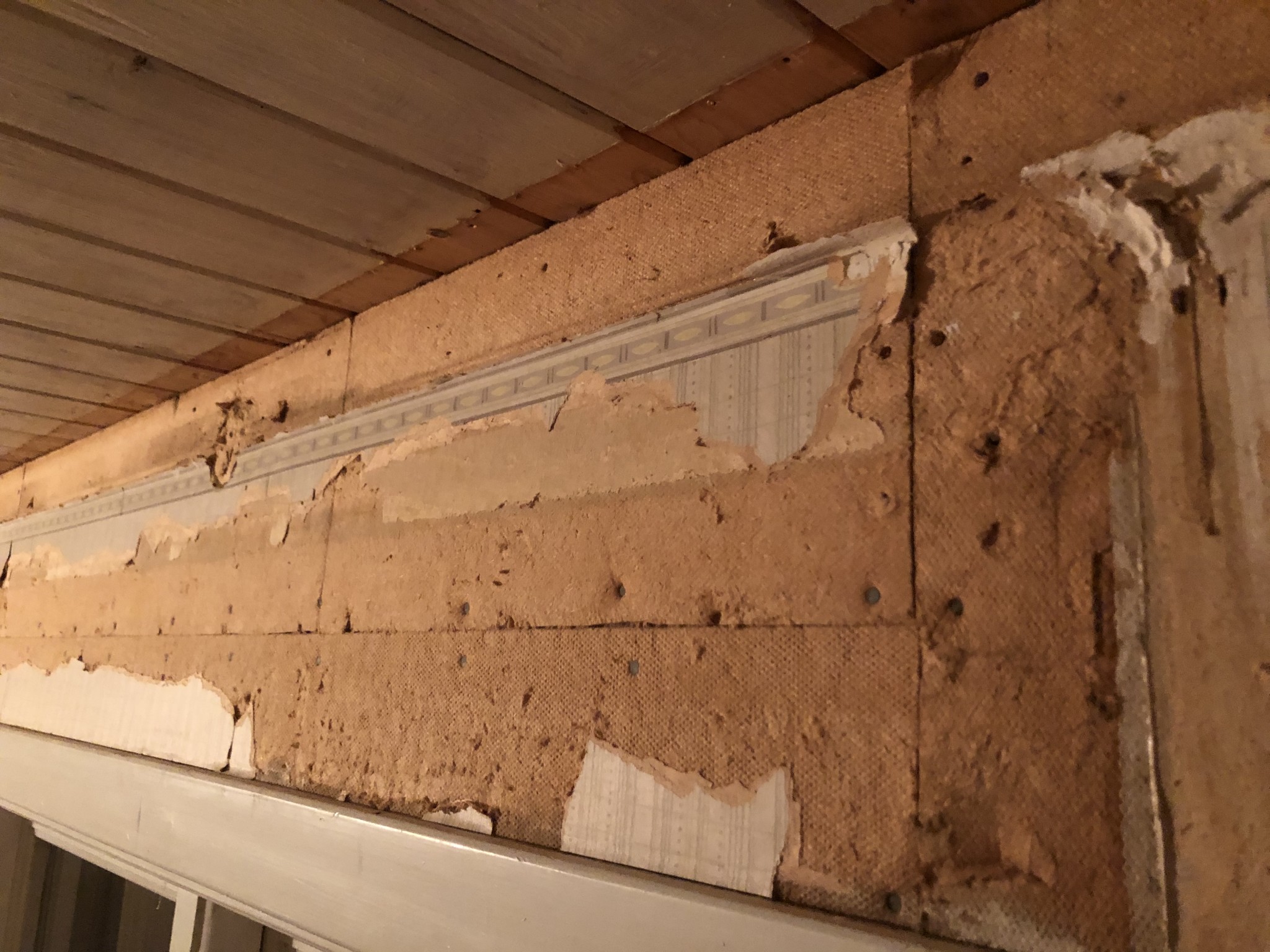
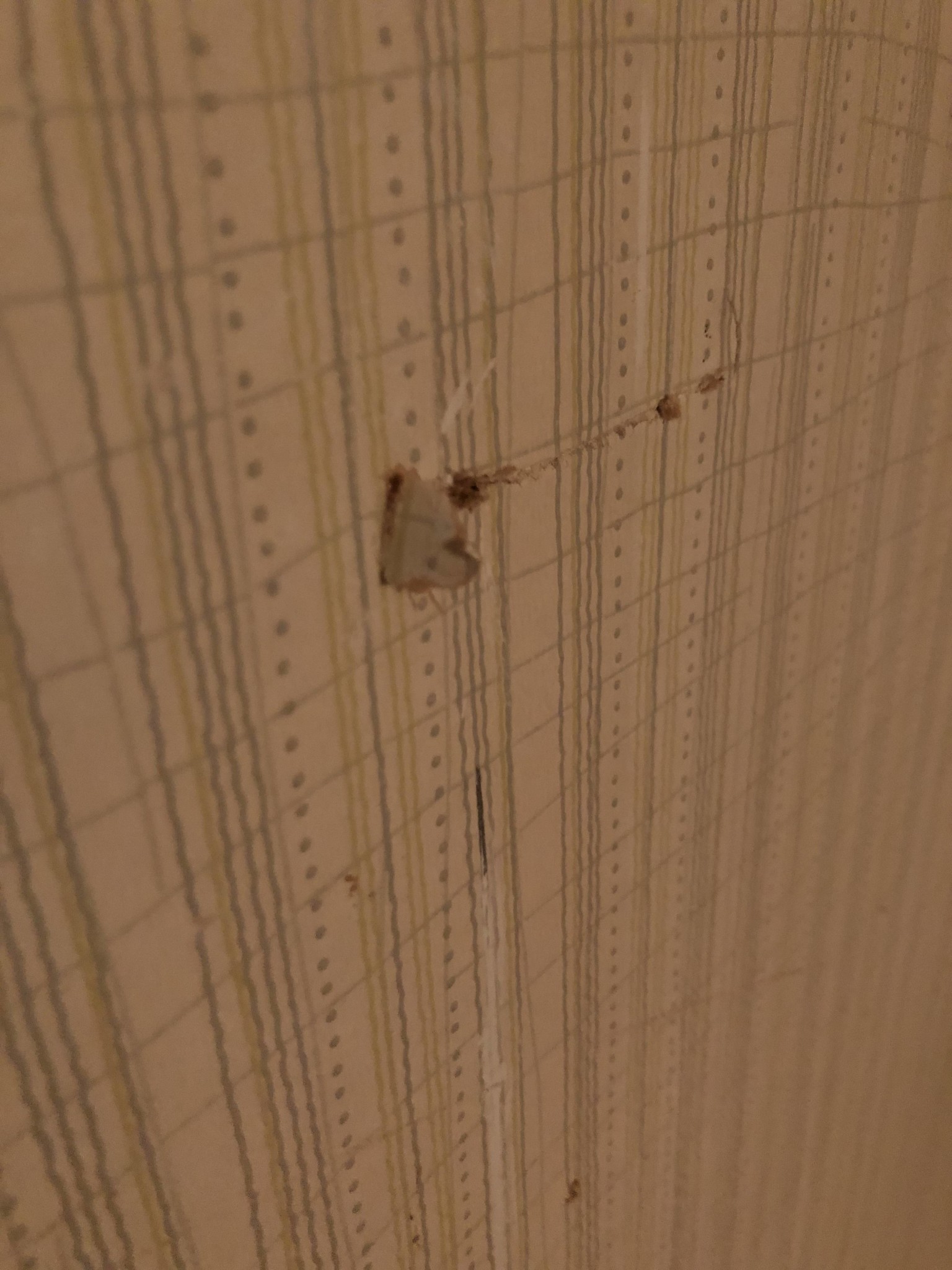
There is wallpaper on some kind of board, unsure what. Behind this, there seem to be wooden boards. Tested screwing through in several places and it holds every time.
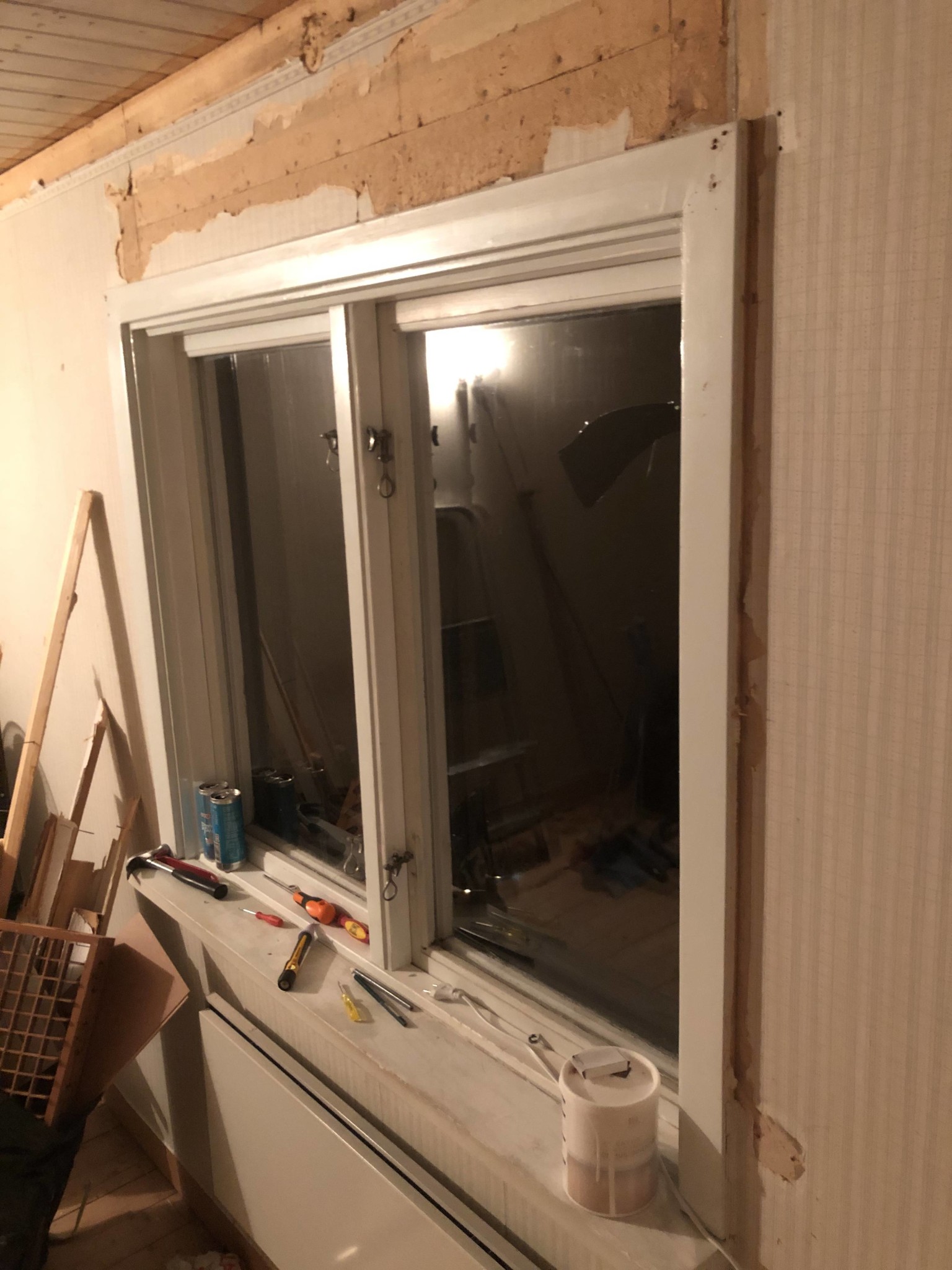
Our thought was renovation plasterboard since there is wallpaper as well as multiple damages on the walls. Are we thinking correctly? How do you handle the window and door frames in that case, since there will be a level difference? Is plain plasterboard better? (It does build a bit extra).
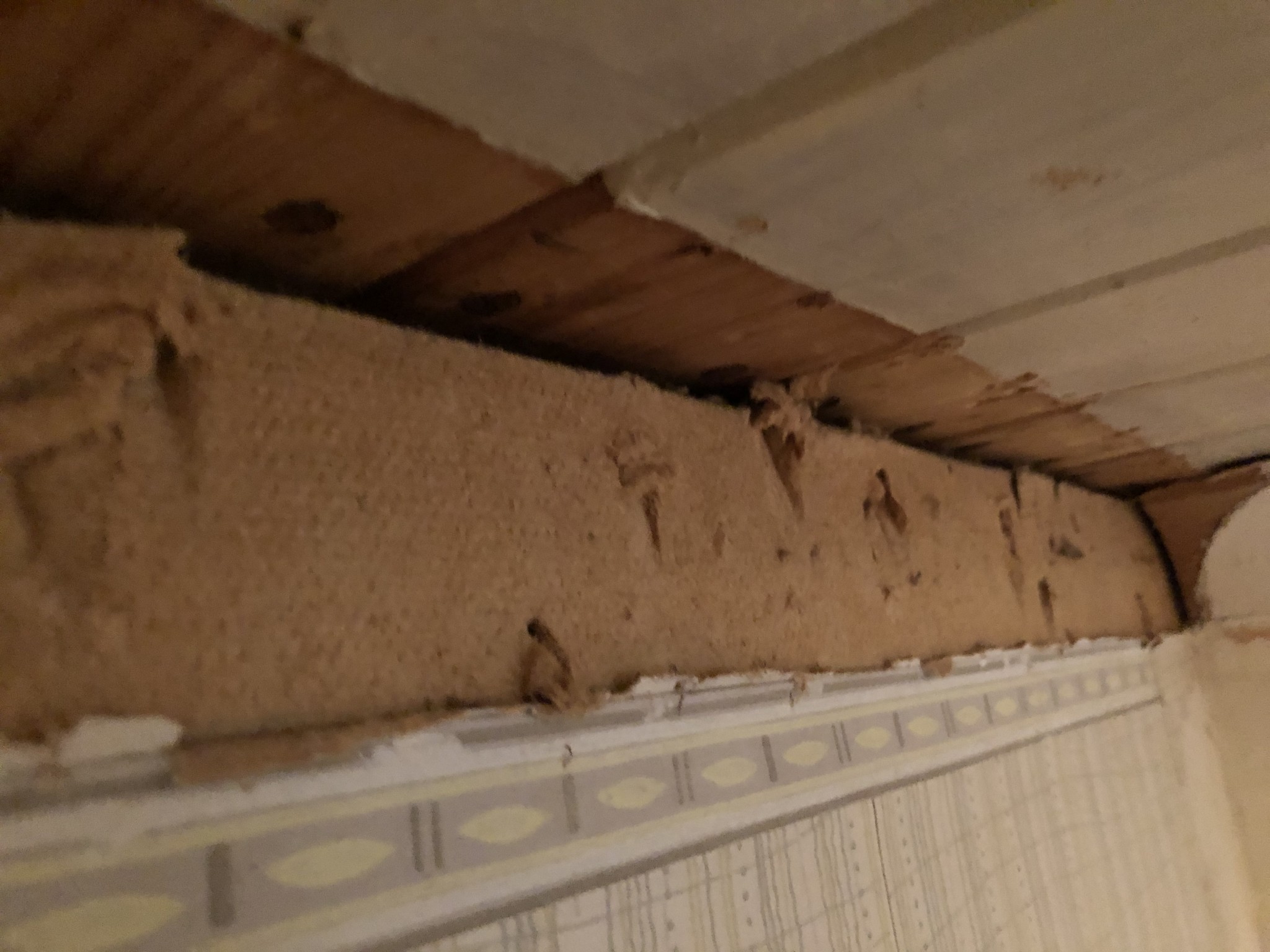
Ceiling - was covered with ceiling fabric that we have torn down. (And pulled out about a million nails. Should we fill the holes?)
Planning to paint it white - how do we handle the gaps. Wool yarn? Do you paint it after you have pressed the yarn into the gaps?
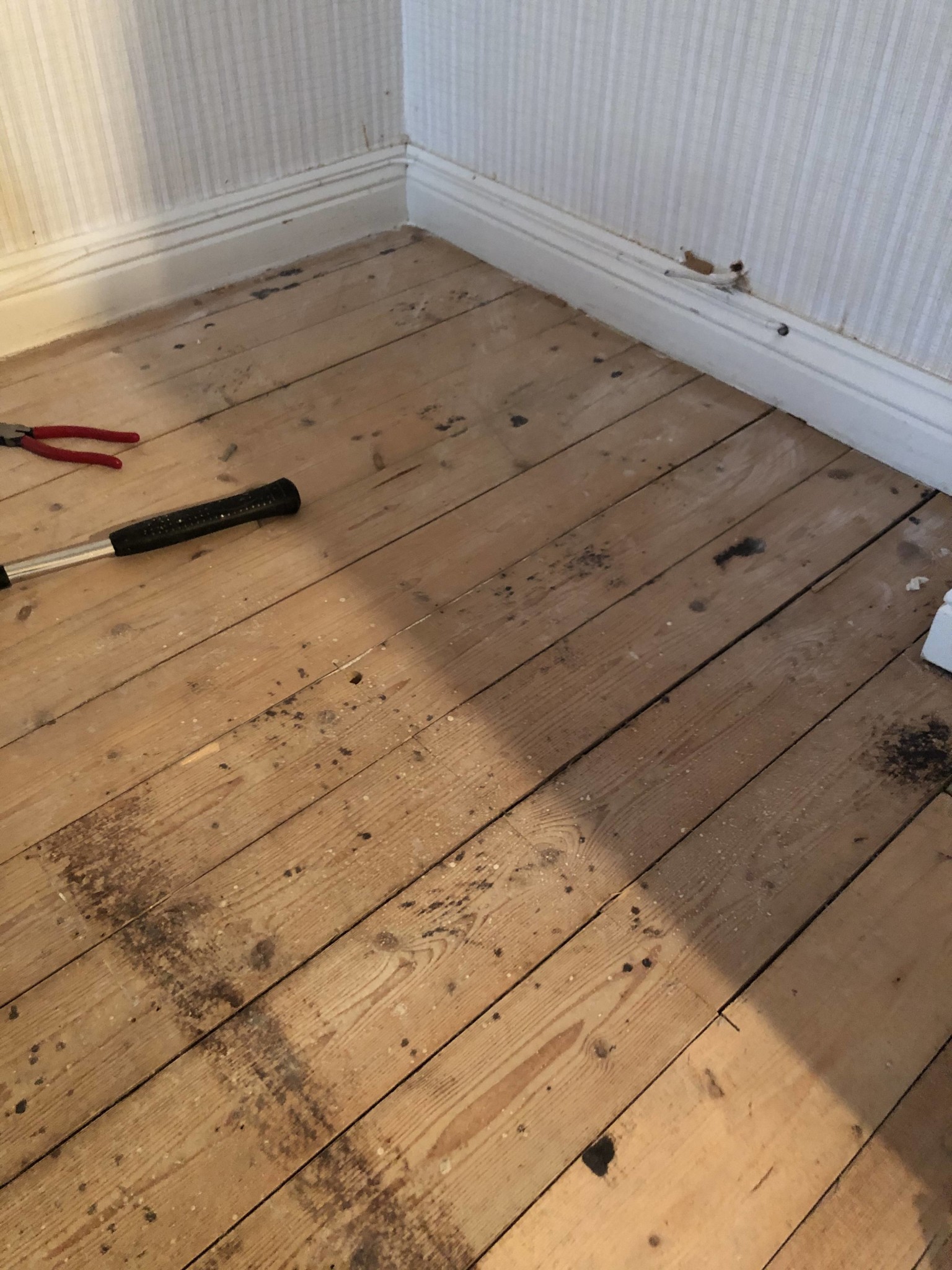
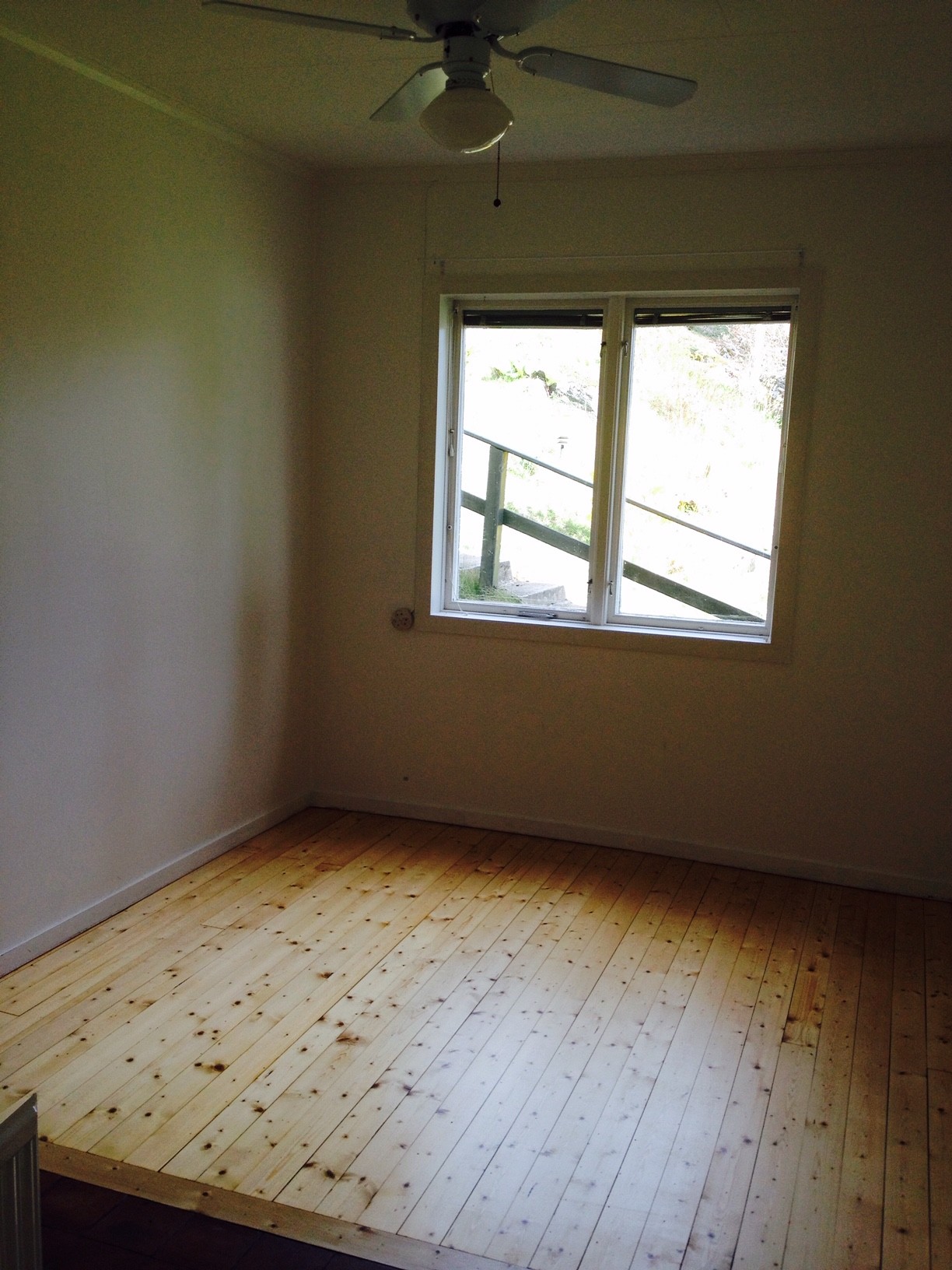
Floor - removed the wall-to-wall carpet and uncovered an old charming wooden floor. Sand it and maybe glaze it somehow. How difficult is it to sand by oneself? Is it reasonable to hire professional help?
Here are some pictures that might help to understand what we mean.
Thanks in advance for all the help!
we are renovating a bedroom at our country house (built around 1929) and have some questions on how to go about it.
We have torn down everything that needs to go (I think) and are now going to start rebuilding the room.
There is wallpaper on some kind of board, unsure what. Behind this, there seem to be wooden boards. Tested screwing through in several places and it holds every time.
Our thought was renovation plasterboard since there is wallpaper as well as multiple damages on the walls. Are we thinking correctly? How do you handle the window and door frames in that case, since there will be a level difference? Is plain plasterboard better? (It does build a bit extra).
Ceiling - was covered with ceiling fabric that we have torn down. (And pulled out about a million nails. Should we fill the holes?)
Planning to paint it white - how do we handle the gaps. Wool yarn? Do you paint it after you have pressed the yarn into the gaps?
Floor - removed the wall-to-wall carpet and uncovered an old charming wooden floor. Sand it and maybe glaze it somehow. How difficult is it to sand by oneself? Is it reasonable to hire professional help?
Here are some pictures that might help to understand what we mean.
Thanks in advance for all the help!

Depends on the style you prefer. I would do it like this: Ceiling: plaster, possibly with recessed electrical wiring for additional outlets for ceiling lamps or spotlights.
Walls: 6 mm renovation plasterboard, fill, paint/wallpaper.
The floor is a subfloor, not meant as a surface layer. However, it can be cozy if you sand and treat it. Sanding it yourself requires renting a large belt sander or a smaller edge sander, and you’ll need some expensive sandpaper. Mistakes can be made too. I've done it myself and hired someone else. Since I don’t want to lug heavy machines from a rental place and value my time, I would hire it out.
If you're considering laying a new floor over the existing one, keep in mind that you’ll have to dismantle the baseboards or put new moldings over the old ones (ugly).
Walls: 6 mm renovation plasterboard, fill, paint/wallpaper.
The floor is a subfloor, not meant as a surface layer. However, it can be cozy if you sand and treat it. Sanding it yourself requires renting a large belt sander or a smaller edge sander, and you’ll need some expensive sandpaper. Mistakes can be made too. I've done it myself and hired someone else. Since I don’t want to lug heavy machines from a rental place and value my time, I would hire it out.
If you're considering laying a new floor over the existing one, keep in mind that you’ll have to dismantle the baseboards or put new moldings over the old ones (ugly).
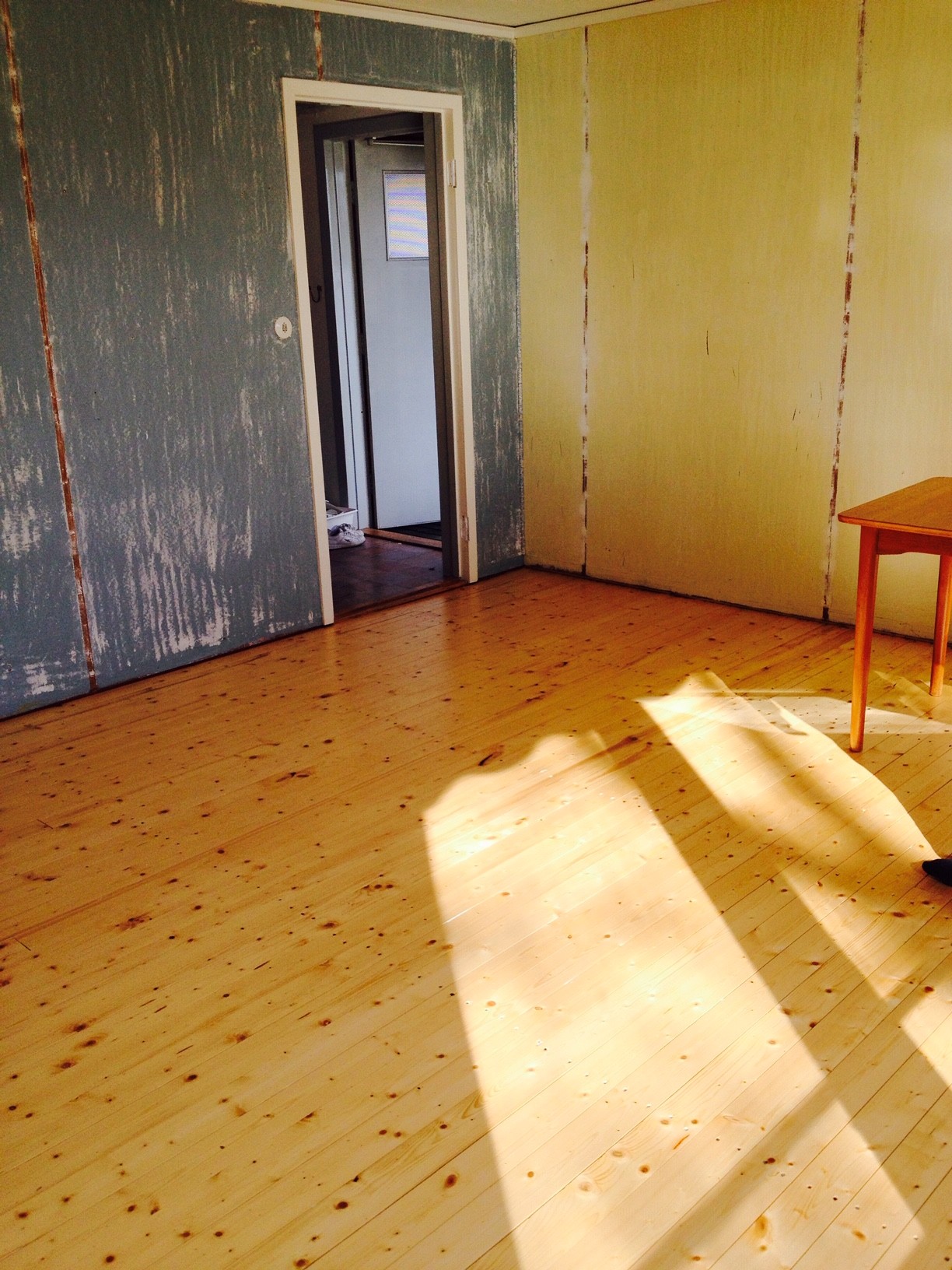
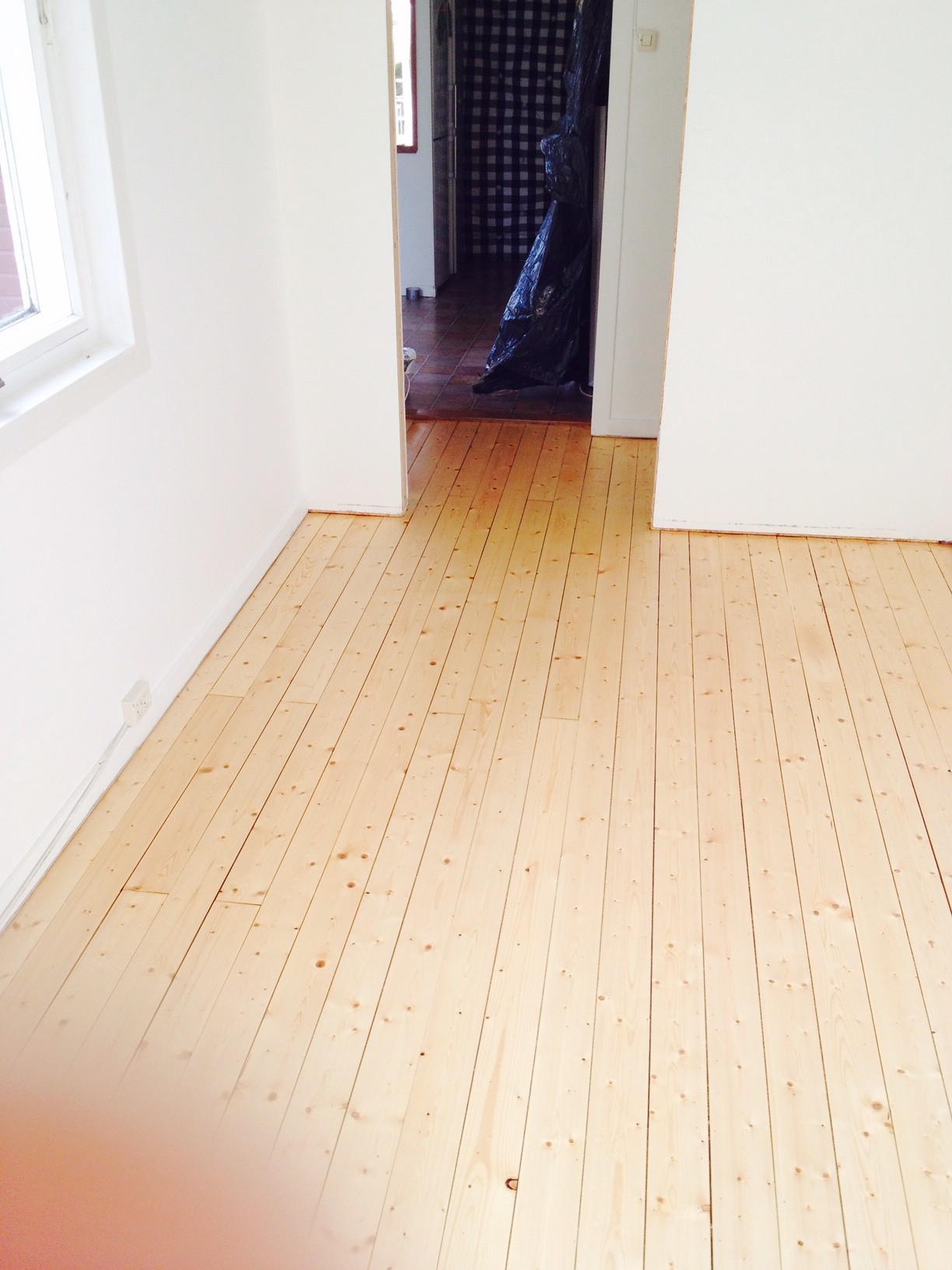
This is how nice it can be. The room with the "blue wall" is a so-called underfloor that was never meant to be visible. We think it turned out great anyway. You should remove the baseboards before floor sanding. It's easy to put them back if you're careful when removing them. If not, it will be more difficult to make it look nice AND there's a high risk that the color of your baseboards will get sanding/scuff marks during the floor sanding.
I've tried both sanding myself and hiring out. Yep, my advice is to hire it out. Check with a few different floor sanders and remember to ask for a quote including the desired floor treatment as well. (Oiled, waxed, etc.)
Thank you for the response!
We have removed the moldings and plan to sand the floor as we want to retain that feeling.
What should we do with the ceiling? Sand uneven areas, fill holes, sand again, and then paint? I've read about using wool thread for gaps; do you press it in before or after painting? Meaning, do you paint over it? We don't want to install spotlights in the ceiling and drywall but retain the feeling of a wooden ceiling.
The walls - is renovation drywall preferable over regular drywall? What do you do around window and door frames? Should there be a gap between the floor/ceiling and the drywall, or do you set it directly on the floor?
Then sand, fill, paint, or wallpaper I assume?
I find it fun to fix things but want to be sure we do the right steps from the beginning
Thanks again for the response!
We have removed the moldings and plan to sand the floor as we want to retain that feeling.
What should we do with the ceiling? Sand uneven areas, fill holes, sand again, and then paint? I've read about using wool thread for gaps; do you press it in before or after painting? Meaning, do you paint over it? We don't want to install spotlights in the ceiling and drywall but retain the feeling of a wooden ceiling.
The walls - is renovation drywall preferable over regular drywall? What do you do around window and door frames? Should there be a gap between the floor/ceiling and the drywall, or do you set it directly on the floor?
Then sand, fill, paint, or wallpaper I assume?
I find it fun to fix things but want to be sure we do the right steps from the beginning
Thanks again for the response!

Renovation rookie
· Dalarna
· 3 173 posts
Regardless of what you do with the walls, take down the treetex boards. They are easy to remove and replace with some wood board. Then you can screw in plasterboard. The depth will be approximately the same.
Member
· Västernorrland
· 11 695 posts
Tretex is otherwise as thick as regular plasterboard, but I would never remove it, why is that? In that case, you might as well remove moldings and other things and plaster directly with regular plasterboard.
Click here to reply
Similar threads
-
Min sovrumsrenovering - En projektredovisningstråd
Inredning -
Sommarhus i Kroatien - Renoveringsprojekt
Socialt & Projekt -
Ytskiktsrenovering av sovrummet.
Socialt & Projekt -
Projekttråd - Totalrenovering av sommarhus
Socialt & Projekt -
Renovering av sovrum, tapet ser ut som stryk..
Färg, Måla & Tapetsera