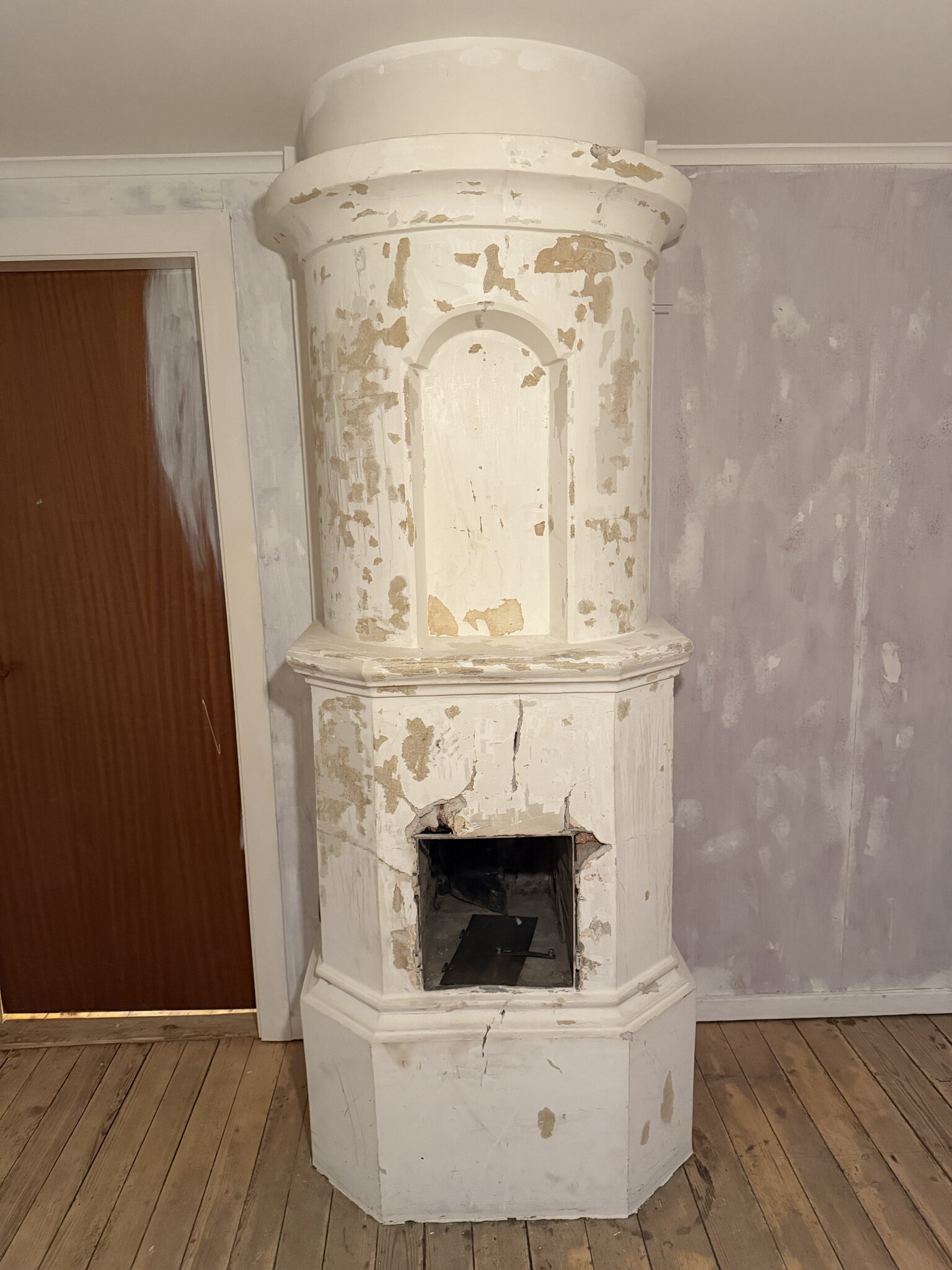
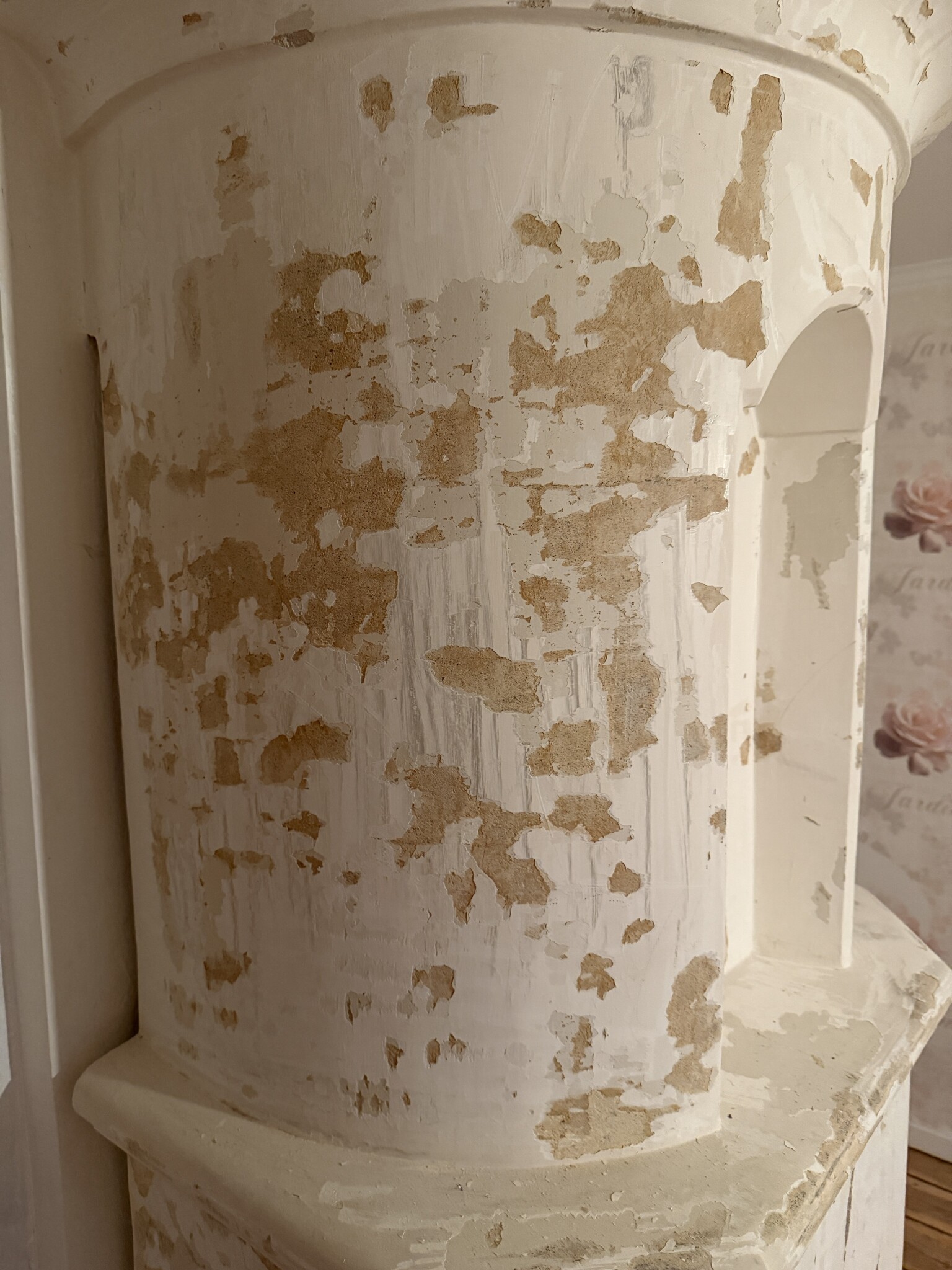
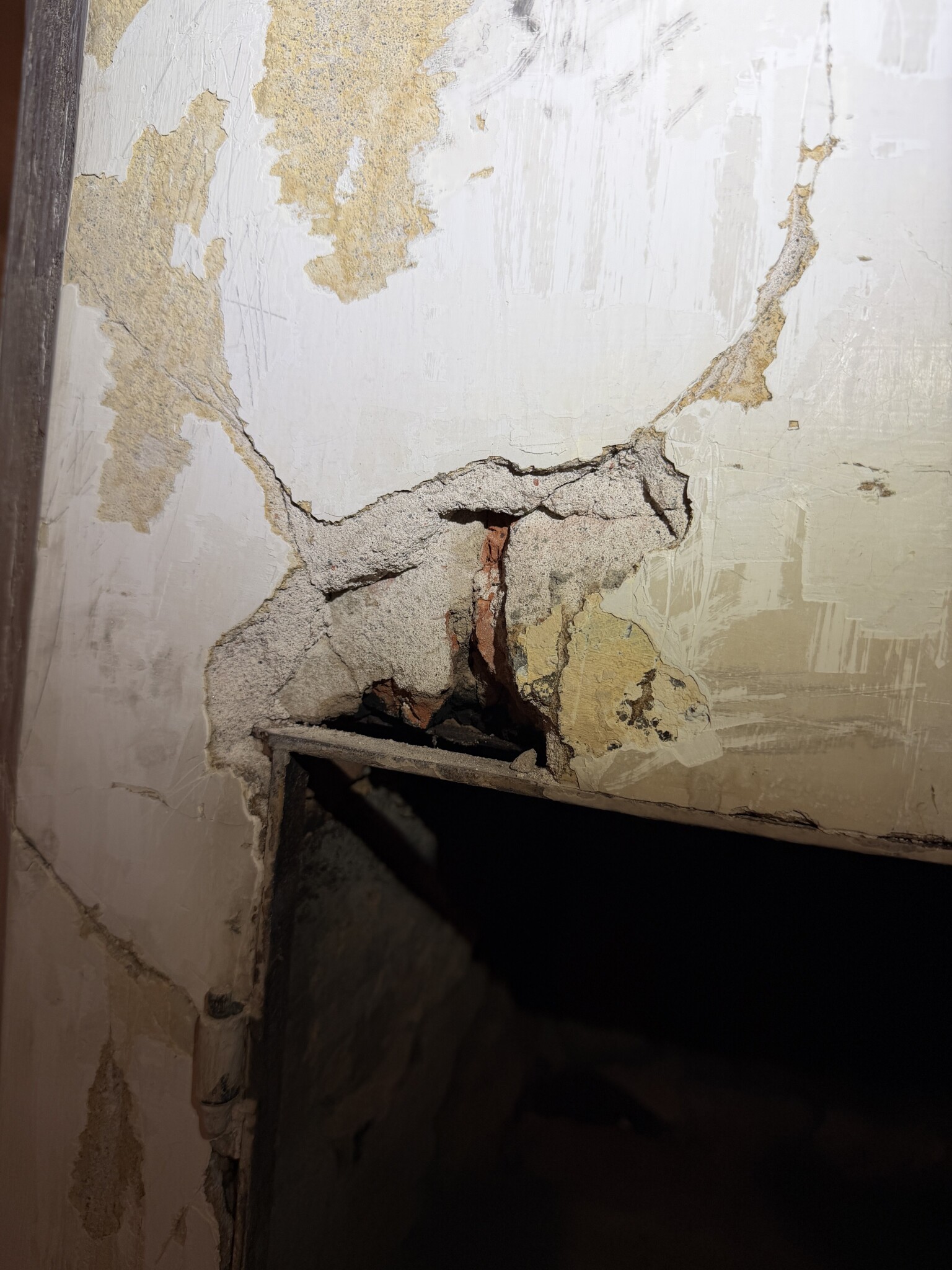
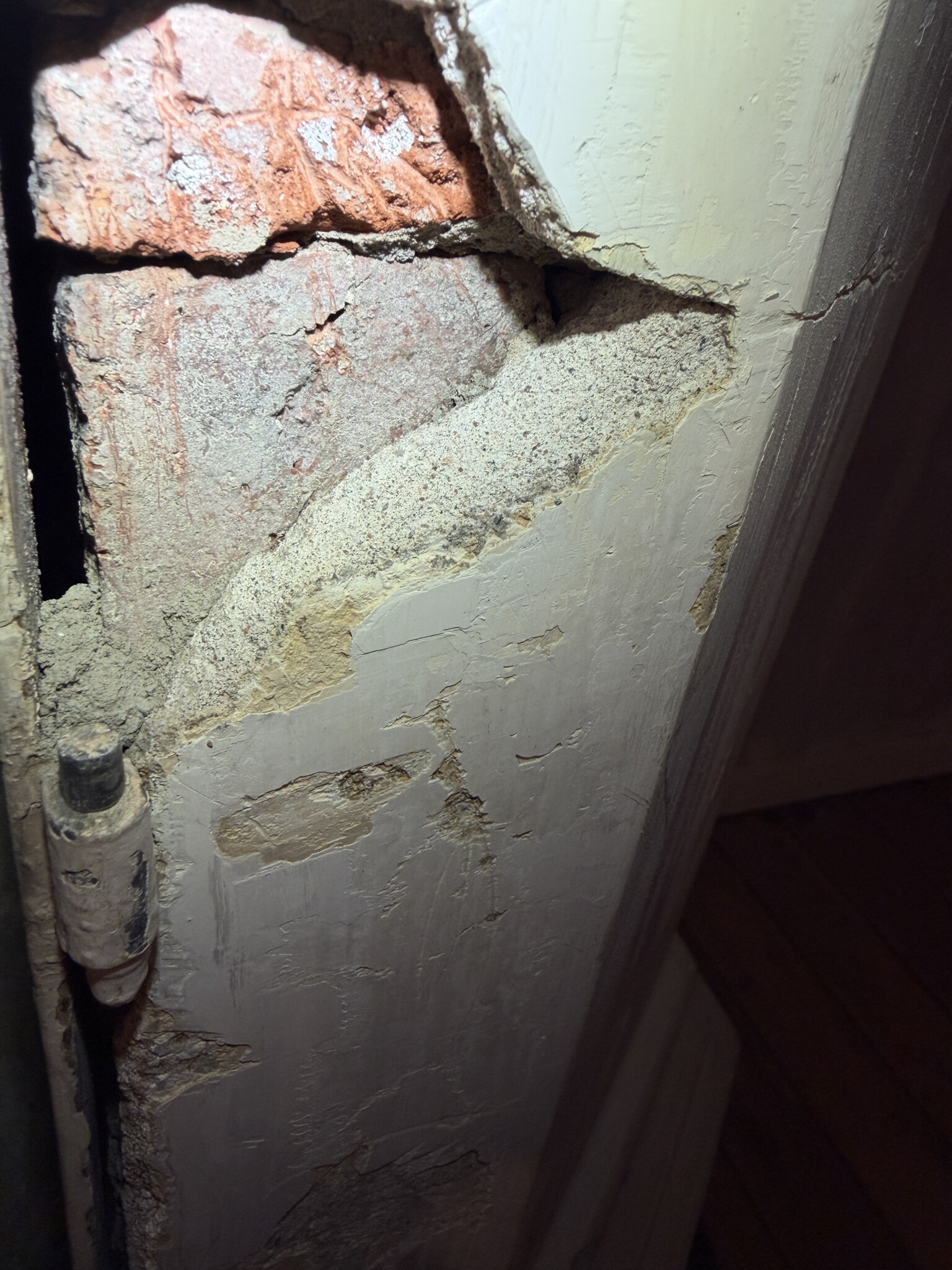
We have moved into a house where there is a rörspis in need of renovation. We have scraped off a lot of loose material and now it remains to restore. What material should I use and how do I achieve the smooth surface shown in the pictures?
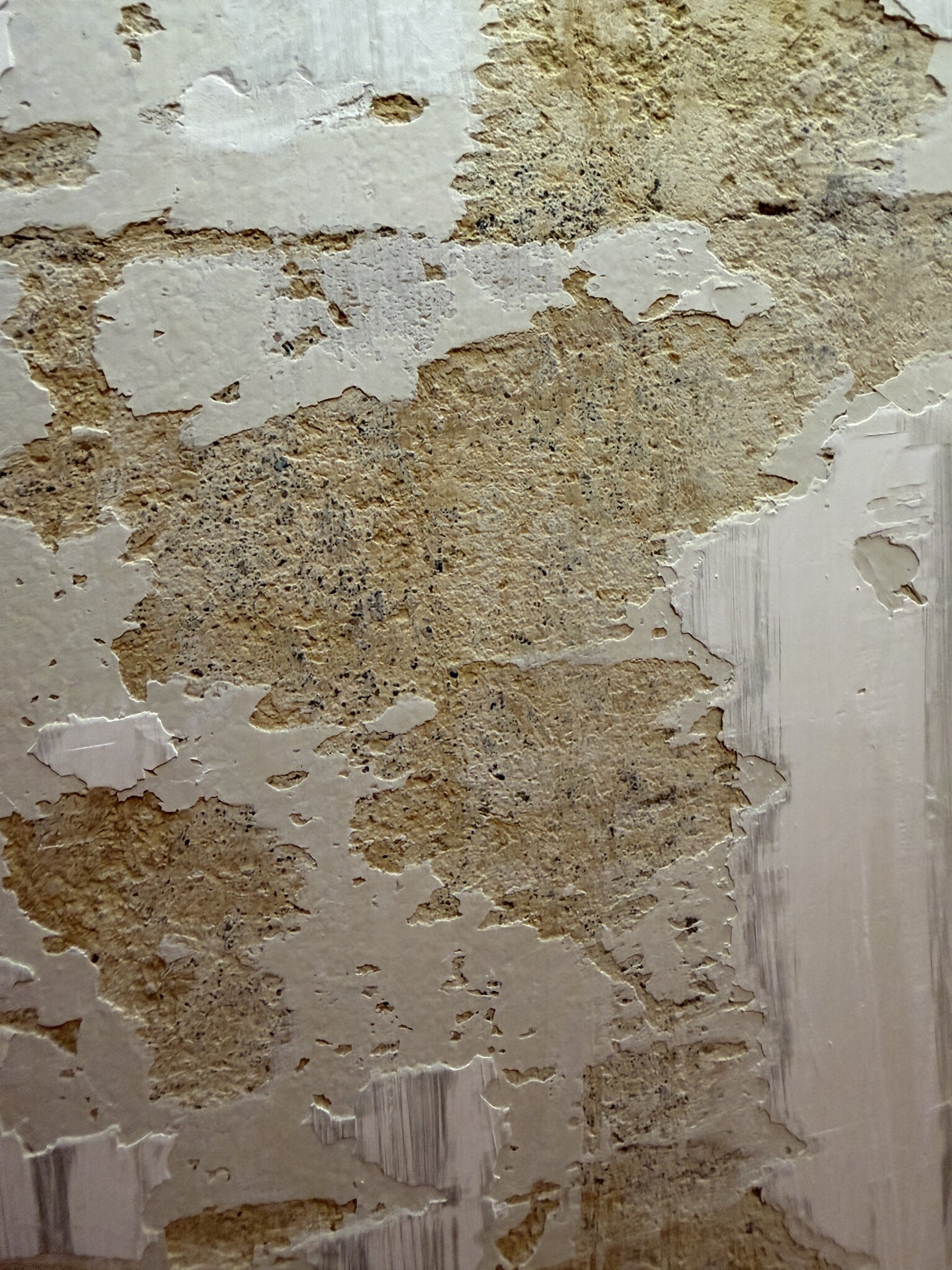
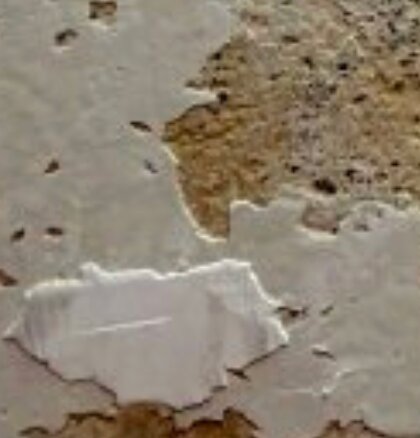
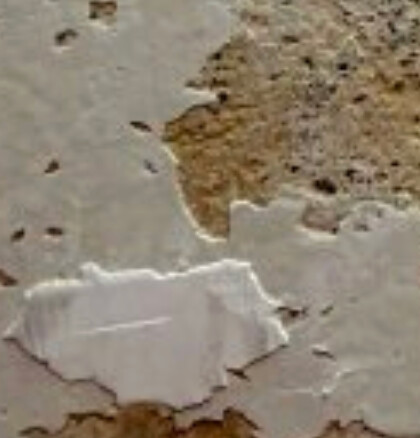
Below you can see the lime plaster. Then it is limewashed, i.e., applied with lime paint. And on top, there seems to be a layer of white plastic paint, like indoor wall/ceiling paint:
If you can remove all the plastic paint, you can paint it with lime paint again. It can be purchased in a specialty store/building conservation store.
It's also possible to paint it with regular matte indoor ceiling paint. A bit of a shame, I think, for such an old antique stove.
I need to try that! To get it completely smooth again, should I use lime filler, or how do you prepare it for painting?
Lime paint is quite creamy and filling, so with a brush and patience, I believe you can get it fairly smooth by applying it to the clean plaster first. The difference between lime plaster and lime paint is really just that plaster is slaked lime + fine sand in a thick water suspension, while lime paint is slaked lime in a thinner water suspension.
Painting with lime paint is somewhat of an art, so I recommend reading up on it. There might be experts on this forum who can help.
There needs to be repairs. You do this with large bricks that can fit into the cavities and clay mortar after all loose material has been removed. Once this has dried for a few days, you finish with lime plaster (=slaked lime + fine sand in suitable size, available for purchase in bags).