Okay, then I would have used b-bruk, but Byggmax doesn't sell putsbruk-b, only murbruk (at least at my Byggmax), which makes it harder for you to apply since it's both rougher and more structural.
Then it's good to have a list for your platonmattan so you can see how thick you should apply it all over.
Also, a warning about ardex, it dries extremely fast. So don't mix a whole bucket or anything, as you have at most 15 minutes before you have to throw it away.
nino said:
Yes, 2 different people writing
But I'm the one who has paint left
Will knock down most of it, the rest I will flex away or scrape.
The top side also needs renovation, preferably before winter. I will use Ardex A46 and E100 additive to repair all minor damage, then it will be STO and a name I've forgotten now, but I think I've mentioned it in the thread, it can be tinted in any color and comes with anti-slip
Ok, my friend recommended mortar B for plastering.
Yes, I'm a tiler by trade and have used Ardex products 99% of the time, so I'm well aware of it, but it's good to mention it in the thread so no one else makes that mistake.
I don't think A46 sets that quickly; maybe you're thinking of A45, which is often used for filling localized areas in bathrooms, that one is fast.
Is it okay to continue posting on my own projects? Otherwise, the admin can remove or open a new thread.
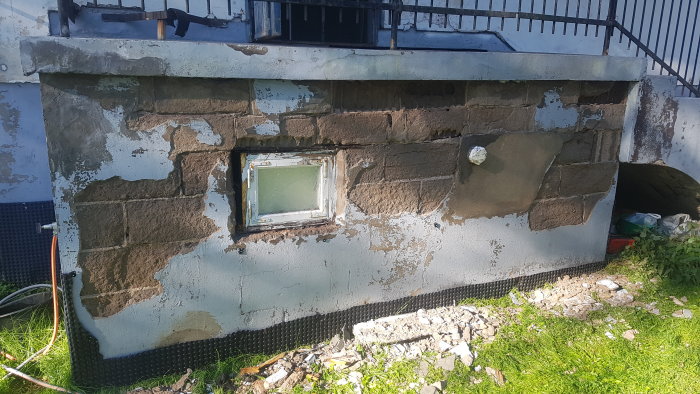
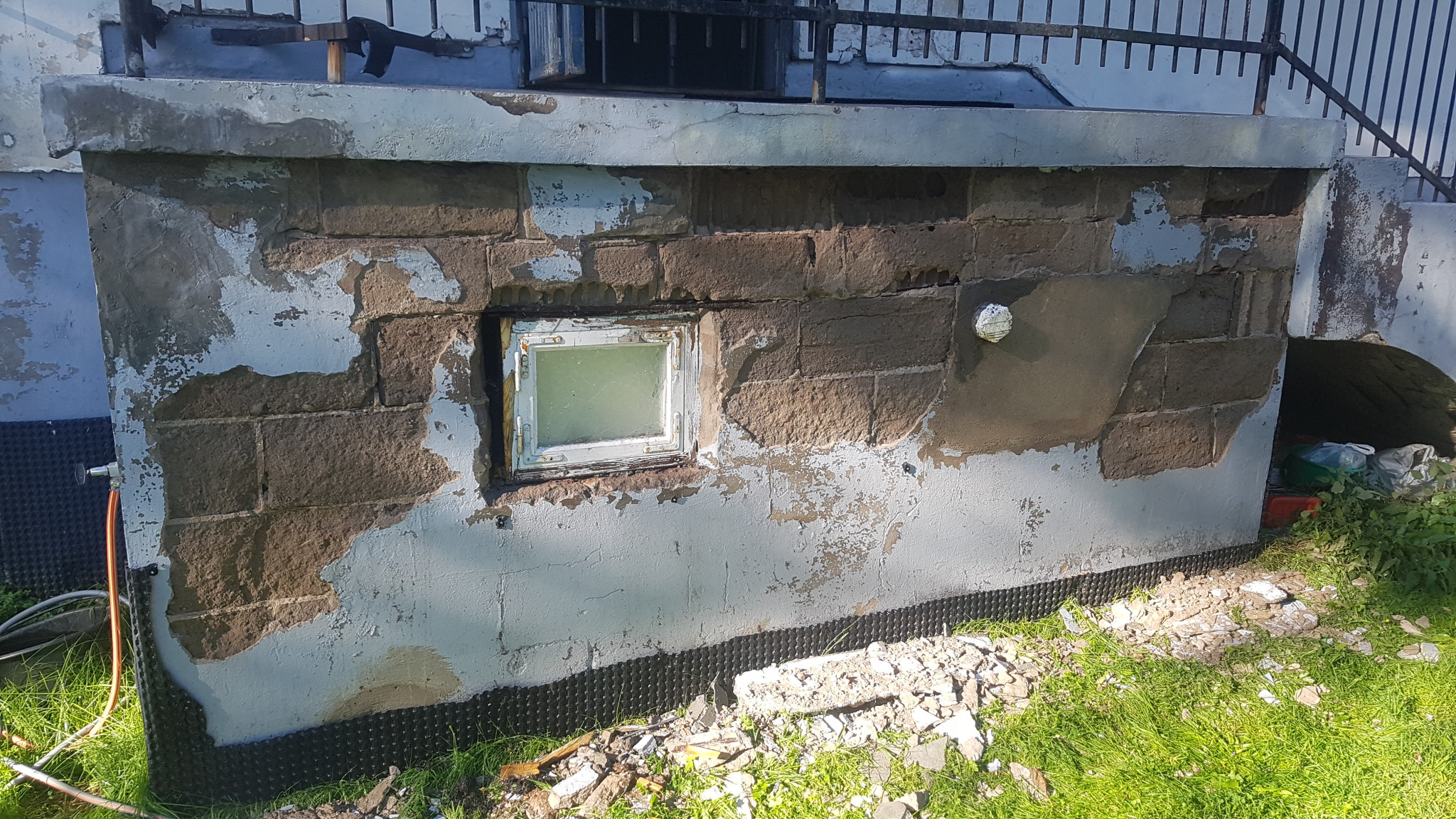
I've knocked down all the loose plaster. Some of the upper clay blocks were in bad shape and cracked quite a bit, missing about 5-6cm in places... Just plaster in layers? I'll go buy stone and mortar for the window and possibly remove it tomorrow.
I've hosed down to remove loose material. Should I cut the edges where there is old plaster with an angle grinder at about a 45-degree angle to get a better transition?
Make a slurry and brush it on, let it dry for a bit, and then apply mortar, is that the right approach?
For me, yes! I started this thread and have no objections. I will take in responses for myself, so it's good for you.
By the way, you have already contributed a lot. The latest post about mortar B and Ardex products was really good.
My stairs look the same as they did. The family thinks I should prioritize a few windows now. Then maybe the roof.
I would just wonder in the long run - if it would be possible to do my work in October with mortar/ardex(?) Maybe quick-drying additives are needed then(?)
Nice to see you've gotten started! Fun to see the pictures. Fingers crossed!
Anyone have a good tip, besides sandblasting, on how to remove paint from the stairs?
Painted maybe 20 years ago with solvent-based concrete paint from Poland.
Would a steel brush on an angle grinder work?
Need to clean it so A46 can adhere to the concrete.
I have a rich man's concrete planer (flex)
But there are scars that are a few mm deep and it's down there that I want to clean without grinding down the steps completely.
I also have a Festool renovation grinder with "gears"
I know what you mean, except for tapping - which I have to do (pictures at the beginning of the thread), then just sand away all the paint (with a large 180 sander with a 125 diamond blade (so it doesn't spin too fast)) so there are some "wounds" or cuts left that might be good to pressure wash, I think. In the worst case, chisel them up so you have 100% clean old concrete for filling.
Considering whether I should go over the entire surface with the renovation mill when everything is ready, maybe it will hide all the repaired parts if it becomes an even surface. Possibly scrape putty with A46 and then paint.
Tried the steps with the sanitation mill, it's like 3 x 4 gears that spin and hit, but almost nothing happened, not on the side of the stairs either where it's quite smooth but there's paint.
Anyone tried wet blasting with a pressure washer, would it work to remove the paint you think?
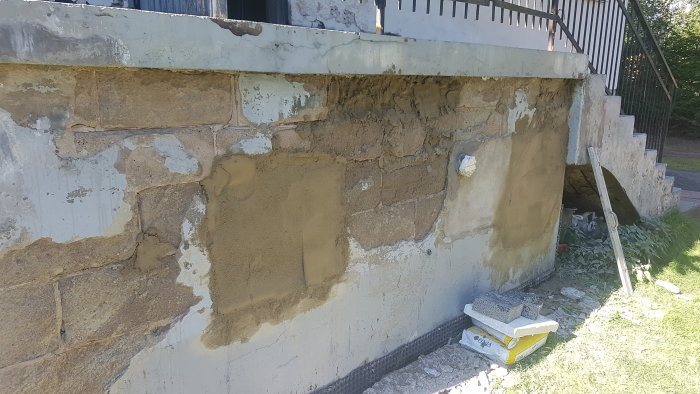
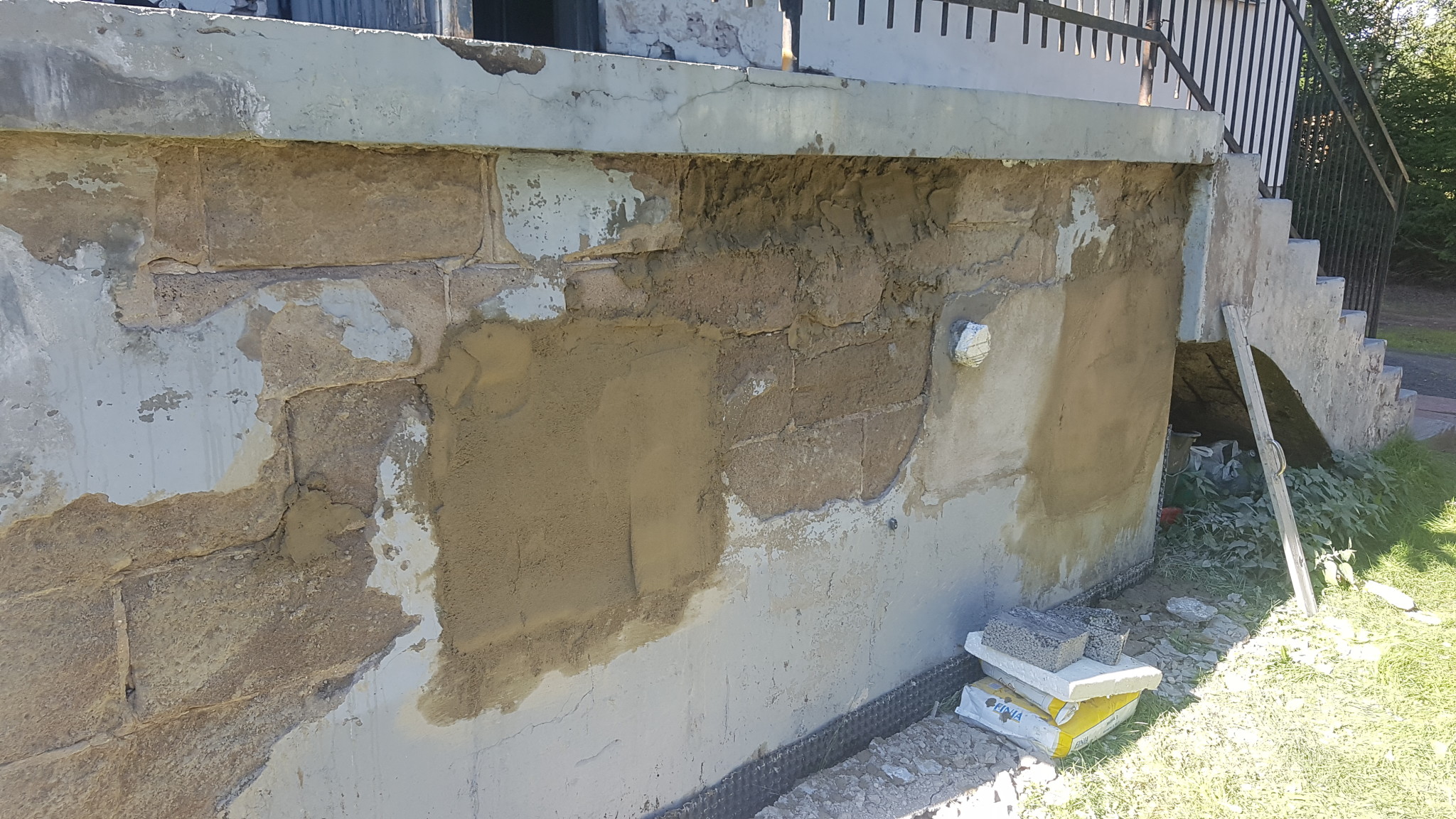
Polished furthest to the right so that part is probably done, filled up with bruk where the window was, will have to apply more there later.
Should you apply the bruk roughly, wait for it to set a bit then board float?
Dried slowly so I had to use the sword and even out as time was running out.
It was more than initially thought, so it's best to redo it completely. Since it's blocks, you should use mesh, but if you do as I intend, it shouldn't show through, although it might still crack later on. Sand all the paint on the render and brush on primer on everything where there are blocks. Then level everything to the same level as the remaining render. Everything should be rough, then finish it off with a board. Absolutely do not smooth it out it will result in too smooth a surface, and adhesion for the next layer will be very poor. Instead, scrub with a scrub board somewhat diligently. Scrubbing is not only for the surface; it also evens out your finished surface, and it's generally easier the larger the scrub board you have, so you don't need to overdo it but don't buy the smallest one.
When it's even, wait a few days for it to dry and get closer to the remaining render in color. Of course, you can do this the next day, but it will result in uneven drying time, making it more difficult for you to do a good job. Then, buy, for example, Weber 133, which is a mortar with small aggregate, and apply it over the entire surface and scrub with a float. It becomes like new and no seams.
If you don't want to do that and plan to smooth it with the old render so you can skip sanding and an extra layer, just prime it and fill everything near the blocks, but leave 3-4 mm from being level with the old. Then apply Weber 133 on the rest next and scrub. Of course, you can level everything the same day with regular mortar, but it has very large aggregate (0-4/0-3), and it will create ridges where it becomes narrow and close to the seam.
It was more than we initially thought, so it's just as well to redo it completely. Since it's a block, you should have a net, but if you do as I think, it shouldn't shine through, but it can still crack later on. Sand all the paint off the plaster and brush on red primer on everything where there is a block. Then level everything out to an even level with the plaster that's left. Everything should be rough, and then you smooth it out with a board. Absolutely no polishing the surface becomes too smooth and the adhesion on the next layer becomes very poor. Instead, scrub with a scrub board, somewhat thoroughly. The scrubbing is not only for the surface; it also straightens your smoothened area, and it's generally easier the larger the scrub board you have. You don't need to overdo it, but don't buy the smallest one.
When it's even, wait a few days so it dries and is closer to the plaster that remained in color. Of course, you can do this as soon as the next day, but the drying time will be uneven, and it will be harder for you to do a good job. Then buy, for example, Weber 133, which is a B-mortar with small ballast, that you polish over the entire surface and scrub with a felt board. Everything looks like new and no seams.
If you don't want to do that and plan to go even with the old plaster so you avoid sanding and an extra layer, just prime and then fill up everything near the blocks, leaving about 3-4 mm from being even with the old one. Then apply 133 on the rest next and scrub. Naturally, you can knock everything out on the same day with regular B-mortar, but it has a very large ballast (0-4/0-3), and it will pull roses where it becomes thin and near the joint.
Ok, yes, it was 0-3 in the mortar I have, so it got a bit rough. I'll check if Weber 133 is available here or if they can order it in; it would be great to plaster the whole thing, then it will look nice.

nino said:
Yes, 2 different people writing