
Hi
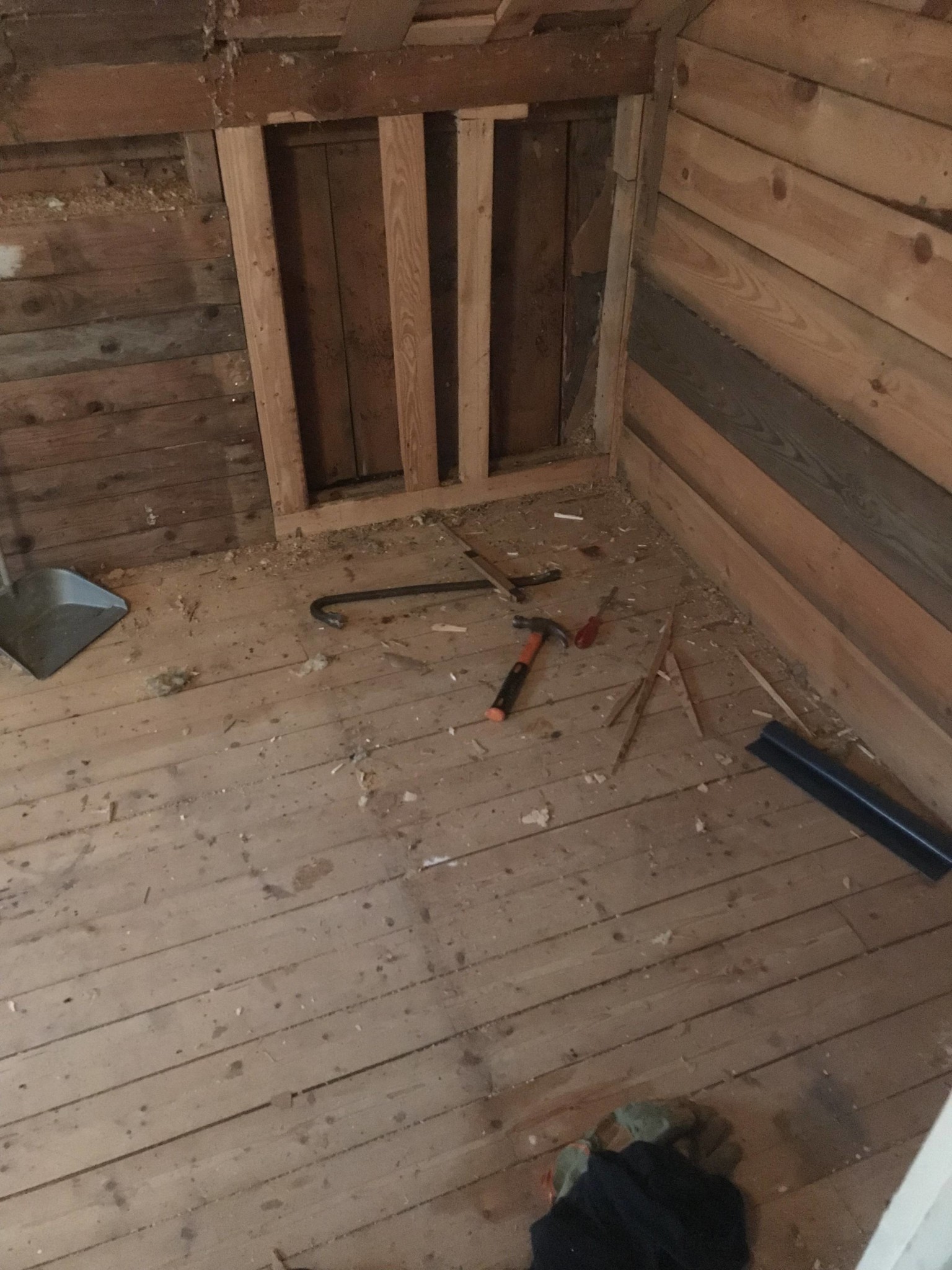
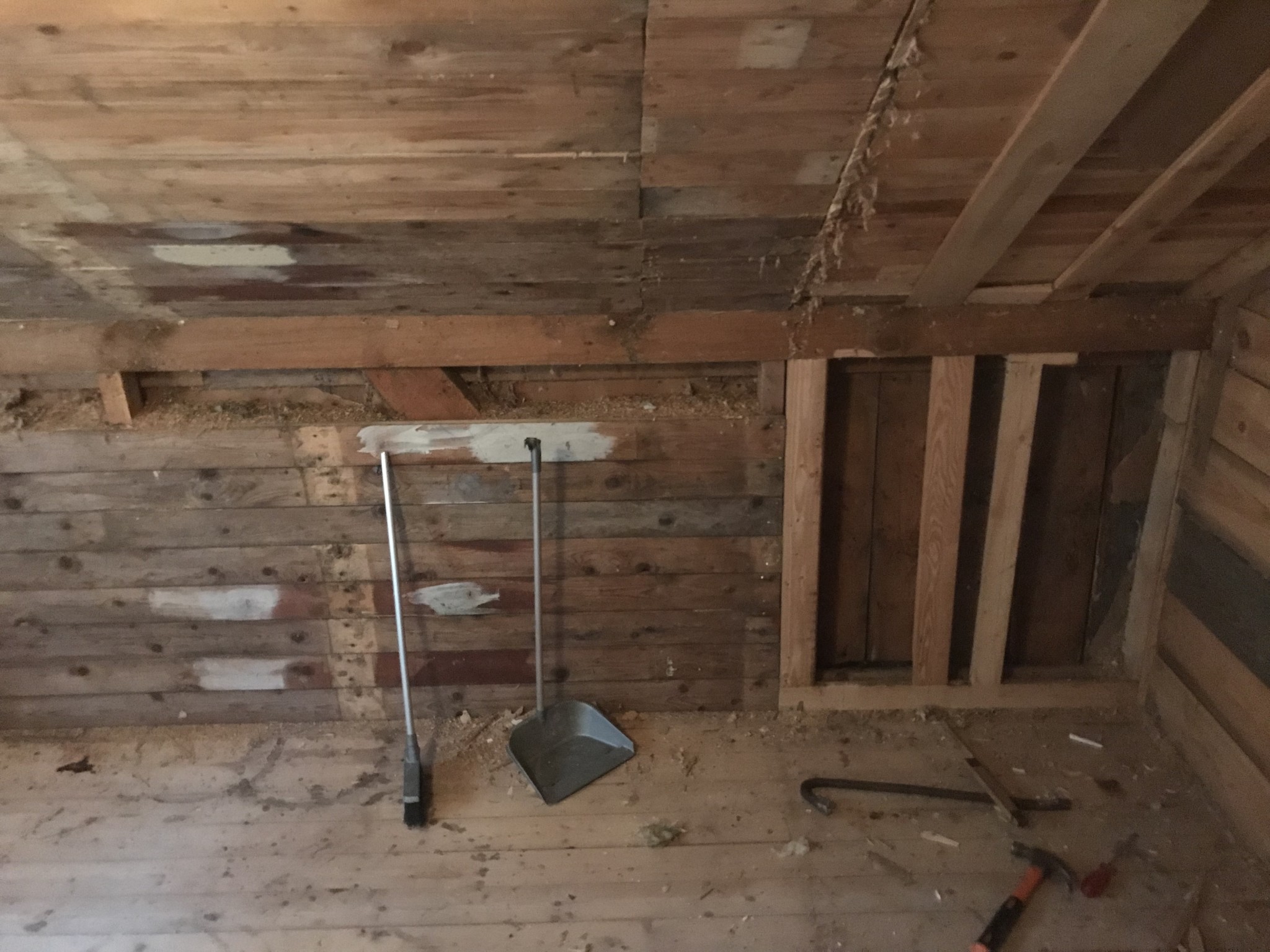
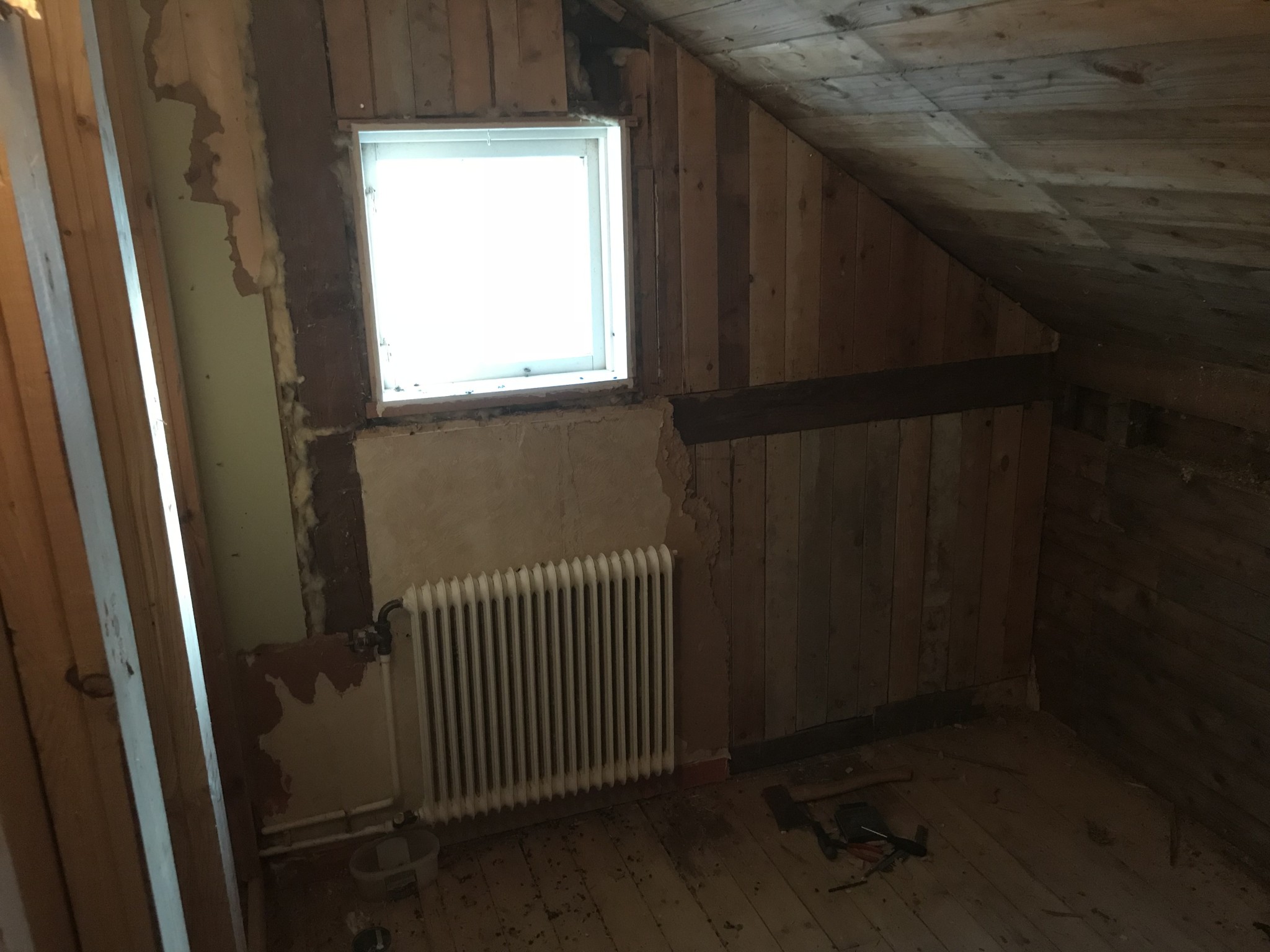
I'm in the process of renovating a small room upstairs in our old house. Built somewhere between 1930-40.
I want to mention right away that I'm a DIY enthusiast inspired by "Bygglov" and "Arga Snickaren." So excuse my ignorance.
I want to replace the wood fiber insulation with newer insulation.
This means I have to tear up walls and floors.
The walls and floors are wood, about 20mm and 30mm respectively.
The beams are 175x75 from what I can see.
When I start tearing up the floor, it continues into the next room. Under a partition wall.
What should I do here?
Saw off the floorboards under the partition wall and try to brace the joint from underneath? So that old floorboards and new chipboard meet there.
Furthermore, I'm considering installing nogging between the beams that are spaced 65cm apart center-to-center.
I'm in the process of renovating a small room upstairs in our old house. Built somewhere between 1930-40.
I want to mention right away that I'm a DIY enthusiast inspired by "Bygglov" and "Arga Snickaren." So excuse my ignorance.
I want to replace the wood fiber insulation with newer insulation.
This means I have to tear up walls and floors.
The walls and floors are wood, about 20mm and 30mm respectively.
The beams are 175x75 from what I can see.
When I start tearing up the floor, it continues into the next room. Under a partition wall.
What should I do here?
Saw off the floorboards under the partition wall and try to brace the joint from underneath? So that old floorboards and new chipboard meet there.
Furthermore, I'm considering installing nogging between the beams that are spaced 65cm apart center-to-center.

Consider whether it's really worth tearing up the floor. It will be quite a lot of extra work.
If you want to do it anyway, you can saw along the partition wall. Tip: use a reciprocating saw with a short blade.
Then there might be a beam under the partition wall, and you can screw-glue a friend against it to support the new floor.
If you've opened the floor, you can also check the electrical wiring for ceiling lights below.
If you want to do it anyway, you can saw along the partition wall. Tip: use a reciprocating saw with a short blade.
Then there might be a beam under the partition wall, and you can screw-glue a friend against it to support the new floor.
If you've opened the floor, you can also check the electrical wiring for ceiling lights below.
Well, thank you, I'm starting to understand what kind of work it is. But I really want to remove shavings and sagging floors.
I'm considering if kortling can reach under the partition wall to the next joist in the worst case in the next room. And then get support on them at the joint.
I don't know if what I call the partition wall is load-bearing. But I guess that lying with large gaps and sagging even on them is not load-bearing.
I'm considering if kortling can reach under the partition wall to the next joist in the worst case in the next room. And then get support on them at the joint.
I don't know if what I call the partition wall is load-bearing. But I guess that lying with large gaps and sagging even on them is not load-bearing.
Last edited:

You have a house that is built with a plank frame, probably 3 inches. The floor joists are 3x7 inches, which was almost standard at the time regardless of the span. If you are undertaking such an extensive renovation, I think you should consider whether you can improve the properties of the floor structure. To be able to get opinions on that from the forum, you need to provide the current spans. If there are interior walls on the ground floor that could be load-bearing, floor plans are best.
Click here to reply