
We have a house built in '63. Semi-detached house where a storage room is connected to a double garage partially situated at ground level, but the long wall in the picture is an exterior wall, and the floor is level with the ground outside. Until about 2 years ago, there were issues with the brick facade (brick on the upper floor, not brick in this basement level), so water would run in and down (we had water on the floor and the wall). The facade has been fixed with new mortar and sealing. It has been dry since then. The wall and partially the ceiling in this room have, however, taken damage, and we are now going to fix it.
We have tried to chip away everything that is loose, but in some areas, it still sounds hollow when you tap on the white wall. Is it important to remove in all areas where it sounds hollow?
How should we proceed then, use house fix in the crack and then plaster everything over? Is it too overwhelming if you have not done it before? Or use other cement-based materials? Can you use this insulating wall filler to make the exterior wall warmer (since there is no extra insulation):
https://www.bostik.com/sv/sweden/bostik-products/roll_thermo
The idea is then to fix the ceiling and floor, and this should become an exercise room
Grateful for answers
We have tried to chip away everything that is loose, but in some areas, it still sounds hollow when you tap on the white wall. Is it important to remove in all areas where it sounds hollow?
How should we proceed then, use house fix in the crack and then plaster everything over? Is it too overwhelming if you have not done it before? Or use other cement-based materials? Can you use this insulating wall filler to make the exterior wall warmer (since there is no extra insulation):
https://www.bostik.com/sv/sweden/bostik-products/roll_thermo
The idea is then to fix the ceiling and floor, and this should become an exercise room
Grateful for answers
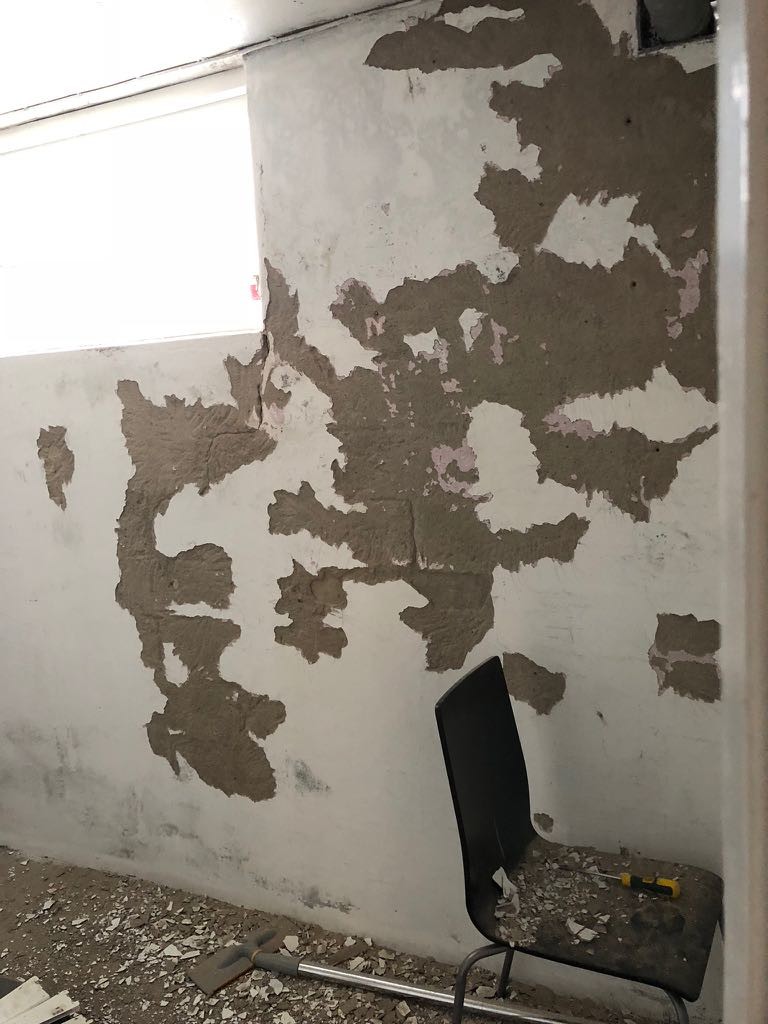
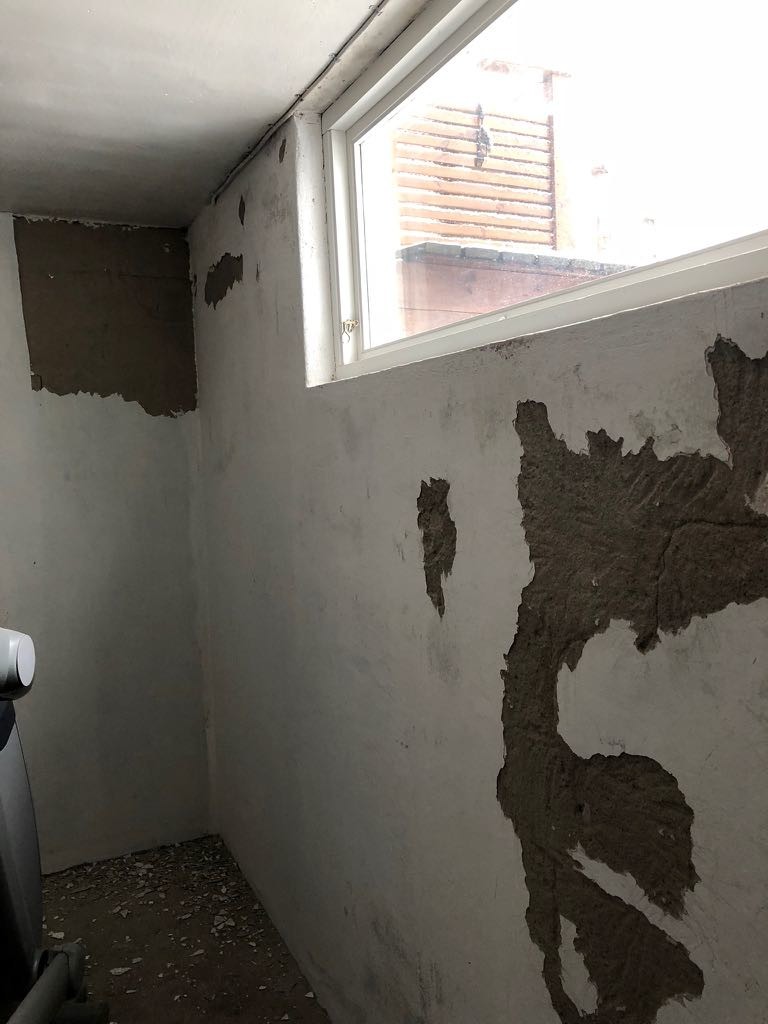
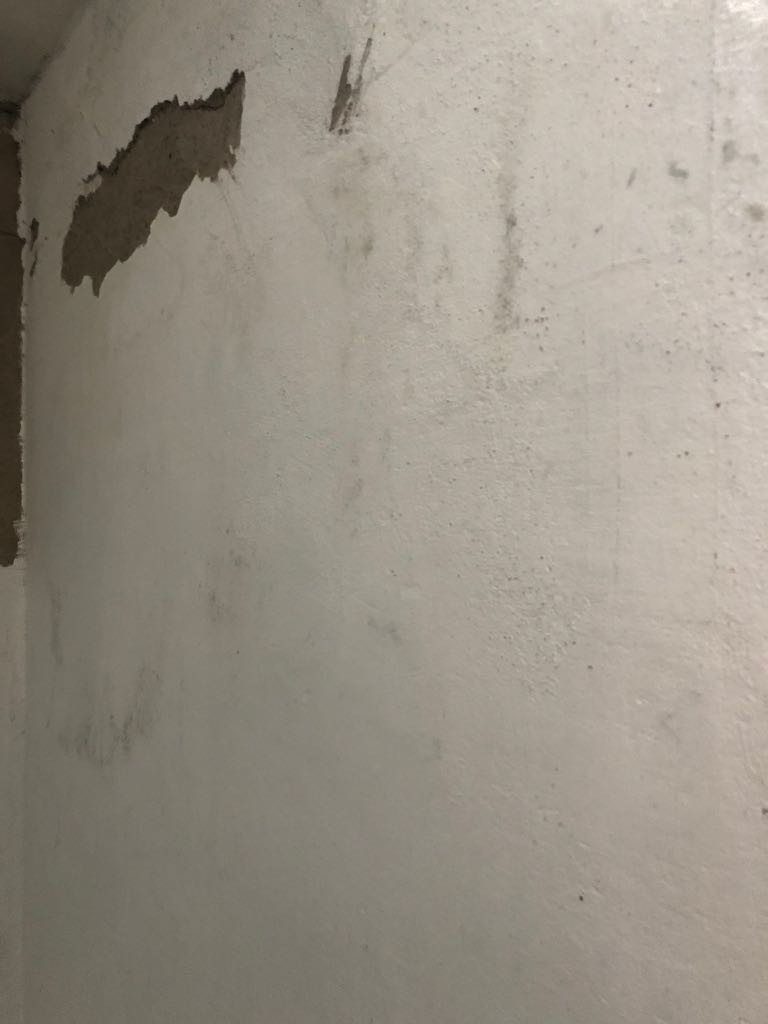
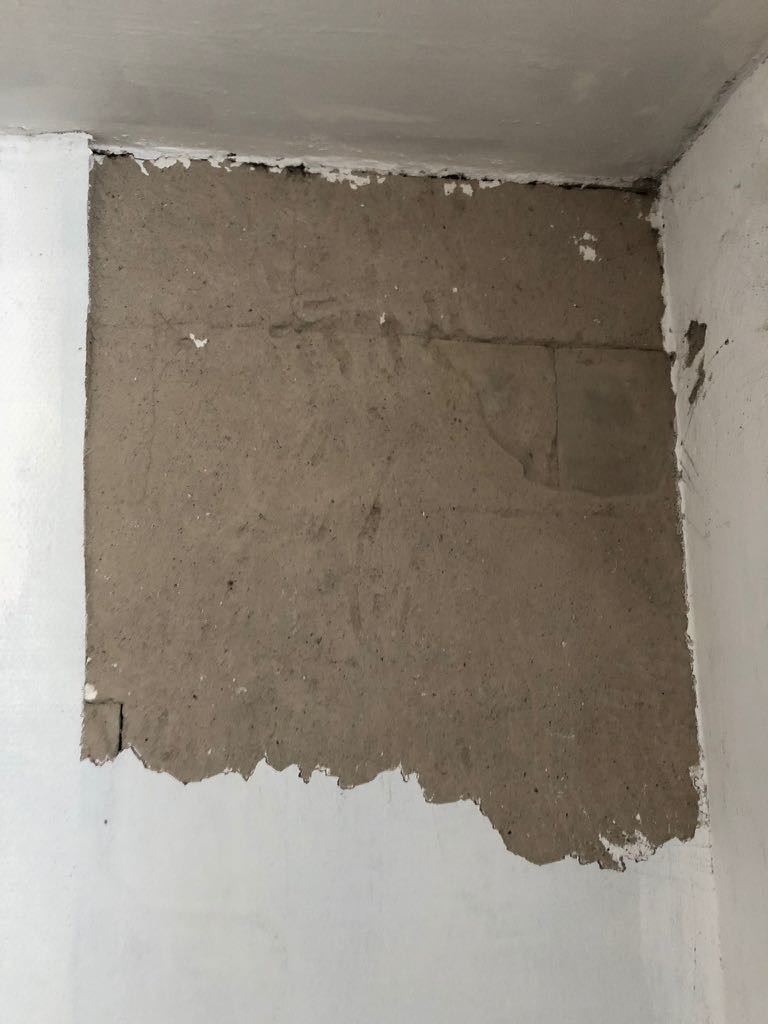
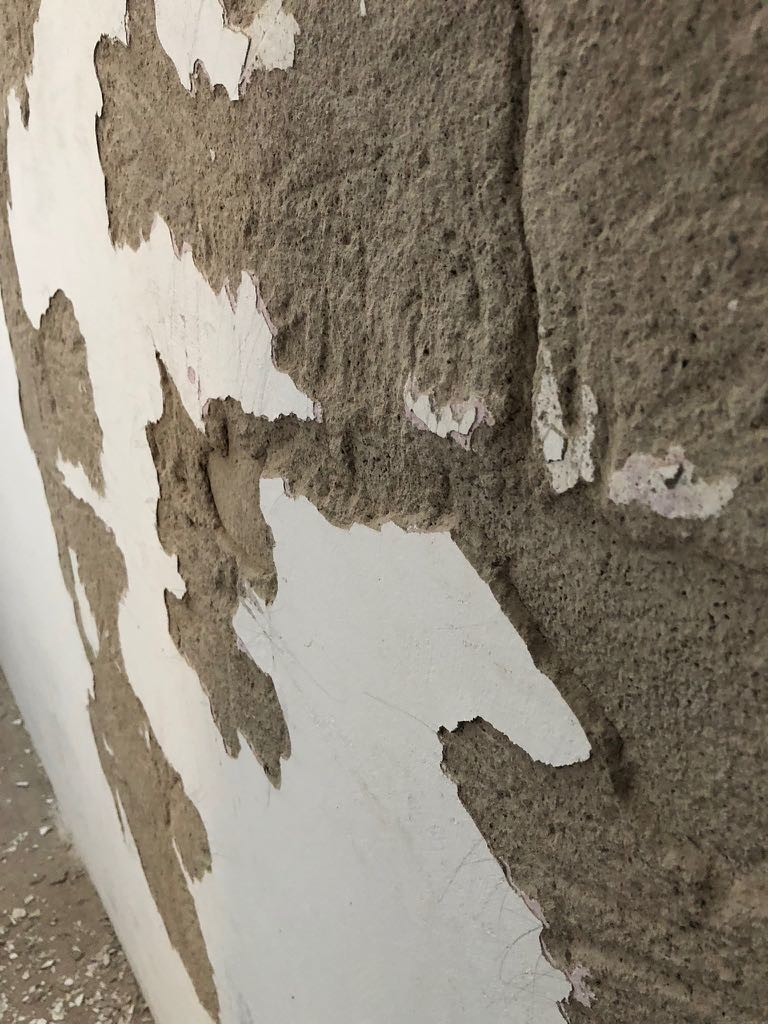
Everything that is loose should be removed and re-plastered with breathable lime mortar, and painted with breathable silicate paint.
What is insulation paint supposed to insulate against, 2 mm is nothing for insulation purposes.
What is insulation paint supposed to insulate against, 2 mm is nothing for insulation purposes.
Ok. Thanks for the response. I think the previous residents used something very hard. Maybe cement-based in certain areas. But it's probably just a matter of trying to chip it away.
According to them, insulating filler is supposed to be some new type of innovation where, if applied thinly, it increases the wall's insulation factor by +15%. But I have no idea if that's true. It almost sounds too good to be true. It's microscopic plastic beads. The question is if it breathes; otherwise, it won't be good.
According to them, insulating filler is supposed to be some new type of innovation where, if applied thinly, it increases the wall's insulation factor by +15%. But I have no idea if that's true. It almost sounds too good to be true. It's microscopic plastic beads. The question is if it breathes; otherwise, it won't be good.
Insulating paint 15% calculated on what and how thick ??? too good to be true in my opinion, everything that is applied to a wall insulates, just how good and effective it can be is probably written in some study. Who ordered it? probably like with statistics, the customer says what they want
1 Statistics
2 Lies
3 Damn lies
4 Utopia
1 Statistics
2 Lies
3 Damn lies
4 Utopia
If we return to the big question.. choice of “bruk”. It's kalkbruk you should use then..? Is it something you prepare yourself in a limited area, or is it just a matter of calling in a tradesman?
On a limited surface, you can probably achieve a smooth surface, but it will then result in a different texture in those areas and be clearly visible once you've painted. If you want nice walls, then full plastering is required, and it can be a bit difficult if you're not fully aware of how to do it, often resulting in a rather wavy wall. Otherwise, kalkputs is the way to go.
Thanks for the tips, I'll hire a murare to plaster the wall so it turns out well!

Eftersom fasadrenoveringen löste vattenproblemet, är du i en bra position att åtgärda den inre skadan nu. Ideally, anything that’s hollow or loose should be removed before you re-plaster, otherwise it can detach later and you’ll have to redo it. It doesn’t mean you have to chip the entire wall—just the sections that clearly sound hollow or feel unstable. Once that’s done, you can patch with a cement-based repair mortar (stronger and more durable than a “house fix” filler), then skim coat or plaster to get a smooth finish. As for the insulating check https://revetementagro.com/, it will give a small improvement in surface warmth but it’s not a substitute for proper wall insulation—it can make the room feel a bit more comfortable, though. If you’ve never plastered before, it can be a bit overwhelming, but with patience and watching a few tutorials you can get a decent result, especially if you’re aiming for a functional exercise room rather than a showroom-perfect finish.
Click here to reply