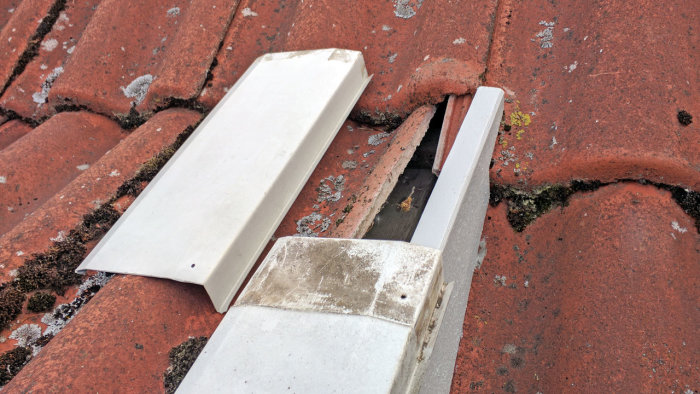
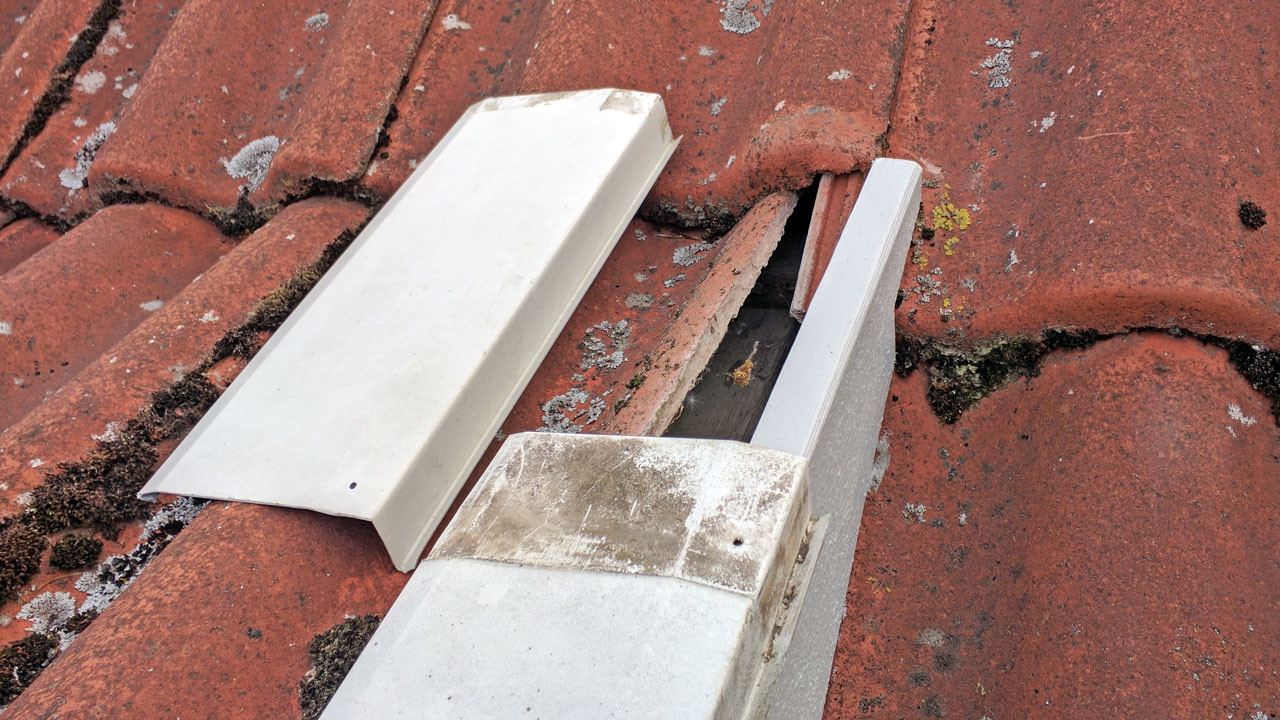
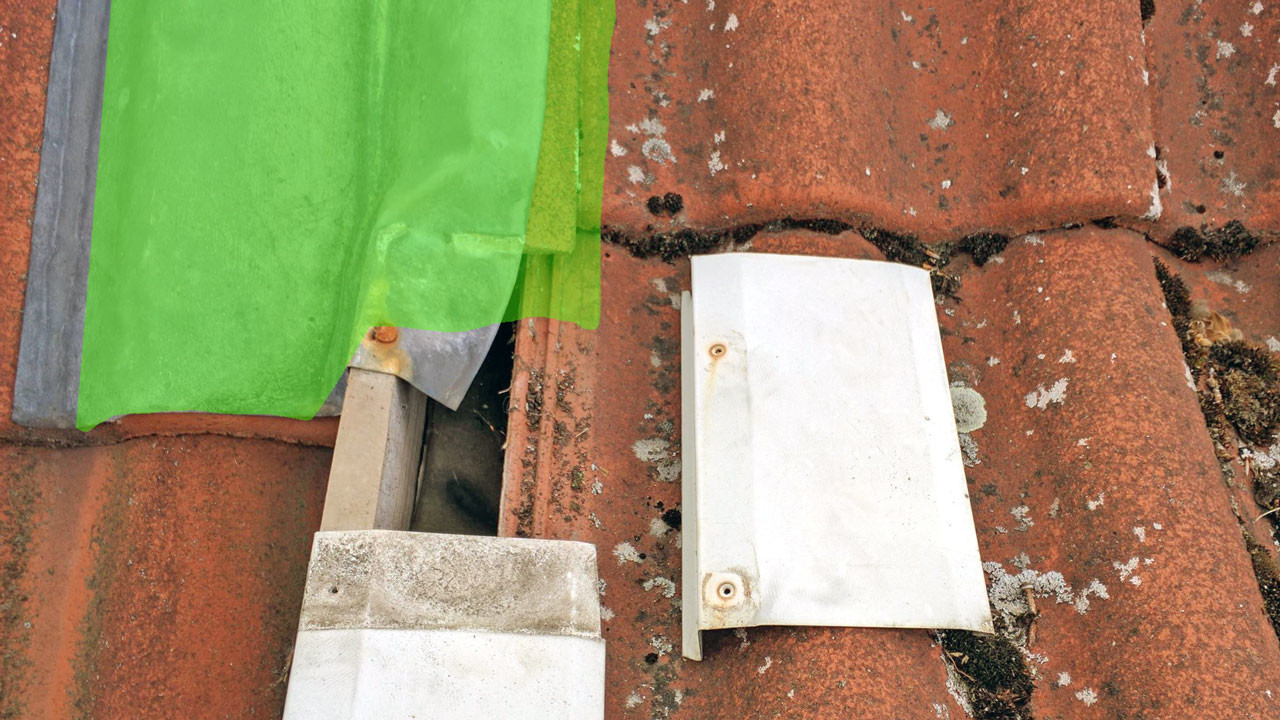
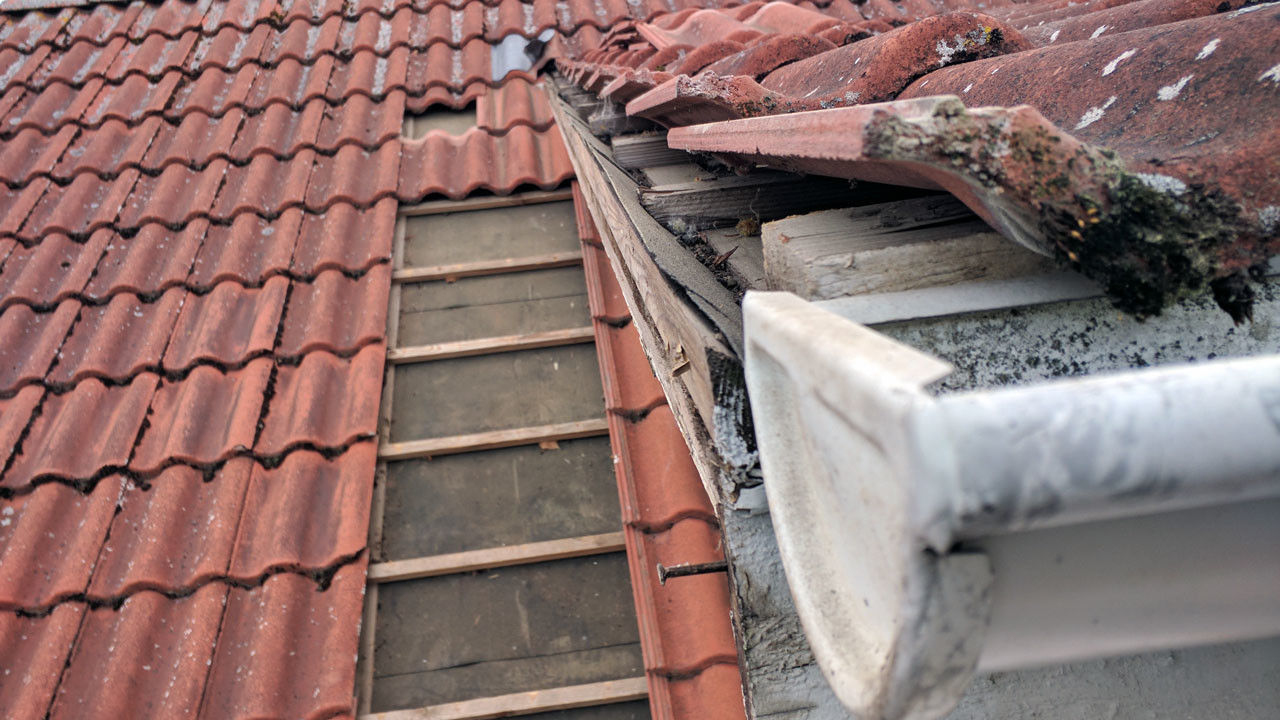
At the same time, it's been sitting like that since ~1999 as far as I can remember. I'll see if I can manage before the scaffolding comes down. I wouldn't want to mess it up and make it worse either, because then it's over for getting up on the roof.
Just picked up all the roof tiles, pretty dull and time-consuming going back and forth, especially when you're afraid of heights. Maybe I should install roof steps so I have something to climb on that isn't affected by the rain.
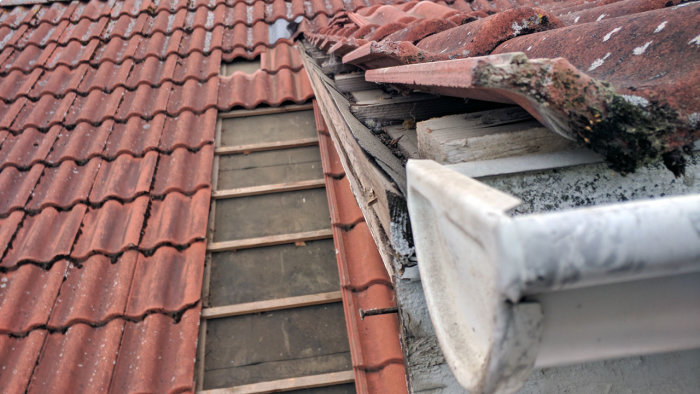
This is what it looks like on the other side of the dormer, by the way ...
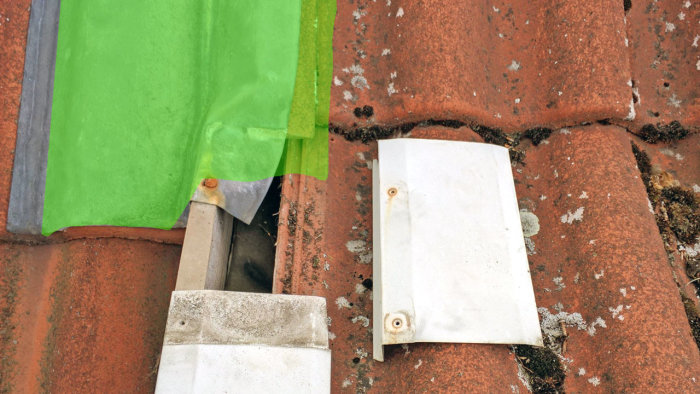
So if I can get back up again, is this reasonable? Move the plate a bit to the right so it fits, reshape it, and place it over the wind board plate, screw it down. Flummig sketch:
Another thing I thought about is that there is very little to nail the wind board to. Both the previous setup and the one I did go through the triangular strip and puncture the paper. But there is nothing else to nail into as I see it.
What you can do to avoid nailing through the felt if the nail is too long is to nailing angled. That means nailing at an angle along the roof slope. It will be a nightmare to dismantle later if the angle changes in different directions. But it won't get any stronger than that. Otherwise, use shorter nails. The part of the nail that protrudes past the material is completely unnecessary and instead damaging.
Otherwise, moving the lead slightly will work well. But wear gloves when handling it.
Furthermore, you can advantageously, if not already done, leave a gap of a couple of centimeters between the fascia board and the tile, so that the wood doesn't lie there and absorb the wetness.
Unfortunately, I've already put up the wind boards, but at least it didn't turn out worse than the so-called carpenters who originally built the house.
I can say as much as that there are definitely traces of leakage caused by the poorly fitted lead sheet, I saw it now when I moved upwards and removed some tiles on top of the roof dormer. That needs to be fixed, of course, but I didn't have time for it today either.
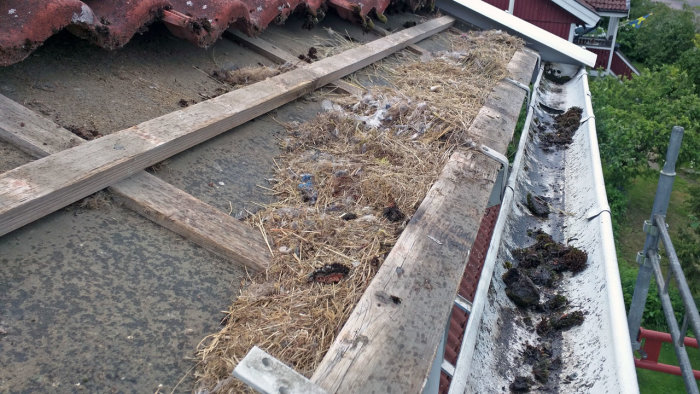
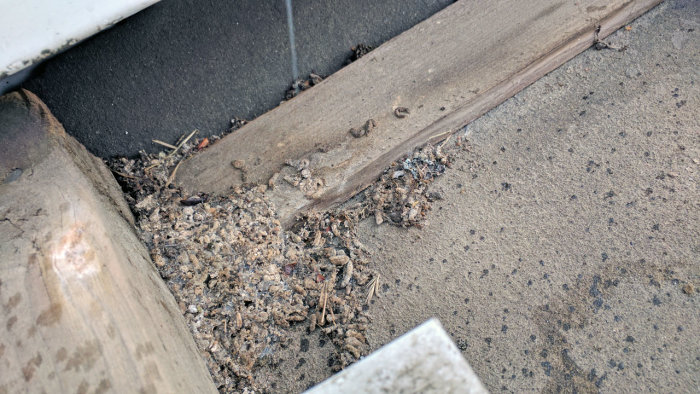
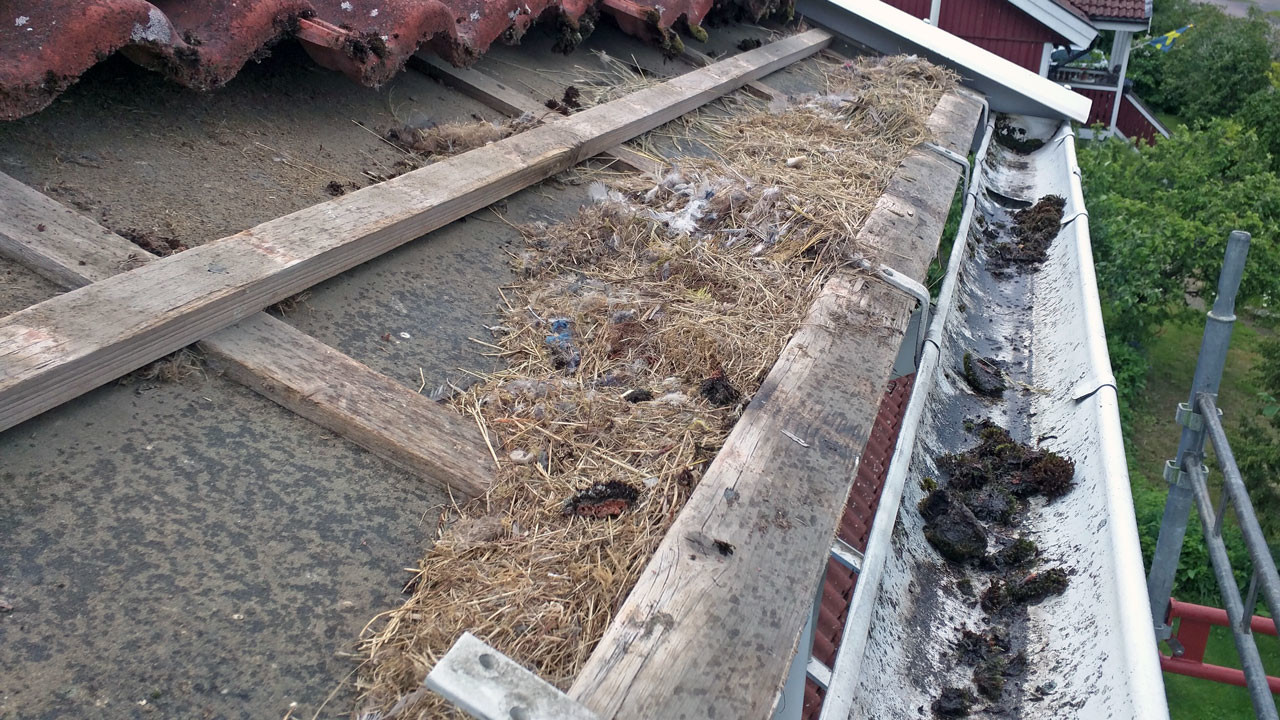
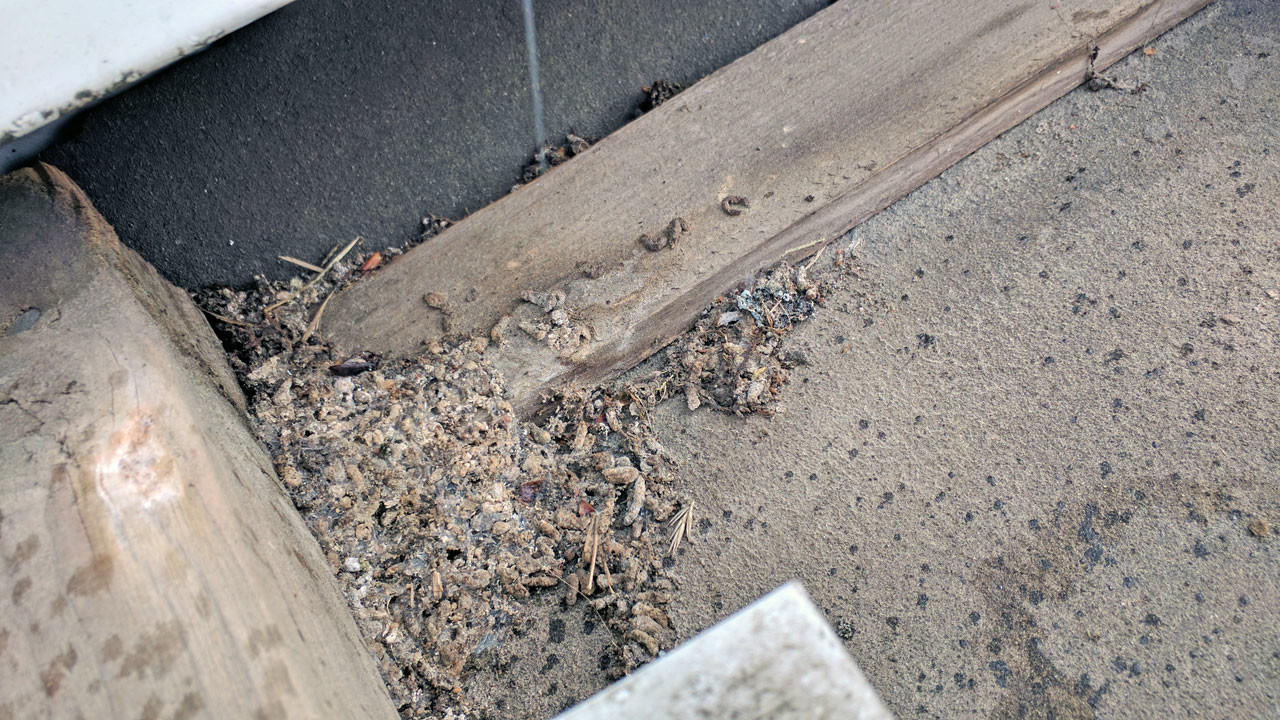
Another thing I discovered was the extent to which small birds had built nests under the tiles over the years. It turned into a whole bucket, but now it's clean and cleared with a leaf blower. A cautionary example (yet another).
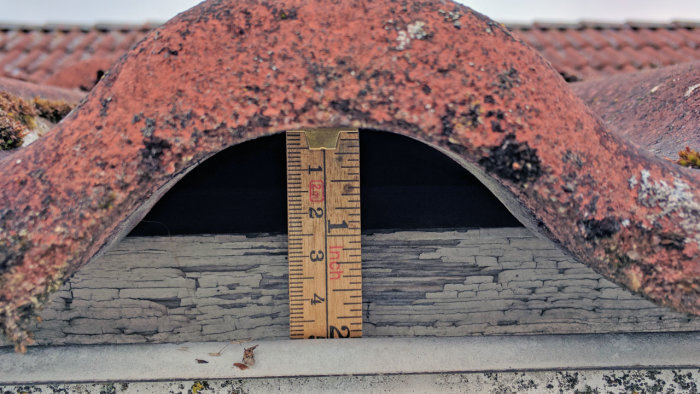
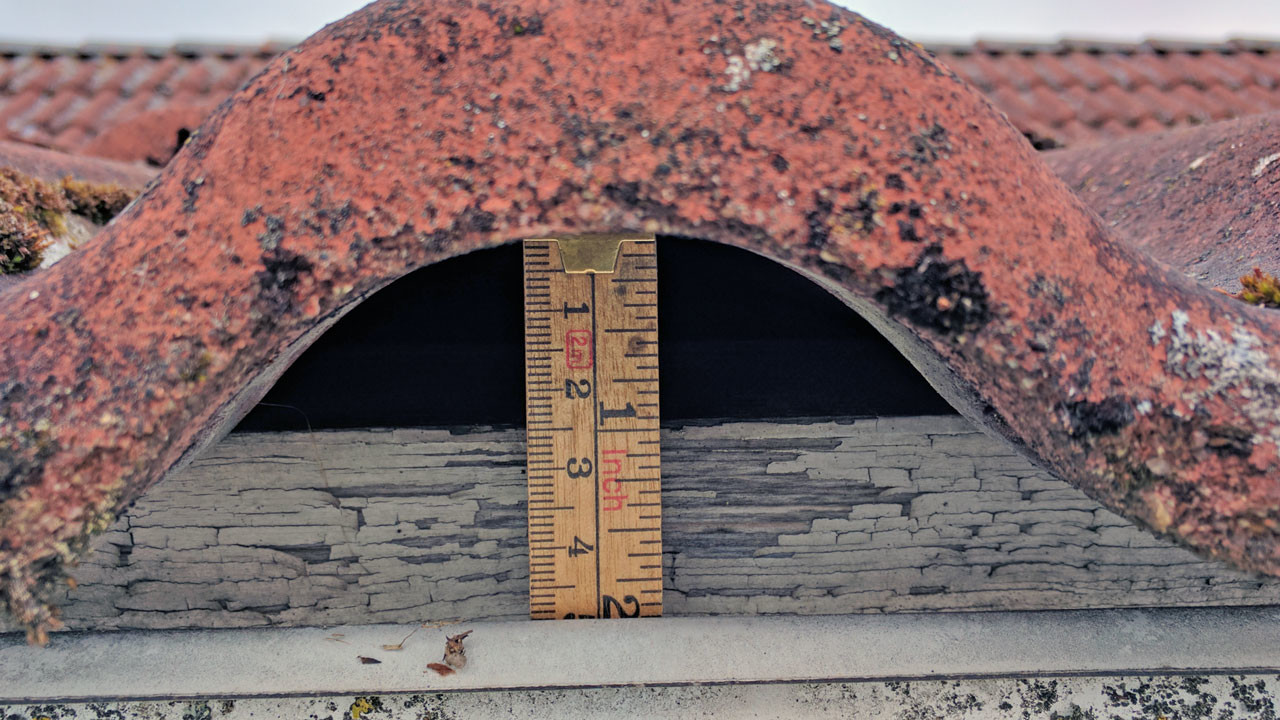
Can bird bands fit here? It seems a bit unclear which way the bands should be angled.
Last edited:
Click here to reply
Vi vill skicka notiser för ämnen du bevakar och händelser som berör dig.