As the description says, I am taking down an interior door in an older house with an apartment on the upper floor.
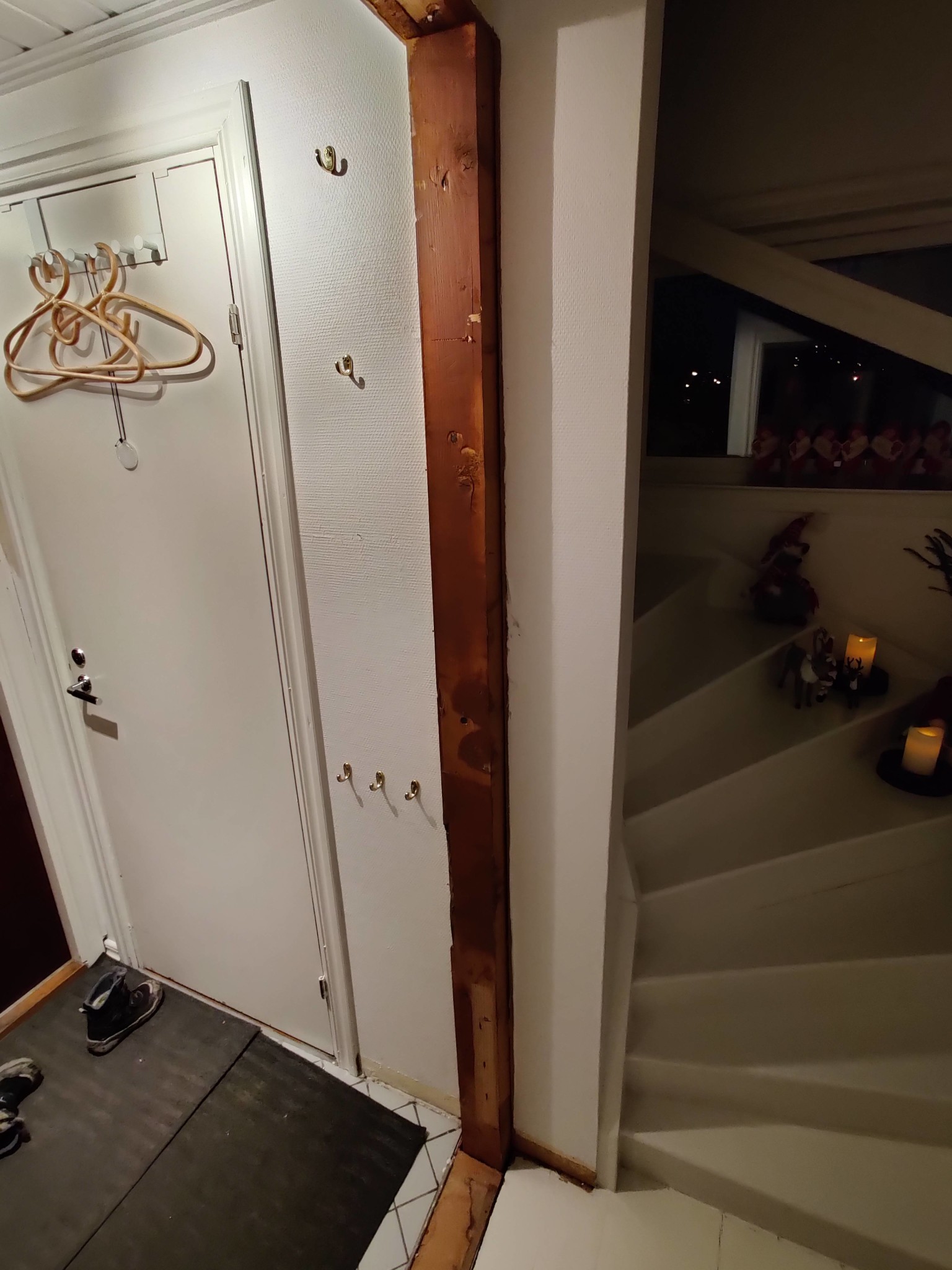
Since we live in the whole house, we have no need for the interior door directly inside the exterior door. If we remove the frame and studs, we gain new wall space that is invaluable for storage (5 in the family).
A carpenter was here last winter and noted that the wall above the guest toilet and the hall outside was load-bearing.
This is not the wall I am working on now.
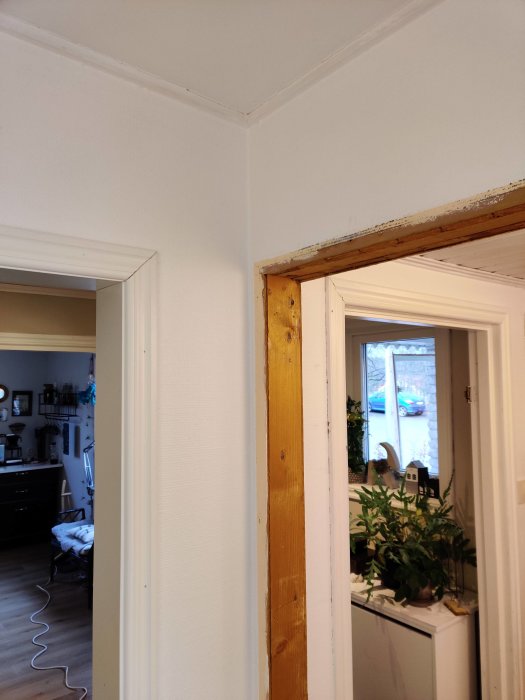
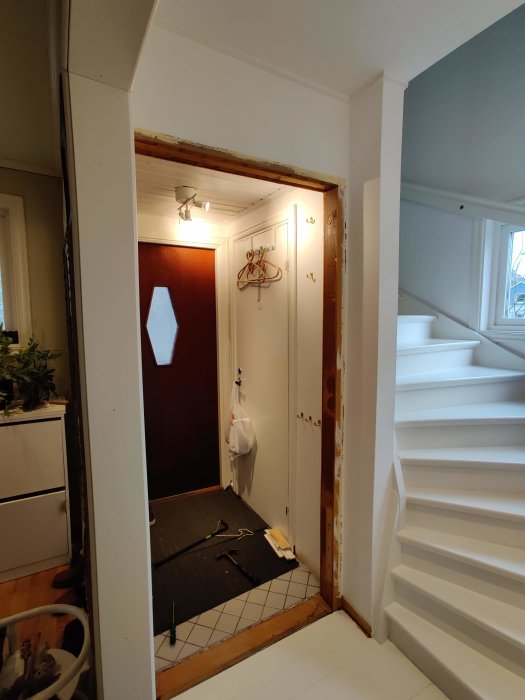
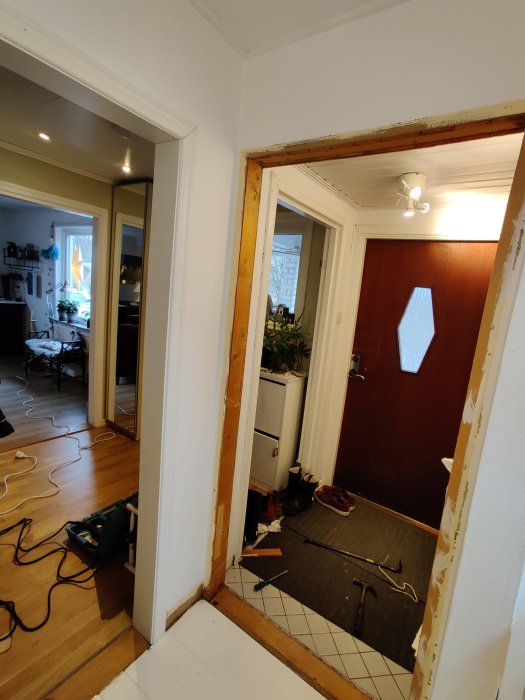
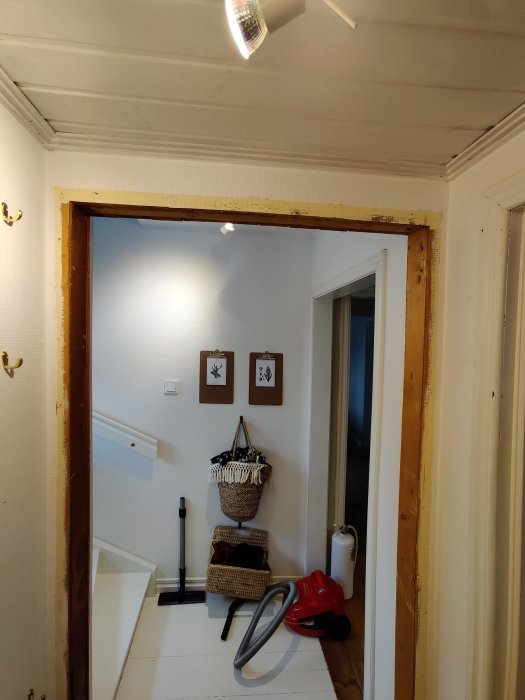
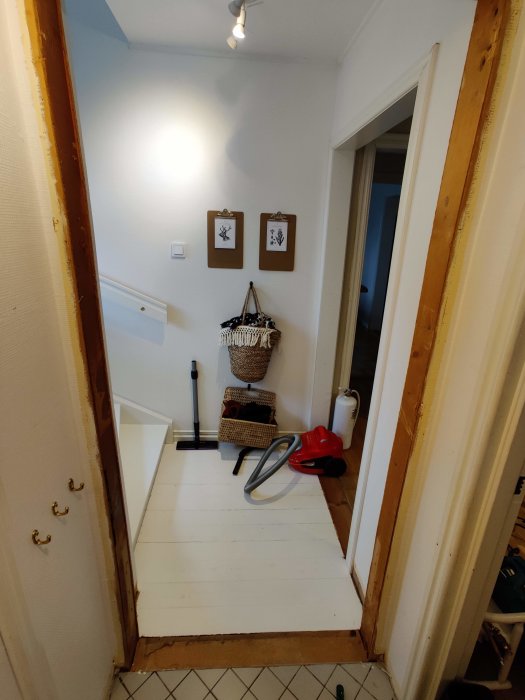
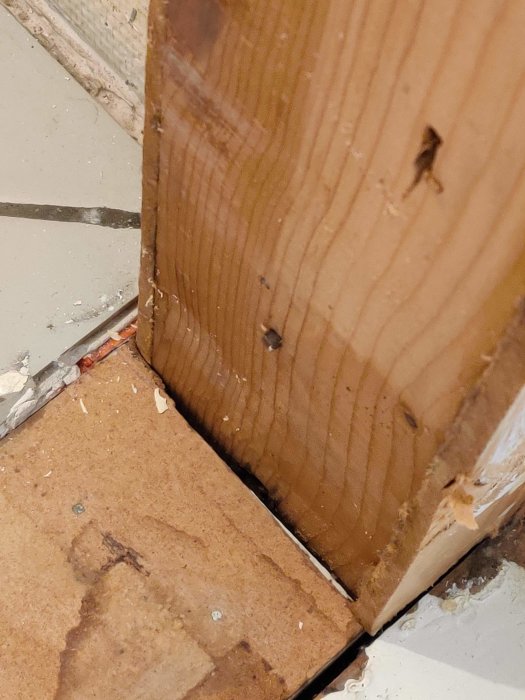
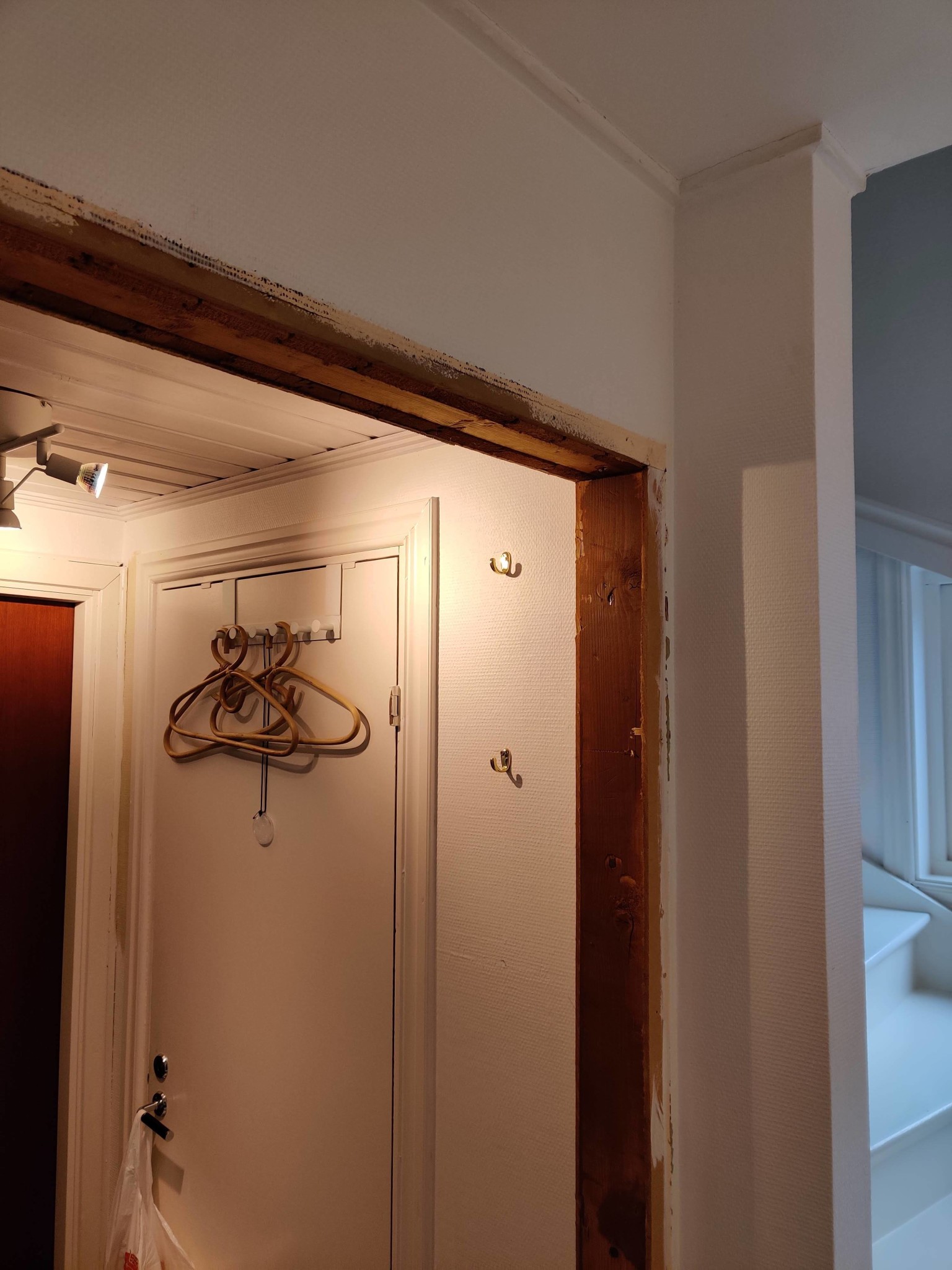
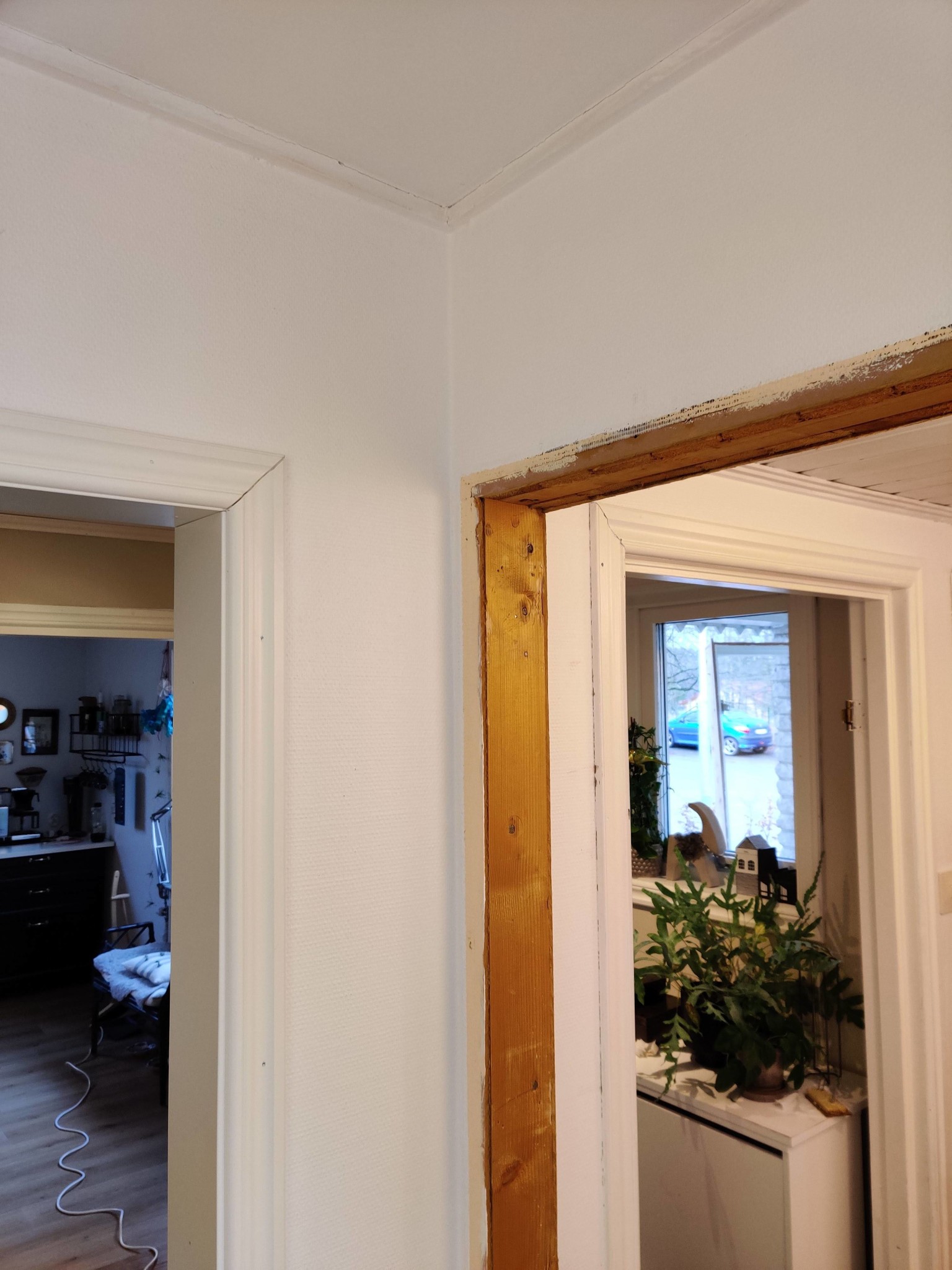
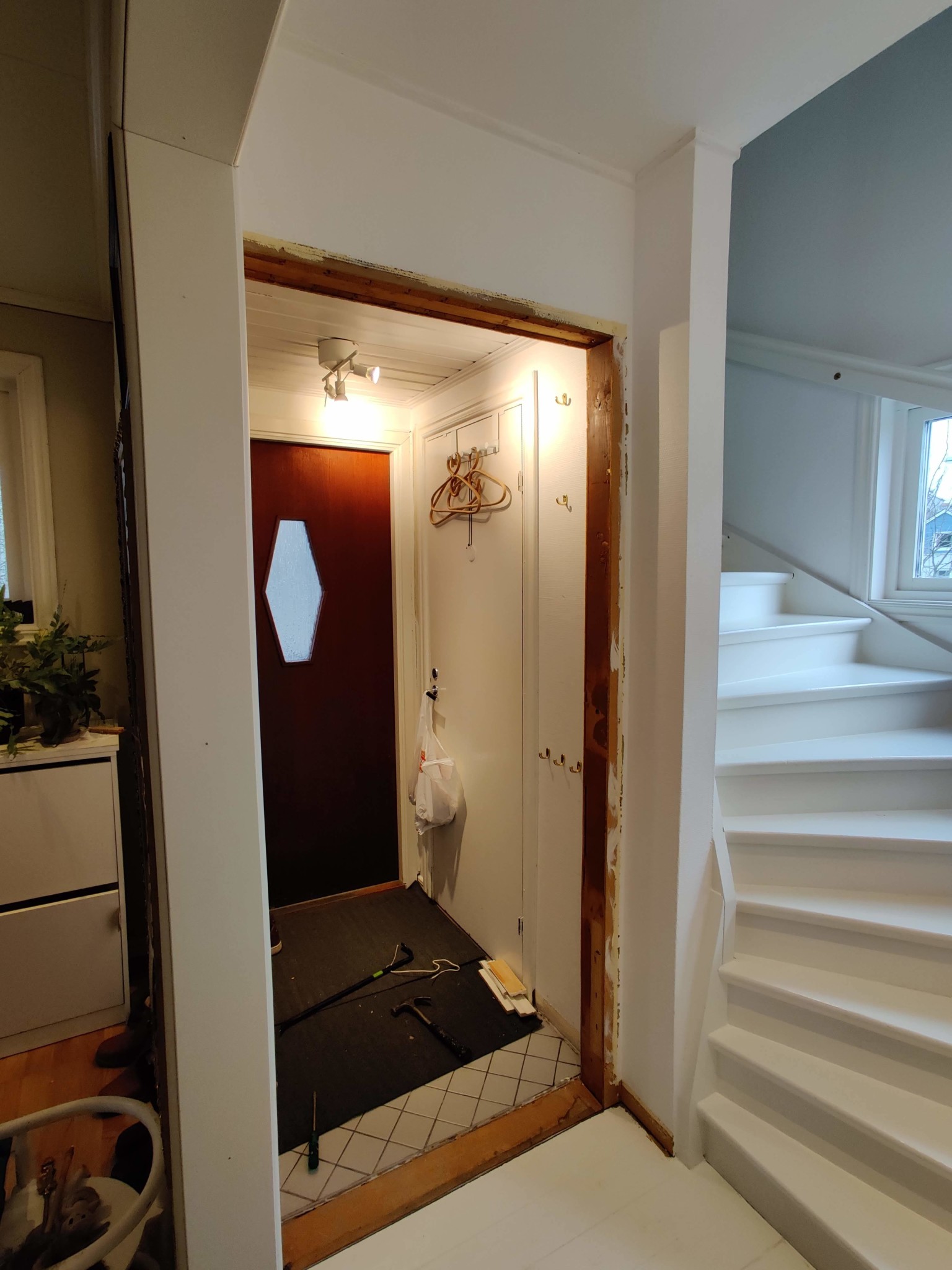
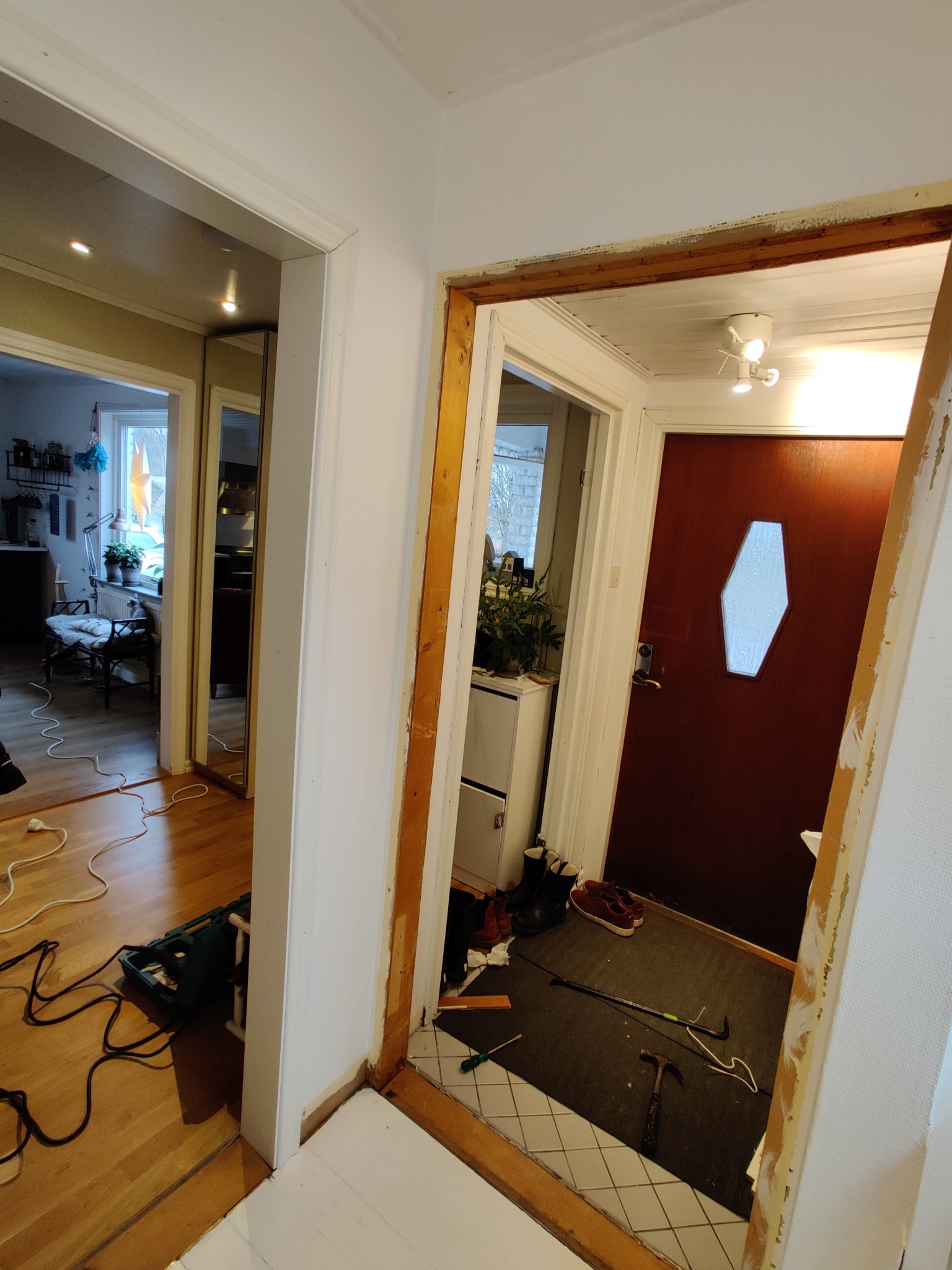
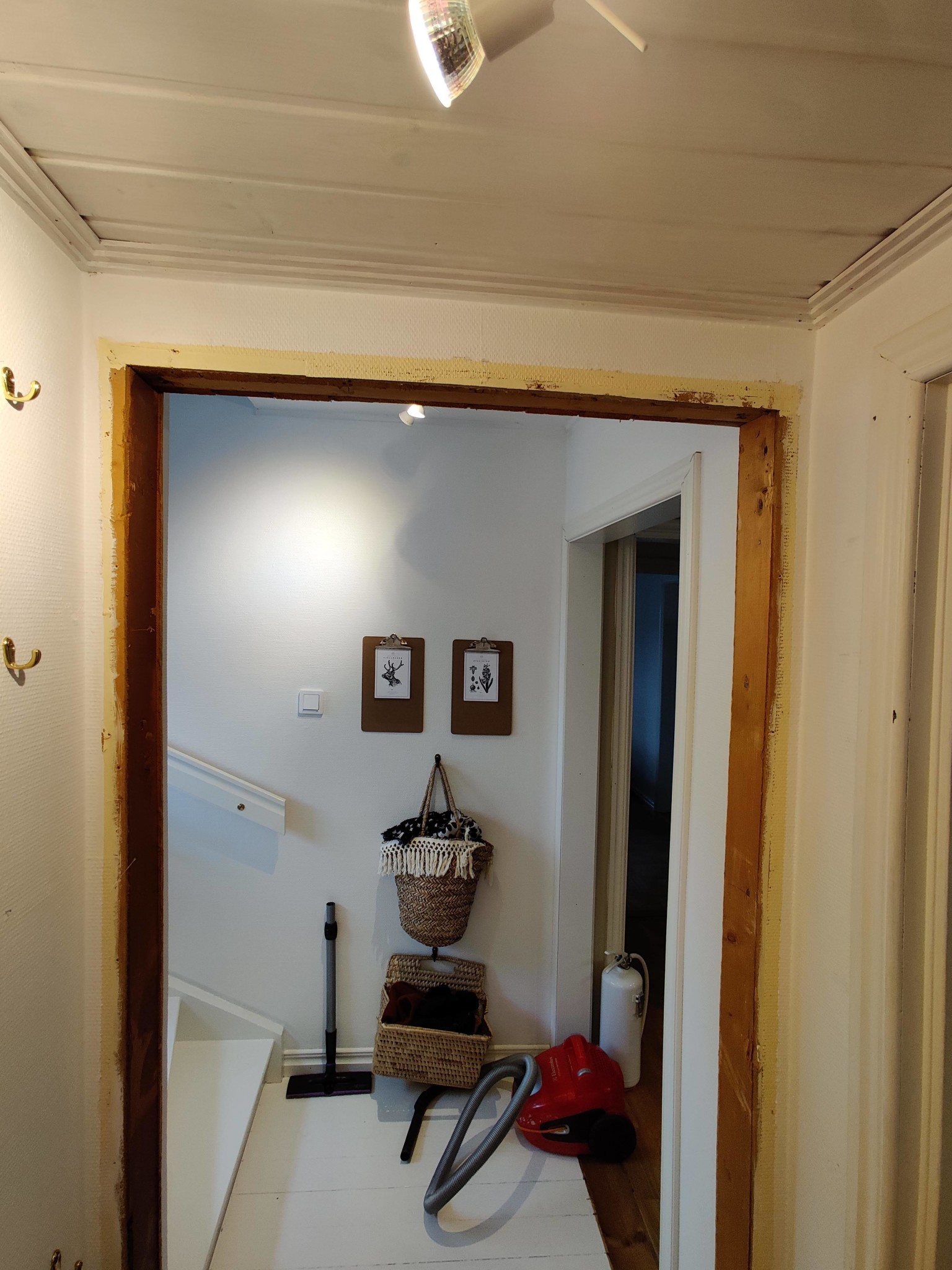
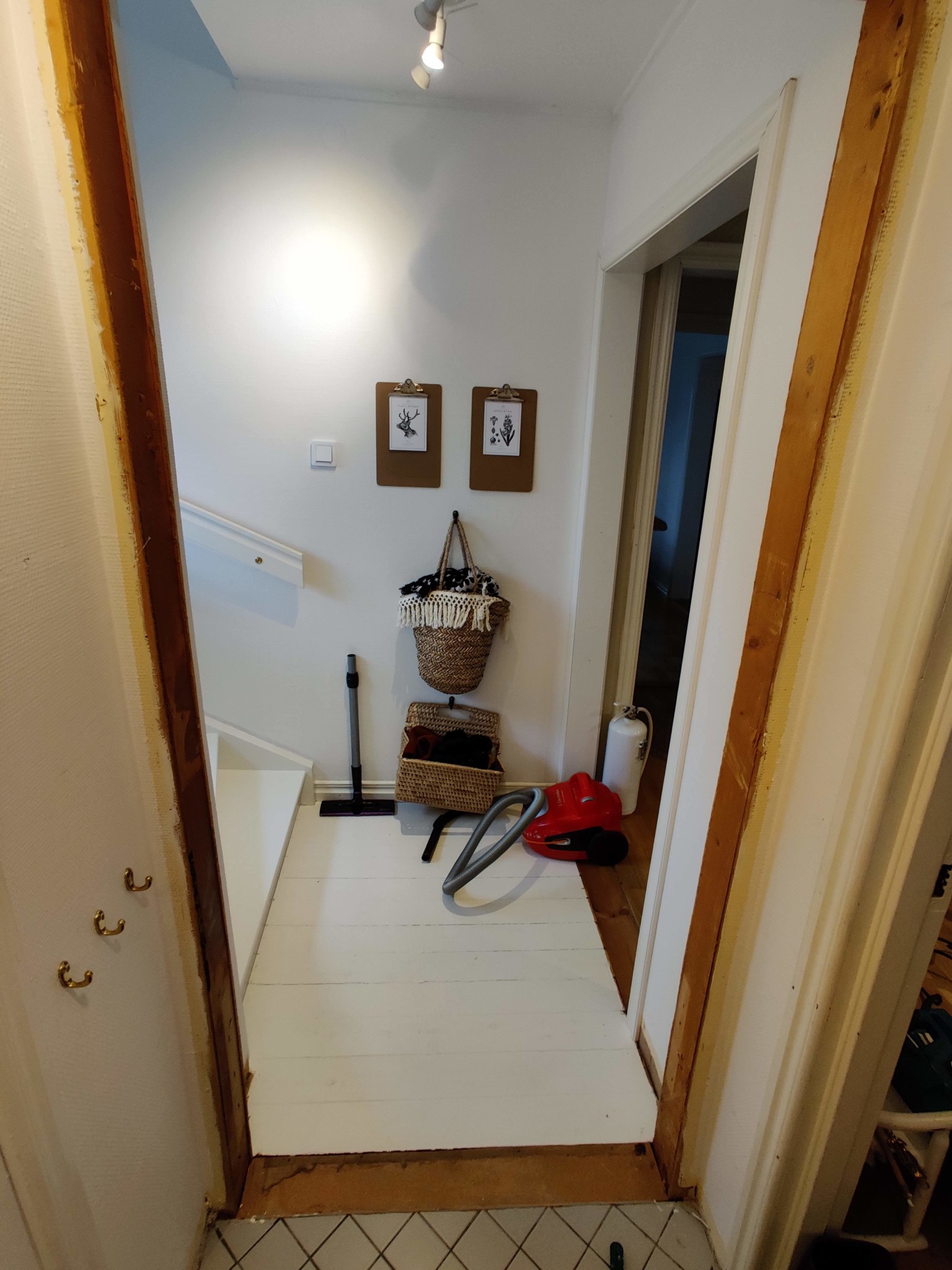
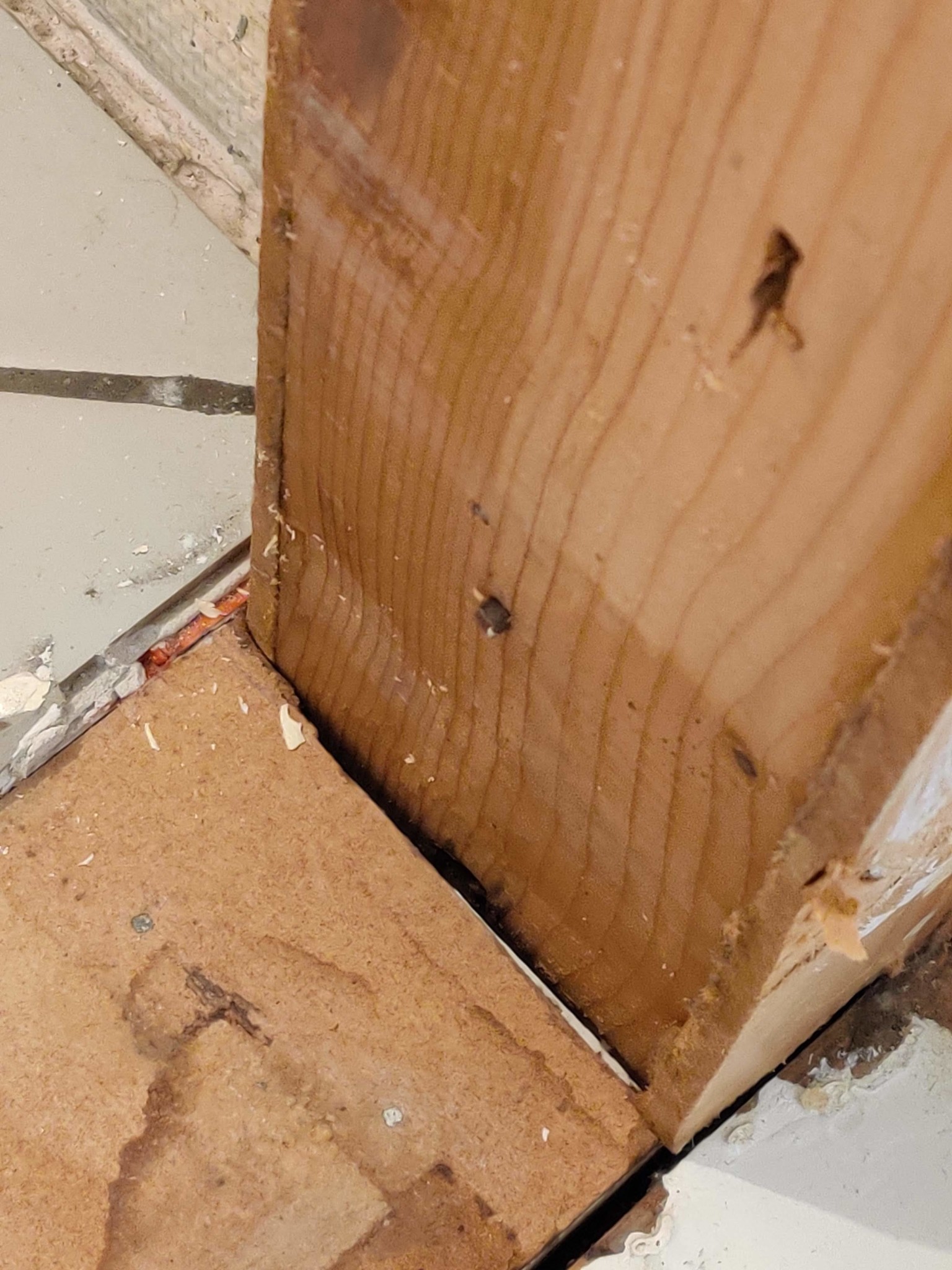
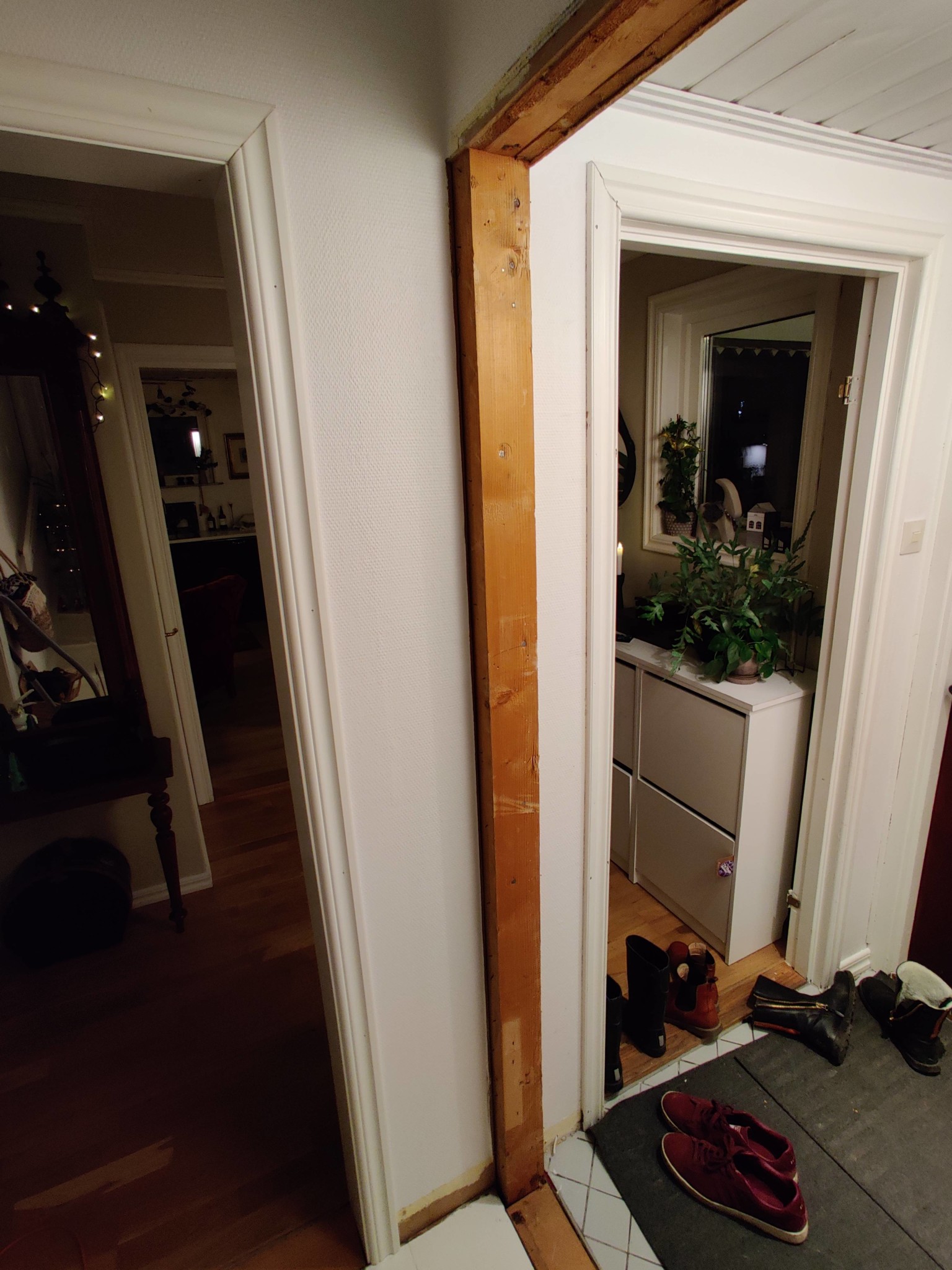
As it looks, the door consists of 2 studs that are nailed to the walls at the sides, but they go down under the floor and up into the ceiling. In the photos, the frame is gone, so it's the studs that remain that I'm wondering about.
I thought of sawing off these in line with the floor and upper frame stud and then covering and plastering the sides to get a solid wall surface without interruption.
The question then: Can these vertical frame studs be load-bearing?
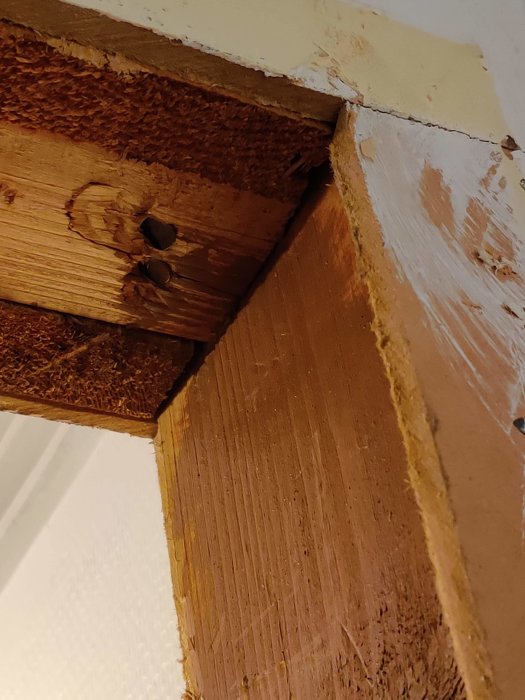
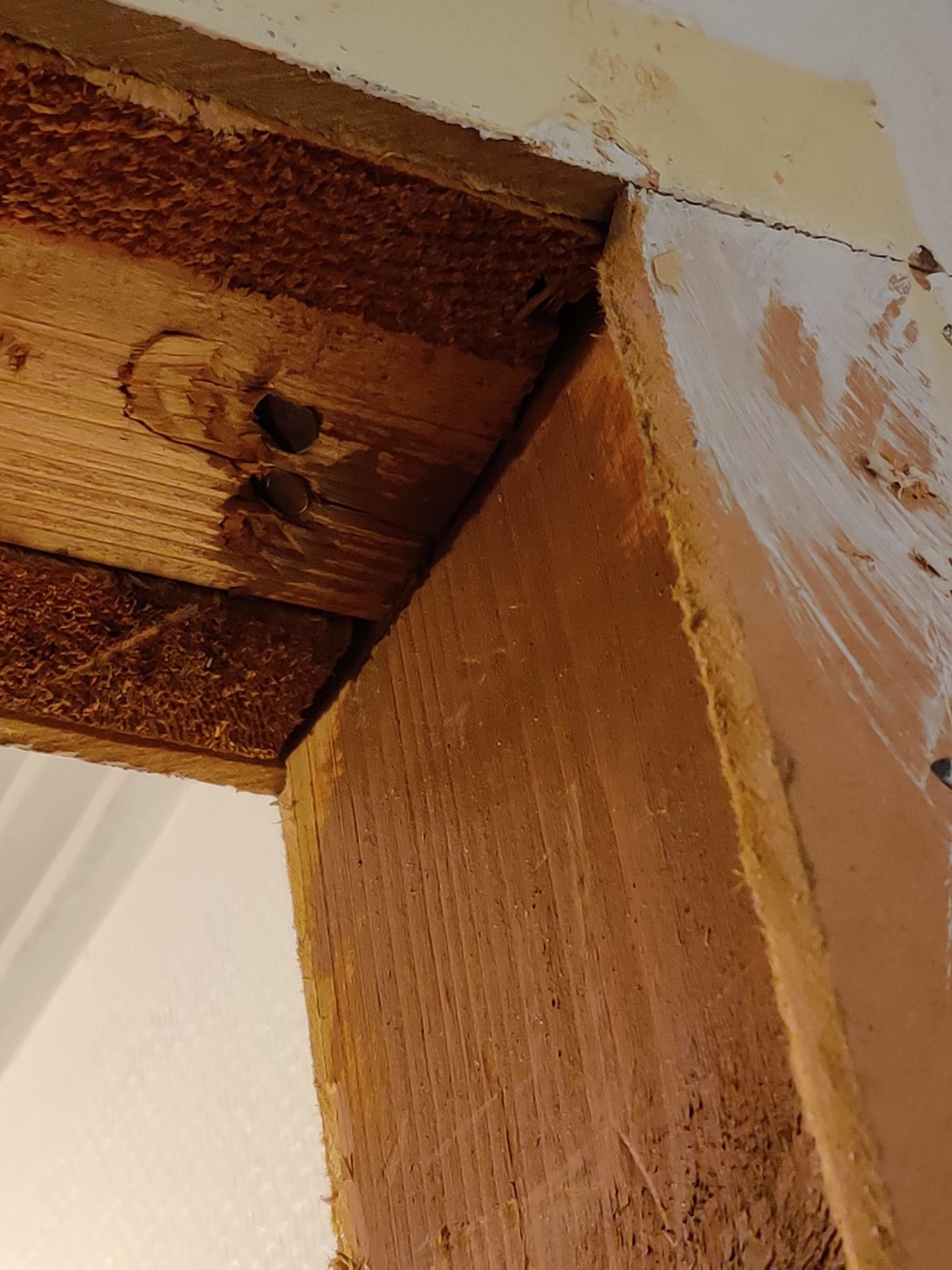
Without having seen any drawing, I can still say that the wall is very likely not load-bearing (except possibly for a part of the staircase's vangstycke). However, you have a house with a plank frame and plank walls. At the top of the door opening, you can see the underside of a horizontal plank that serves as a load-bearing beam for the plank wall. The studs at the sides of the opening can be removed, though I find it hard to see the point of doing so. There might also be some surprises if you do so.
Without having seen any drawings, I dare say that the wall is most likely not load-bearing (except possibly for part of the staircase's vangstycke). However, you have a house with a plank frame and plank walls. At the top of the doorway, you can see the underside of a horizontal plank functioning as a header for the plank wall. The studs at the sides of the opening can be removed, though I have a hard time seeing the point of it. It might also pop up a few surprises if you do so.
The idea was to cut the stud along the plank wall at the top and remove it. Then the hole will be closed up, and we will have 2 smooth walls for a shoe cabinet and shelves in a narrow hallway.
But if the horizontal beam above the opening is laid on the standing beams, then they are indeed load-bearing.
I would check that the horizontal beam extends past the standing ones you are going to cut off.
But if the horizontal rule above the opening is resting on the standing rules then they are load-bearing.
I would check that the horizontal rule passes beyond the vertical ones you are going to cut off.
The horizontal rule is between the vertical rules, and thus does Not even rest on these.




Bältesclip said: