
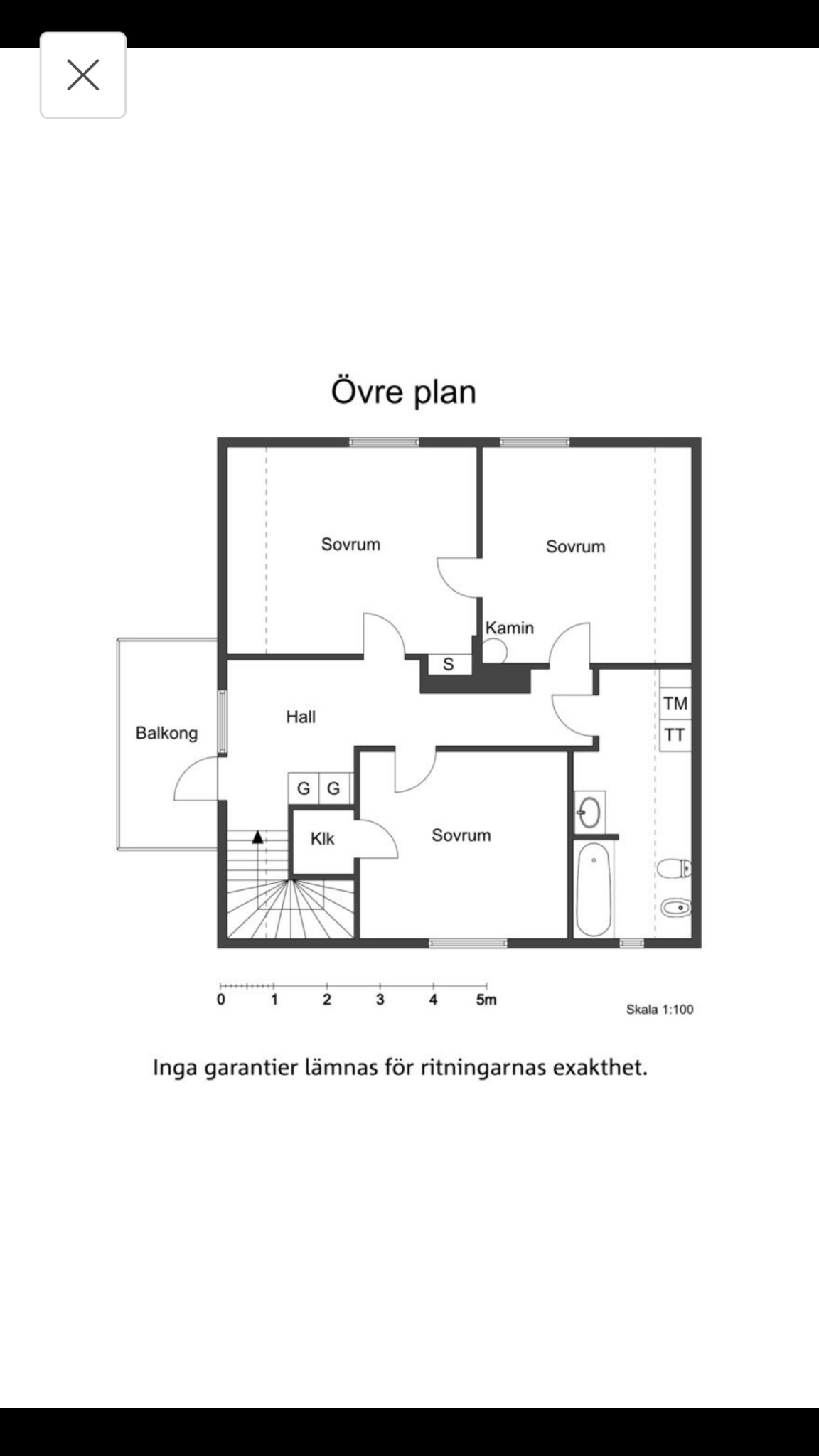
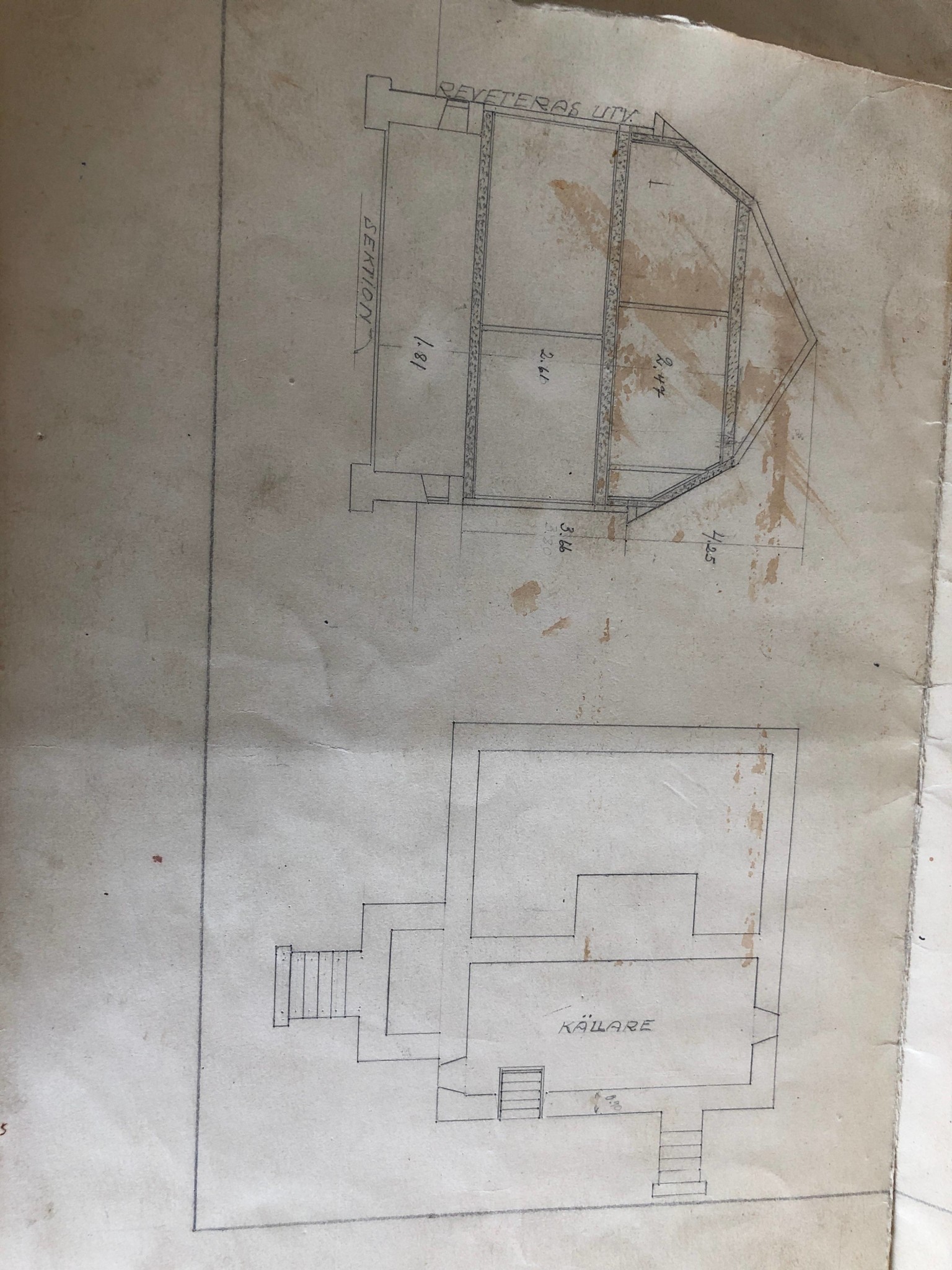
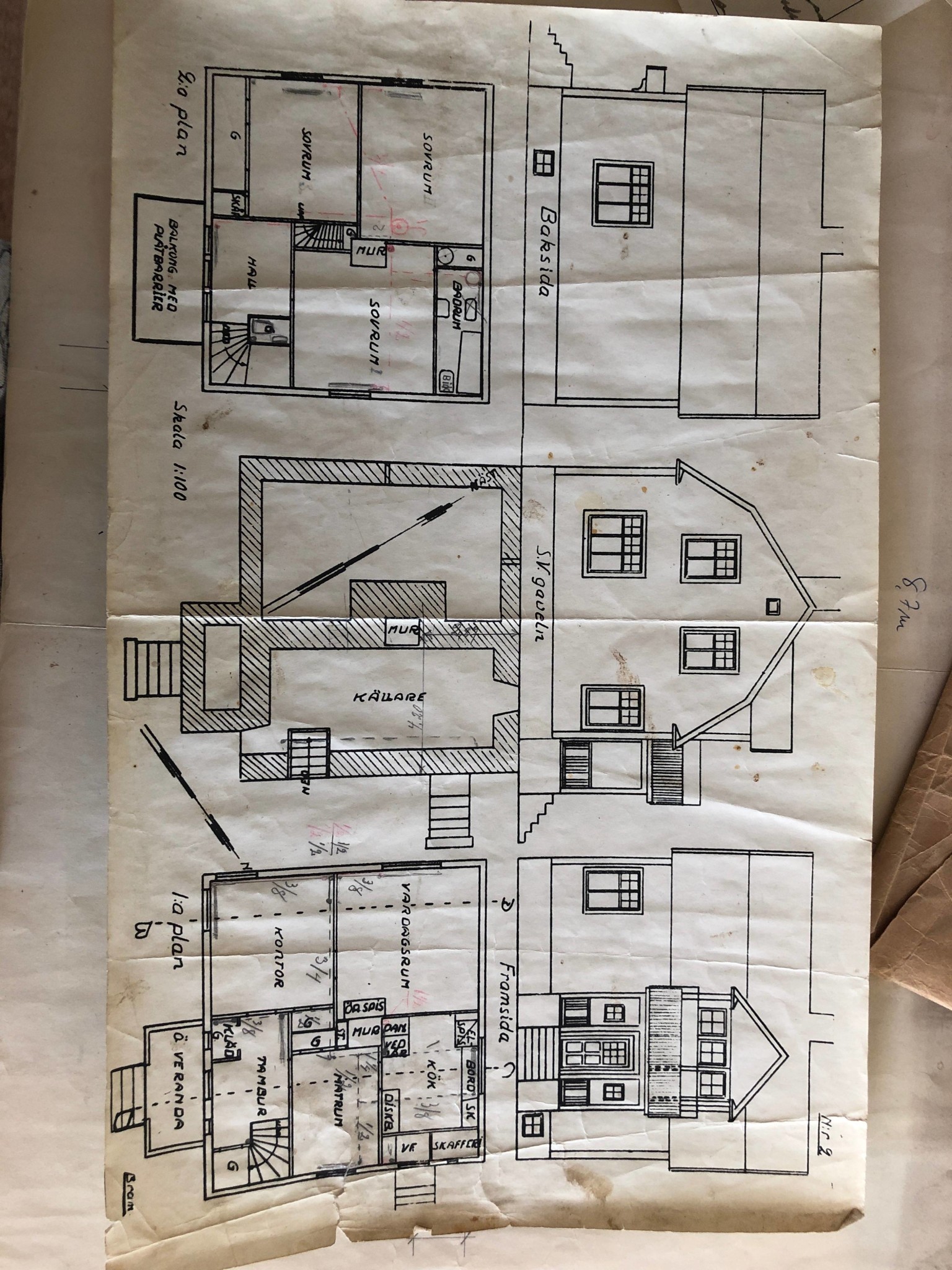
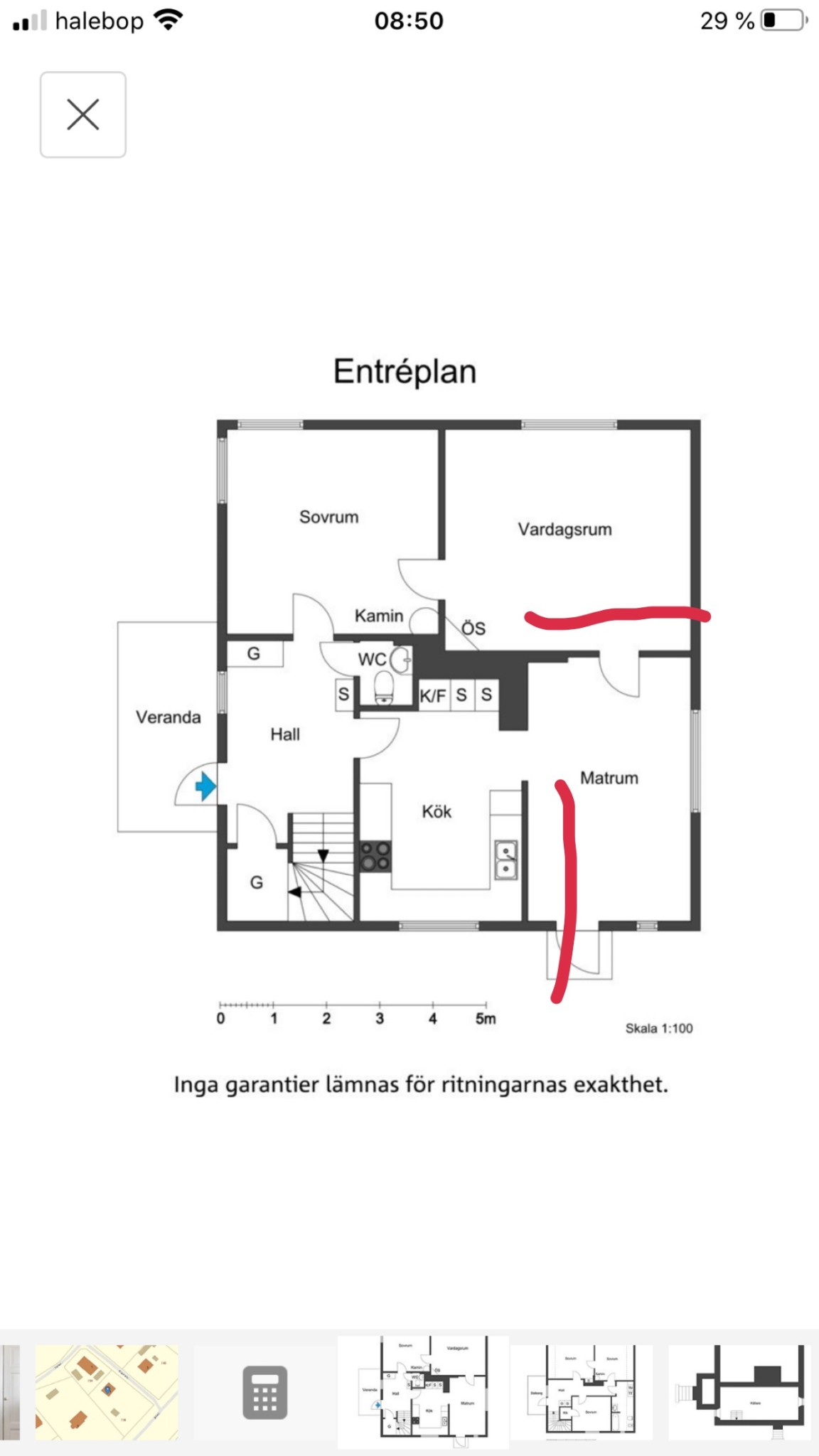
Hello! My partner and I are planning to buy a house, but before we decide, we need to know if we can tear down 2 walls. It's a bit unclear whether they are load-bearing or not. When researching, it indicates that one is load-bearing, but when we showed the pictures to a friend who is a structural engineer, he said the one we thought was load-bearing might be easier to remove than the other. So now we're wondering how it actually is, and if anyone knows how complicated it will be to take down each wall and how costly it will be.
I have included both the old drawing of the house and the current layout. And I have drawn red lines at the walls we would like to remove.
Grateful for any help we can get!
I have included both the old drawing of the house and the current layout. And I have drawn red lines at the walls we would like to remove.
Grateful for any help we can get!

Hello and welcome to the Byggahus forum!
The house is a plastered plank house, presumably from the late 1920s. Charming but somewhat insensitively renovated. In plank houses, all walls are more or less load-bearing, which means you cannot remove a wall without consequences. The wall between the living room and dining room is not load-bearing in the traditional sense. There will be a lot of debris, and you may need to put in a beam as a replacement. The wall between the kitchen and dining room, however, is load-bearing. It must be replaced with a beam and pillars. In houses of this type with plastered walls, there will be a lot of patching work. I would probably question the benefit of such a measure. Large open floor plans are not compatible with old plank houses.
The house is a plastered plank house, presumably from the late 1920s. Charming but somewhat insensitively renovated. In plank houses, all walls are more or less load-bearing, which means you cannot remove a wall without consequences. The wall between the living room and dining room is not load-bearing in the traditional sense. There will be a lot of debris, and you may need to put in a beam as a replacement. The wall between the kitchen and dining room, however, is load-bearing. It must be replaced with a beam and pillars. In houses of this type with plastered walls, there will be a lot of patching work. I would probably question the benefit of such a measure. Large open floor plans are not compatible with old plank houses.
Hi! Thank you so much for your response! Good guess on the house, it was built in '32. We have already planned for the need for a beam, but do you mean that the one between the living room and dining room is relatively easy to solve? And the one between the kitchen and dining room is a bit trickier? We really want to remove the one between the kitchen and dining room since the rooms feel very small, and we want a larger kitchen. But when you write that we need a beam and pillar, do you mean the pillar will need to be in the middle of the opening, or do you mean a pillar that runs along the wall to support the beam? And what do you mean by a lot of repair work with the plastered walls? What needs to be done from the outside? And what is the difference between a beam and a beam with a pillar? Sorry for so many questions!J justusandersson said:Hello and welcome to the Byggahus forum!
The house is a stuccoed plank house, probably late 1920s. Charming but somewhat insensitively renovated. In plank houses, all walls are more or less load-bearing, which means that you can't remove a wall without consequences. The wall between the living room and dining room is not load-bearing in the traditional sense. There will be a lot of debris and possibly you need to install a beam as a replacement. The wall between the kitchen and dining room, however, is load-bearing. It must be replaced by a beam and pillar. In houses of this type with plastered walls, there will be a lot of repair work. I would question the usefulness of such a measure. Large open plans are not compatible with old plank houses.
The wall between the dining room and the living room is not load-bearing with respect to the floor above, but it may still replace a floor joist in that specific line. You won't know until it's removed. In that case, a new floor joist must be installed to prevent the floor above from sagging. It can likely be suspended from the opposing walls.
The other wall is a bit trickier. Normally, when replacing a load-bearing wall with a beam, you also need two columns for the beam to rest on. In a plank house, you can sometimes use parts of the remaining plank walls instead. Beam dimensions depend greatly on how large the opening will be. It always pays off to think twice with houses this old. Perhaps you can move functions instead of walls? Renovations in this type of building require care, caution, and knowledge of older construction methods, which not all younger craftsmen possess. That's about all I can say without writing a book on the subject.
The other wall is a bit trickier. Normally, when replacing a load-bearing wall with a beam, you also need two columns for the beam to rest on. In a plank house, you can sometimes use parts of the remaining plank walls instead. Beam dimensions depend greatly on how large the opening will be. It always pays off to think twice with houses this old. Perhaps you can move functions instead of walls? Renovations in this type of building require care, caution, and knowledge of older construction methods, which not all younger craftsmen possess. That's about all I can say without writing a book on the subject.
Okay, then we'll have to rethink and consider how we're going to solve it! One last slightly dumb question, does it make any difference if you were just to make the doorway larger, like removing half of that wall? Like between the kitchen and dining room.J justusandersson said:The wall between the dining room and living room is not load-bearing with respect to the floor above, but it might still replace a floor joist along that line. You won't know until you remove it. In that case, a new floor joist needs to be installed to prevent the floor above from sagging. It can probably be hung on the opposing walls.
The other wall is a bit trickier. Normally when replacing a load-bearing wall with a beam, you also need two columns on which the beam rests. In a plank house, you can sometimes use parts of the remaining plank walls instead. Beam dimensions depend greatly on how large the opening is supposed to be. It's always worth it to think twice with houses this old. Maybe consider moving functions instead of walls? Renovations in this type of building require care and caution, as well as knowledge of older construction methods, which younger craftsmen don't always have. That's about all I can say without writing a book on the subject.
I believe in larger doors. It also fits better with the style of old houses than creating an open floor plan. The kitchen also seems to have been relocated. Often, it was located in the northeastern corner with a cold pantry in the outer corner. We kept the kitchen and dining room. It can be quite nice not to have to "sit in the kitchen" as in many modern homes. Even if you don't have a maid/housekeeper like in the old days, you avoid looking at the dishes, listening to the fridge and the fan (the dishwasher is quieter than these nowadays), etc. My in-laws have an extremely open floor plan which feels pleasant for a shorter time, but if you're there for several days, you get tired of never being able to retreat except to the restroom or a small bedroom. But at certain moments, you feel envious. In our house, which resembles the one you're looking at, you have to rush around and search for each other, but on the other hand, everyone can do different activities without disturbing each other...
A larger doorway is a significantly simpler measure.
Okay, thank you so much @justusandersson for all the info! And thank you @JohanLun! Then we will see if the solution is just to make the doorway larger!
Click here to reply