

Hello!
We are in the process of opening up the floor plan between the dining room and the kitchen in our house, which has a valuation year of 1929 (likely older though).
We had a structural engineer draw up a plan for support before we opened up the wall - but now that we've opened it, we've run into a problem.
A load-bearing wooden beam runs from one side - but not all the way to the other side, ending after 2/3 of the wall that needs to be relieved, and the load-bearing shifts to a brick wall.
If we take down the brick wall, we'll obviously have a problem - as the existing load-bearing beam will have no support.
Does anyone have an alternative solution?
Should we place a metal beam under the load-bearing wooden beam? The risk then is that it becomes too low-ceilinged right there.
Hope the pictures explain better.
We are in the process of opening up the floor plan between the dining room and the kitchen in our house, which has a valuation year of 1929 (likely older though).
We had a structural engineer draw up a plan for support before we opened up the wall - but now that we've opened it, we've run into a problem.
A load-bearing wooden beam runs from one side - but not all the way to the other side, ending after 2/3 of the wall that needs to be relieved, and the load-bearing shifts to a brick wall.
If we take down the brick wall, we'll obviously have a problem - as the existing load-bearing beam will have no support.
Does anyone have an alternative solution?
Should we place a metal beam under the load-bearing wooden beam? The risk then is that it becomes too low-ceilinged right there.
Hope the pictures explain better.
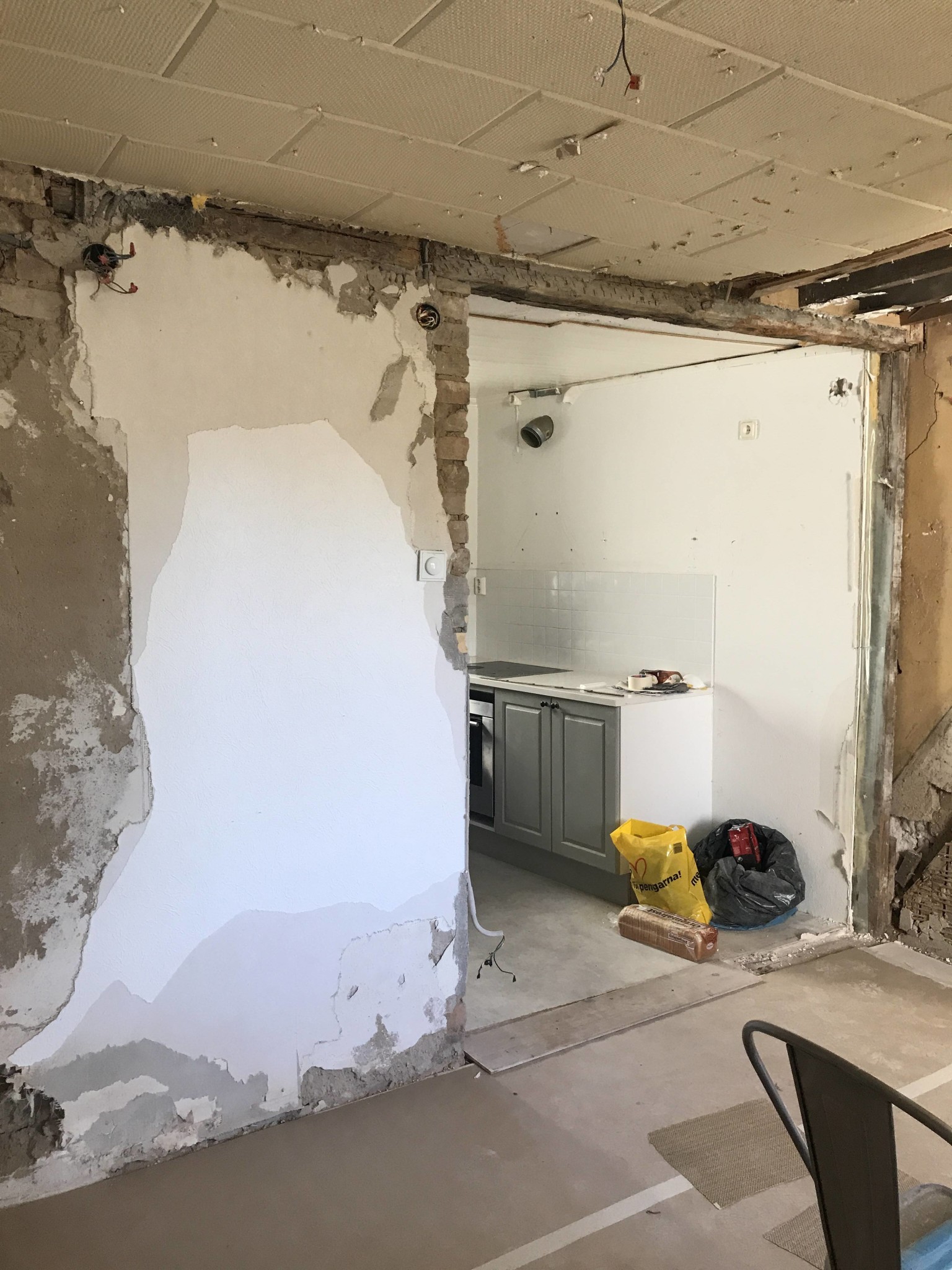
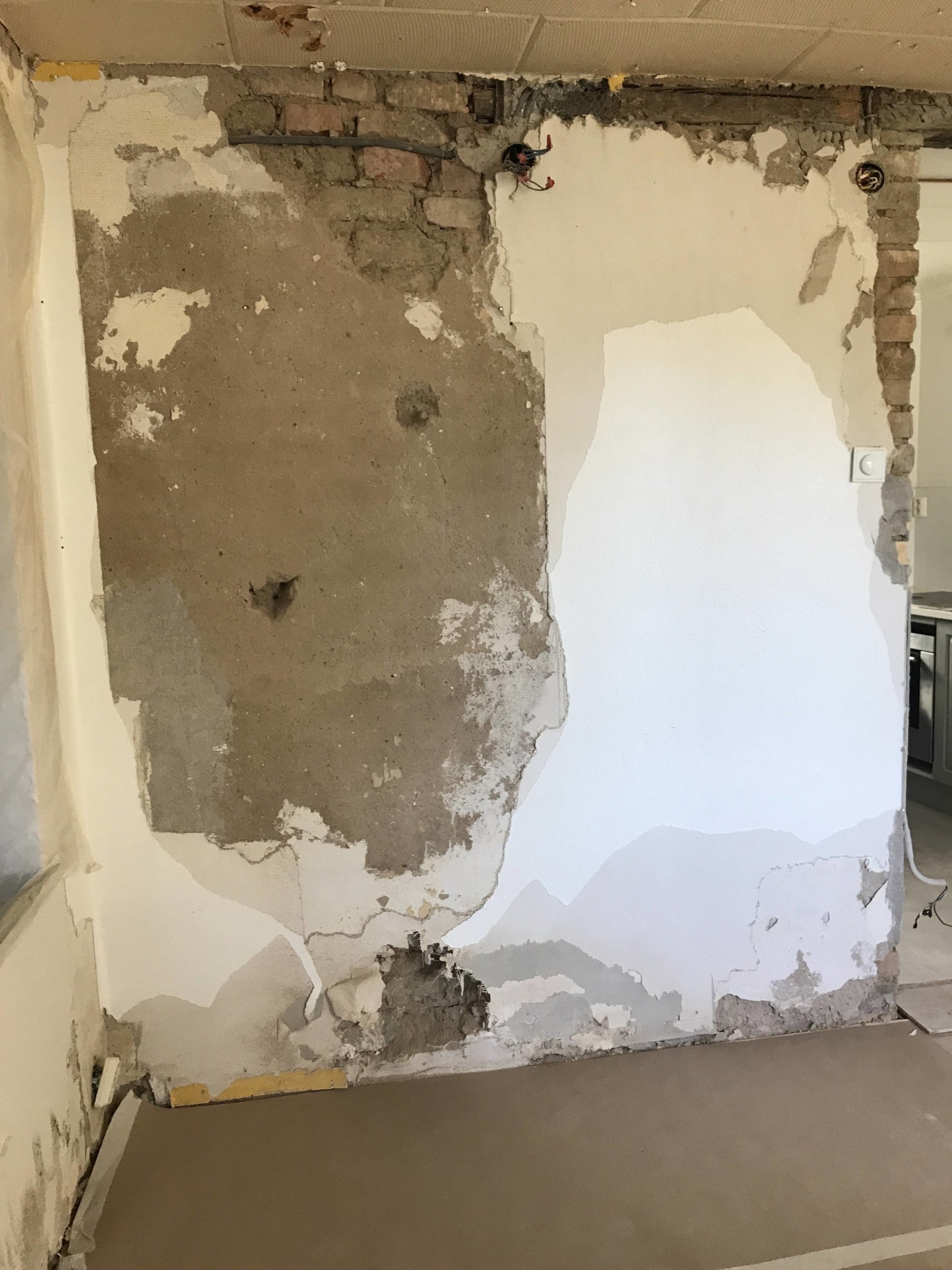
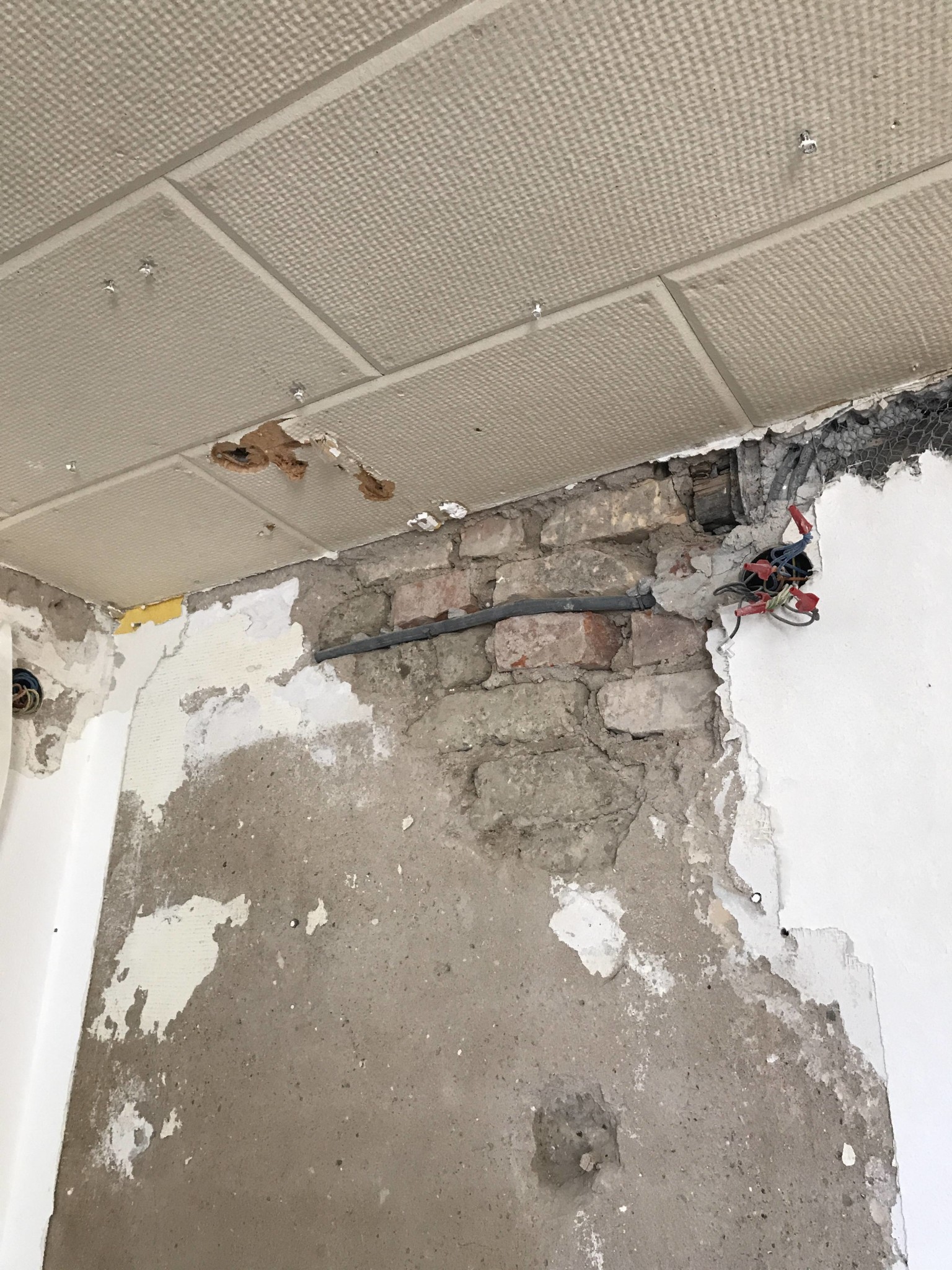
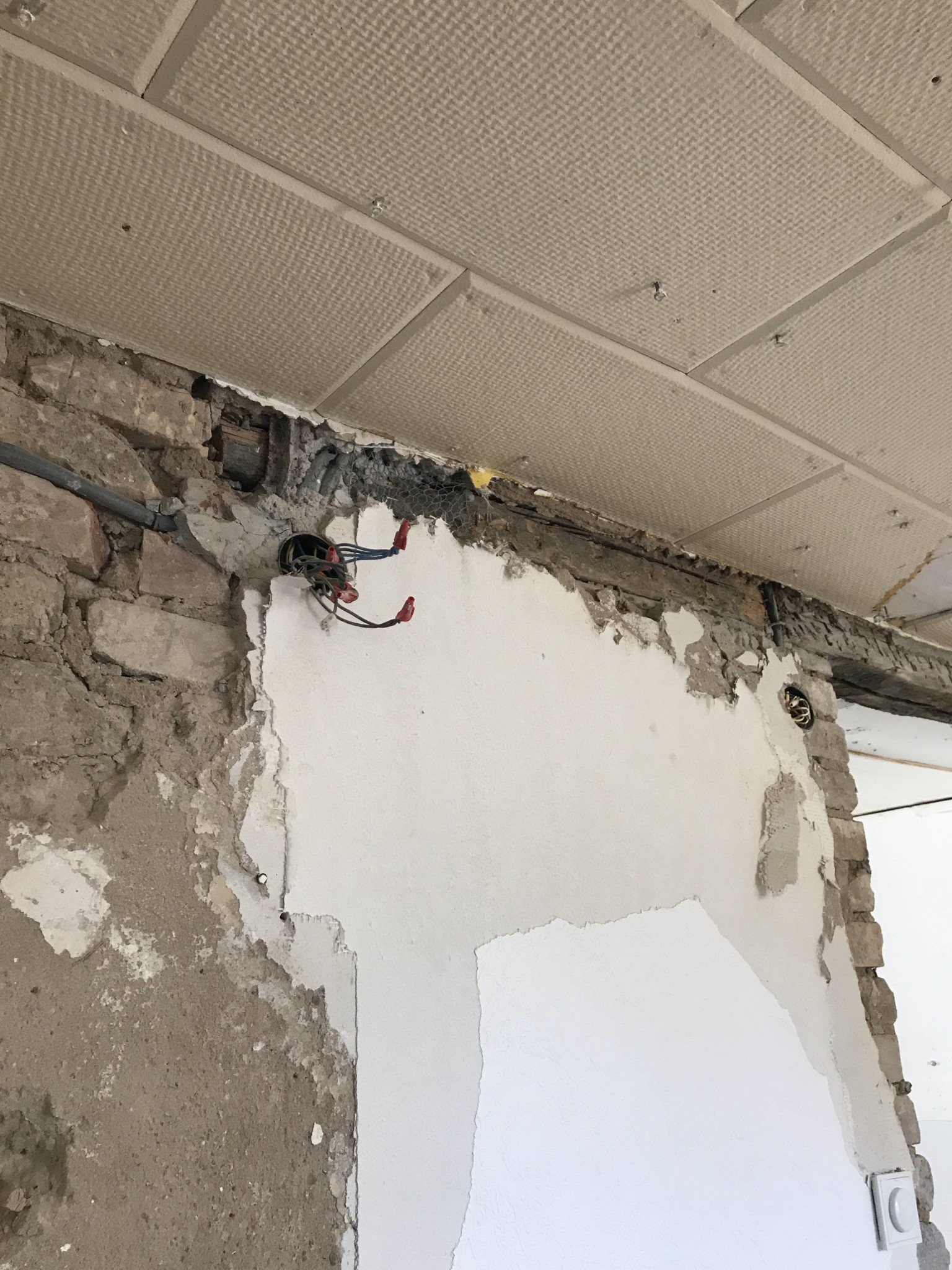
In image 1, are those floor joists from the upper floor resting on the beam we see?
Relieve it with a prop, tear down the wall, remove the beam and insert a new one that rests at the ends. However, as you say, you might have problems with the sagging/ceiling height. It must be calculated how large a beam you need.
Relieve it with a prop, tear down the wall, remove the beam and insert a new one that rests at the ends. However, as you say, you might have problems with the sagging/ceiling height. It must be calculated how large a beam you need.
Thank you for the reply!
It seems like my builder thinks it's difficult to remove the existing one, as he believes there's a risk of collapse.
We have calculated the size of the beam needed - but did not expect this slightly more than half wood beam...
It seems like my builder thinks it's difficult to remove the existing one, as he believes there's a risk of collapse.
We have calculated the size of the beam needed - but did not expect this slightly more than half wood beam...

If you want to remove the brick wall, as already pointed out, there is no other option than a beam that goes all the way. Potentially in steel to keep the height down. To assess other consequences of tearing down the brick wall, floor plans are needed.
Click here to reply