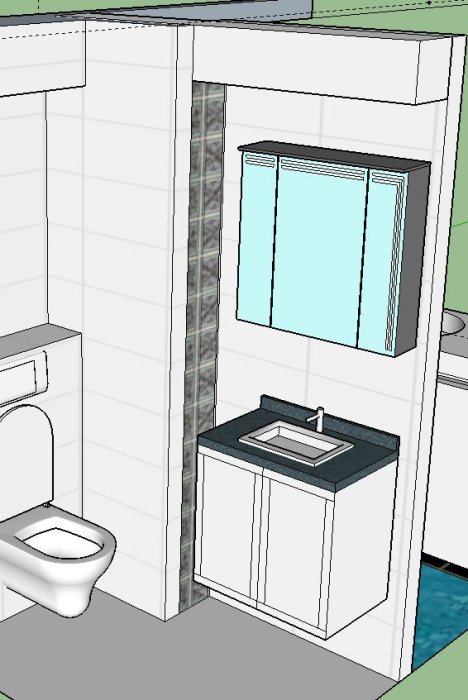
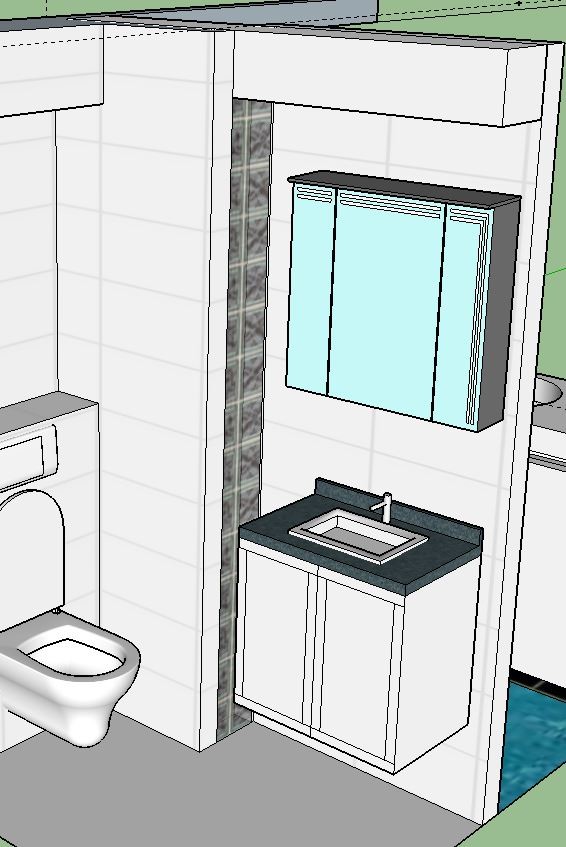
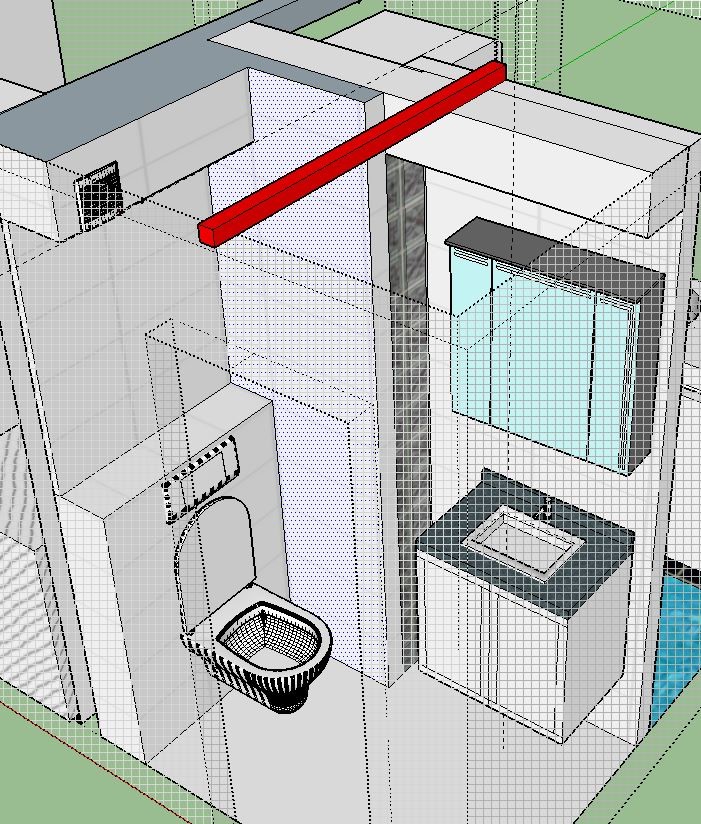
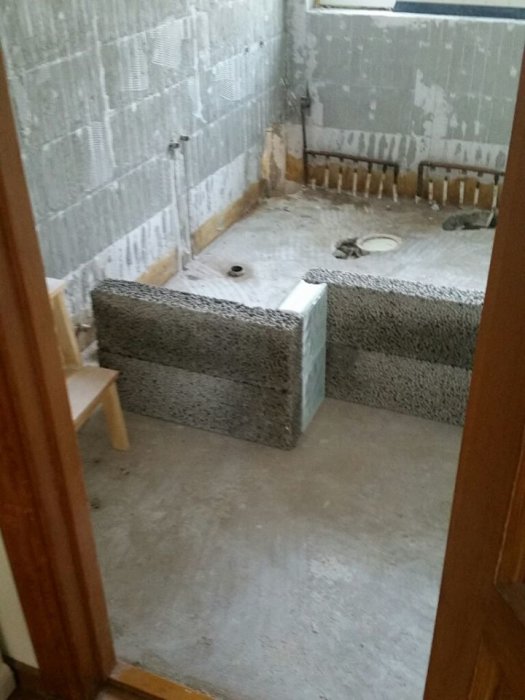
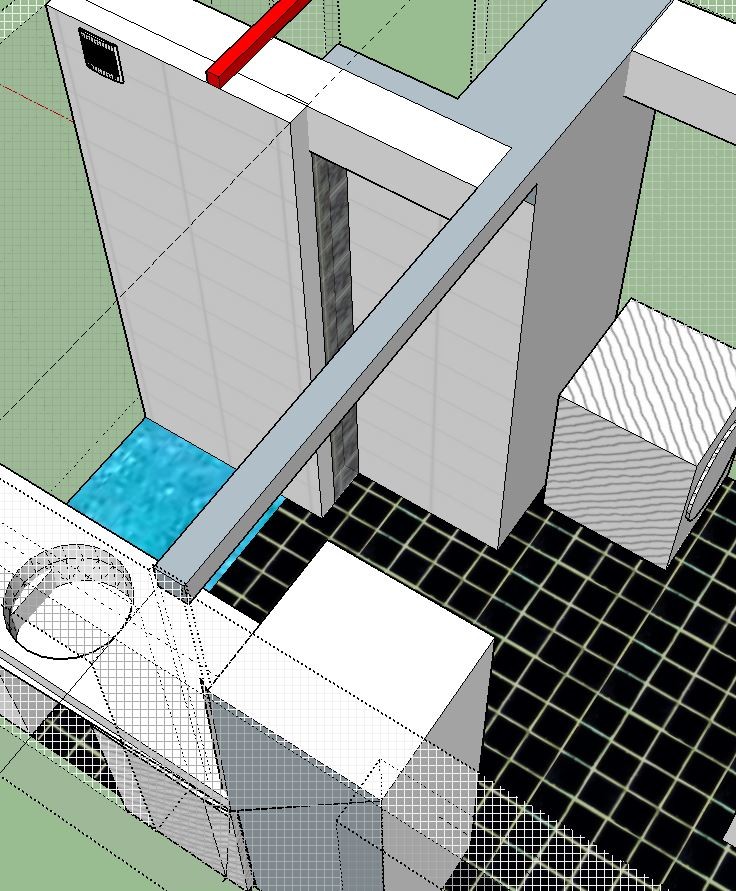
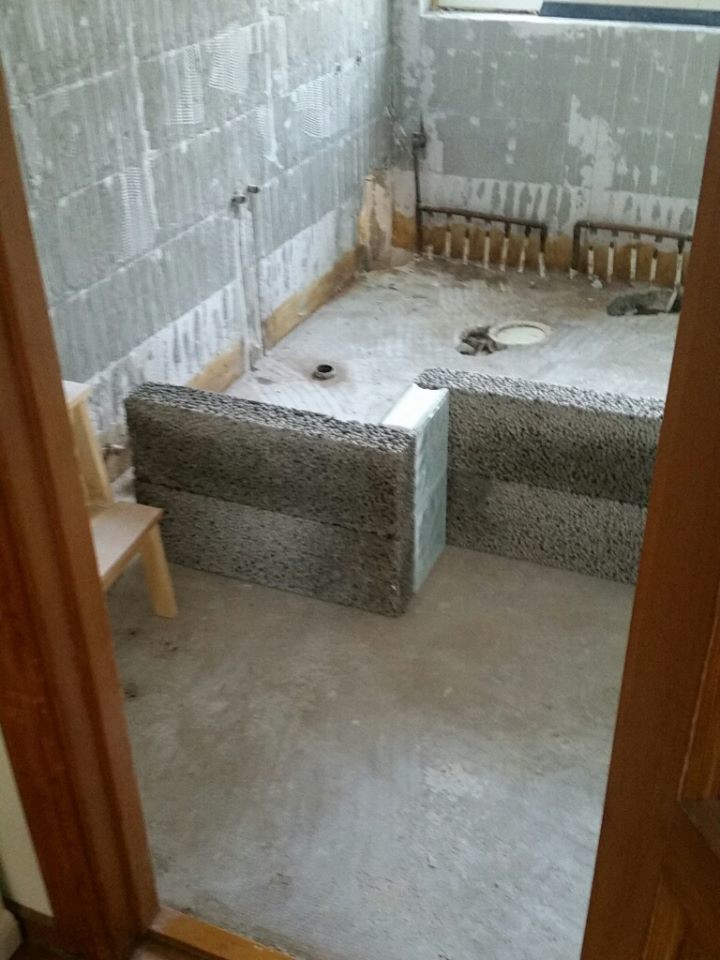
I am going to build an interior wall out of concrete blocks, and it will be a bit special (see picture), so I will need to reinforce it. The wall is a section of concrete blocks, then a stack of glass blocks, and then another section of concrete blocks. There will also be shower doors hanging (on the backside) and a vanity attached to it.
I've heard that it is unwise to use regular rebar because it rusts over time and can then expand and create cracks in the wall between the tiles. (Kind of like the Öland Bridge, but a bit slower if I don't mix mortar with saltwater. ) I've also seen cracks in old houses over the windows and have been told it's because there was superficial reinforcement... Even when reinforcing self-leveling compound, you usually use galvanized mesh. Anyway, myth or not, perhaps it's foolish to take a chance.
So I read about bistål that is available in stainless and galvanized versions. But it seems like no one sells it in Skåne (possibly as a special order), so one wonders how common it really is. What is the prevailing practice?
How would you have done it?
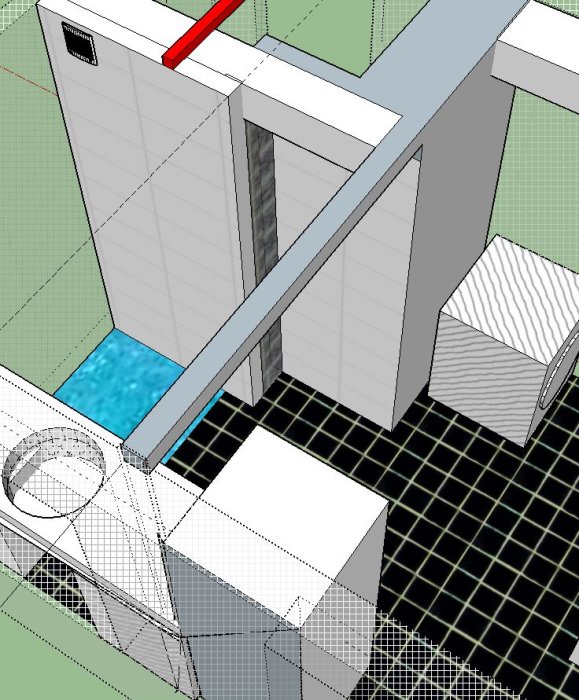
The shower door hangs on the backside. The wall with the mirrored cabinet connects to another stone wall (aerated concrete) on the right that isn’t visible in the picture.
My plan, until I read about bistål, was to take galvanized reinforcement mesh (spot-welded) for self-leveling and cut rods with some transverse rods left. That is, a long piece of steel with a 5 cm piece of steel across every 10 cm.
Are you going to have any vertical reinforcement as well? It's quite thin and there's some weight on the wall. Maybe embed a square tube 40*40 that is attached to the floor and ceiling, for example.
Are you going to have any vertical reinforcement as well? It is quite thin and there's some weight on the wall.
Maybe embed a square tube 40*40 that is attached to the floor and roof, for example.
Can I attach something to the rafters without the movement in the wood causing more harm than good? I have thought about it a bit, if the wood pushes the rebar 1 mm sideways, it might push the tiles off the wall.
I have considered different types of vertical reinforcement, but the question is if it's needed. Just because the wall goes in a hook with the glass blocks, I think it would take a lot for the wall to collapse or crack in any way. I am anchoring it in the walls at the outer edges. Often when I build things, I build them as strong as a cat and over-dimension with belt and suspenders, then I realize that it's 10 times stronger than needed. So now I thought I wouldn't be so paranoid.
You could place a brace above the ceiling and attach the wall, but isn't that going too far? :-o
But I can't attach shower doors, etc., to lux boards without nogs, can I? It just felt like a masonry wall would be the most stable and easiest to make fittings in, right?
Backside
How it looks now. The masonry blocks and glass blocks are just temporarily placed. The wall on the left is to be (partially) demolished.


 ) I've also seen cracks in old houses over the windows and have been told it's because there was superficial reinforcement... Even when reinforcing self-leveling compound, you usually use galvanized mesh. Anyway, myth or not, perhaps it's foolish to take a chance.