Okay, on my parents' house the panel on the gable is about 15cm in from the plaster with a type of flashing, feels like a strange solution? Or is it because it's easier to build the gable wall that way?
Should I build all the walls, including inner interior walls, before I put on the roof and roof trusses, do you think? Add "hammarband" even on the inner interior walls to get an even more stable construction..?
One should think of a house like clothing when it rains. Higher layers should be outside of lower layers. Indenting the panel 15 cm might look nice but is not a technically good solution. In Halland, it rains from all directions at times.
It's obviously easiest to do all the masonry first before putting on the roof. Hammer beam even on interior walls is not wrong.
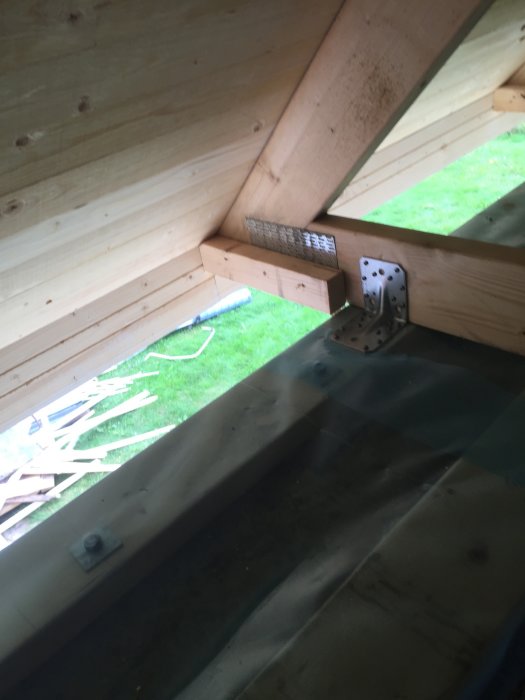
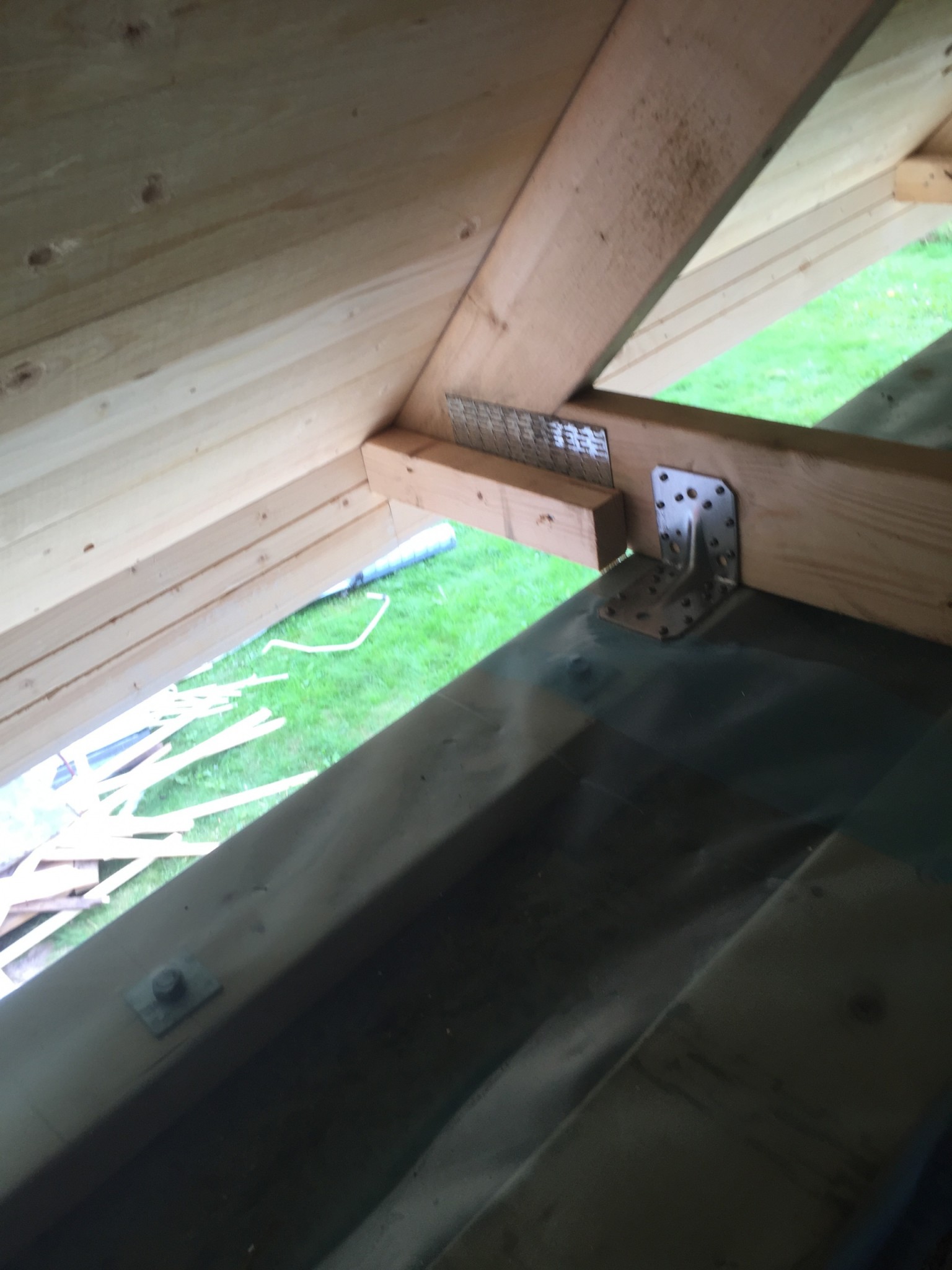
Okay, isn't it easier to make the wall plate in the full thickness of the wall, about 20cm, so that you can nail the cover board on the outside directly into the wall plate?
Is sill paper required under the wall plate?
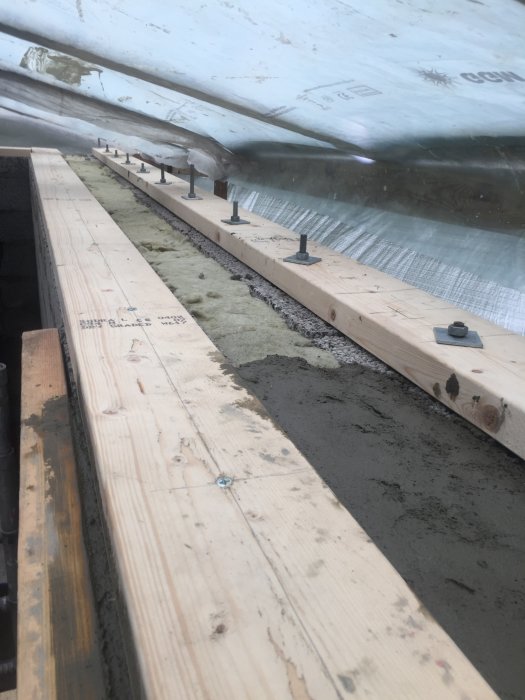
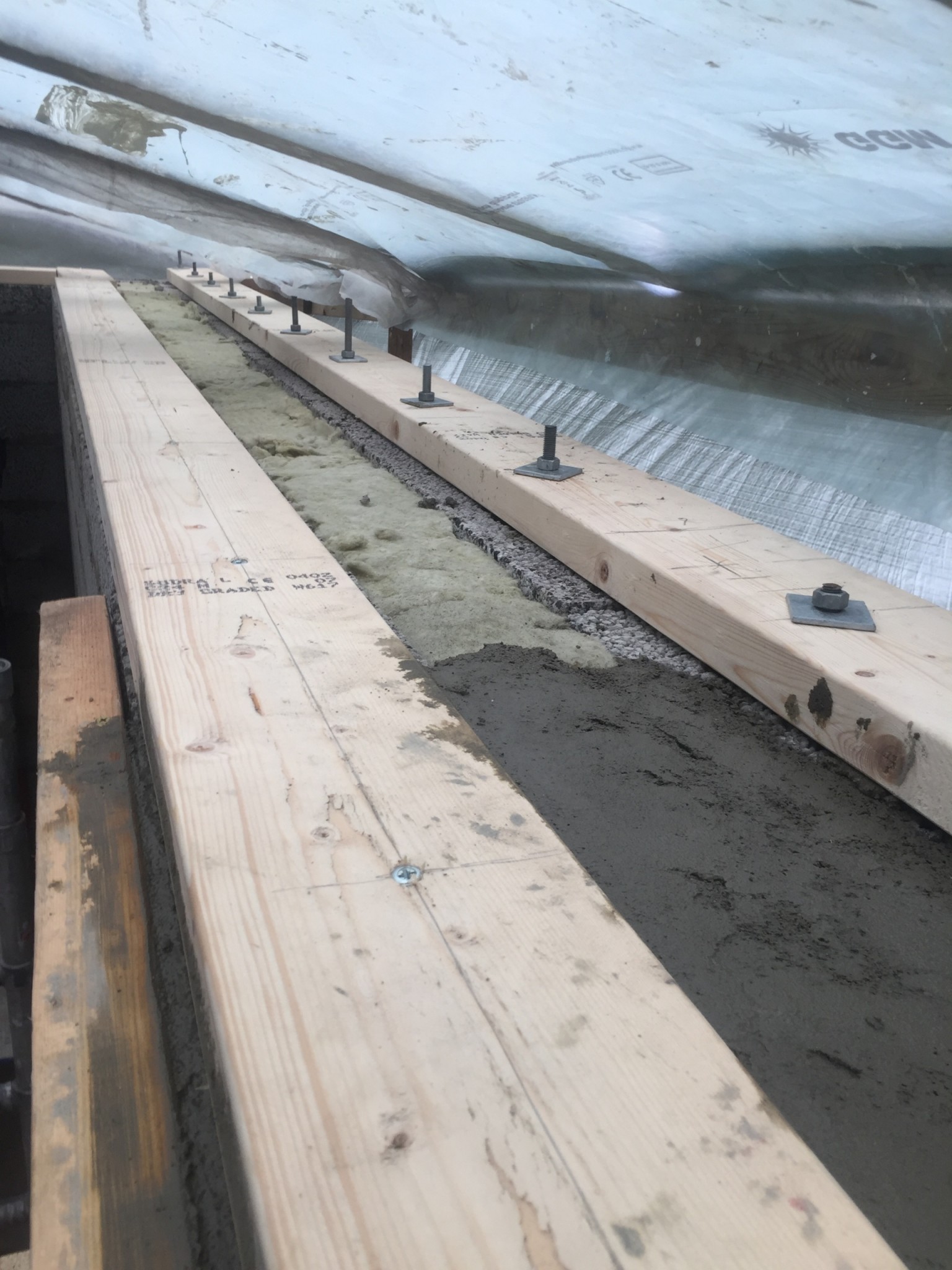
Bolts will probably go into the U-blocks. Do you have any tips on the workflow to easily make the bolts fit into the holes on the wall plate?
I assume first cast the bolts and let them dry? Or fit the wall plate with the bolts while the concrete is wet?
No problem if the wall plate aligns with the plaster. No point in having overly wide wall plates, it just becomes cumbersome. 95 mm is sufficient.
"Is sill paper required under the wall plate?" The answer is yes.
A good method when casting in fixings is to first attach them to the timber the fixings are meant to secure, then pour the concrete and press the fixings with the timber down. However, you must have a little air between the timber and concrete while the concrete sets. After that, loosen the bolts, remove the wall plate, put on the sill paper, and screw the wall plates back in place.
Now the construction is starting and I have questions about how to easily plaster the interior walls straight. I have Finja's products at home.
Plaster mortar KC Fin. Do you not use screeds indoors or what is the easiest way?
I have read a bit. So no use of wooden strips indoors with a thin layer of plaster. Is it best to prime with A-bruk even indoors? It will be painted with silicate paint in some places and tiled in others.
I am certainly no expert when it comes to plastering issues at this detailed level. Few areas in construction are as complicated as plastering. However, I believe it might be a good idea to prime with a thin cement-rich mortar before applying the lime-cement mortar. Of course, you can use planed strips as a guide to get the right thickness of the mortar. It's easy to attach a strip to the lecasten with nail plugs and then move it. However, plastering large surfaces to make them look neat is a professional job.
It somewhat depends on how the insulation of the attic floor will be done. In the usual case with a ventilated eave, you cover the soffit box from underneath with panel boards nailed with about a 1 cm gap between the boards. Then you install an insect net from above. There are three types of nets: stainless steel, aluminum, and plastic. Stainless steel is very expensive, mice eat the plastic net, so I would choose aluminum.
The insulation should not extend beyond the facade line. How the insulation should be confined depends on the type you will use. Cellulose fibers, which I recommend, definitely require some sort of board at the edge.
Vi vill skicka notiser för ämnen du bevakar och händelser som berör dig.