
Hello all builders!
We've bought a house built in 1970, split-level, with living space also on the lower level (split-level).
The interior walls downstairs are made of blåmattong which I received some input about here on the forum, and they will be torn down.
The next issue is the raised floors, and they are raised on both levels; it's a concrete floor structure, and I hoped it wasn't that on the upper level.
On the lower floor, there's nothing to worry about; I've started lifting them. The house had a leak that caused moisture, so everything has to go, but what is best to do then—pour a new slab?
The current one is just rough concrete, not at all smooth and nice.
But upstairs, I hoped to see a nice, even, and smooth slab, but no such luck, so what should one do?
Suggestions? Has anyone had the same situation?
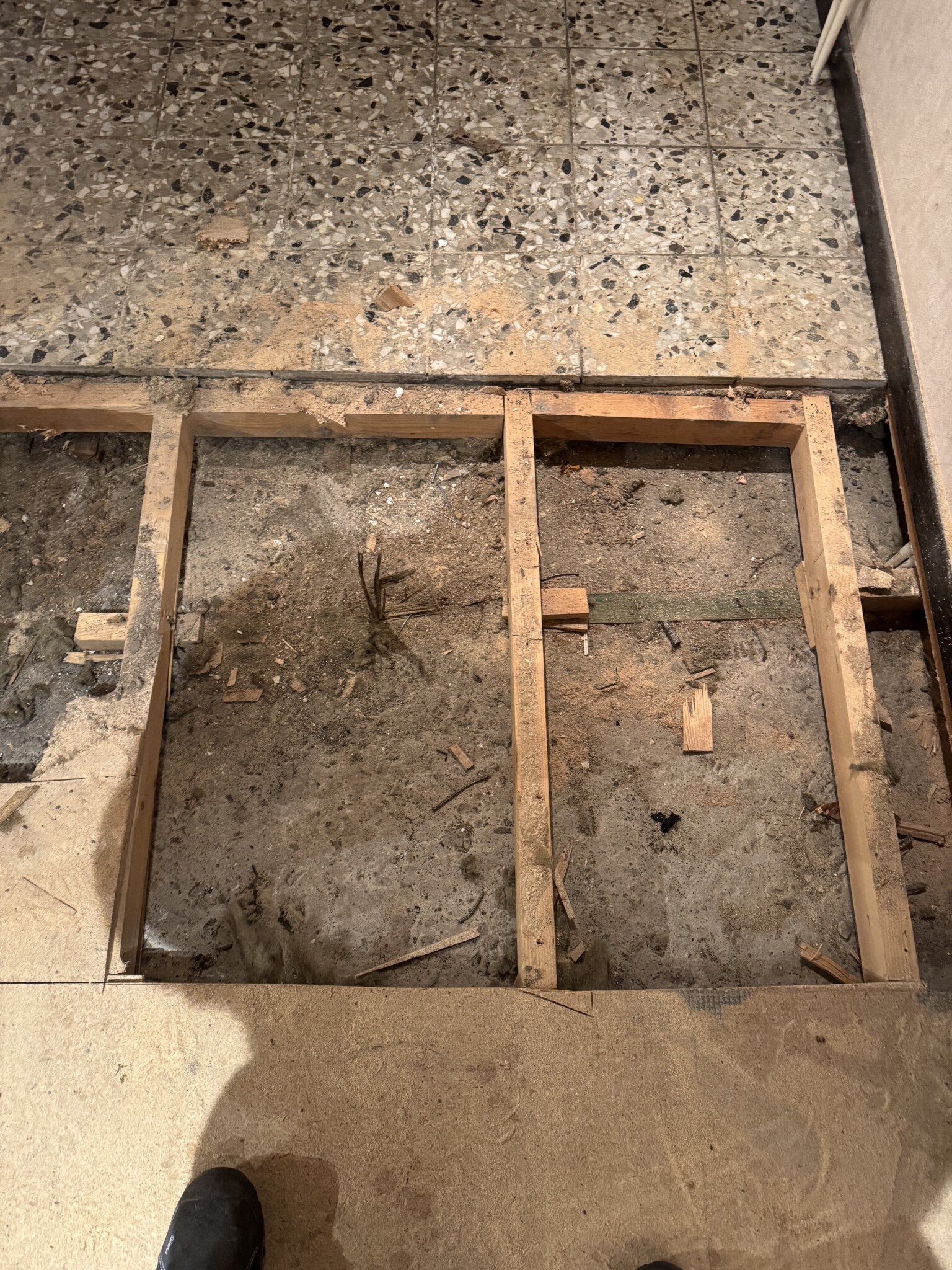
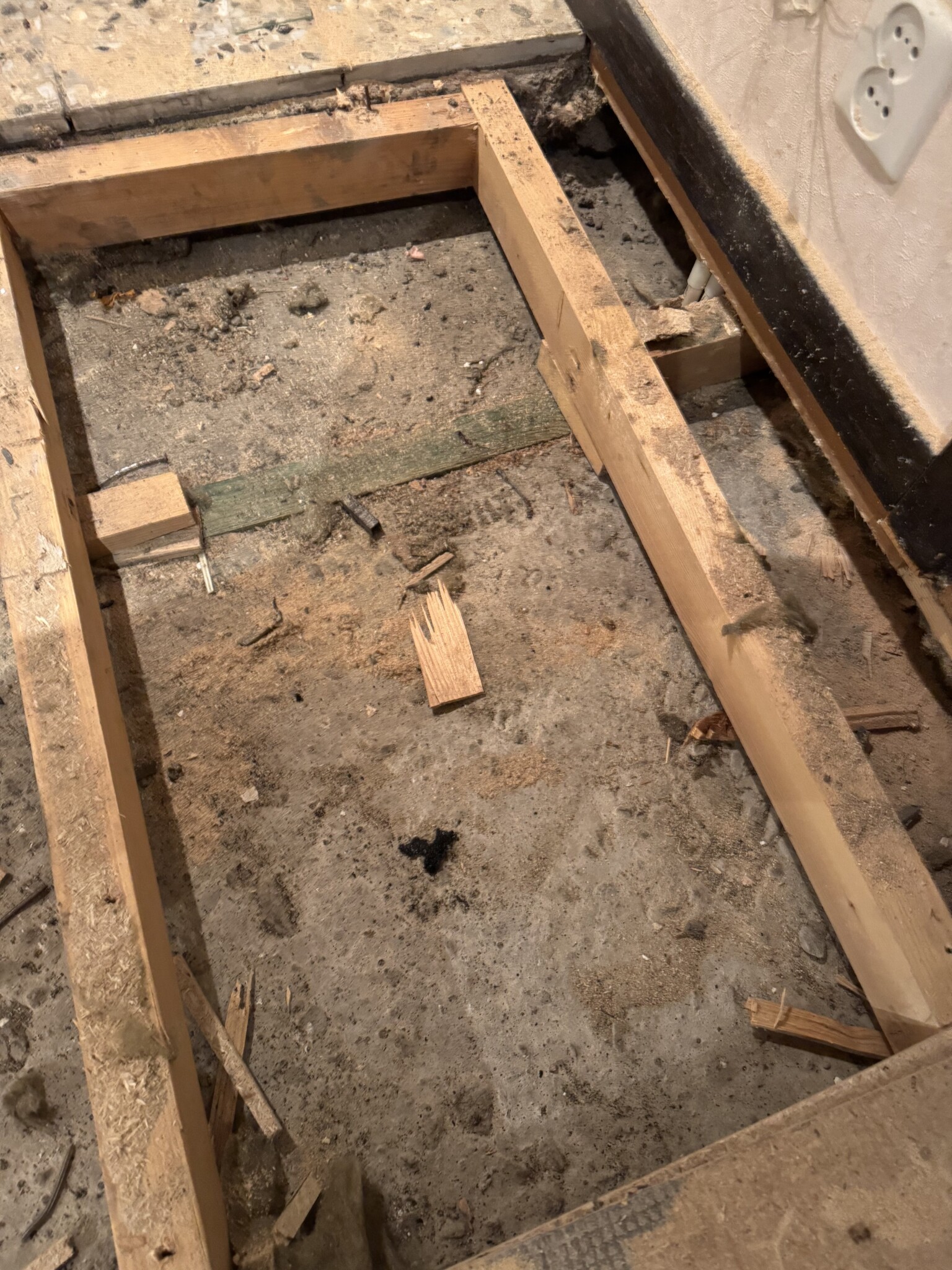
Picture of the upper floor.
We've bought a house built in 1970, split-level, with living space also on the lower level (split-level).
The interior walls downstairs are made of blåmattong which I received some input about here on the forum, and they will be torn down.
The next issue is the raised floors, and they are raised on both levels; it's a concrete floor structure, and I hoped it wasn't that on the upper level.
On the lower floor, there's nothing to worry about; I've started lifting them. The house had a leak that caused moisture, so everything has to go, but what is best to do then—pour a new slab?
The current one is just rough concrete, not at all smooth and nice.
But upstairs, I hoped to see a nice, even, and smooth slab, but no such luck, so what should one do?
Suggestions? Has anyone had the same situation?
Picture of the upper floor.
What are you wondering about?V vix79 said:Hello all builders!
We have bought a house built in 1970, split-level, with living space even on the lower floor (split-level).
The partition walls downstairs are made of blåbettong which I got some answers about here on the forum and they will be torn down.
The next issue is the raised floors, and they are raised on both floors, it's concrete beams and I was hoping it wouldn't be like that on the upper floor.
On the lower floor, there's nothing to think about as I have started lifting them, the house had a leak which caused moisture so everything needs to go, but what is best to do then, pour a new slab?
The current one is just rough concrete, not at all smooth and nice.
But on the upper floor, I was hoping to see a nice even and smooth slab, but no, so what do you do?
Suggestions? Anyone who has had the same?
Picture of the upper floor.
I don't quite understand the problem - can you elaborate?V vix79 said:
On the upper floor, you hopefully don't have a problem with penetrating moisture, but on the ground floor, an underfloor from, for example, Nivell, Subfloor, or Granab could be a not entirely bad idea if you need to replace the subfloor anyway.
https://subfloor.se/
The mentioned companies have solutions that work great on uneven slabs and also enable mechanical ventilation, in case you have problems with penetrating moisture.

Upstairs, the little I've opened up in the concrete slab, there are embedded beams that might not be visible in the picture, and the floor construction is screwed into these. This particular beam was damp, and I'm hoping it's just there because there's a bathroom nearby where there was a water leak. So the question is if it comes to the point where it needs to be opened up, what could be the cheapest option?
Also, I've noticed that the floor is raised, and they've built thin partition walls on it, so they would have to be demolished if the floor is removed.
The big question is about the sill; the sill should be directly on the slab, one hopes, and not on the raised floor...
The house has had a leak that dripped water from the toilet next to the stairs going down, so it has dripped down to the basement, but I want to check the floor upstairs as well.
Thanks for your responses!
Also, I've noticed that the floor is raised, and they've built thin partition walls on it, so they would have to be demolished if the floor is removed.
The big question is about the sill; the sill should be directly on the slab, one hopes, and not on the raised floor...
The house has had a leak that dripped water from the toilet next to the stairs going down, so it has dripped down to the basement, but I want to check the floor upstairs as well.
Thanks for your responses!
So, you have water damage on both the upstairs and downstairs? Then I guess it's just a matter of tearing out as much as needed, I would think. If you didn't discover the leak soon after it started, I find it hard to believe there's any reason to hope that air drying the material would be enough.V vix79 said:Upstairs, in the little I have torn up, in the concrete slab there are embedded joists that might not be visible in the picture, upon which the floor construction is screwed in. This particular joist was damp; I now hope it is just in that specific spot since there's a bathroom nearby where I've had a water leak. So the question is, if it reaches the point where it needs to be torn up, which option might be the cheapest?
I have also noticed that the floor is raised and thin interior walls are built on it, which would have to be torn down if the floor is removed.
The big question then becomes, how is it with the sill, the sill should lie directly against the slab one would hope, and not on the raised floor...
The house has had a leak that dripped water from the toilet located adjacent to the staircase down, so it has dripped down to the basement area, but I want to check the floor upstairs as well.
Thanks for your answers!
If interior walls stand on the floor (not supported on the slab), I would remove the subfloor piece by piece and continuously support from below. I had to do so in our house when we replaced the subfloor. Remove a small piece at a time - provide support.
Our '70s house was unfortunately built on the floor joists (hope that's unusual!). Therefore, there wasn't any actual sill on two sides of the house. Had to remove the joists one by one and provide pointwise support. Then we slid a sill in, and removed one support at a time.
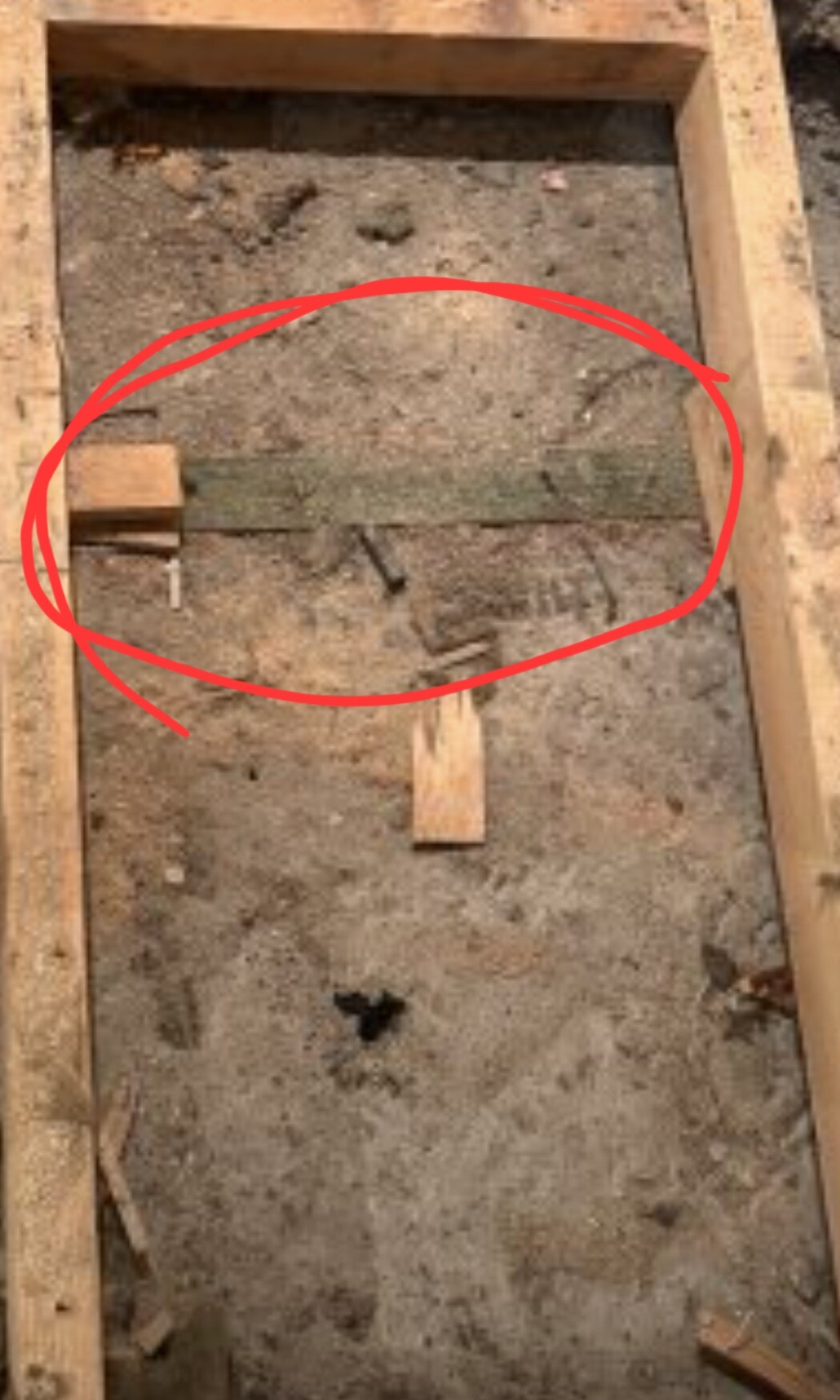
Edit - are those embedded pressure-treated joists on the upper floor? Looks green - mold?
Last edited:
Thanks for your response!!K Kardan79 said:So you have water damage on both the upper and lower floor? Then I think you just need to tear away as much as required. If you didn't discover the leak soon after it occurred, I find it hard to believe there's any reason to hope that air-drying the material will be sufficient.
If the interior walls stand on the floor (not supported on the slab), I would remove the subfloor bit by bit and gradually support from underneath. I had to do that in our house when we replaced the subfloor. Remove a small piece at a time - support it.
Unfortunately, our 70s house was built on the floor beams (hoping that's unusual!). Therefore there wasn't actually a sill on two sides of the house. Had to remove the beams one by one and support them at specific points. Then we folded in a sill and removed a support one at a time.
Edit - are these pressure-treated beams embedded on the upper floor? Look green - mold?
Now it's not as green as in the picture, though damp, which makes it essential to pull these up if possible. Fortunately, it's only this one that was adjacent to the toilet where a pipe leaked.
Click here to reply