Have now got a RadonEye at home, the first day in one of the bedrooms produced a nice curve just below 15 Bq/m3, it spiked to 40 for a few hours around 9 in the evening but then went down again. Of course, it's too short a period to draw any conclusions, but it may mean there is a very large range here considering that the detectors measured 120 and 240.
The plan now is to move the RadonEye to the room where we got the highest values and see if we can somehow recreate what the detector showed. It's possible that we may need to lower the fan to level 1 again to get there.
I have now measured in various places over shorter periods mostly to see if anything stands out. I know that long-term measurement is what counts, but I thought that if it's significantly elevated somewhere, I might be able to catch it this way. To assist with the "troubleshooting," I bought one more Radon Eye.
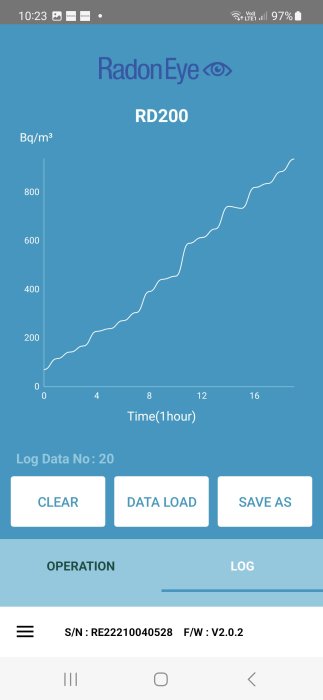
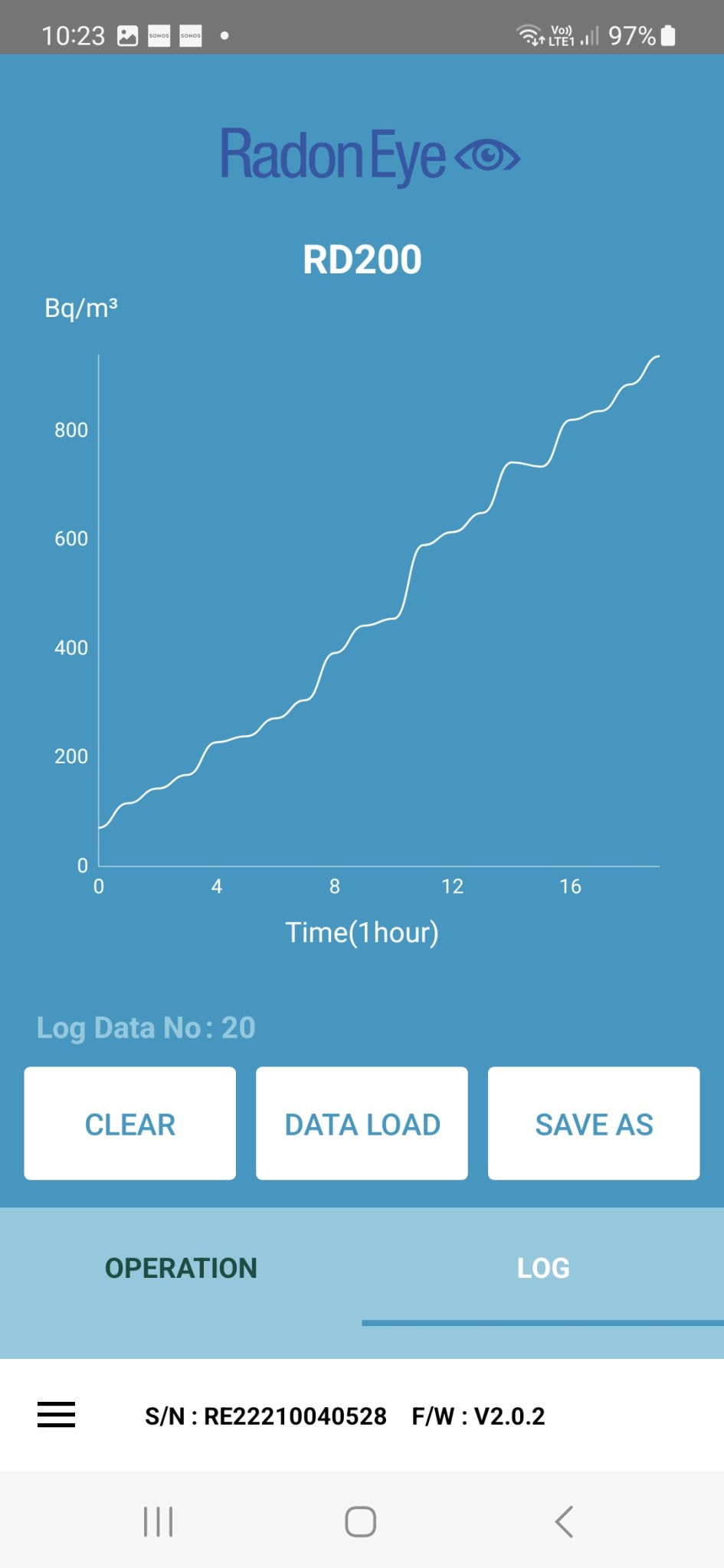
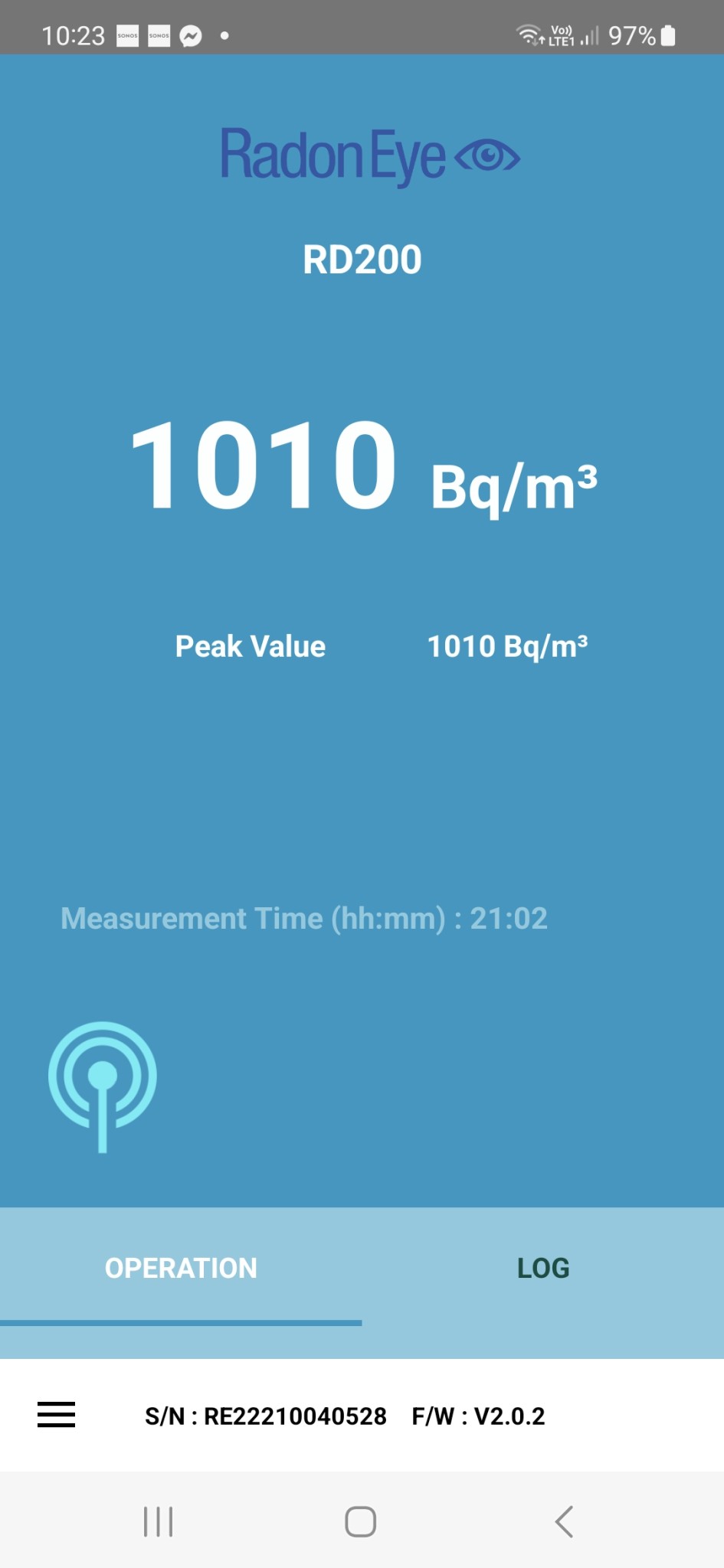
I have a couple of rooms with wells and thought the values might be elevated there, but nothing unusual (yet). However, I have a tool shed (maybe 3x4 m) (basement), without ventilation and 2 sealed doors, and here sensor 1 is measuring a significantly elevated value, continuing to rise after 10 hours. Right now it is at a whole 650 Bq/m3 and the curve is significantly steep.
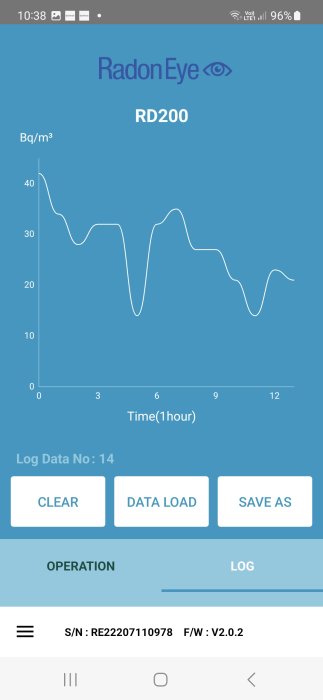
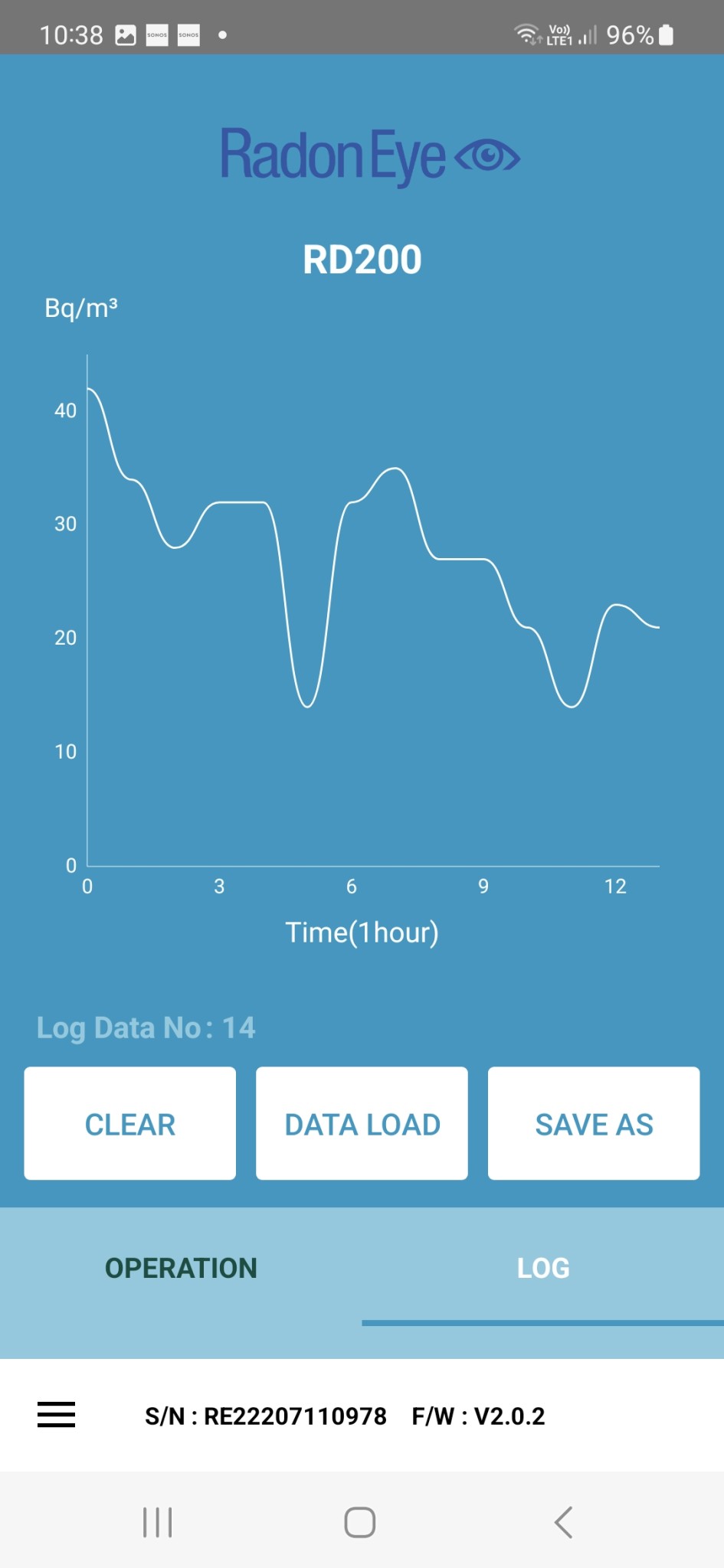
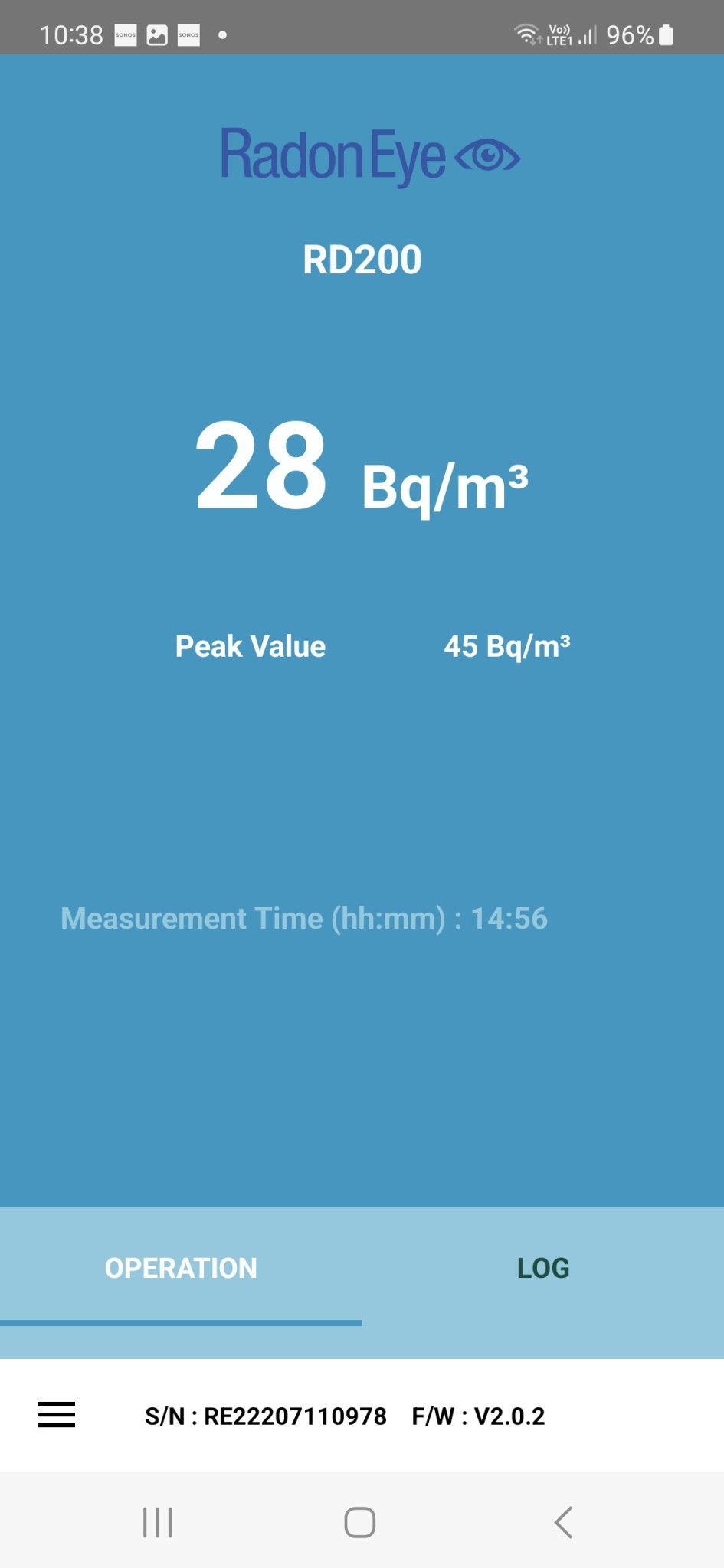
Sensor 2 was placed outside the door where I got around 60-80, so the door seals well. After a few hours, I moved sensor 2 to the room directly above (ground floor) where we spend a lot of time, and here the values appear to stay below 40, so the ceiling/floor also seems to seal well.
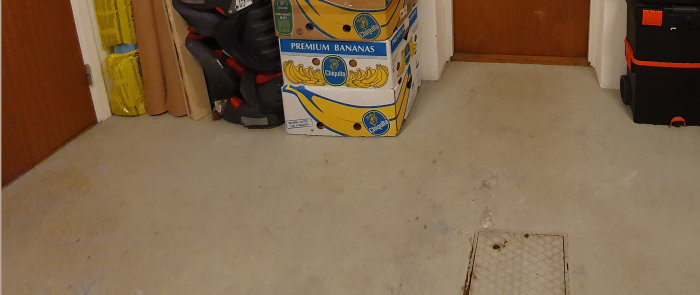
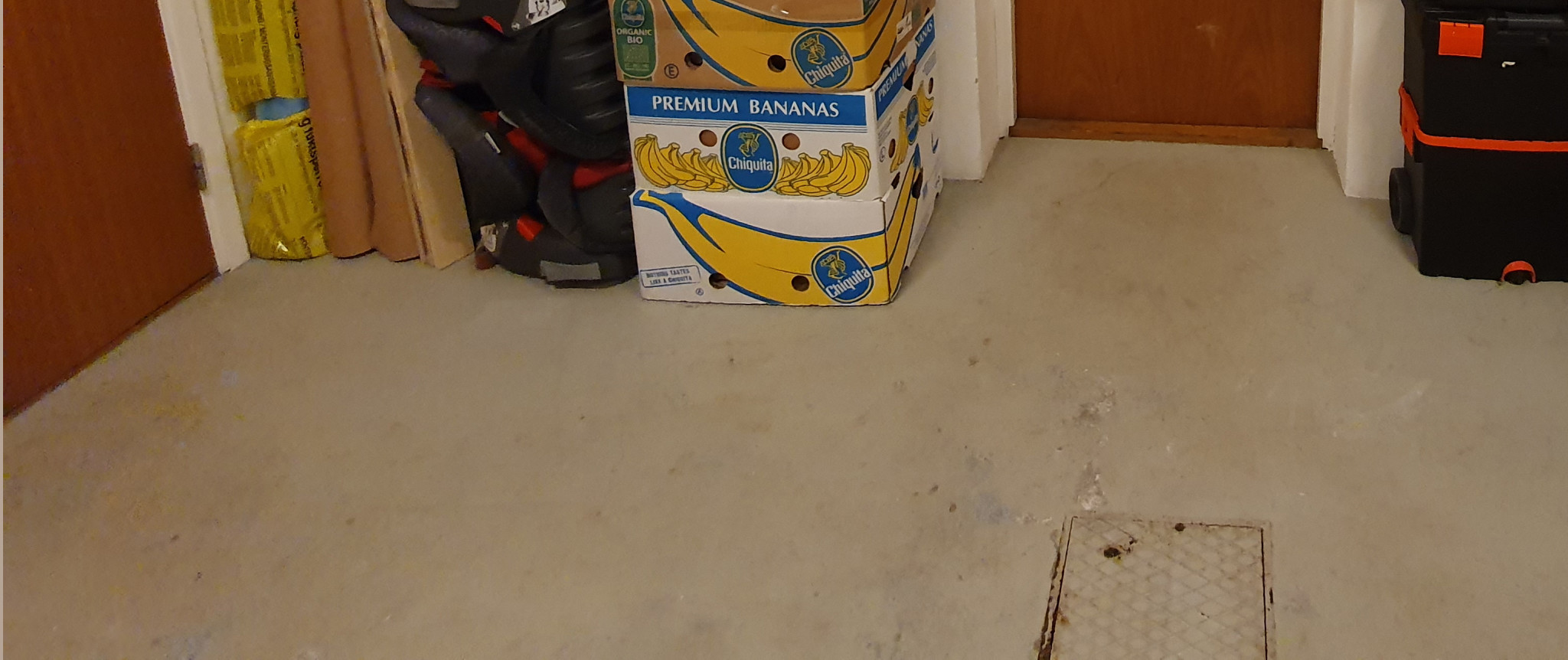
The tool shed is just that, a tool shed with tools, some clothes, screws/nails, gas masks, paint, brushes, etc. Fortunately, we are rarely here, mostly just to fetch or drop off something. No renovations have been done. The municipality's water hose comes through the wall that goes to the water meter and then transitions to a pipe that continues down into the floor, there are no holes or gaps at all there. Then we have a cleaning well for the drain in the floor. The cleaning well consists of a "loose" rusty metal cover maybe 40x30 cm, inside which you find concrete and gravel, as well as a sewer pipe with a screw cap.
I guess the radon is coming from the cleaning well, i.e., that the metal cover does not seal sufficiently well. Since the room is "sealed" without ventilation, the radon value builds up, I just hope it doesn't reach horrible levels!
I would like to test sealing the well in a simple temporary way to see if this is indeed the source; suggestions on how to do this? Is it enough to tape down construction plastic with duct tape or age-resistant tape?
I would consider just trying to solve the problem instead, I don't think you will find a completely radon-tight product that solves the probable leakage in the well, and regardless, it's associated with quite high costs to resolve. You have relatively high levels in a room you barely spend time in, which in itself is not a particularly big problem as exposure time is an important factor with radon. I would install a fan in the room that ventilates the air out, which should drastically lower the levels and also reduce exposure for the rest of the house.
It definitely needs to be addressed, the question is just how. From what I've been able to read, step 1 is sealing, step 2 is reviewing ventilation.
The room we're talking about is the storage room at the top right on the left drawing here:
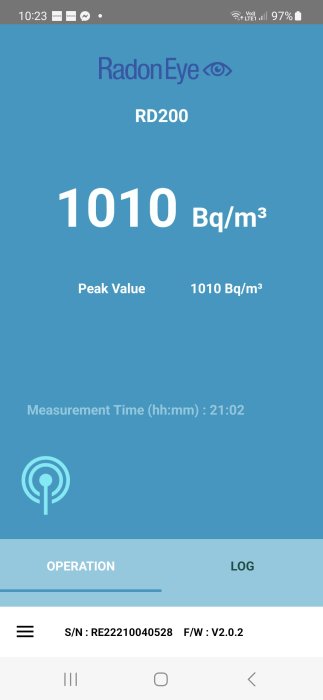
The idea was to upload detailed photos of the well, but first, I want to find out how high the values can actually get in here. Considering the graph started at about 70 like the rest of the basement and has gone up significantly since the measurement began, I guess the radon quickly vents out when the door is opened. This is what the measurement looks like from the room right now:
The rooms directly above look like this:
Note that we did a long-term measurement in the room right outside, where we got only 120 ± 20 Bq/m3. So even if the room has been opened and radon has escaped from time to time, it doesn't seem to have significantly affected the value.
I actually found an older picture of the well lid, worth showing, but it doesn't really say much:
If you lift the lid, there's a hole about 40 cm deep with concrete, gravel, and of course the sewage pipe. Sealing the lid itself shouldn't be difficult if we're talking about airtight, but since concrete breathes, I suppose some radon can still get through.
Putting a vent in the wall shouldn't be a problem as long as one can get hold of a diamond saw of the right size (which seems to be quite expensive). Then there's the question of how to solve the ventilation; as I see it, there are 3 solutions, all of which of course involve a vent in the wall:
1. Hole in the wall with a PAX fan that extracts air, but this risks creating negative pressure which can be bad when it comes to radon.
2. Extend the existing exhaust system; however, there are 2 obvious problems: 1. The room next to where the exhaust system extends is a shower, and you don't want a pipe going overhead there. It can surely be solved with detours but it will cost. 2. The system currently runs at 2/6, and even here one can hear the fan.
3. Drill a ventilation hole from the problem room into the large one where it becomes part of the existing exhaust system, even if it's a bit further away. However, there is a big risk that the radon level increases significantly in this "social room" where we are much more.
I don't think our scenario is that unusual; if we had only gone by the long-term measurements and the experts' opinions, no further measures or measurements would have been taken.
Some of the many questions that stand out:
1. It's worrying that the radon level is rising so significantly; maybe it reaches several 1000 Bq/m3, how much is needed to be harmful even for a shorter time, say 1 hour?
2. How do you usually seal sewage cleanouts? Is it just about sealing the lid or is some kind of sealing compound placed in the hole over gravel and concrete (around the pipe)?
3. What size do you drill for ventilation, and where can you get a diamond saw of this size? Is it worth renting?
4. If you just install a PAX fan that pushes air out, I assume it creates negative pressure in the room which I understand is bad for ground radon? So you really want to build onto the existing system in the house?
5. Can radon settle into objects and clothes? Or is it just radiation that works that way?
How about ground radon? Had the same with an inspection well and sealed it. I replaced some other pipes in the house and installed an inspection well on the pipe. How many penetrations do you have in the basement, sewage, water, electricity; it is not airtight around these pipes, so ground air might be seeping in with possibly radon.
How is it with ground radon? I had the same with the cleaning well and sealed it. I replaced some other pipes in the house and put a cleaning well on the pipe. How many penetrations do you have in the basement, sewage, water, electricity? It is not airtight around these pipes, so ground air with possibly radon is seeping in.
According to the municipality, we are in a yellow area which means clay that can contain high levels of radon. In this particular room, it's about a water hose from the municipality that goes into the water meter and then goes up to the ceiling. From what I understand, water from the municipality does not need to be tested for radon.
I would prefer not to seal the cleaning well, as it has been very important for cleaning the sewage during the first few years we lived here.
Ok, following along, nothing wrong with being able to clear things out. There's no radon in municipal water. How is your drainage around the house? Old junk or new with a drainage pipe?
All stormwater goes to water trenches around the house, the house drainage has probably not been redone since the 70s. Since the house is a bit on a hill, there has really been no reason to redo it, the basement walls are dry and fine, the paint stays where it should. I don't think the solution here is drainage; I've heard some stories where it actually got worse when people drained.
We've talked through the situation a bit, at first we thought about drilling a ventilation hole today, but we actually lack data. We want to know what levels the radon levels can reach, even if this is a short-term measurement, because there's really no elevated risk for us since it stays in the room where visits are currently prohibited. Then we want to figure out how the floor cleanout should be sealed, is it enough to seal the cover or do we have to use some sealant.
So the action plan now is to let the radon build up to find where the plateau is. When we reach it, we'll try opening the window slightly to simulate a ventilation hole in the wall. When we know the results of this, we plan to air out, cut the hole in the wall, and probably seal the floor cleanout (however that should be done).
If this isn't enough, the next step will be to get a company to extend our ventilation system into the room, and hopefully, there's already an exhaust vent here.
If we had obvious elevated risks for other parts of the house, we would have drilled the hole today.
That you don't want to close the hole I understand, it will be cleared at some point. The question about drainage is that it can be used effectively to remove ground radon. Different conditions exist for this and must be assessed on-site, and the downpipes should not go into the same well/soakaway. Regarding the special room, it's possible to lower a pipe through the floor and have a fan that sucks with low negative pressure and vent it into nature. That's how I have it and it works well.
It absolutely needs to be addressed, the question is just how. From what I have been able to read, step 1 is sealing, step 2 is reviewing ventilation.
The room we are talking about is the storage located at the top right on the left drawing here:
[bild]
The plan was to upload detailed photos of the well, but first I want to find out how high the values can actually get in here. Considering that the graph started at about 70 like the rest of the basement and has gone sharply up since the measurement began, I guess that the radon is quickly ventilated out when you open the door. This is what the measurement from the room looks like right now:
[image] [image]
The rooms directly above look like this:
[image] [image]
Note that we did a long-term measurement in the room just outside, where we only got 120 ± 20 Bq/m3. So even if the room has been opened and the radon has escaped now and then, it doesn't seem to have affected the value significantly.
I actually found an older picture of the well lid, worth showing but doesn't really say much:
[image]
Lifting the lid, there is a hole here maybe 40 cm deep with concrete, gravel, and of course the sewer pipe. Sealing the actual lid shouldn't be difficult if we're talking airtight, but then concrete breathes I suppose, so some radon can probably still get up.
Installing a vent in the wall shouldn't be a problem as long as you manage to get hold of a diamond saw of the right size (which seems to be quite expensive). Then the question is how the ventilation should be resolved; as I see it, there are 3 solutions, all of course involving a vent in the wall:
1. Hole in the wall with a PAX fan that draws out the air, however, this risks creating negative pressure, which can be bad when it comes to radon.
2. Expanding the existing exhaust system, however, there are two obvious problems: 1. The room next door where the exhaust system extends is a shower, you don't want a pipe going overhead there. It can certainly be solved with detours, but that will cost. 2. The system is currently running on 2/6 and even here you can hear the fan.
3. Drill a vent hole from the problem room into the big one where it becomes part of the existing exhaust system even though it is located a little further away. However, there is a big risk that the radon level increases significantly in this "living room" where we clearly spend more time.
I don't actually think our scenario is that uncommon; had we just gone by the long-term measurements and experts' assessments, no further measures or evaluations would have been taken.
A few of all the questions that stand out:
1. It is worrying that the radon level goes up so sharply, maybe reaching several 1000 Bq/m3, how much is required to be harmful even for a shorter period, say 1 hour?
2. How do you usually seal sewer cleanouts? Is it just about sealing the lid or do you put some kind of sealing compound in the hole over gravel and concrete (around the pipe)?
3. What size do you drill with for ventilation and where can you find a diamond saw of this size? Worth renting?
4. If you just install a pax fan that pushes out air, I assume you create negative pressure in the room, which I understand is bad for soil radon? So you actually want to expand the existing system in the house?
5. Can radon settle in items and clothes? Or is it just radiation that works that way?
A pax fan does not create enough negative pressure to "suck" up soil radon.
Modern sewers are laid under the slab and seals are used against a radon membrane if soil radon is present.
Pax no one has said anything about it, of course it can manage to suck out the room, but that will create a negative pressure that causes ground radon.
Pax, no one has said anything about it, of course, it can handle ventilating the room, but it will create a negative pressure that introduces ground radon.
The negative pressure that a Pax fan can generate is very limited, if not non-existent. A prerequisite for adequate airflow is an air supply. The room in question is probably already exposed to ground radon, and if you create some form of air supply with sufficient area, it will hardly get worse; on the contrary, the critical level will likely drop to significantly better numbers.
If you install a PAX fan, where is the air supposed to come from? Other rooms already have a ventilation system consisting of a couple of active exhaust vents and a few supply vents (in the walls). It otherwise sounds like a relatively inexpensive solution.
Personally, I think the only right thing is to expand the existing system so that the entire house's ventilation works the same way. I could probably run the ducts myself, but then the air needs to be measured so that the correct airflow is achieved in all vents. Since it's important that this is done correctly, a company will probably need to handle it, and it probably doesn't need to be a radon remediation company to solve this.
Of course, you can make a special solution where you break up the floor and install a smaller duct with a fan to the well, but that becomes another thing to keep track of.
Moreover, the curve is now broken, it has dropped to 800-900 bq/m3, which is still high, but hopefully, we won't see several thousands of bq in the future, although there is still a risk. Let's see if it stabilizes a bit better by tomorrow so I can try opening the window a little to see how much a vent would affect it.
Vi vill skicka notiser för ämnen du bevakar och händelser som berör dig.