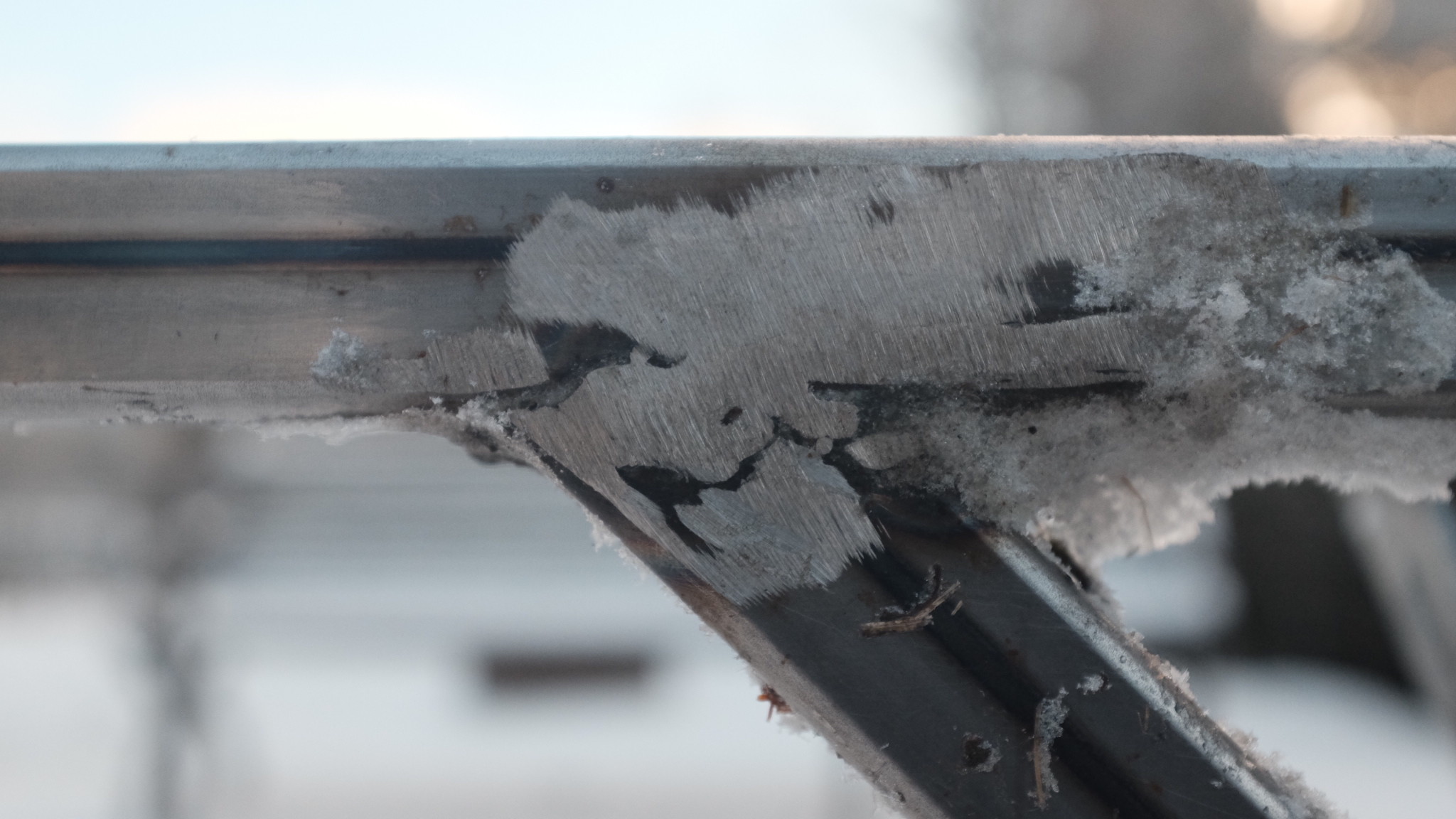
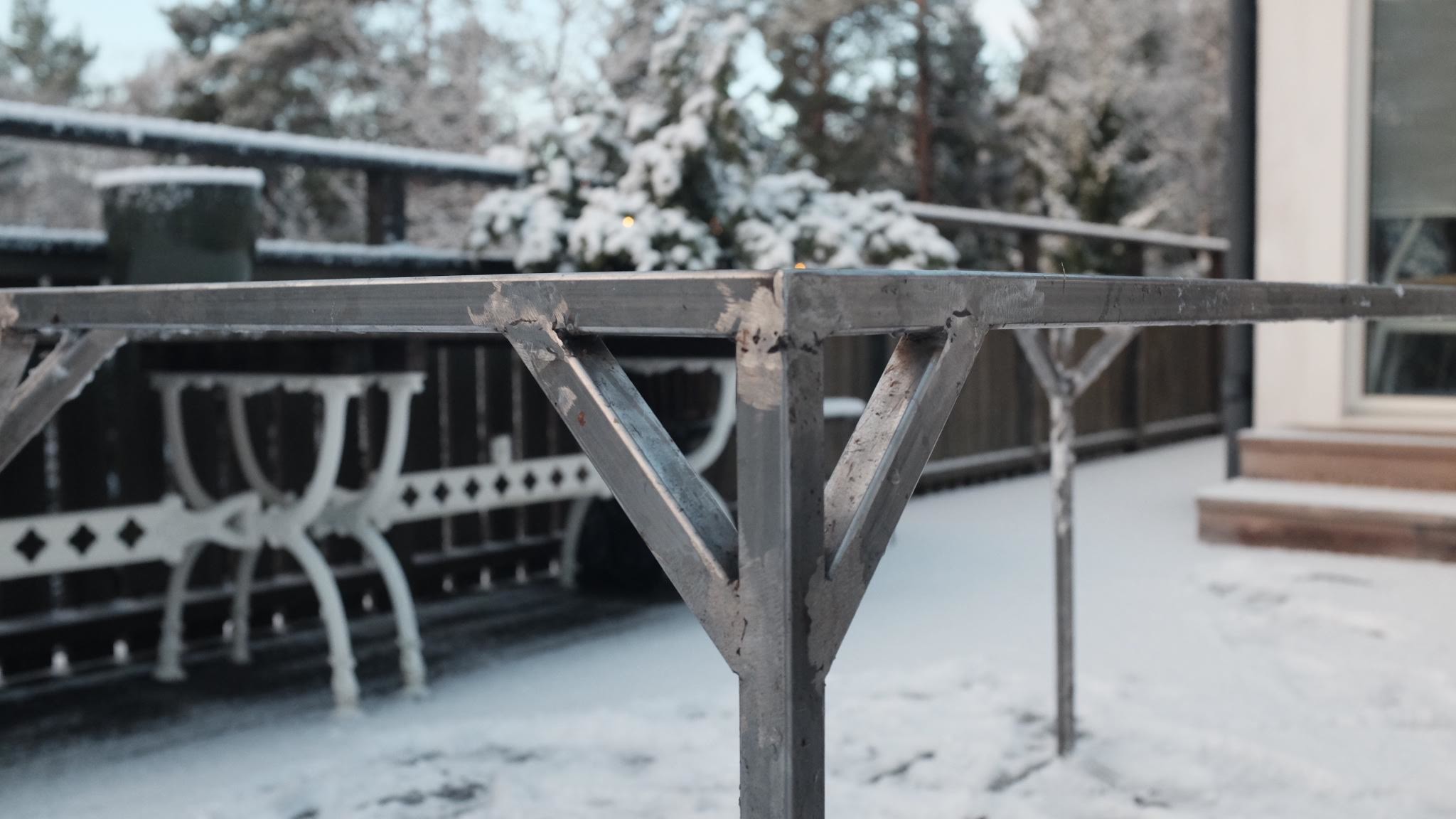
Hello! I, as a novice, have (me) welded a table frame. Since I am not skilled, the welds turned out as expected, ugly. Therefore, I planned to grind the welds, which I have now done. During grinding, some of the welds almost look separated, like a puzzle (for lack of a better description). They feel very solid when I try to break them by force, but could there be a problem?
If it feels uncertain, turn up the power a notch and go around once more. The important thing is that it burns through, not that it becomes a big bead on top. A small mound is good, a thick bead may be okay if it has burned through. Never a groove.
A professional welder can provide more details.
Thanks for the reply! I'm aware that the picture wasn't the best. Since the seams are in place, I thought they were joined but have left a gap in the outermost "layer". Thanks for the input, maybe I should take another round.
Those joints would normally be rejected, but a table doesn't need to withstand more than what you can bend and break. Maybe they suffice.
Welding on top usually doesn't help. Welding defects in the underlying weld metal aren't melted up again, so the defect remains hidden. I usually cut open failed joints with an angle grinder and re-weld them.
If you're getting a result that's that good as a novice, I think you should continue welding and practicing. I think you have a bit of talent for this. Many beginners (including myself once) tend to mess up even worse.
Really appreciate your comment and compliment, with the understanding that I've never welded with anything other than MIG, and it actually takes a lot of practice to get good at. What I find the trickiest and the "villain" in the drama of separated joints is the ratio between feed speed and current strength. I haven't taken any courses, so I started by setting both in the middle, then tweaking them a bit when things didn't go my way, e.g., spitting and sizzling, versus burning holes in the material, about 1.5mm thin steel.
I will bend the material a bit more, but I believe it should hold, as you heimlaga write. The undercarriage will be painted and will probably look good in the end.
Good on you for daring to weld and accepting criticism!
Feel free to take the scrap pieces and do some more test welding.
Bad welds usually become very weak when you grind away most of the material.
You should have a small gap between the materials you want to weld together.
When placing a cut pipe against a pipe side, there is more material in the pipe side, and it requires more energy to melt.
Then aim the wire at the thicker/stronger part of the material and let it "flow" over to the weaker part.
I think the choice of materials and design looks very good!
The hardest part is getting the right current and the right feed, but that will come.
Go out and try on the scrap pieces now and show your progress
I find that adjusting the tip is easiest by listening. Choose the voltage level, then regulate the wire speed while welding on a scrap piece. When it sounds good, it usually turns out well.
Thanks for the comments! The tip to aim for the stronger material part and let it flow over was very good. It's a situation that has been the trickiest. I will also try to listen for the right settings. It feels good to at least have a thread to start pulling to move forward. It's frustrating when one joint becomes godlike and the next downright disgusting without knowing why.
MAG welding is difficult; it can even look great but still be really bad.
What kind of welder is it? Some digital one with a display so you see the voltage, or a knob with 1-6 or something similar?
I'm really terrible at welding myself but have received some help from professionals both at work and privately. As an amateur, it's easy to end up in the borderline between short-circuit and spray arc. Also, MIG/MAG is a bit tricky, the current varies with both stickout and feeding, which isn't obvious to me.
I got a tip from a professional when I was welding pipes similar to what you have done. Turn up the voltage properly and weld in spots, about 1.5-2 seconds or whatever fits, let it cool for a few seconds, move half a cm and go again, and so on..... You'll get penetration, and the result will look professional. It does take a bit of time. And weld around it first, otherwise it might twist a lot.
Try on some scrap pieces and attempt to achieve the same result with continuous welding by moving back and forth during welding. It's really fun when you get it right, especially with TIG (it's like crocheting and running a chainsaw at the same time).
I've seen worse, so I don't think you need to worry too much, but otherwise, as they say, either you become a welder or a grinder.....
But I agree with the previous writer. With MIG/MAG, it's easier to make tack welds if you're inexperienced. Try first on some scrap with high current and keep the red melt pool going. Then you can tack your way forward and get a really nice bead. The important thing is to keep the melt pool red all the time; if it cools down, it will just end up as tacks, so to speak.
There is usually a recommended feed per current/wire diameter on the welding machine. Still, it's best to practice on a scrap piece of the same type as what will be welded. Also, make sure it's clean beforehand.
If it is thin-walled, up to 1mm, you can use 0.6-wire instead of 0.8-wire and I find that you get more margins and a wider adjustment range. Otherwise, it's just a matter of practice, practice, practice. There's not much more fun than welding