May I ask for some tips from you? I have finally bought a house and after living in it for just over a year now, it's time to start renovating
I have a chimney that borders the kitchen, which I ultimately want to tile over as I lay new tiles throughout the kitchen. As preliminary work, I want to apply plaster or gypsum plaster over the chimney, but I'm facing some challenges that I'm wondering how you would deal with. The challenge mainly consists of how to make it look nice against the part of the chimney on which no preliminary work is performed.
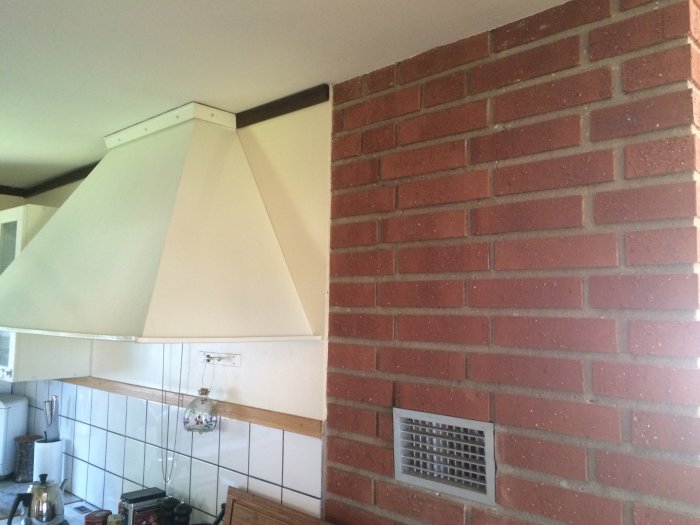
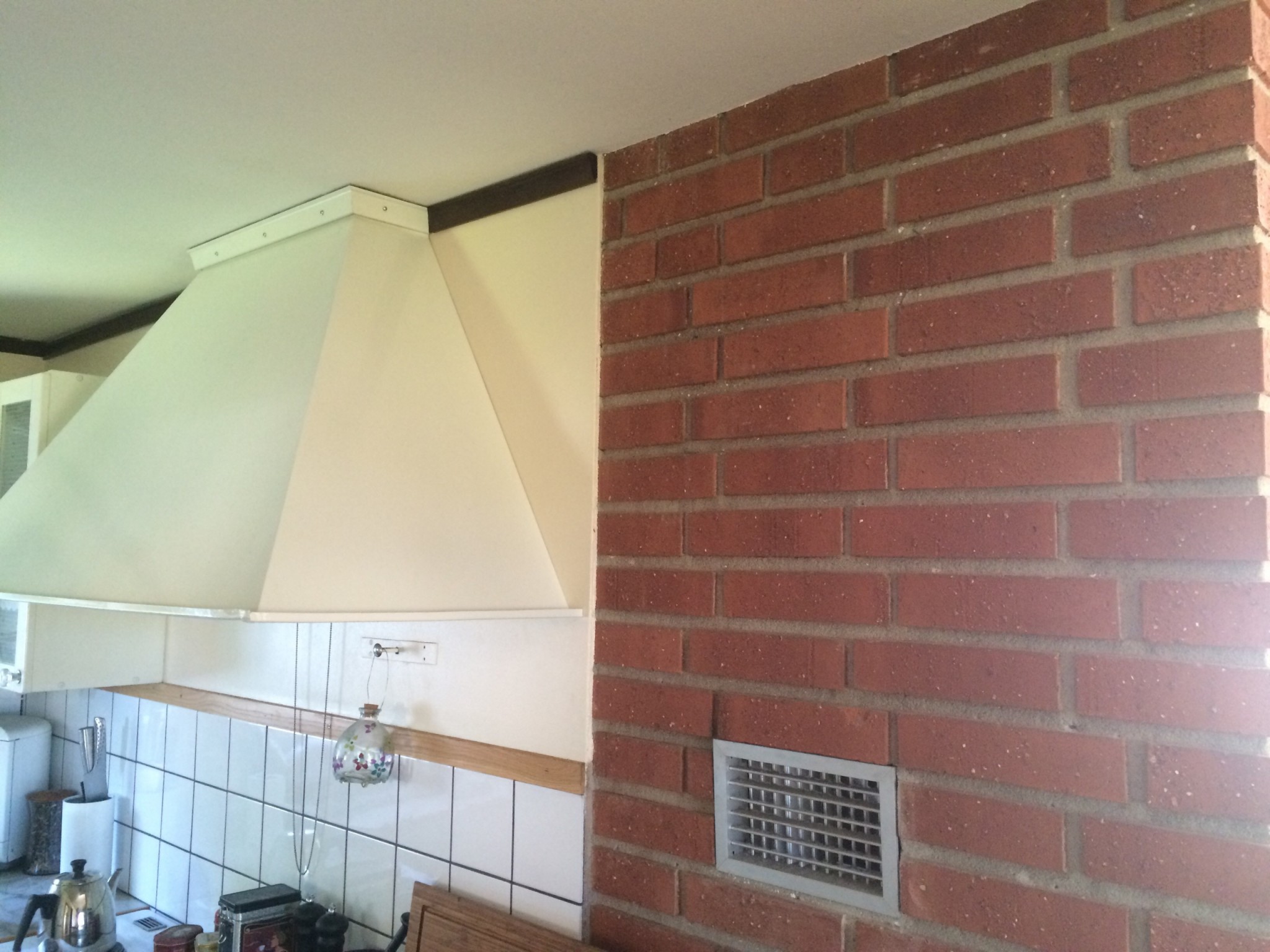
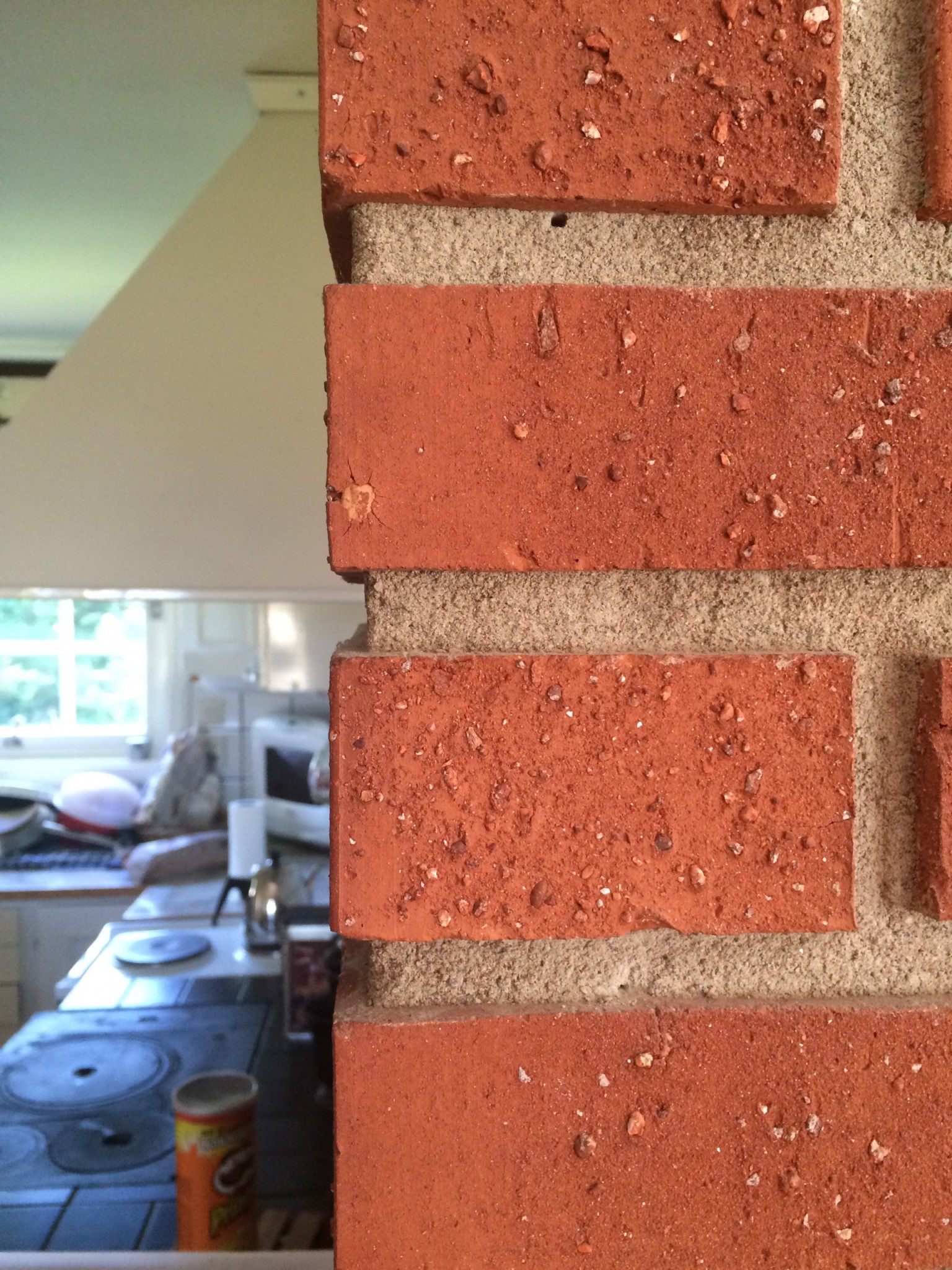
In the top picture below, you can see that it borders a white gypsum board(?), and the height difference is about 1 cm.
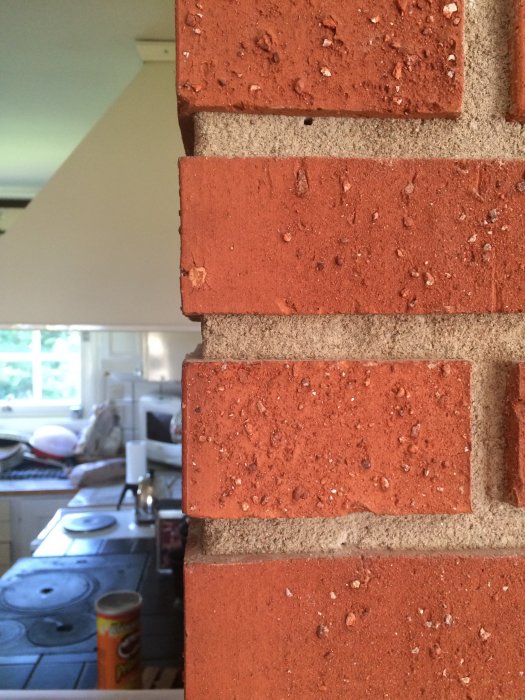
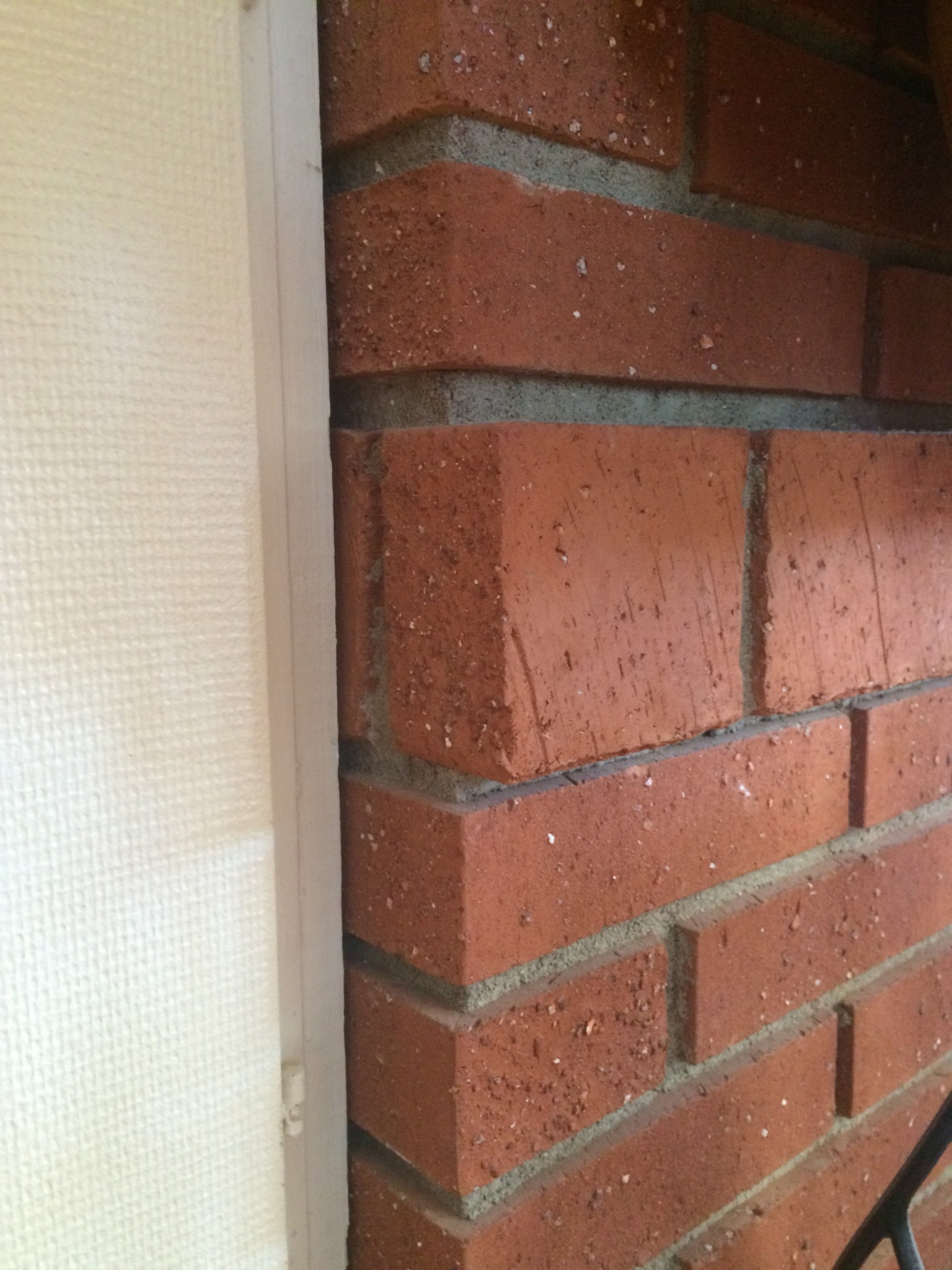
In the middle picture, you see one of the challenges. How should I get a "good" finish between the kitchen and the next room where the side of the chimney borders? This is because there are large gaps between the bricks.
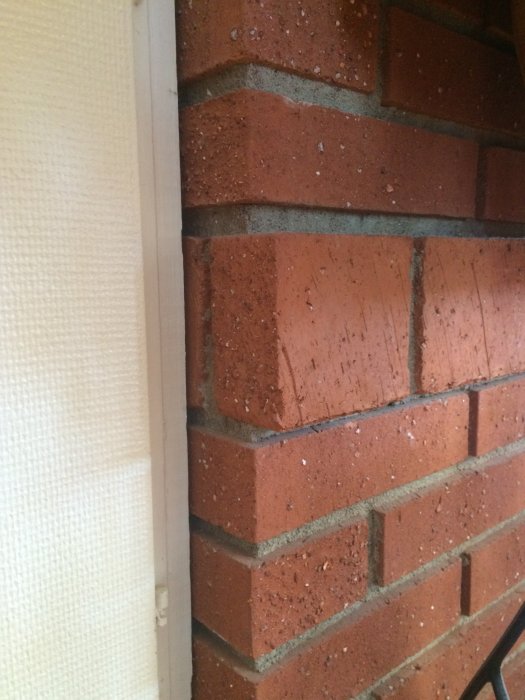
The last picture shows the final challenge. The ones who built the chimney made a waist(?) on it for aesthetic purposes. This also causes trouble, I guess, as I only wish to do the preliminary work on one side of the chimney and leave the other sides of the chimney intact.
I assume the murstock isn't used for burning, as it's usually a requirement that it be plastered.
For the outer corner towards other rooms, you could perhaps put some type of list? What do you think would look nice?
You could probably knock off the midja and, if whole bricks come loose, build out in stages with mortar before plastering. That course seems to consist of double standing bricks.
The chimney is currently partially used for burning when the mood strikes. So plaster is out, leaving rendering.
A simple corner bead sounds sensible.
If I start chipping away at the waist, and the whole stone comes loose, can it be solely filled in with render mortar (similar to filling holes in walls)?
The chimney is partly used for heating when the mood strikes. So plaster is out of the question and that leaves us with render.
There's nothing that says plaster is out compared to kc-mortar.
Strangely, it's approved as unplastered and even with raked joints. It could be an extra facade layer on top of the old chimney. What hints at this is the width of the entire chimney, that the visible bricks look modern, and that it's never been plastered before.
butchbob said:
A simple corner strip sounds sensible.
If I start knocking off the waist, and the whole stone comes loose. Can I just fill in with render (similar to patching holes in a wall)?
Yes, with render like kc-mortar, you can apply one centimeter at a time with about a day's drying in between. If you use plaster, you can apply 5-6 cm per layer.
If I were doing this and were 100% sure that the visible wall is an extra facade layer, I would knock off the waist and just "patch in" the holes that are left and all the raked joints. It seems to be very straightly laid.
Aha! Naturally, what is seen in the picture is a cavity wall. My stove is connected to pipes, and you can see that there is different brick on the inside of the chimney.
And regarding the choice of KC-mortar, if I don't know which mortar was used previously: should I choose B or C? Or should one go for hydraulic mortar (which is claimed to avoid cracking)?
C-bruk is what I would use based on the little I know about this specific object. Make sure to pre-water and post-water really thoroughly, as dry brick walls will absorb the water from the applied mortar in no time otherwise, and then it will definitely crack. Gypsum mortar is not as prone to cracking and can also be easier to handle for someone who is inexperienced with the trowel, but it becomes more expensive as the wall should be primed first and the gypsum mortar costs more.
Click here to reply
Vi vill skicka notiser för ämnen du bevakar och händelser som berör dig.