
12,318 views ·
39 replies
12k views
39 replies
Posts for the terrace - have I completely messed up?
Yes, make it neat, sand and round the edge and paint what is visible, but the sawed part should be clean.S sblixten said:
Think of a log-constructed hay barn in a field, untreated wood, and it lasts for several hundred years. But if brush and grass come into contact with the timber so it can't dry between each rain, it will rot in a few years.
Stave churches in Sweden and Norway have stood for 1000 years with untreated wood! Paint them with modern paint, and they'll rot in a few decades.
Neither do I.F fribygg said:
Unpainted wood usually lasts better than painted wood. See older houses, fences, summer pasture farms, etc.
The wooden houses that are still standing have been maintained and have long eaves and well-selected timber, and I would argue that they have been treated with tar or something else. I agree that untreated wood often holds up better than treated wood. In the given case, any frays should be sanded down and oiled/primed with the "right" method. If you look at how wooden boats are built, there is a lot of information on how wooden structures should be constructed. Where wood meets wood, it should be treated for rot protection and a more stable paste should be applied to prevent water from entering the gap. I build with good fit, treat for rot protection, and lay tar paper in between so that wood never meets wood.
/W
/W
I feel like it's a lot of "apples and oranges" in the question of whether to paint or not in the lower part of the post. I may be wrong, but my experience is that if you paint the end in this specific case, versus leaving it as it is, it will last longer painted/moisture-protected. Leaving a few small points at the bottom where moisture can be absorbed will not be a good solution.
Painting can mean many things.S sblixten said:I feel that there's a lot of "apples and pears" in the question of whether to paint the bottom of the post or not.
I could be wrong, but my experience is that if you paint the end in this specific case, as opposed to leaving it as it is, it will last longer when painted/protected from moisture.
Leaving a few small points at the bottom where moisture can be absorbed will not be a good solution.
Can we say protect against rot with a suitable means?
Thereafter ensure with the right treatment that organisms can't thrive and that moisture isn't trapped.
You can protect against rot in many ways, including with the protection that is now in place.
"Ensure right treatment" can also be done in many ways.
Painting with plastic paint is at one end of the scale, while doing nothing is in the middle of the scale, and I don't want to go into what exactly should be done, because I agree that "apples and pears" thrive among us opinionated professionals.
/W
Now that we have drifted into painting.
I will build my railing according to the picture below. The spindles are, as mentioned, painted all around but how would you do with the bottom rails?
Window paint all around or just settle for primer on the back side that faces the spindles?
My spindles will lie flush against each other at the top and bottom if that matters.
I will build my railing according to the picture below. The spindles are, as mentioned, painted all around but how would you do with the bottom rails?
Window paint all around or just settle for primer on the back side that faces the spindles?
My spindles will lie flush against each other at the top and bottom if that matters.
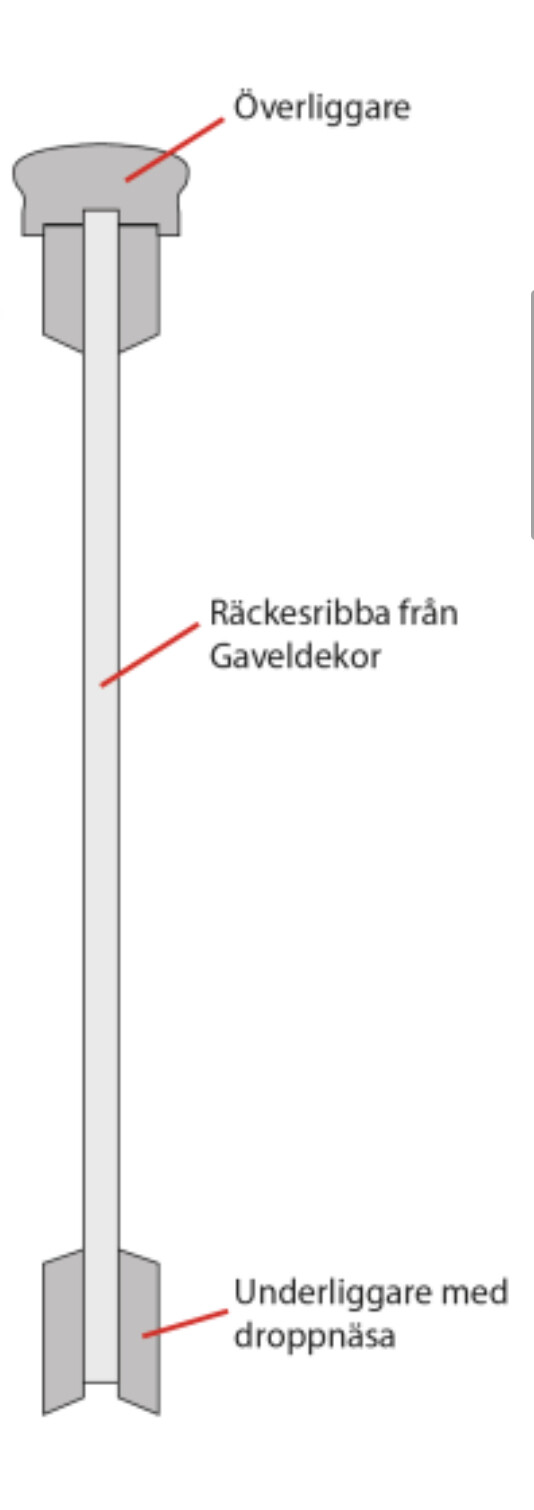
I don't disagree with anything in your two posts in the "painting debate."Workingclasshero said:
Painting can mean many things.
Can we say to protect against rot with suitable products?
Then ensure that the right treatment prevents organisms from thriving and that moisture is not trapped.
Protection against rot can be done in many ways, including the protection that is now applied there.
"Ensuring the right treatment" can also be done in many ways.
Painting with plastic paint is at one end of the scale, while doing nothing is in the middle of the scale; what exactly should be done, I don't want to go into, because I agree that's where "apples and pears" thrive among us opinionated professionals.
/W
I agree with you.
However, it gets strange when someone writes about compressed air and newly impregnated wood when it's about untreated wood. Likewise, log cabins that were built 200 years ago and are still in good shape.
Maybe it's me being slow, but I find it hard to see the connection to TS's case.
Or am I just grumpy about my own upcoming painting work with 80 Kg of paint 😉
You don't mention whether it's pressure-treated wood or not.A Amrich said:Now that we've slipped into painting.
I will build my railing according to the image below. The spindles are painted all around, but how would you do with the stringers?
Window paint all around or just settle for primer on the backside that faces the spindles?
My spindles will be placed tightly against each other at the top and bottom, if that matters.
Regardless, if wood is to be painted all around outdoors, it should be oil-based paint, which I believe is banned from being manufactured within the EU.
Nordsjö has an oil-based paint, I think, and linseed oil paint has an exception, so it works too, but check the ingredients to ensure.
Click here to reply