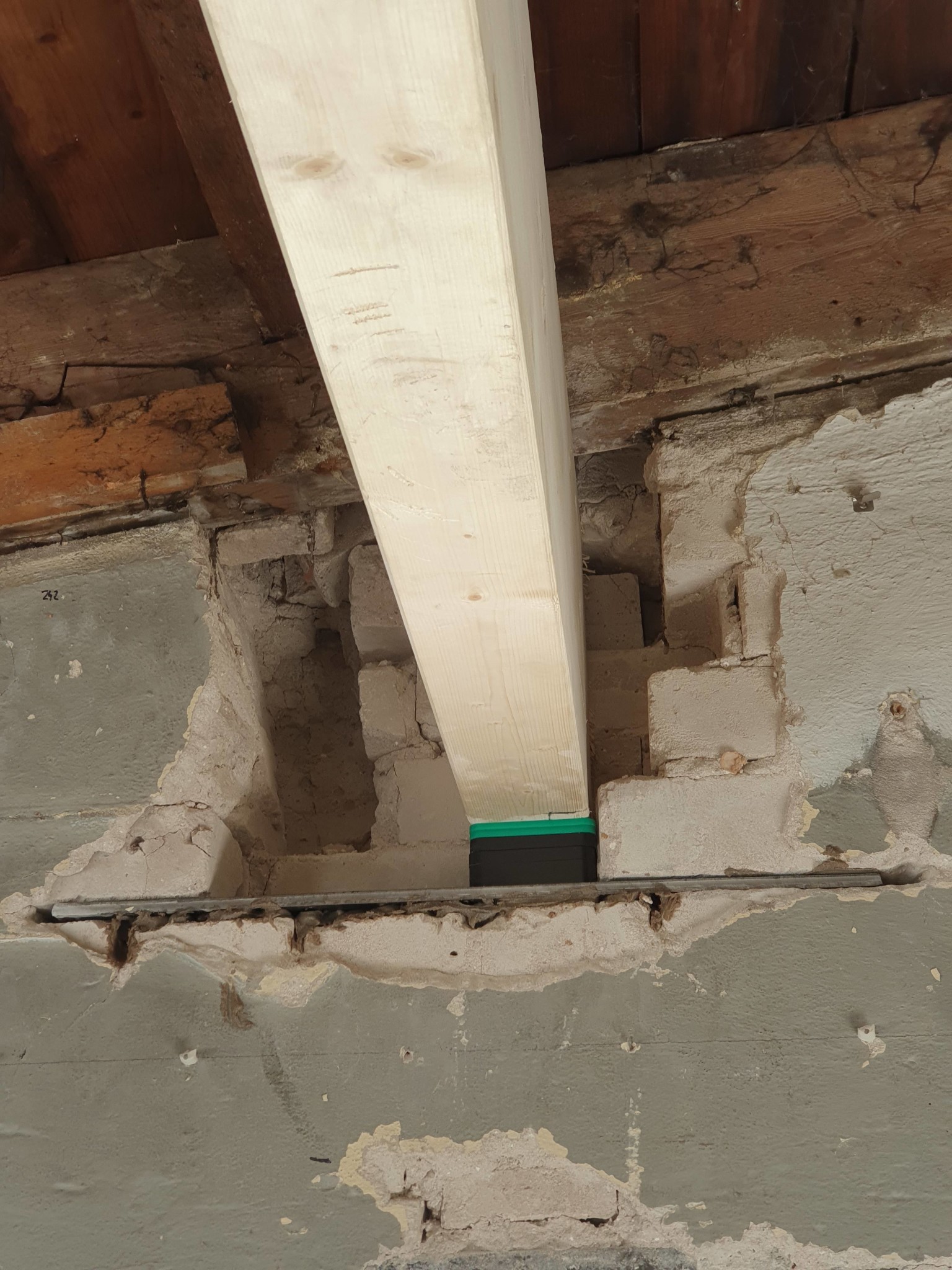
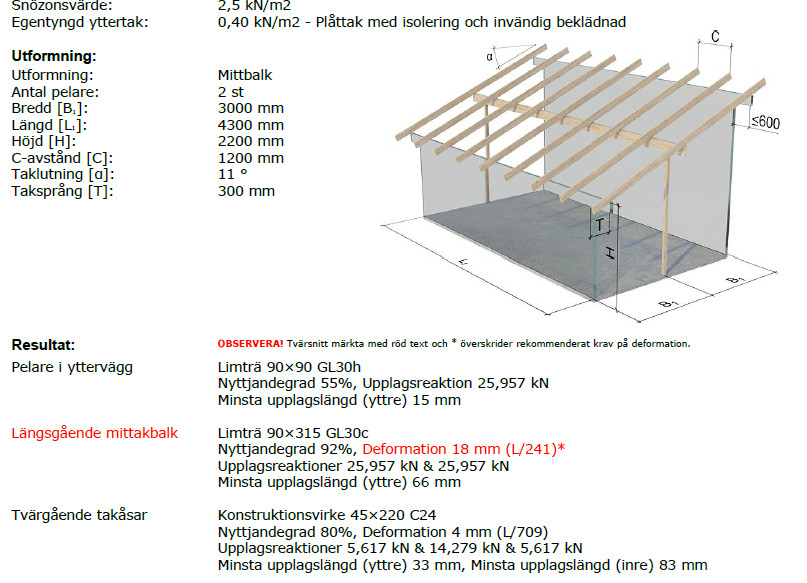
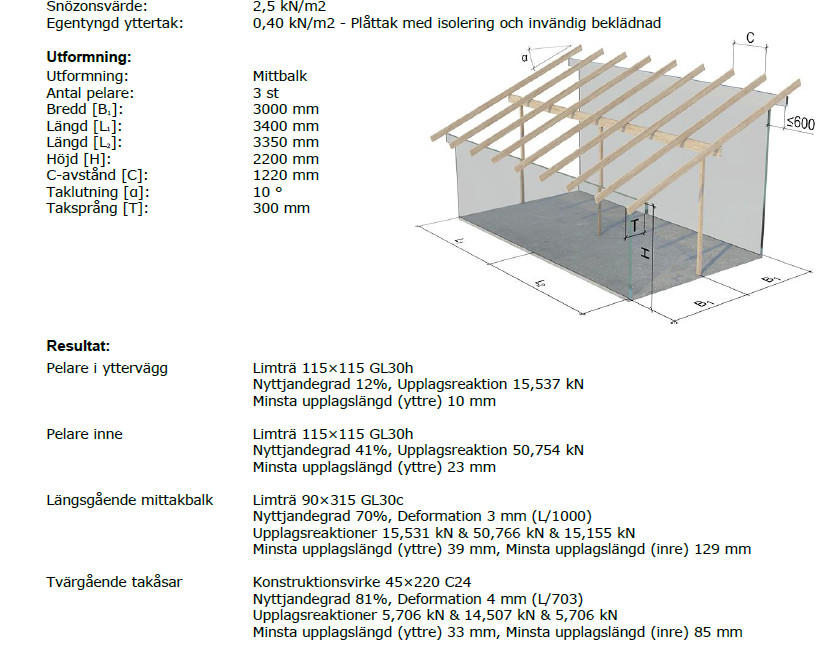
I interpreted the post about recessed flat iron as suggesting it would be used to distribute the load, which it will not do effectively. Yes, it will distribute the load slightly, but not enough to be significantly helpful.
Rroli said:
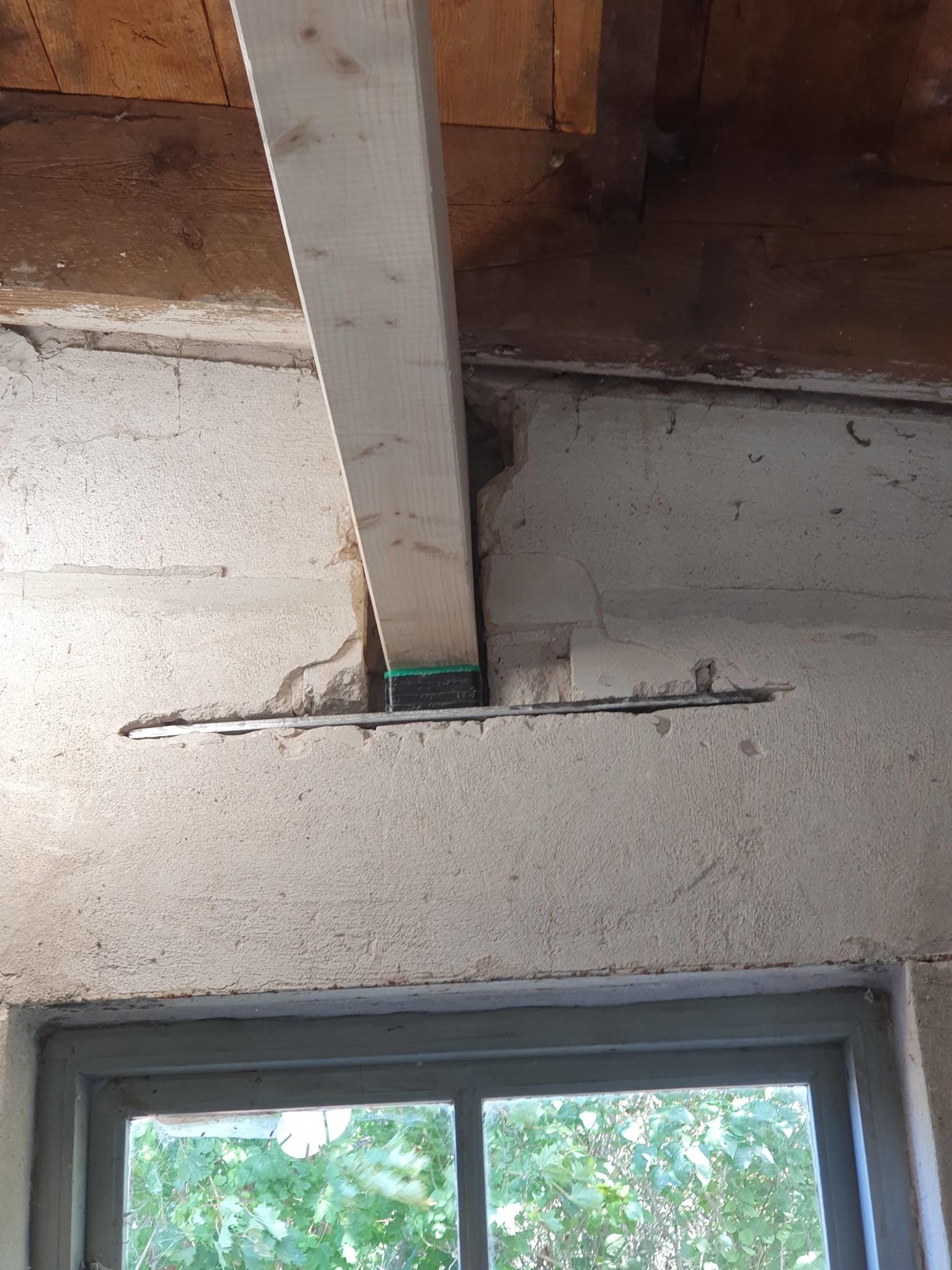
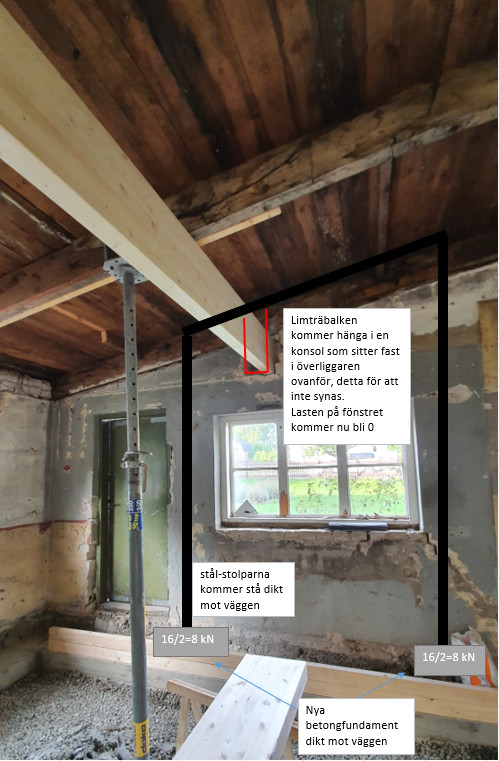
A flat iron under that glulam beam will not distribute much load sideways; it is simply too weak. How wide is the window opening in picture 2? It looks like you might encounter problems there unless there is a sturdy beam above the window opening that handles the vertical load from the glulam beam. If it's the rail according to previous pictures, then it's doubtful it will hold.
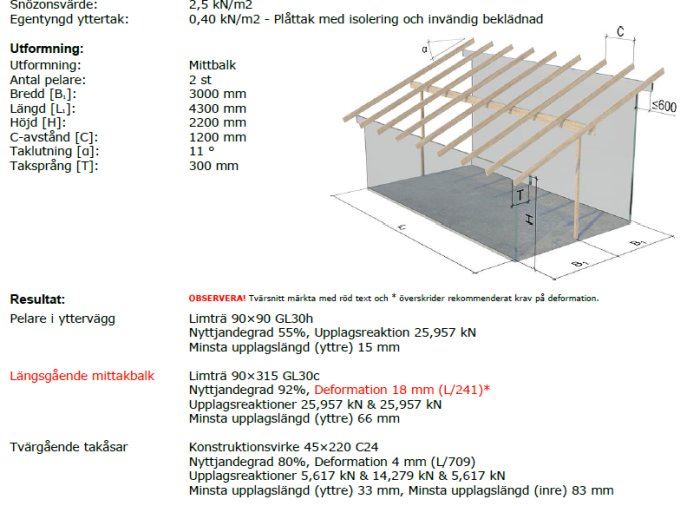
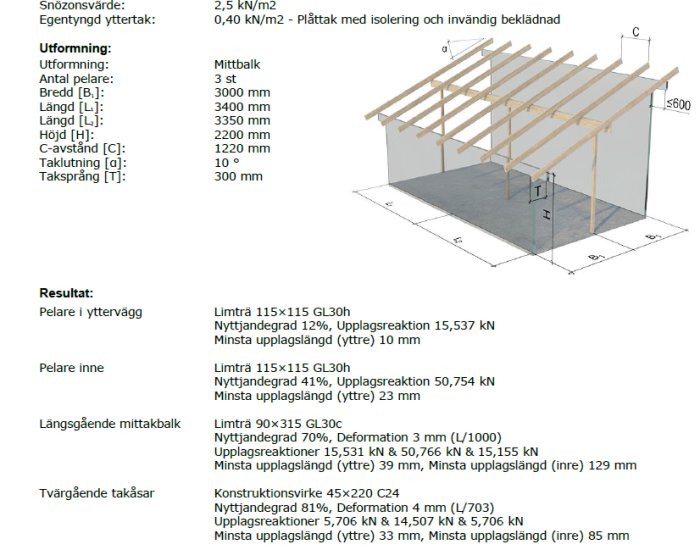
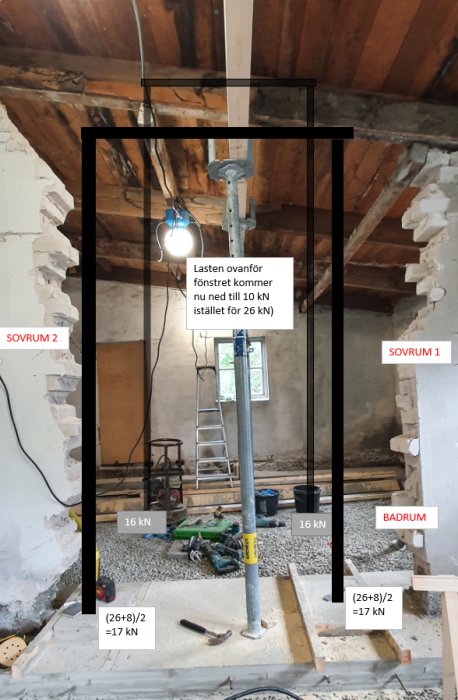
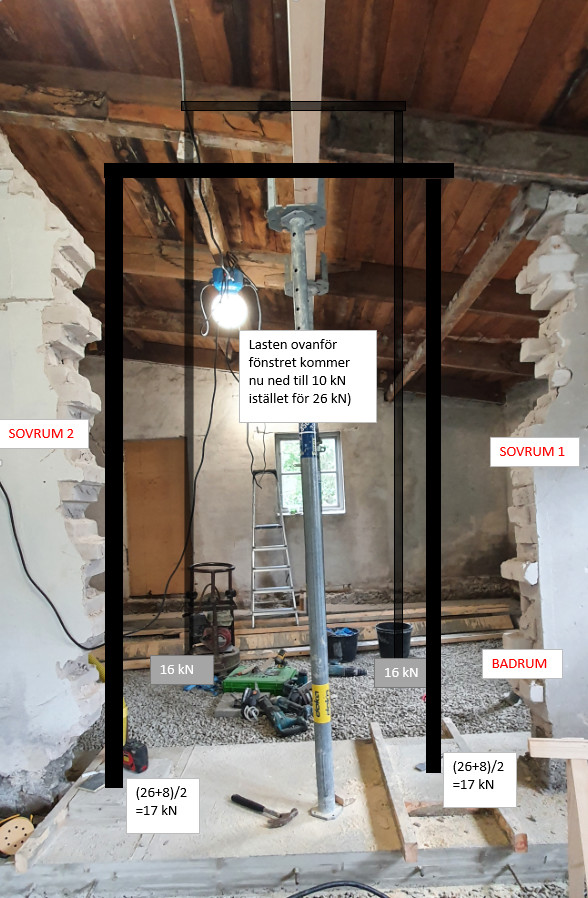
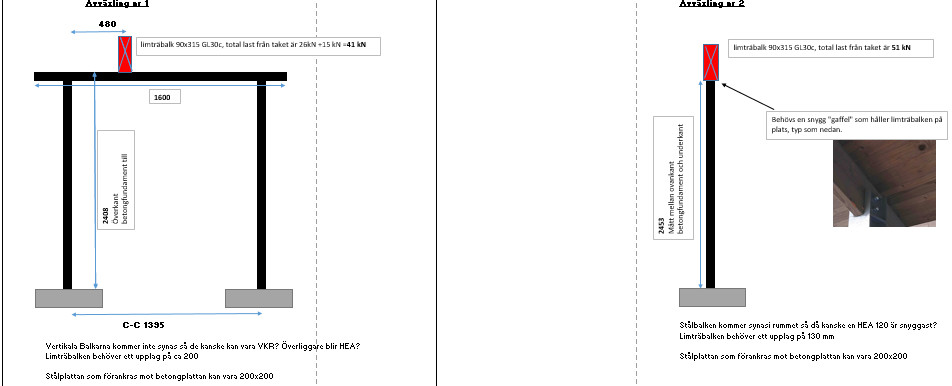
Here is today's load calculation with the current installation. Note that I split the calculations as if it were two sections. This is because the glulam beam is spliced at one of the concrete foundations and thus not in one whole piece.
Small window - 80 cm wide and currently a maximum load of 26 kN.
I am listening to you and trying to solve the problem under the given conditions.
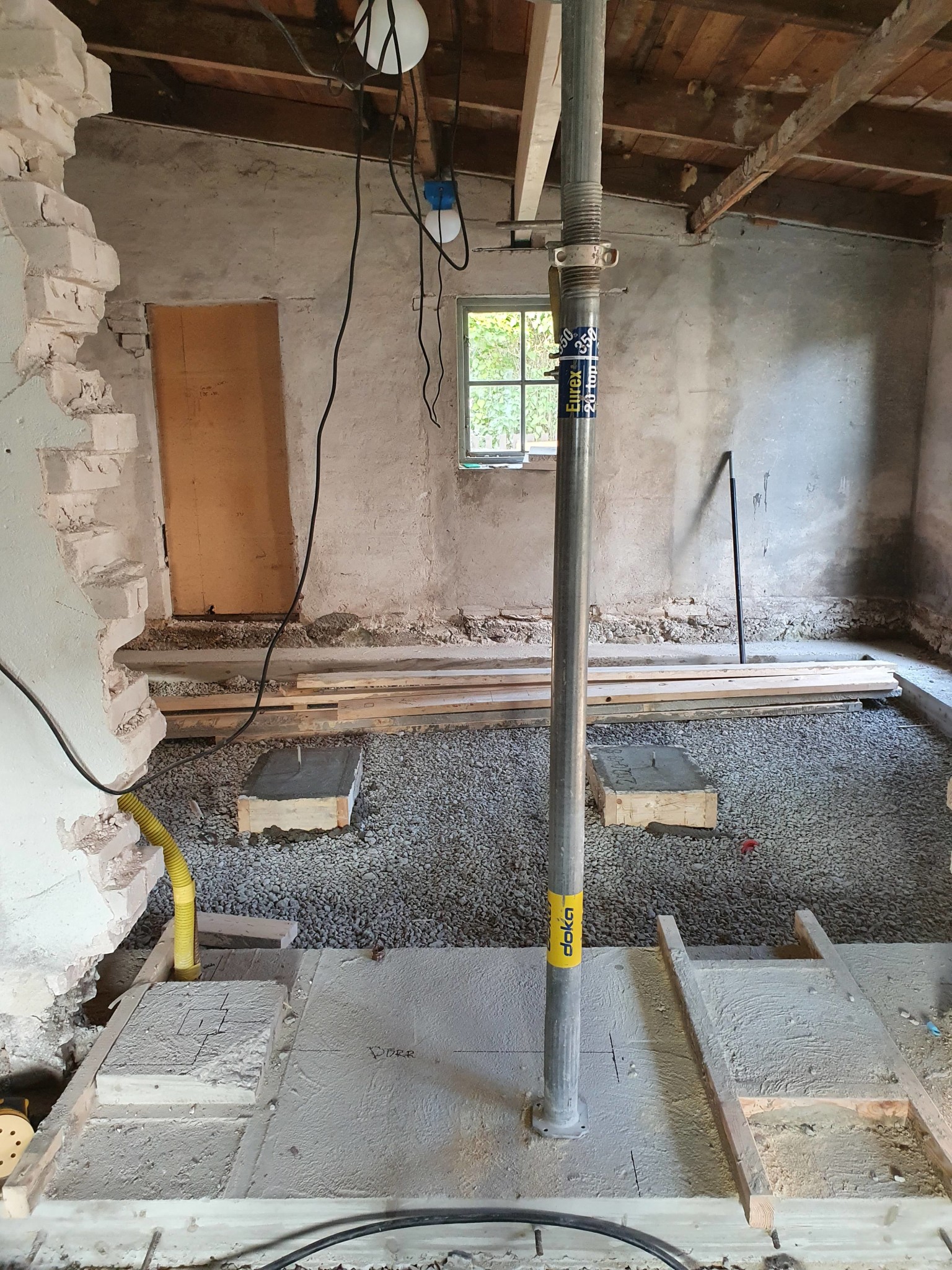
Regarding the small window, we plan to cast an additional 2 foundations and build a steel lintel.
This way, I will reduce the load in the brick wall above the small window from 26 kN to 10 kN. It is still 1 ton at maximum snow load, but it still seems like the wall should handle it. The steel rail (which is in decent condition) should handle over 24 kN according to Julius. I think a brick wall should handle it with supports of 19 cm on each side. We must not forget that there has been load on the wall for 90 years. The nice thing about this solution is that these two new vertical beams will be embedded in future interior walls!
There we go, now it's starting to look like something. I was thinking of suggesting an overhead suspension myself. But there's no point now, because you've already thought of it...
In the past, when load-bearing masonry was commonplace, many could handle this type of problem instinctively. Today, it's different. I found an old table that serves as a sort of quick reference guide. It provides information on compressive strength for different combinations of bricks and mortar. One prerequisite is that the ratio of depth to height is 1:12. This means a full brick wall (25 cm) needs to be 3 m high to apply the data. A sandstone wall built with lime mortar, which is not an unrealistic assumption, according to the table has a compressive strength of 18 kp/cm^2, i.e., approximately 1.8 MPa.
In the past, when load-bearing masonry was commonplace, many could handle this type of problem with a reflex. Today it's different. I found an old table that serves as a sort of cheat sheet. It provides information about compressive strength for different combinations of bricks and mortar. One condition is that the ratio of depth to height is 1:12. This means that a full brick wall (25 cm) needs to be 3 m high for the data to be applicable. A sandstone wall built with lime mortar, which is not an unrealistic assumption, has a compressive strength of 18 kp/cm^2 according to the table, i.e. about 1.8 MPa.
Justus. How do I translate this into potential load in practice? I suspect these 1.8 MPa apply to line load and not point load?
If in my case the load is 10 kN, then the load on the support from the steel rails will be as follows,
10,000÷(0.19×0.06×2) = 0.44 MPa
Now, the load rests on a larger area than the rails, of course, but to make an assumption.
It is a question of pressure, i.e., load per area. The larger the area you can distribute a load on, the lower the pressure will be. Many loads that land on masonry are some form of point loads, such as floor joists, roof trusses, etc. One must also consider that the load from the rail lands near a wall end (window opening) and at a lower height than desirable. I think you are on the right track in your calculation.
Wouldn't a round pillar be the nicest when it is visible? I like a fork with sturdy through screws. How have you attached the rafters to the glulam beam?
Wouldn't a round pillar be the nicest when visible? I like a fork with sturdy through bolts. How have you attached the rafters to the glulam beam?
A round pillar can look nice, yes. The rafters are not yet fastened to the glulam beam. But they will be attached with some sort of nailing connection later.
Do you have any thoughts on the dimension of the pillar?
Also, the other beams. I feel uncertain about which dimensions to choose, actually...
Round column can look nice indeed. The roof ridges are not yet fastened to the glulam beam. But they will be attached with some sort of nail joint later.
Do you have any opinions on the dimension of the column?
And the other beams. I feel unsure about which dimensions to choose, you see...
Round pillar can indeed be nice. The roof rafters are not yet secured to the glulam beam. But they will be fastened with some form of nail joint later.
Do you have any opinions on the dimension of the pillar?
And the other beams. I feel uncertain about which dimensions to choose, actually...
You should probably attach the glue-laminated beam right now if the props have been removed. Check at the back and you'll see the tables on pillars, preferably choose a slightly stronger pillar so you don't have to fireproof paint it.
[link]
Thanks. What deflection on the overlying beam can I accept? I want it to be fairly rigid so the load doesn't end up on the brick wall.
Regarding the glue-laminated beam and the chairs, two pillar props remain. Do you think the glue-laminated beam will topple? Right now it's essentially wedged up with substantial pressure against the rafters so the risk of it toppling is small. Furthermore, it's wedged in the hole in the brick wall.
Vi vill skicka notiser för ämnen du bevakar och händelser som berör dig.