
Hi
Converted the garage into a living room. It was never a garage, had it as a storage space, with underfloor heating.
The house was built in 2017. Now we have built an attefallshus and are transforming this into a living room.
One wall has slightly less insulation than the rest, not something we notice but knowing it makes us want to do something about it.
When the house was built, we told Mjöbäcks that this would become a living room in the future and that the insulation on this wall should be like the rest of the exterior walls since we also have underfloor heating, but there ended up being less insulation in this wall.
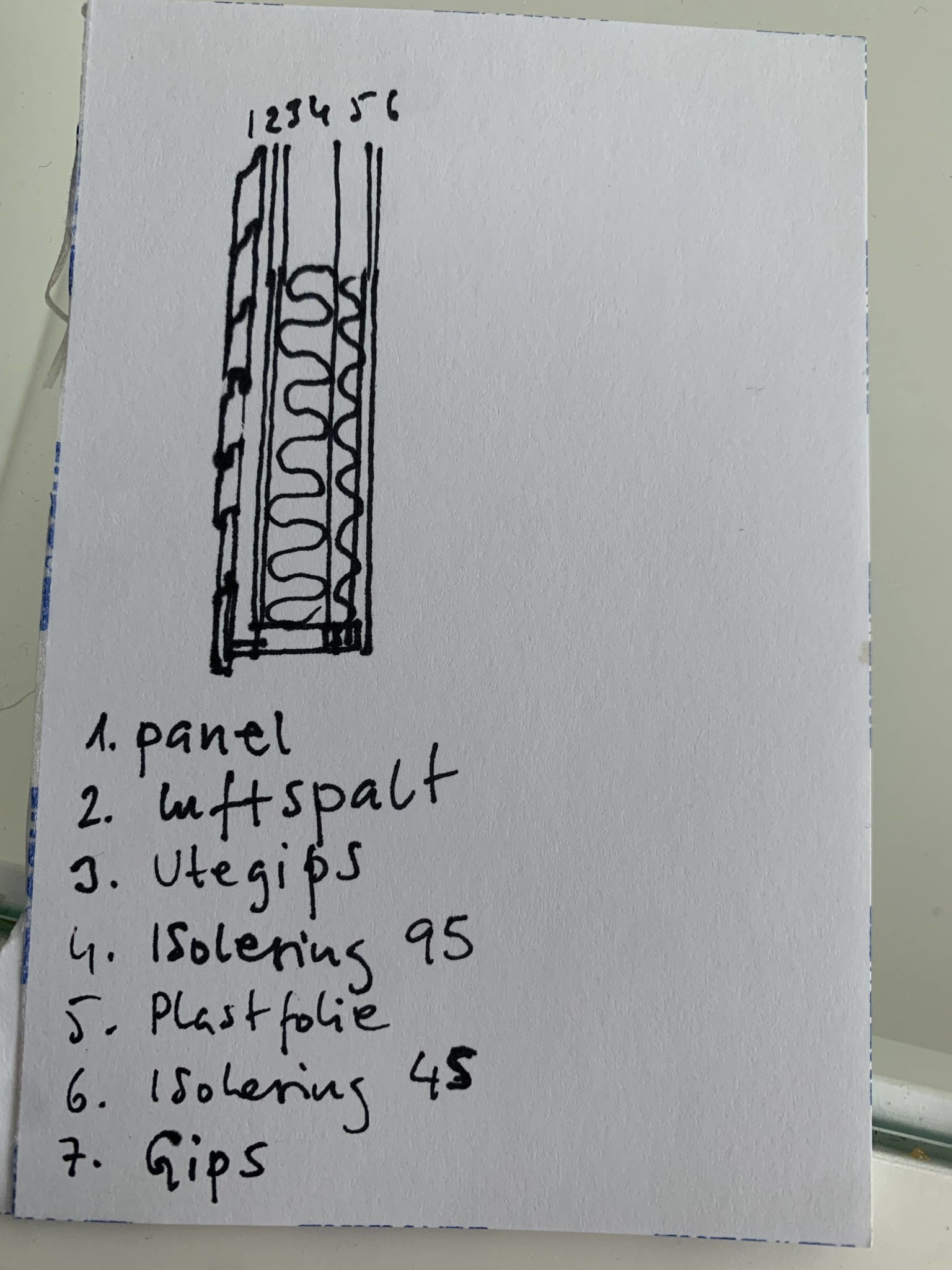
Now I don't have room to install 45 mm insulation, so I've been considering adding plywood + gypsum over it, it feels like that would provide some extra insulation, both thermal and sound, what do you think?
Attached is a picture of the current wall.
Converted the garage into a living room. It was never a garage, had it as a storage space, with underfloor heating.
The house was built in 2017. Now we have built an attefallshus and are transforming this into a living room.
One wall has slightly less insulation than the rest, not something we notice but knowing it makes us want to do something about it.
When the house was built, we told Mjöbäcks that this would become a living room in the future and that the insulation on this wall should be like the rest of the exterior walls since we also have underfloor heating, but there ended up being less insulation in this wall.
Now I don't have room to install 45 mm insulation, so I've been considering adding plywood + gypsum over it, it feels like that would provide some extra insulation, both thermal and sound, what do you think?
Attached is a picture of the current wall.

Mats-S
Construction veteran
· Sollentuna
· 3 645 posts
Mats-S
Construction veteran
- Sollentuna
- 3,645 posts
The only thing I object to is having a plastic sheet in the middle of the insulation. It goes against all the rules regarding the placement of plastic sheeting. It should be on the warm side to avoid condensation, which then leads to moisture damage in the wall. As usual, I advocate for hydringspapp in all cases when in doubt about the plastic's impact on moisture formation.
But I would never place a plastic sheet in the middle of the insulation... sure, one can argue that there is more insulation on the outside so it should work. If you want to take a chance, you buy that argument; if you want to be 100% sure, you put the plastic where it should be according to the rules
But I would never place a plastic sheet in the middle of the insulation... sure, one can argue that there is more insulation on the outside so it should work. If you want to take a chance, you buy that argument; if you want to be 100% sure, you put the plastic where it should be according to the rules
The only thing I object to is having a plastic foil in the middle of the insulation. It goes against all the rules regarding the placement of plastic foil. It should be on the warm side to avoid condensation that later causes moisture damage in the wall. As usual, I advocate forhydringspapp in all situations when uncertain about the plastic's impact on moisture formation.
But I would never place plastic foil in the middle of the insulation... sure, one can argue that there's more insulation on the outside so it should work. If you want to take a chance, you buy that argument, if you want to be 100% sure, you put the plastic where it should be according to the rules
Hi Mats
Thanks for your response!
The thought has crossed my mind regarding the plastic, but I thought since it's above the gypsum already in place, so...
What are your thoughts when it comes to PIR insulation, got a tip from another byggahus friend here on the forum.
There's one that's 3cm and that one is equivalent to normal 10cm glass wool, to throw on one of those and the thinnest gypsum over...?
You are wrong about the placement of the plastic. On the contrary, it is quite common to have 95mm insulation - plastic - 45mm insulation. There, the 45-space is used for installations; electrical boxes and so forth. Otherwise, you would need to make holes in the plastic at all electrical boxes. The plastic can sit 1/3 in. That's why 95/45 works.The only objection I have is having a plastic film in the middle of the insulation. It goes against all the rules regarding the placement of the plastic film. It should be on the warm side to avoid condensation which then leads to moisture damage in the wall. As usual, I advocate for hydratic paper in all situations when there is doubt about the plastic's impact on moisture formation.
But I would never place a plastic film in the middle of the insulation... sure, one can argue that there is more insulation on the outside so it should work. If you want to take a chance, you accept that argument; if you want to be 100% certain, you place the plastic where it should be according to the rules
Mats-S
Construction veteran
· Sollentuna
· 3 645 posts
Mats-S
Construction veteran
- Sollentuna
- 3,645 posts
Not if you follow the rules, plastic is a disaster if placed incorrectly. But sure, you can take a chance if you feel like it, if it works, it works. But you're definitely cutting it close...D Daaaaaniel said:
Regarding electrical boxes, you can tape the plastic to them with duct tape, if you want to spend some time avoiding potential future problems...
There are many things today that are "quite common" in construction, which aren't always correct. Common because it's quicker and saves money. But as a DIYer like the OP is, he has time to do it right


Click here to reply