
Hello expert panel!
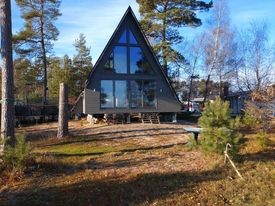
I am in the process of building the house in the picture, and most of the interior walls and the enormous ceiling will be covered with OSB and then 4mm plywood on top of that. I am placing the OSB with a few millimeters gap, but I plan to place the plywood sheets edge to edge. The plan is to attach with thin lines of adhesive and shoot brads into the edges and perhaps in the middle.
My question is mostly about how much movement can be expected. The plywood joints will be "in the middle" of the OSB, so they lie stable against each other, but could there be problems elsewhere, causing the plywood to bulge or tear apart when the OSB moves, or causing it to come loose? My guess is that I don't think there will be any problems, and that the plywood can absorb the minimal movements I expect. I hope you understand. If you have any tips on adhesive and brad length, it's just a bonus.
I have seen other threads here about plywood on OSB but none that address the issue of movement.
Thanks in advance!
I am in the process of building the house in the picture, and most of the interior walls and the enormous ceiling will be covered with OSB and then 4mm plywood on top of that. I am placing the OSB with a few millimeters gap, but I plan to place the plywood sheets edge to edge. The plan is to attach with thin lines of adhesive and shoot brads into the edges and perhaps in the middle.
My question is mostly about how much movement can be expected. The plywood joints will be "in the middle" of the OSB, so they lie stable against each other, but could there be problems elsewhere, causing the plywood to bulge or tear apart when the OSB moves, or causing it to come loose? My guess is that I don't think there will be any problems, and that the plywood can absorb the minimal movements I expect. I hope you understand. If you have any tips on adhesive and brad length, it's just a bonus.
I have seen other threads here about plywood on OSB but none that address the issue of movement.
Thanks in advance!
It's over 200 square meters that need to go up, so I thought of applying the glaze before installation. I assume that the brad marks will be so small that they won't be very visible.A atomlab said:
Hello! May I ask how you solved the installation of OSB + 4 mm plywood and if you were satisfied with the result? Grateful for any experiences as I'm planning the same combination for the barn I'm renovating. Best regards😊
A quiet question: why plywood on OSB? The usual thing is some form of plasterboard so it becomes smooth and easy to spackle, etc.

Aha... sorry I missed that detail.
I read somewhere that such a wall board should be attached to the framing with over fifty sufficiently long "chipboard screws" and then it is unlikely to come loose and warp. If it is exposed to moisture, that problem should probably be solved separately, as long as you avoid double waterproofing layers. Both OSB and Plywood must be of "construction quality" that can have knots and splits in the veneer layers, but are glued in the correct way.T Tornhuset said:Hello expert panel!
I am in the process of building the house in the picture, and most of the interior walls and the enormous ceiling will be clad with OSB and then 4mm plywood outside of that. I am placing the OSB with a few millimeters of space in between, but then I plan to place the plywood boards edge to edge. The plan is to fasten with thin lines of glue and shoot brads at the edges and maybe in the middle.
My question is mainly about how much movement can be expected. The plywood joints will be "in the middle" of the OSB, so they lie stable against each other, but could there be problems elsewhere, leading to the plywood bulging or tearing apart when the OSB moves, or causing it to come loose? If I had to guess, I don't think there will be any problems, and the plywood can absorb the minimal movements that I believe will occur. I hope you understand. If you have any tips on glue and brad length, that would just be a bonus.
I have seen other threads here about plywood on OSB, but none that have addressed the issue of movement.
Thanks in advance!
I glued it with strips of PL400 and also used brad nails, many around the edges and a few in the middle of the board where it seemed like it wasn't making contact. Initially, I thought of just staining before putting up the boards, but it covered poorly, and I wanted to cover the brad heads, so I stained once more when they were in place. Anyway, I think it turned out insanely well, with a lovely surface. You might not see details there, but Byggahus has done a report (and film) on the build:Martin Johansson2 said:
https://www.byggahus.se/byggde-sommarhus-sjalv-for-823422-kr
Since it's such large surfaces, I wanted a more lively surface than drywall. Most of it is also in lateral light, so no matter how carefully I would have puttied and sanded the drywall joints, it wouldn't have turned out well.H Harald Blåtumme said:
Feels like this applies more if you are going to build something like a bathroom. Construction plywood, as far as I know, does not come in 4mm; it is too thin to screw with chipboard screws, and as a surface layer, you don't want knot holes and cracks.S star_daddy said:I have read somewhere that such a wall panel should be attached to the frame with over fifty sufficiently long "chipboard screws" and then it will likely not come loose and warp. If it is exposed to moisture, that issue should probably be solved separately, just make sure to avoid double waterproofing layers. Both OSB and Plywood must be of "construction quality," which can have knot holes and cracks in the veneer layers, but are glued properly.
Click here to reply