
14,798 views ·
13 replies
15k views
13 replies
Plasterboard without space behind. Can I use drywall anchors?
See the two images below. One is just a photo that shows where the other picture is taken.
As seen in the close-up, there is first a plasterboard (I think) and then it seems there are three more plasterboards behind (but I might be wrong).
I was thinking of putting up a shelf, but I'm unsure if I can use plasterboard anchors for this. There seems to be no space for the anchor to expand on the backside.
Does anyone know?
As seen in the close-up, there is first a plasterboard (I think) and then it seems there are three more plasterboards behind (but I might be wrong).
I was thinking of putting up a shelf, but I'm unsure if I can use plasterboard anchors for this. There seems to be no space for the anchor to expand on the backside.
Does anyone know?
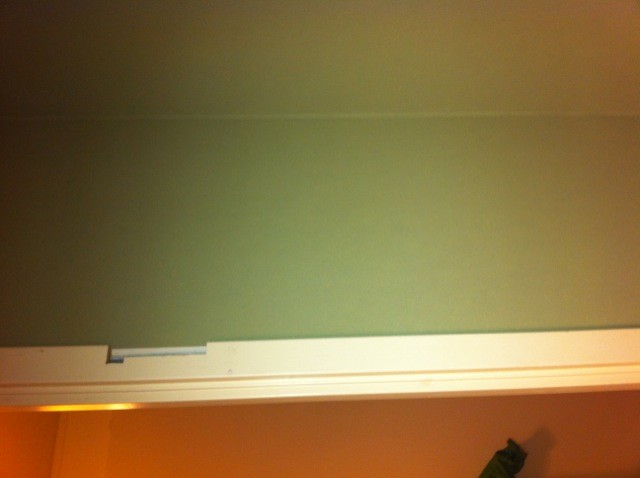
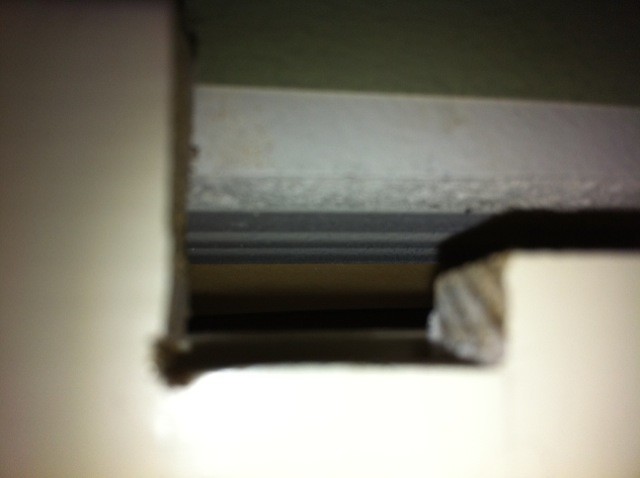


I think you can quite safely assume that the wall is hollow, but there are ways to make sure of it. One way or another, you will need to attach the shelf, and all methods will involve drilling into the wall. If you drill a small hole, you will notice how thick the drywall is. Once you have confirmed there is a gap, you can drill for the drywall anchor. If the wall unexpectedly turns out to be solid, you haven't drilled too big for using other solutions.
Erik
Erik
Yes, you're right. I'll try it tomorrow.Avemo said:I think you can quite calmly assume that the wall is hollow, but there are ways to make sure of it. One way or another you will need to attach the shelf, and all methods will involve drilling into the wall. If you drill a small hole, you'll notice how thick the drywall is. Once you've confirmed that there is a gap, you can drill for the wall anchor. Should the wall against the odds be solid, at least you haven't drilled too large for other solutions.
Erik
Now I've tried drilling. It seems to be just a single plasterboard. Then there's an empty space of 1 - 2 cm and after that comes the next plasterboard.
I took a photo of my drywall anchor.
Since the drywall anchor is so long (certainly 4 - 5 cm too long) I can't get the whole thing into the hole and therefore can't get it to expand (right?). Are there shorter drywall anchors that have the same effect? Or what do you do? Might it be possible to drill through the next plasterboard as well, just to be able to insert the entire drywall anchor?
I took a photo of my drywall anchor.
Since the drywall anchor is so long (certainly 4 - 5 cm too long) I can't get the whole thing into the hole and therefore can't get it to expand (right?). Are there shorter drywall anchors that have the same effect? Or what do you do? Might it be possible to drill through the next plasterboard as well, just to be able to insert the entire drywall anchor?
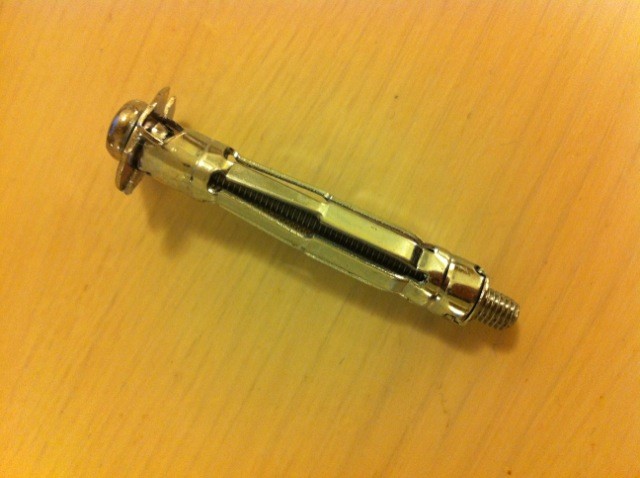
I imagine that there are shorter ones than the one you have in the picture. The screw in the drywall anchor can be unscrewed. Is the hole you drilled large enough to insert that screw? If you can insert the screw all the way to the head without it hitting the other side, it works. Otherwise, you need a shorter drywall anchor or come up with some special solution.
Erik
Erik
That sounds like a strange wall. What's on the other side? Could it be, for example, that what you're encountering is a junction box from the other side, or something similar? If it really is a plasterboard inside the wall, you should be able to drill through it as well and, so to speak, borrow the space until your drywall anchor has expanded. Once it has expanded, it doesn't take up much space.
If you use a tool to expand the anchor (never just use the screw to tighten the anchor, use the special tool that pulls the screw, available from around 40kr), it should be possible to start expanding the expander even if it hasn't completely gone into the hole. But you might need to do a test on a couple of plasterboard pieces first; it's not fun to be stuck with an anchor halfway expanded.
If you use a tool to expand the anchor (never just use the screw to tighten the anchor, use the special tool that pulls the screw, available from around 40kr), it should be possible to start expanding the expander even if it hasn't completely gone into the hole. But you might need to do a test on a couple of plasterboard pieces first; it's not fun to be stuck with an anchor halfway expanded.
Stefan N: Yes, one like that should work. How does its load-bearing capacity compare to a regular anchor? I'm planning to put up a fairly heavy shelf - and of course, I don't want to worry about it falling down. I'll be using two brackets. Each bracket has three holes for the wall. So that means three drywall anchors for each bracket... Which maybe means it will be very strong after all?
hempularen: It seems like the bathroom wall is on the other side. It feels like drywall there too. Should I dare to drill a bit further into it, to borrow the space?
hempularen: It seems like the bathroom wall is on the other side. It feels like drywall there too. Should I dare to drill a bit further into it, to borrow the space?
Click here to reply