
Hello,
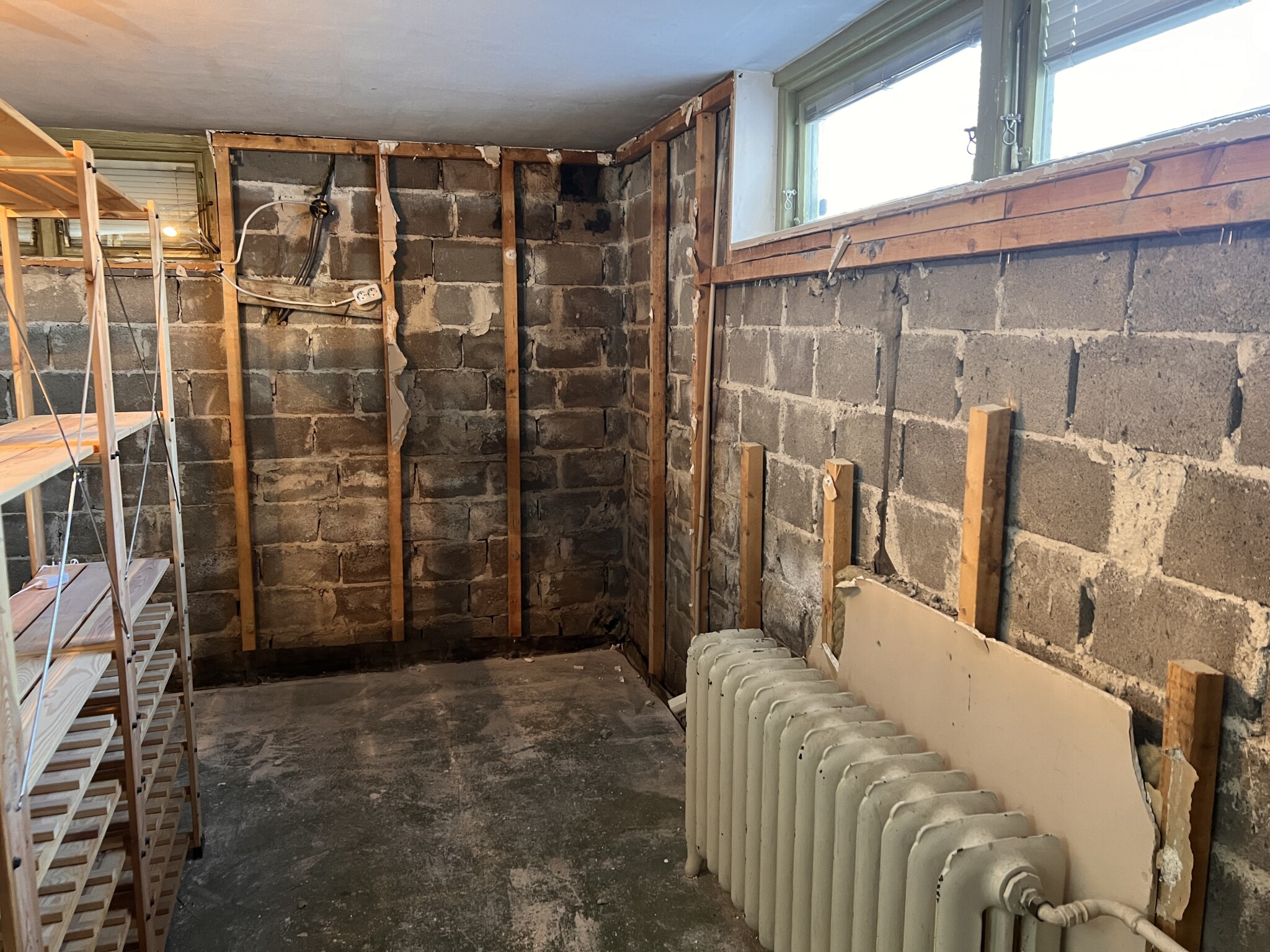
I have a house built in the early 1900s with an extension made in the 1960s. I have just removed the drywall and insulation in an old "gillestuga" in the basement made in the 1960s and am in the process of taking down the studs the drywall was attached to, in order to then plaster and paint with silicate paint.
Some questions I hope for some smart answers:
1. It's lightweight concrete blocks in the foundation as far as I can see. The mortar is not fully covering the joints, leaving some holes here and there. Does this need to be fixed with some form of mortar beforehand, or is this done with the plaster? See pictures:
2. The slab cast on the ground is not cast all the way out, as that's where the wooden studs were placed. Should I fill in that groove along the walls? If so, with what? Concrete as well? See picture.
I have a house built in the early 1900s with an extension made in the 1960s. I have just removed the drywall and insulation in an old "gillestuga" in the basement made in the 1960s and am in the process of taking down the studs the drywall was attached to, in order to then plaster and paint with silicate paint.
Some questions I hope for some smart answers:
1. It's lightweight concrete blocks in the foundation as far as I can see. The mortar is not fully covering the joints, leaving some holes here and there. Does this need to be fixed with some form of mortar beforehand, or is this done with the plaster? See pictures:
2. The slab cast on the ground is not cast all the way out, as that's where the wooden studs were placed. Should I fill in that groove along the walls? If so, with what? Concrete as well? See picture.
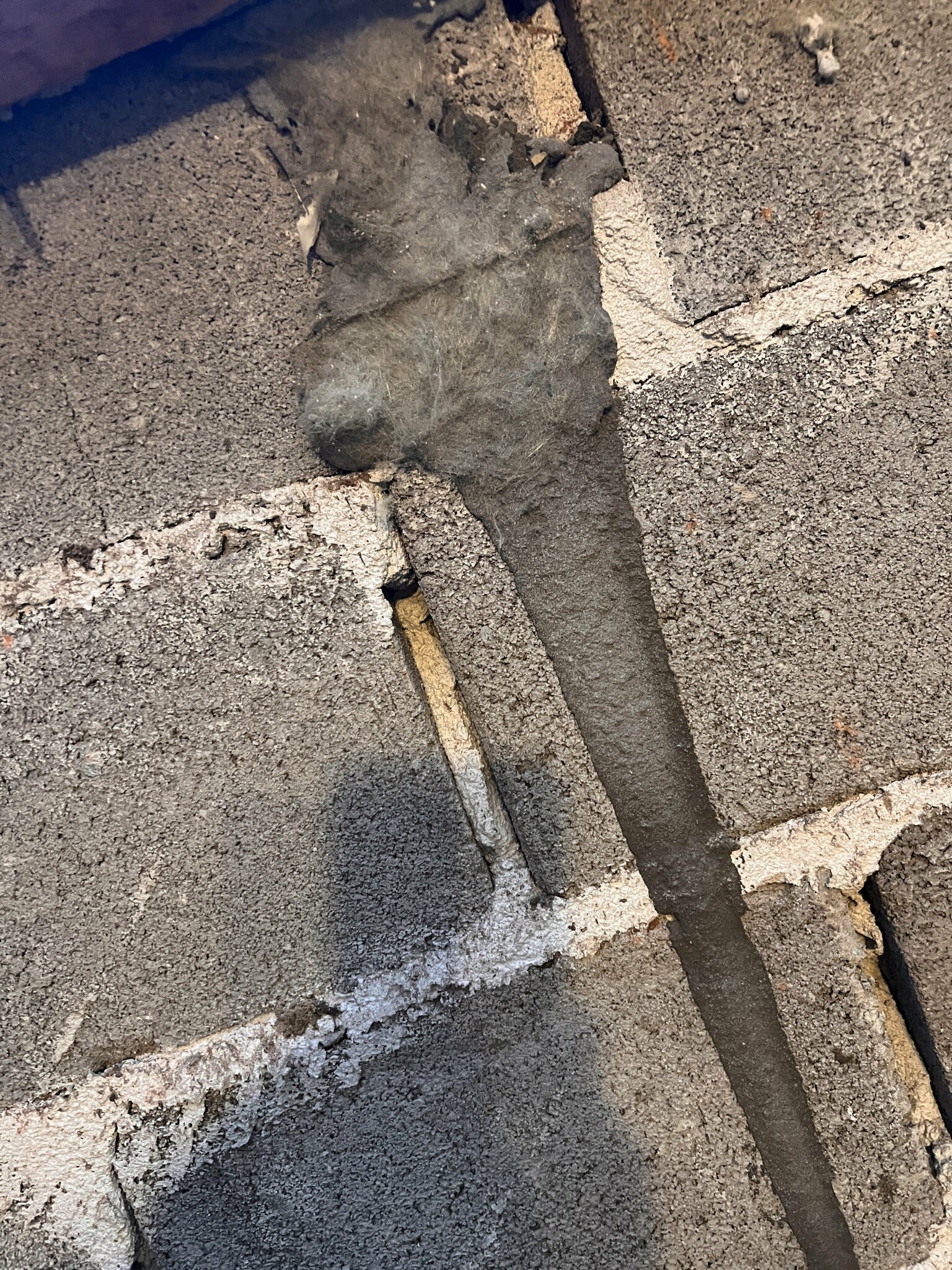
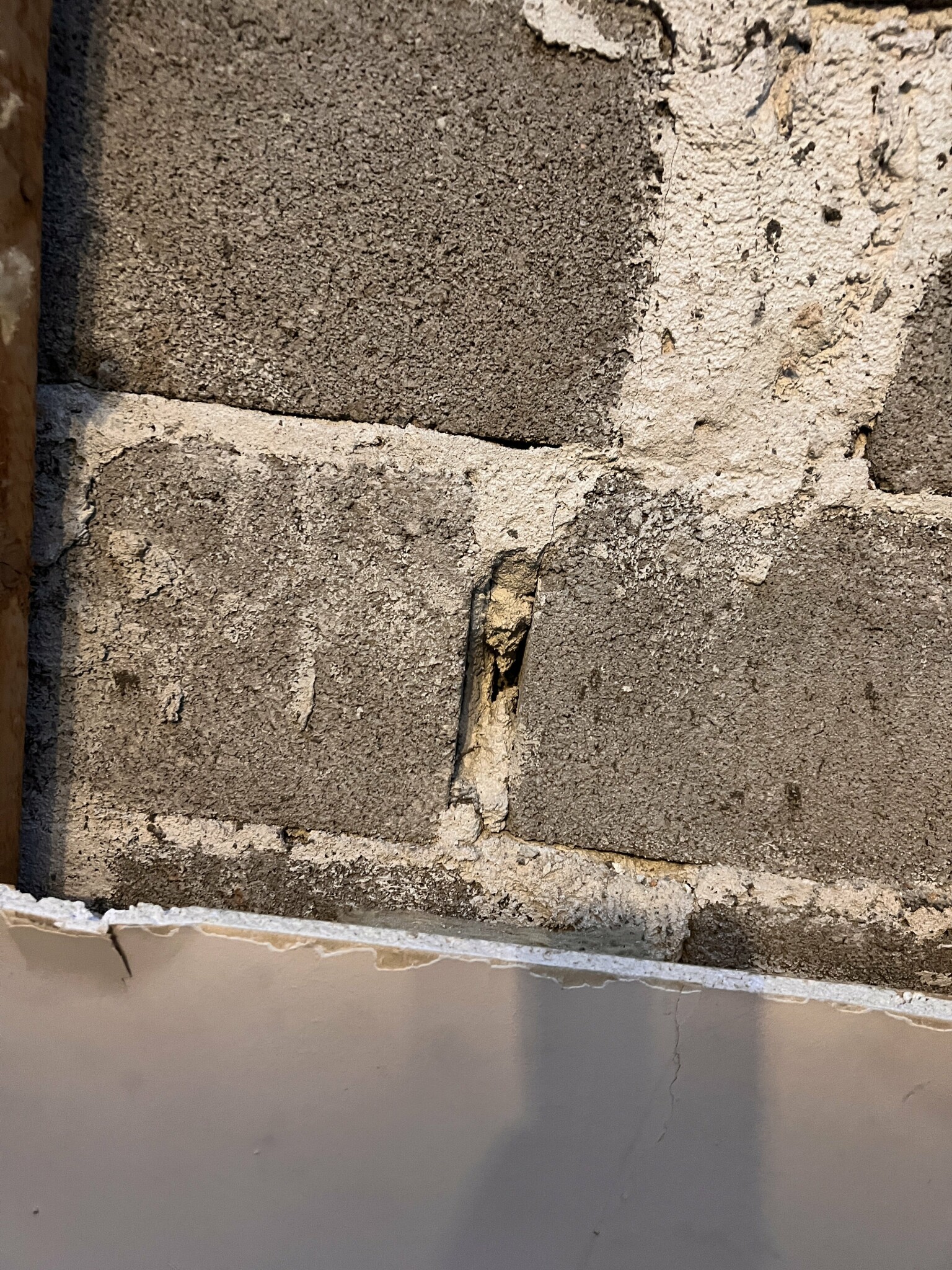
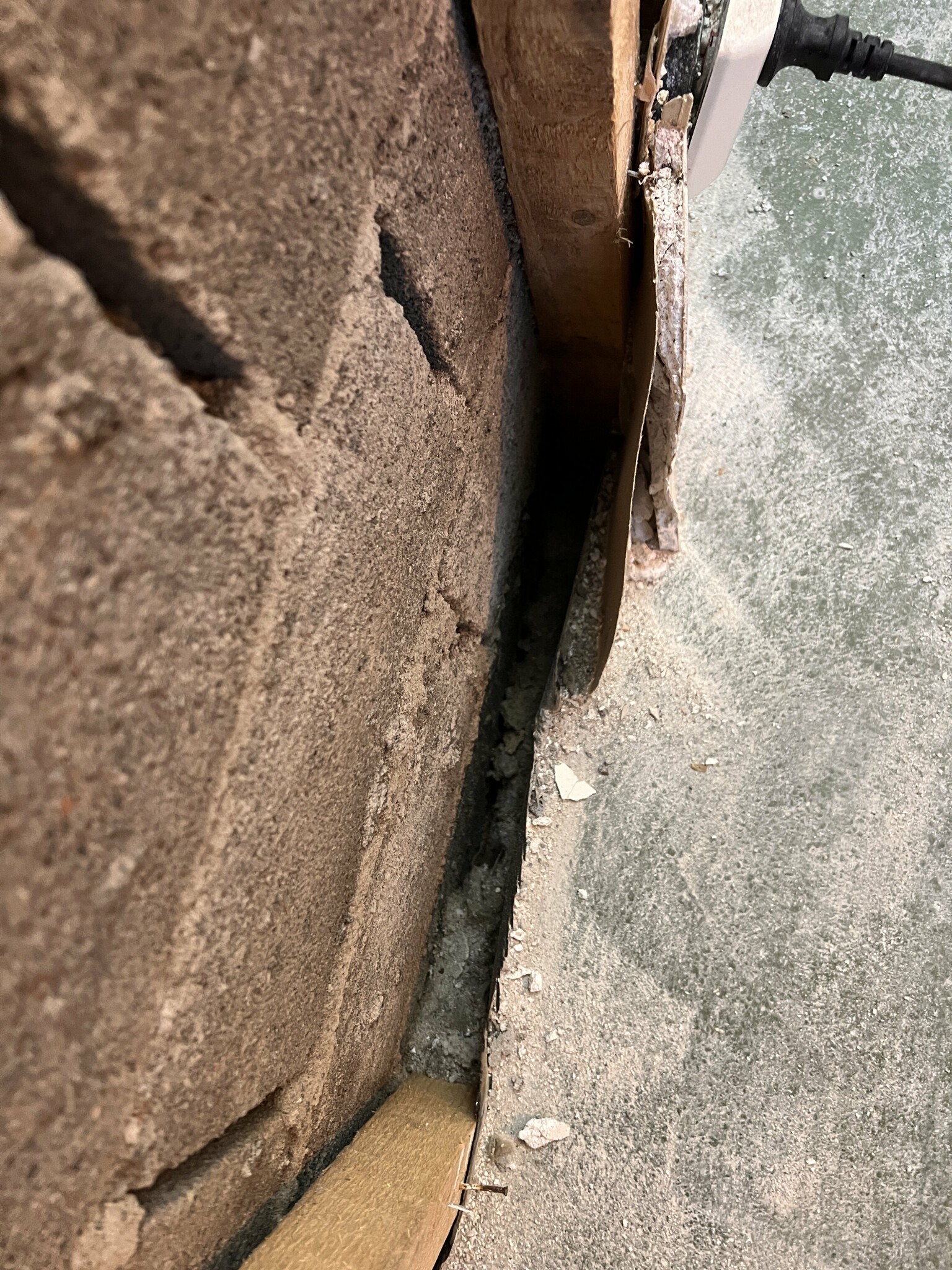
Are you sure it's aerated concrete?P Plex- said:Hello,
I have a house built in the early 1900s with an extension made in the '60s. I have just torn out the drywall and insulation in the old "gillestugan" in the basement made in the '60s and am in the process of taking down the studs that the drywall was attached to, in order to then plaster and paint with silicate paint.
A few questions I hope to get some smart answers to:
1. The foundation appears to be made of aerated concrete blocks. The mortar is not completely covering the joints, leaving some holes everywhere. Does this need to be addressed with some form of mortar first or will it be done with the plaster? See pictures:
2. The slab cast on the ground doesn't go all the way out, and that's where the wooden studs have been standing. Should I fill that gap along the walls? If so, what should I use? Concrete as well? See picture.
It looks like concrete block...
You can use a knife or a screwdriver to test if the stone is hard or soft; you can carve into aerated concrete with a knife.
In any case, you should fill in all the holes before plastering; this can be done with regular plaster mortar B or whatever you plan to use.
I would level the floor first with concrete repair mortar, otherwise you will have a hell of a time with all the plaster mortar that will fall into the holes. It will be easier to work and keep clean with a leveled floor.
Last edited by a moderator:
Thanks for the response! Very possible that it is concrete hollow blocks!Rejäl said:Are you sure it's lightweight concrete?
Looks like it might be concrete hollow blocks..
You can use a knife or a screwdriver to test if the stone is hard or soft, you can carve lightweight concrete with a knife..
In any case, you should fill in all the holes before plastering, this can be done with regular plastering mortar B or whatever you plan to use..
I would first level the floor with concrete repair mortar, otherwise you'll have a hassle with all the plaster mortar that will fall into the holes. It'll be easier to work and keep clean with a level floor..
You mention “leveling the floor,” for clarity do you mean filling the edge around?
Usually, the slab typically extends all the way to the walls for stability and to keep water out of the wall. I would have tried to stretch some type of plastic over the space along the walls to determine if moisture is seeping in before re-casting, because today any potential moisture is ventilated away effectively. But you might already know whether the previous insulation and studs were damp or not.
If it's as you fear, then the wooden studs should be rotten and wet as they go down into the gap between the concrete slab and the wall...C Carl Johansson said:Usually, the slab goes all the way out to the walls for stability and to keep water outside the wall. I would try to stretch some type of plastic over the space along the walls to determine if moisture is coming in before over-pouring, because today any moisture is effectively ventilated away. But you might already know if the previous insulation and studs were damp or not.
In a specific spot, two wooden studs were a little rotten, but that's coming from above where a downspout runs down the outside and has had poor drainage. Otherwise, it was dry and fine!C Carl Johansson said:Usually, the slab extends all the way to the walls for stability and to keep water out of the wall. I would have tried to stretch some type of plastic over the space along the walls to determine if moisture is penetrating before repouring, as today any moisture is ventilated away effectively. But you might already know if the previous insulation and studs were damp or not.
Cast again with fine concrete or expansion concrete, concrete repair mortar will become unreasonably expensive. You can repair holes with A-mortar before plastering. Finja and Weber have good instructions on how to plaster concrete hollow blocks.
Click here to reply