
591 views ·
2 replies
591 views
2 replies
Plaster and Surface Layer Basement Room
I have a basement room that has had wooden studs and veneer boards since '75. When these were removed, I still think the wooden parts looked relatively good behind, no mold or effects except for the horizontal stud at the bottom, which was quite rotten. Then the plaster had come off large parts, but overall maybe not so surprising when it’s been enclosed for 50 years.
Anyway, brought in a mason to fix the walls so we could paint them. I was fully aware that it wouldn’t be completely smooth and would have texture.
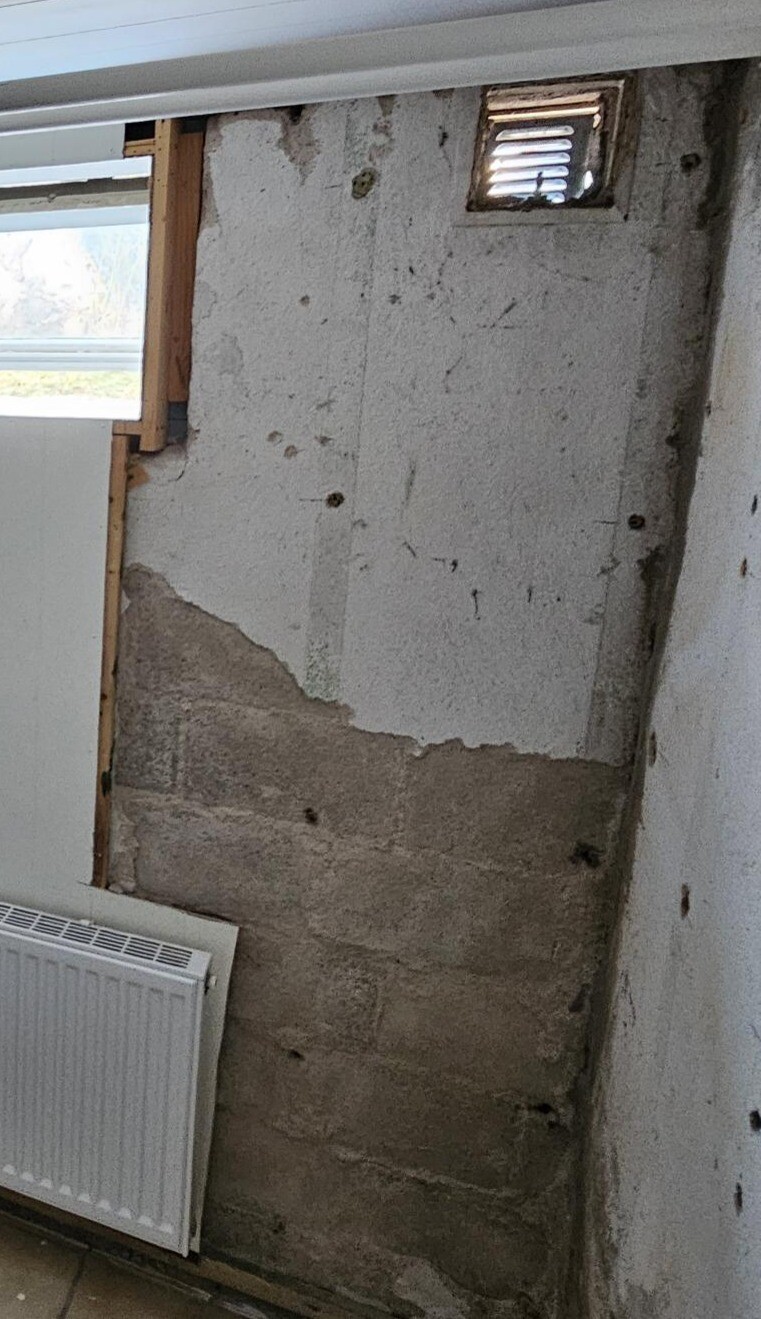
The substrate is some kind of stone blocks (see picture). The mason applied Primer Mortar A on the parts where the plaster had come off, and then KC Plaster Mortar B.
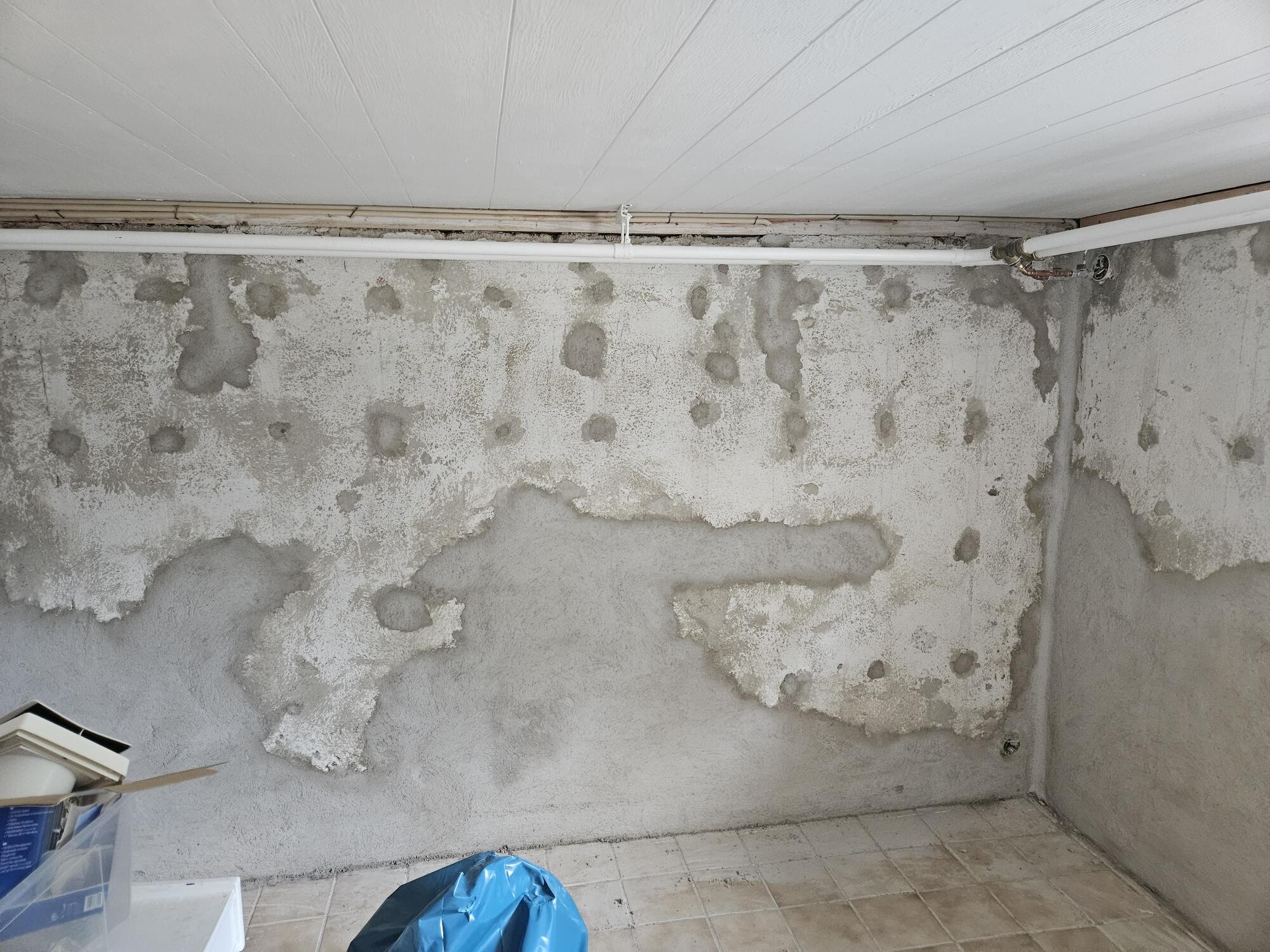
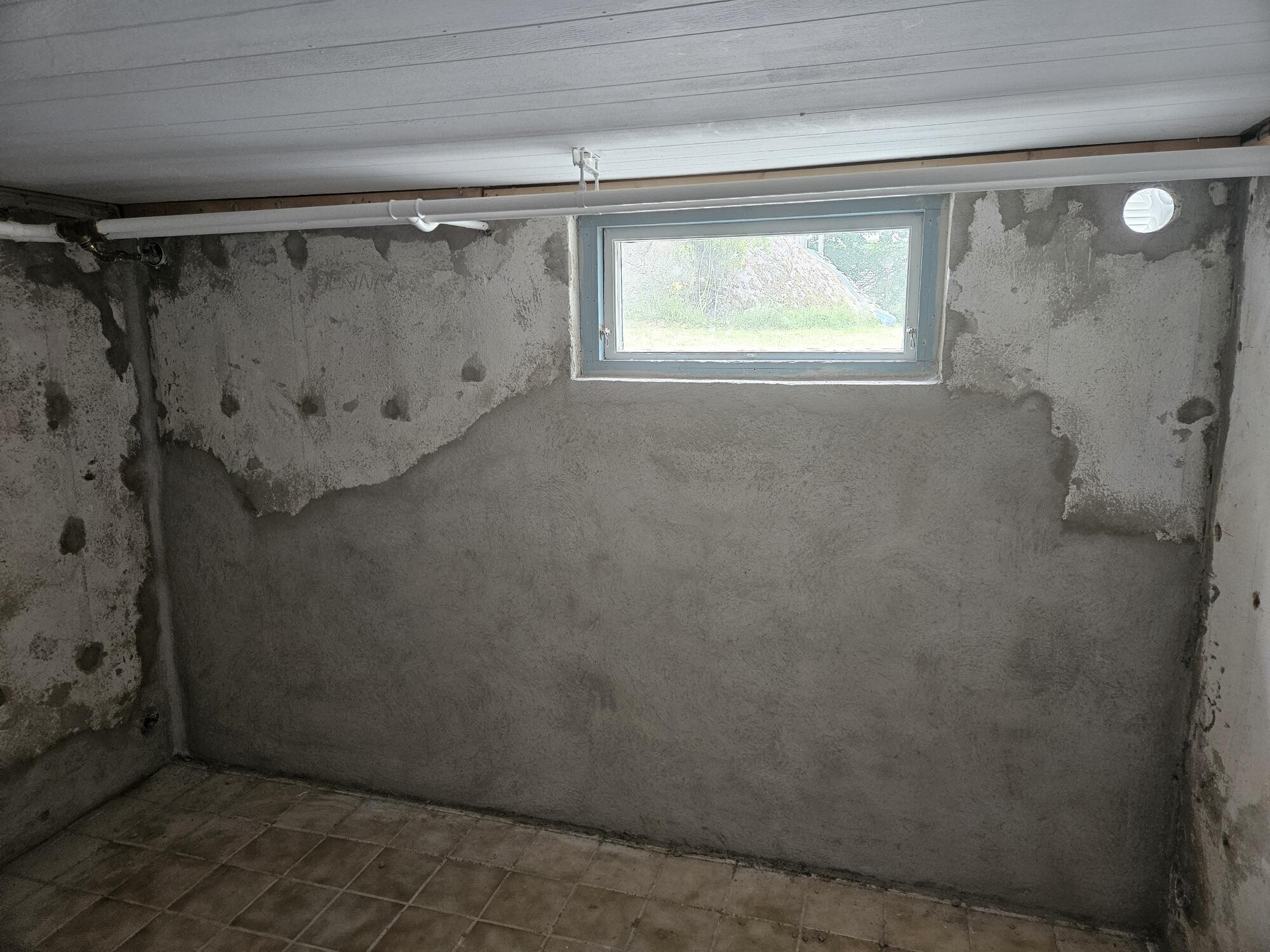
Things don’t always turn out as planned, as I had expected the whole wall to have a homogeneous surface and not the joint that is there now, along with all the small patches. But the painter will fix that… (in this case, me).
So my question is how do I solve this. What can I apply as a "surface layer" on this?
Can you apply another thin layer with some plaster mortar? Or is there something else good.
I'm not looking for a perfectly smooth surface skimmed with fine filler, it can have some texture.
Tips and ideas are gratefully received.
Anyway, brought in a mason to fix the walls so we could paint them. I was fully aware that it wouldn’t be completely smooth and would have texture.
The substrate is some kind of stone blocks (see picture). The mason applied Primer Mortar A on the parts where the plaster had come off, and then KC Plaster Mortar B.
Things don’t always turn out as planned, as I had expected the whole wall to have a homogeneous surface and not the joint that is there now, along with all the small patches. But the painter will fix that… (in this case, me).
So my question is how do I solve this. What can I apply as a "surface layer" on this?
Can you apply another thin layer with some plaster mortar? Or is there something else good.
I'm not looking for a perfectly smooth surface skimmed with fine filler, it can have some texture.
Tips and ideas are gratefully received.
Would probably apply a thin layer of plaster and then brush it, so you get a homogeneous plastered surface that turns out well 👍H hajnes said:Have a basement room that has had wooden studs and veneer boards since '75. When these were removed, I still think the wooden parts looked relatively good behind, no mold or damage except for the horizontal stud at the bottom which was quite decayed. Then the plaster had come off in large parts, but overall perhaps not so strange when it has been enclosed for 50 years.
Anyway, I brought in a mason to fix the walls so that we could paint them. I am fully aware that it wouldn't be completely smooth and would have texture.
The base is some kind of stone block (see picture). The mason applied a layer of Grundningsbruk A on the parts where the plaster had come off, and then KC Putsbruk B.
Things don't always turn out as planned, as I had expected the entire wall to have a homogeneous surface and not the seam that is there now, along with all the patches. But the painter will fix that... (in this case, me).
So my question is how do I solve this. What can I apply as a "surface" on this?
Can I apply another thin layer with some plaster mix? Or is there something else good?
I'm not looking for a perfectly smooth surface fully covered with fine filler, it can have some texture.
Tips and ideas are gratefully received.
Edit: that would be the absolutely easiest for you to do
Thanks for the reply. We like simplicityL Lechuza said:

Continue with the same "KC Putsbruk B", or should I switch to C?
Unfortunately, I don't know what the old plaster is. My guess is that it is older than 75 when the walls were put up. Edit: but not older than 45 (when the house was built)
Click here to reply