
4,194 views ·
80 replies
4k views
80 replies
Pipes behind old radiator, putty/asbestos?
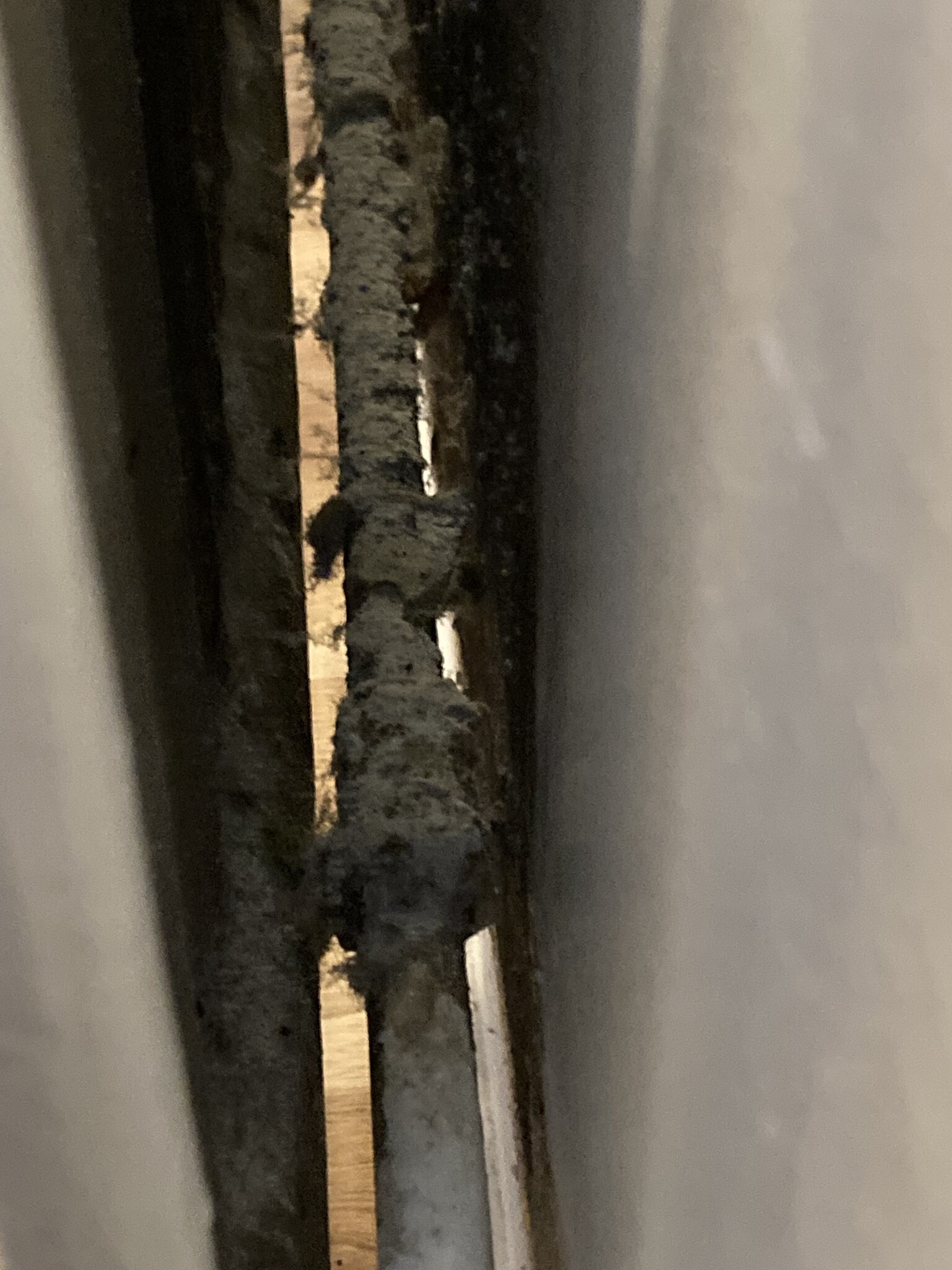
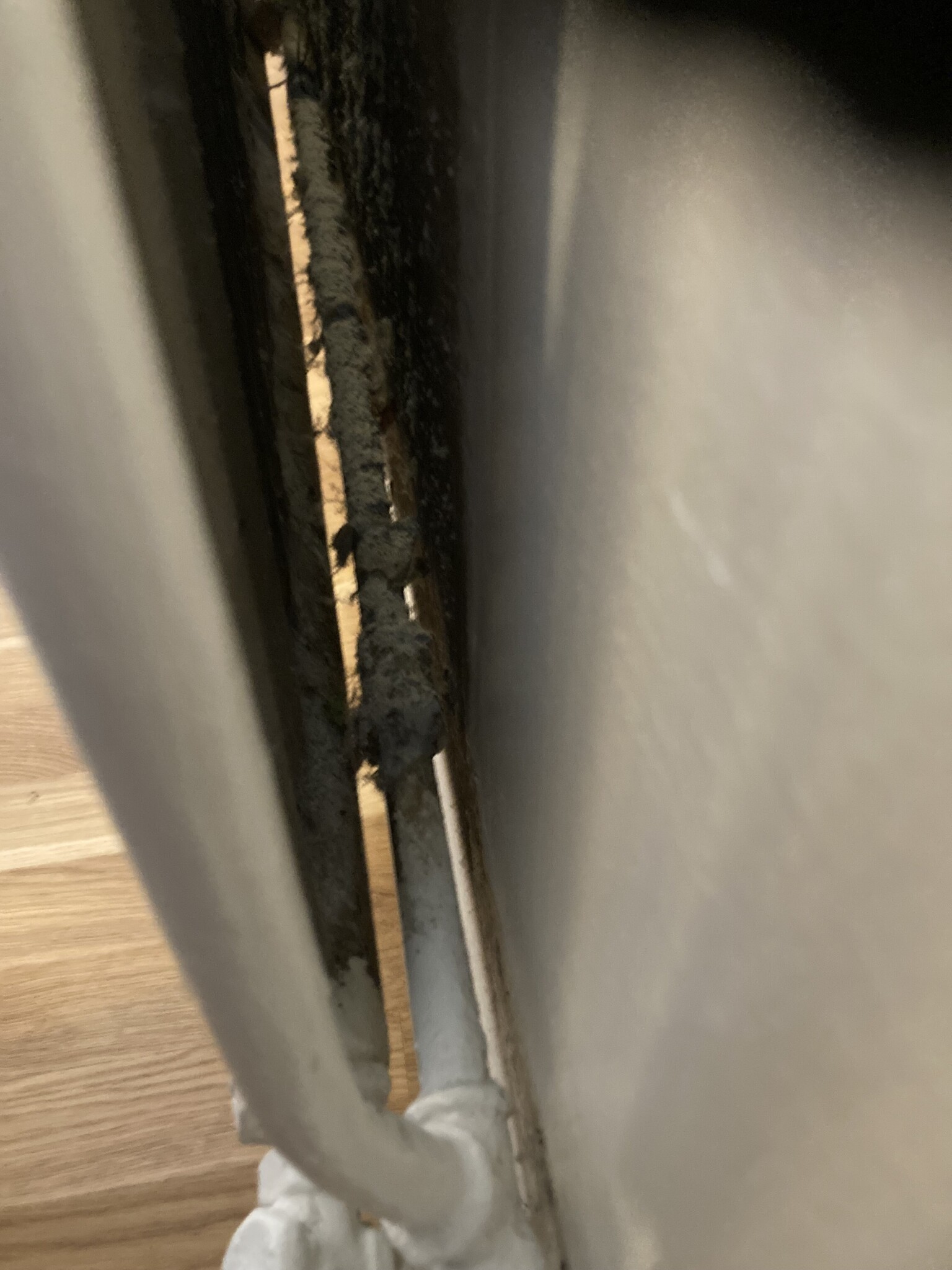
Just moved into an apt, building from the 30s. Old waterborne radiators. Discovered by pure chance that the pipes behind the radiators have something on them. Like "dust" when I touch it with my finger. Kind of beige. Quite thick layer.
I'm worried it might be some old pipe paste, with asbestos. Need your help!
Did they use pipe paste containing asbestos on this type of longitudinal horizontal pipes? Or what else could it be?
No, it's not regular dust. Carefully touched the material with my finger. Got something like thin, beige, soft, plaster-like on my finger.
I know they used pipe paste/asbestos on pipes primarily at bends, pass-throughs. But Chat GPT said they also used it to insulate the pipes so that the heat wasn't lost by traveling through the pipes into the wall, to instead make the heat go mainly to the radiator itself, as intended.
Worried... anyone knowledgeable about this?
Thanks in advance!
I'm worried it might be some old pipe paste, with asbestos. Need your help!
Did they use pipe paste containing asbestos on this type of longitudinal horizontal pipes? Or what else could it be?
No, it's not regular dust. Carefully touched the material with my finger. Got something like thin, beige, soft, plaster-like on my finger.
I know they used pipe paste/asbestos on pipes primarily at bends, pass-throughs. But Chat GPT said they also used it to insulate the pipes so that the heat wasn't lost by traveling through the pipes into the wall, to instead make the heat go mainly to the radiator itself, as intended.
Worried... anyone knowledgeable about this?
Thanks in advance!

Homeowner
· Småländska höglandet
· 5 851 posts
This worry about asbestos seems to be impacting your quality of life. Have you sought help for this concern?
That being said, heating pipes were almost never insulated when they passed through a room that was going to be heated anyway. It was pipes embedded in floor joists or run in basements that were insulated. With all probability, it is dust; who knows how many decades have passed since someone cleaned there. Decade-old dust can probably look like anything.
That being said, heating pipes were almost never insulated when they passed through a room that was going to be heated anyway. It was pipes embedded in floor joists or run in basements that were insulated. With all probability, it is dust; who knows how many decades have passed since someone cleaned there. Decade-old dust can probably look like anything.
It doesn't just look like dust - it is dust.S Slottsfrun said:Just moved into an apartment, house from the 1930s.
Old waterborne radiators.
Discovered by pure chance that the pipes behind the radiators have something on them.
Like "dust" when I touch it with my finger. Kind of beige. Quite a thick layer.
I'm worried if it could be some old gurmassa, with asbestos.
Need your help!
Did they used to have gurmassa containing asbestos on this type of longitudinal horizontal pipes?
Or what else could it be?
No, it's not ordinary dust.
Carefully touched the material with my finger.
Got something like thin, beige, soft, plaster-like on my finger.
I know they used gurmassa/asbestos on pipes mainly at bends, penetrations.
But Chat GPT said they also used it to insulate the pipes so that the heat wouldn't be lost by going through the pipes into the wall, to instead make the heat primarily go to the radiator itself,
as intended.
Getting worried... anyone who knows about this?
Thanks in advance!
Previous owners neglected the moving-out cleaning.
This worry about asbestos seems to be deteriorating your quality of life. Have you sought help for this worry?
That being said, heating pipes were almost never insulated when passing through a room that was going to be heated anyway. It was pipes that were built into floor joists or run in basements that were insulated. With all the greatest certainty, it's dust, who knows how many decades have passed since someone cleaned there. Decades-old dust can probably look any way at all.
I wish that were the case, but no, it's more like a "mass." Of course, with some regular dust on top.Düsseldorff said:
It's only like this on one part of the pipe, not the other. Dust would have laid like a blanket over the whole pipe, but this part is much thicker with "something" on it.
After enough dead skin cells, dust becomes like that.S Slottsfrun said:
I'm keeping an "eye" on my anxiety, but even anxious souls can sometimes have reason for their worry.This concern about asbestos seems to be reducing your quality of life. Have you sought help for this worry?
With that said, heating pipes were almost never insulated when they ran through a room that was going to be heated anyway. It was pipes built into floor joists or run in basements that were insulated. Most likely it's dust, who knows how many decades have passed since someone cleaned there. Decade-old dust can probably look a bit random.
The anxiety is not always unfounded.
No, it's not common dust.
Looks like a "mass," goo of some kind. Naturally, with regular dust on top.
It's only on a specific section of the pipe.
Dust would have settled as a coating all over. The mass is quite thick, but crumbled and unevenly thick.
The section it's mostly on, is it the one hardest to reach, or?S Slottsfrun said:I have "control" over my anxiety, but even anxious souls can sometimes have grounds for their worries. The anxiety is not always unfounded.
No, it's not ordinary dust. It looks like a "mass," some kind of gunk. Of course, with regular dust on top. It's only on a certain section of the pipe. Dust would have settled as a coating over the entire area. The mass is quite thick, but crumbled and unevenly thick.
Why can't it be that?NyKarin said:
As I replied
No, equally difficult to reach on other stretches.G gmogmo said:
Düsseldorff
Building conservationist
· Bromma
· 3 360 posts
Düsseldorff
Building conservationist
- Bromma
- 3,360 posts
I think it looks exactly like dust usually behaves behind radiators. It tends to clump together a bit. Not sure if it could be due to condensation on the pipes perhaps.S Slottsfrun said:
I hope you're right.
But the strange thing is that the thickness of the "dust" differs significantly on the left and right side of the pipe, behind the radiator.
One side has almost no "dust" at all, and the other side is so thick that I suspect some form of mass.
I think if it were about condensation, then the whole pipe should have had condensation and been "affected" equally.
Düsseldorff
Building conservationist
· Bromma
· 3 360 posts
Düsseldorff
Building conservationist
- Bromma
- 3,360 posts
Yes, it is a bit strange. Could it have been cleaned in one direction and forgotten in the other?S Slottsfrun said:I hope you're right.
But the strange thing is that the thickness of "dust" differs a lot on the left and right sides of the pipe, behind the radiator.
One side has almost no "dust" at all, and the other side is so thick that I suspect some kind of mass.
I think that if it's about condensation, the whole pipe should have had condensation and been "affected" equally.