
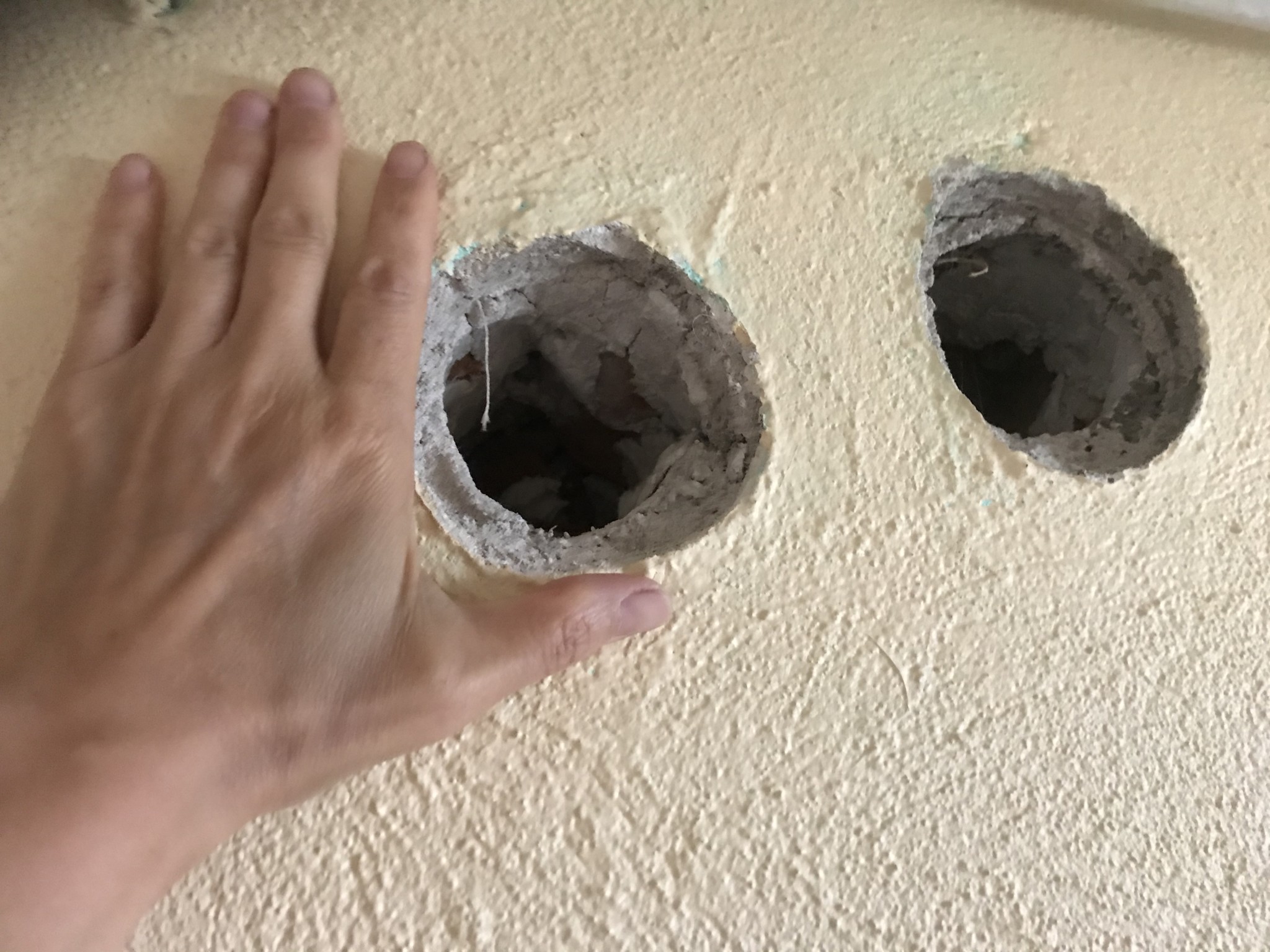
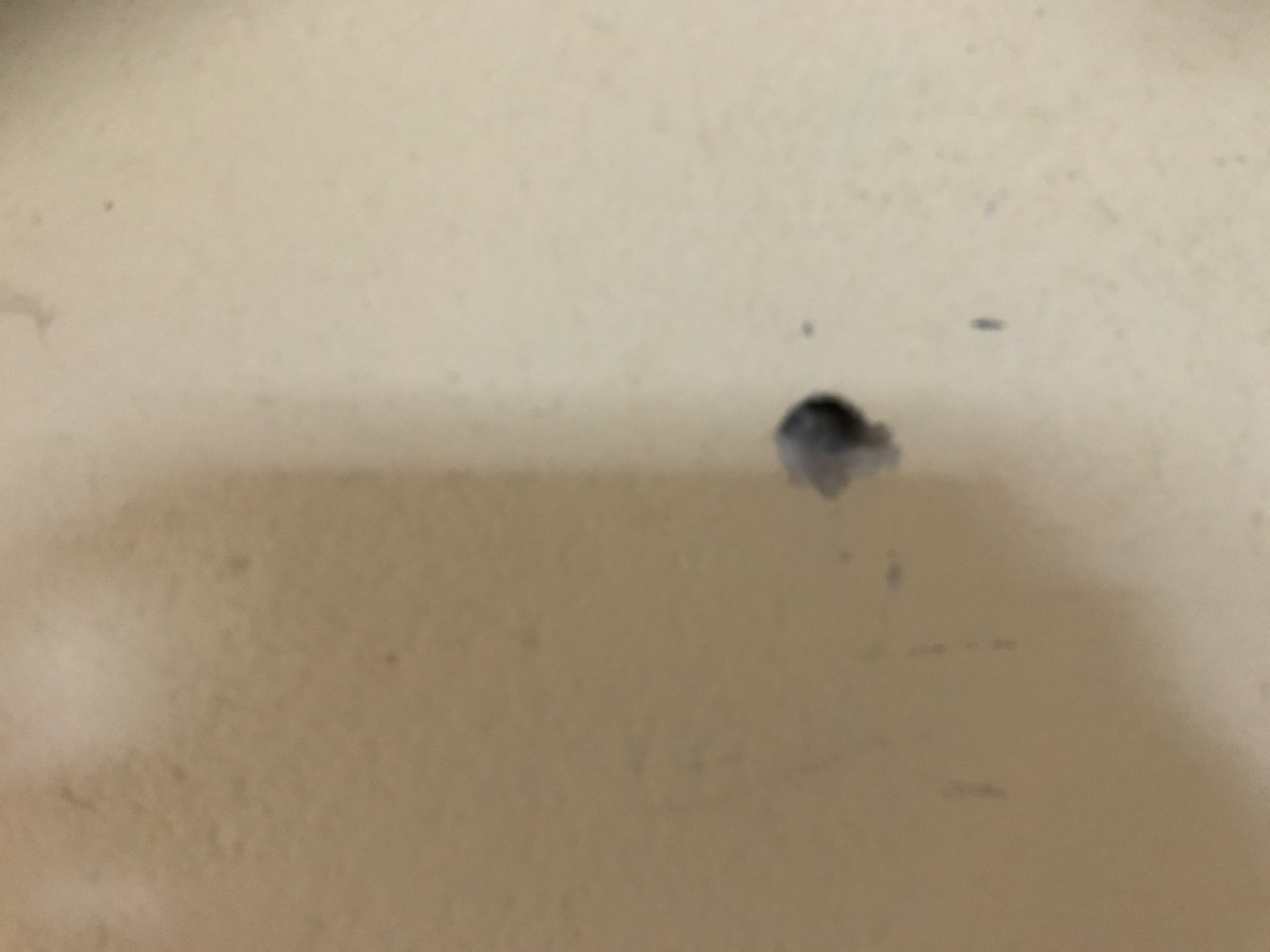

I am going to fix up my "shame room" in the basement. The house was built in the 1930s and the walls are plastered with—well, something? Quite porous and easy to chip away.
I've been advised to use concrete filler for smaller holes from screws and plugs, but how do I fix larger holes and edges where the old plaster has broken off? It doesn't need to be a perfect result, it's not a family room. Just a shame room that should be a little less shameful.
Take floor adhesive, for example, Casco Multifix. I prefer using that over plaster which always "sinks" no matter how much they advertise that it doesn't. Where there are large depths, you can apply a thin layer a few centimeters in just to stop the next plastering, possibly supported by a piece of plastic if the hole can't be covered by the adhesive without support, assuming you don't want to fill the entire hole. If you do, you can mix in stones so the adhesive cures faster.
When I search for it, it says adhesive. Is that what you mean? It seems there are two variants, a regular one and a rapid one. Is there one that is preferable?F fb35523 said:Take floor adhesive, for example, Casco Multifix. I'd much rather use that than filler which always "sinks" no matter how much they advertise that it doesn't. Where there are large depths, you can lay a thin layer first a few centimeters in that is only there to stop the next filling, possibly supported by a piece of plastic if the hole cannot be covered by the adhesive without support, assuming you don't want to fill up the entire hole. If you do, you can mix in stones so the adhesive sets faster.
The large holes are probably 1.5-2 dm deep. With stones - are you thinking more like macadam/road gravel in a suitable dimension then?
Take what’s already on the wall. That is, plaster. C Plaster will be good for that.D dee79 said:[image] [image] [image]
I’m going to fix my shame room in the basement. The house was built in the 30s and the walls are plastered with—well, something? Quite porous and easy to chip away.
I’ve been advised to use concrete putty for smaller holes after screws and plugs, but how do I fix larger holes and edges where the old plaster has broken off? It doesn’t need to be a perfect result, it’s not a rec room. Just a shame room that should be a little less shameful.
If you want something easier to work with, go with Gypsum. It won't have exactly the same surface as you have today but fairly close and much easier to work with if you're not experienced.
I like simple and this is my first attempt, so Gypsum sounds like my thing. Does it work on the big/deep holes?Krille-72 said:
Absolutely. Buy a Lecasten or ytongsten, and you can chop some small pieces with an axe to press into the hole first or together with gypsum. Prime the surfaces you will plaster first. There is a special gypsum primer, but regular primer works too.D dee79 said:
If you're inexperienced, it's usually easier to fill the holes first and let it dry before going on to plaster with gypsum.
Gypsum any day of the week if it's interior walls and far up from the floor.D dee79 said:
Mix to the consistency of thick whipped cream - I don't think you need to fill with any material, but it might help.
Also, check out Finja's product "Finna Gipsputs Inne" which is a bit cheaper than Gypsum from Weber.
And as @Krille-72 writes - Primer first.
You've received other suggestions that might be even better, but yes, I mean tile adhesive which Casco seems to call adhesive. What I like about it is that it is very fine-grained and can be shaped well, even if the surface isn't flat. You can shape it around a curved surface and get it really neat on the first try. It is also easy to sand the first day and becomes relatively hard once it's fully cured, so it can withstand quite a bit. Plaster isn't as strong, but the advantage is that the texture will be similar to what you have. Additionally, your holes aren't in a vulnerable position so the "adhesive's" hard surface isn't necessary.D dee79 said:
I went on a shopping trip and both stores claim that primer is not needed but the wall should be dampened before applying the plaster. I insisted on buying a primer anyway, because I don't want to make another trip, but they claim non-absorbent material = primer, plaster and other absorbent materials = dampen the wall first.slacker said:
Gypsym all day every day if it's interior walls and such far from the floor.
Mix to the consistency of thick whipped cream - I don't think you need to fill with any material, but it might help.
Also check out Finja's product "Finna Gipsputs Inne" which is a bit cheaper than Gypsum from Weber.
And as @Krille-72 writes - Primer first.
But then they added that they are not professional masons, so now I feel confused about what to do. One of them suggested that I apply primer first and then dampen. So - any tips from those of you who have tried?
They are both right and wrong. Or rather, there are multiple truths.D dee79 said:I've been on a shopping spree, and both stores claim that primer is not necessary but that the wall should be moistened before applying the plaster. I insisted on getting a primer anyway because I don't want to make another trip, but they claim that non-absorbent material = primer, plaster and other absorbent materials = moisten the wall beforehand.
Then they added that they are not professional masons, so now I feel confused about what to do. One of them suggested that I apply primer first and then moisten. So - any tips from those of you who have tried?

First of all, you need to knock down anything loose. Then you can apply gypsum directly, lightly moisten the plaster, or prime beforehand. Since you are inexperienced, I recommend you lightly prime and also extend the primer over the painted area. If you choose to "base" the big hole first, you can choose water or primer. Gypsum is not as sensitive as plaster, but the secret is that it should not dry too quickly. Otherwise, the entire compound can crack. Since you are inexperienced, you are likely to take a bit longer than an experienced mason. It's good if the surface does not absorb the water in the plaster too quickly.
Here you can read what Weber says about its primer.
https://www.se.weber/fasad-puts-och-murbruk/putsprimer/webergypsum-primer
Thank you!They are both right and wrong. Or rather, there are multiple truths.
First of all, you need to knock down what is loose. Then you can apply gypsum directly, lightly wet the plaster or prime beforehand.
Since you are inexperienced, I recommend you prime lightly and also spread primer on the painted area.
If you choose to "backfill" the large hole first, you can choose water or primer. Gypsum is not as sensitive as plaster, but the secret is that it should not dry too quickly. Then the entire mix can crack. Since you are inexperienced, you will probably take a bit longer than an experienced mason. It is good if the substrate does not absorb the water in the plaster too quickly.
Here you can read what Weber says about its primer.
[link]
The primer is not the same brand, so the next discussion was how much it should be diluted. 1:3 or 1: and they thought 1:5.
Should the primer dry before plastering?
And thank you again for your patience with my questions!
I would go with 1:3 and let it dry. You don't need to worry about what brand the primer is in your case.D dee79 said:
If you're plastering with gypsum on a painted wall with a slightly glossy paint, you might need a primer with some sand in it. That is not applicable in your case.
Thanks for everything! Time to get started then!
Click here to reply