
3,089 views ·
7 replies
3k views
7 replies
Partition wall basement with tiled floor
Hello. I've been browsing here a bit but haven't found a real answer to my challenge. I have a relatively large room in the basement that I would like to divide to create some kind of utility entrance. As you can see in the picture, we've had water intrusion, so I'm terrified of building something that would need to be demolished if we get water again. We have done what we can to prevent it from happening again (put a roof over the basement entrance and dug a sump pit at the entrance that couldn't handle the water last time), but having seen how much rain can fall in a few hours, I'm not confident this will permanently solve the problem. So how would you build this wall given the circumstances? The floor is tile with water-based underfloor heating, so I don't want to screw into it. The ceiling has panels, so it might be possible to attach a wall plate to that. If I weren't worried about water, I'd wedge a wooden stud and lay some friction mat under the sill, but I guess this technique doesn't work as well with just metal studs? I also don't know what kind of board material to use since gypsum and wood are out. In the new room becoming the utility entrance, I also want to install wall cabinets on this new wall, so it needs to be fairly stable and provide a way to attach these. A door is needed too. Further complication is the lowered part of the ceiling where some electrical and water runs. Will it be necessary to build this wall with blocks, or can it be done differently? It feels like if you build with blocks, this wall will stay until the whole basement is redone, and I'd prefer a less permanent solution since it's a dividing wall, and you never know what you might want the space for, but it's better than tearing everything down if we get water again. Apart from the outer wall by the door, the basement is built with block and plastered, which might suggest building this wall with blocks as well, but I'm not as comfortable with this technique as using studs, so perhaps I'd need to hire help. What do you think? I would be very grateful for suggestions.
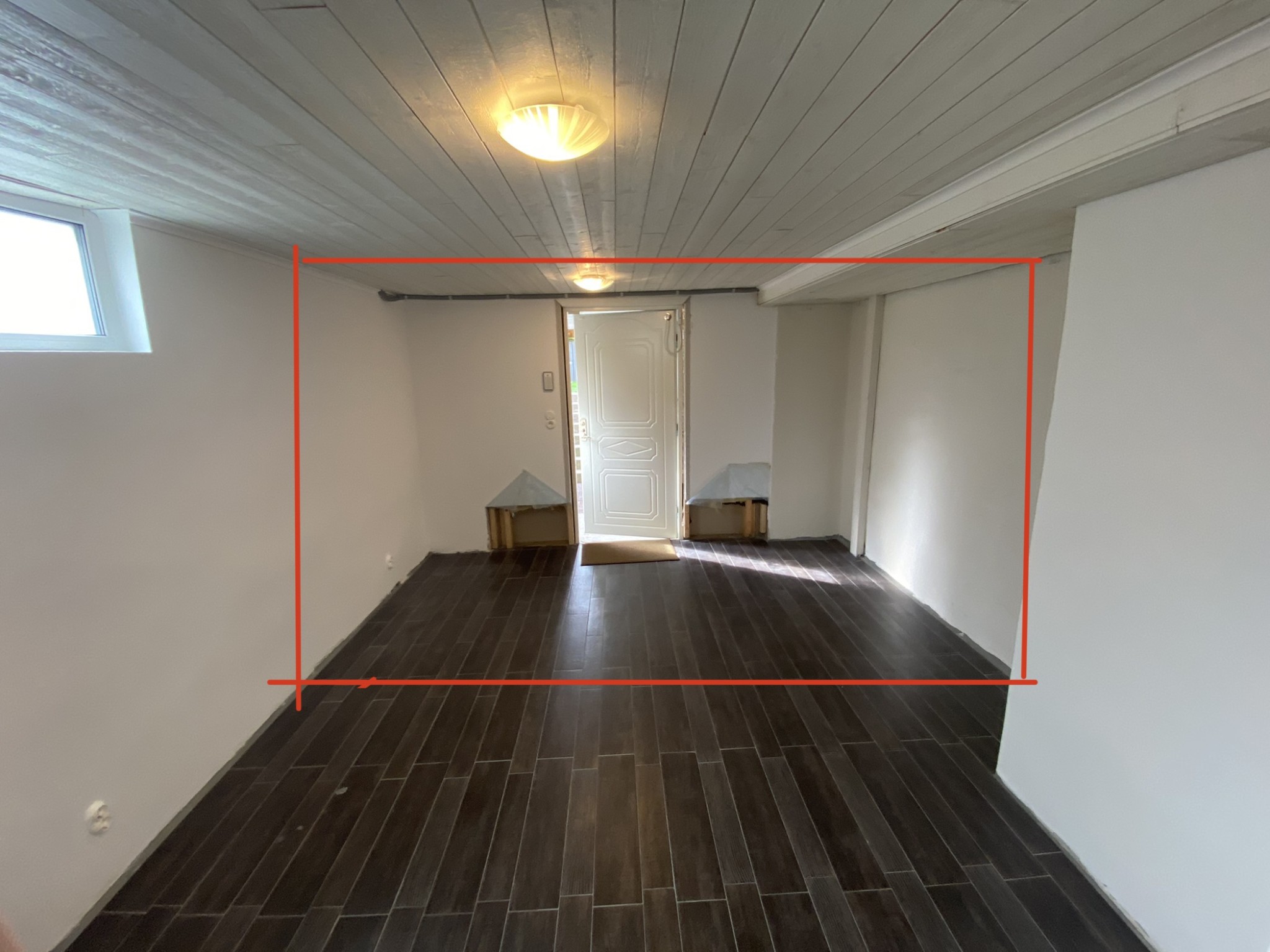

Welcome to the forum!
I can't answer all your questions but some.
I can't answer all your questions but some.
You can attach the metal stud to the floor with double-sided tape as it shouldn't absorb any lateral forces, so the weight of the wall keeps it in place as long as the wall is well-secured to the ceiling and walls. Vertical metal studs really need to be pressed in.B Bollatta said:
Look into what is used in bathrooms, Lux panels I believe are what the panels around wall-hung toilet cisterns are called. An OSB panel that ends half a meter above the floor or nogging where wall cabinets are to be placed might work.B Bollatta said:
Great! Thanks for the tips! As you say, it might work with OSB or plywood if I let it sit a bit higher, the challenge will be the joint between the materials but it can probably be hidden. Otherwise, maybe I can use slightly stronger steel profiles for the studs and make sure I hang the weight on those.BirgitS said:
Welcome to the forum!
I can't answer all of your questions but a few.
The sheet rule against the floor can be attached with double-sided tape because it shouldn't absorb any lateral forces, so the weight of the wall keeps it in place as long as the wall is securely attached to the ceiling and walls. Standing sheet rules should really be pressed in.
Look at things used in bathrooms, Lux-boards are what I believe the boards used around the cistern for wall-hung toilets are called. An OSB board that ends half a meter above the floor or crossbars where the wall cabinets will be might work.
Cembrit boards might also work, they are cheaper than Lux. They are moisture-resistant and can be painted, but you don't have to. With Lux boards, you probably need to apply some surface coating. I don't think you can hang anything on Lux walls without having something like plywood behind them. The Cembrit is similar to drywall, you can hang things with Molly plugs. I've personally chosen not to paint the ones I have on the basement walls, I think the gray works there.
/Höghus
/Höghus
Okay, how are they to work with? Can you cut/snap them like gypsum or do you need a circular saw? Yes, as you said, I would need to coat the Lux boards, and I'm not looking forward to that. Like you said, a problem with attaching things to them. My plan was to hang IKEA cabinets on a rail that I attach to the studs. How good are metal studs for hanging things? Another thing I'm considering is the door frame. I've seen there are thicker metal studs that might work; I would prefer to avoid using wooden studs at the door.Höghus said:
Cembrit boards might work too, they are cheaper than Lux. They are insensitive to moisture and can be painted but it's not necessary. You'll probably need to give Lux boards some sort of surface layer. I don't think you can hang anything on Lux walls without having something like plywood behind them. Cembrit is similar to gypsum; you can hang things with Molly plugs. I have chosen not to paint the ones I have on the walls in the basement; I think the gray works there.
/Höghus
Scoring/snapping probably doesn't work very well. The Cembrit is harder than gypsum, and the best is to cut with a circular saw with a carbide blade. Cutting outside is recommended—it smokes like hell. Or cut with the circular saw on an EPS board and a vacuum cleaner.B Bollatta said:Okay, what is it like to work with them? Can they be cut/snapped like gypsum or does the circular saw need to come out? As you say, I would need to polish the lux-plates, and I'm not really looking forward to that. As you mentioned, attaching things to them is a problem. My plan was to hang Ikea cabinets on a rail that I attach to the studs. How good are metal studs for hanging things on? Another thing I'm considering is the door frame. I've seen that there are thicker metal studs that might work; I'd prefer to avoid using a wooden stud at the door.
A jigsaw/handsaw also works, but it probably won't look very neat.
If cabinets are to be hung on the walls, I would set metal cross bracing between the studs to screw into. I had a piece of smooth roofing sheet left over that I screwed into the studs behind a board where I would have an indoor unit for a heat pump.
I have no experience with setting door frames in metal studs, but it's pretty standard.
/Höghus
Click here to reply