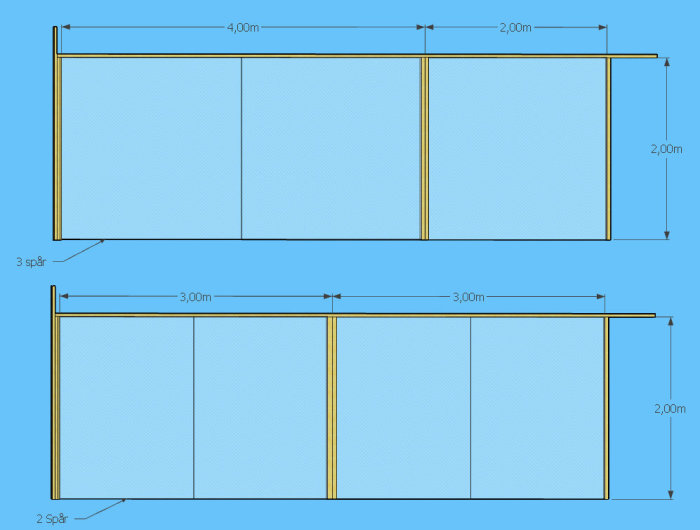
If the column is to be directly under the beam and the sections should be able to "roll by," the wall must therefore be at least 22.6 (frame) + 90 (beam), i.e., a total of 31.6 plus cladding.
There can't be that much cladding involved outside the sliding sections? 316 mm is a very normal wall thickness today. With laminated wood, it's possible to make quite simple solutions. Consider it.
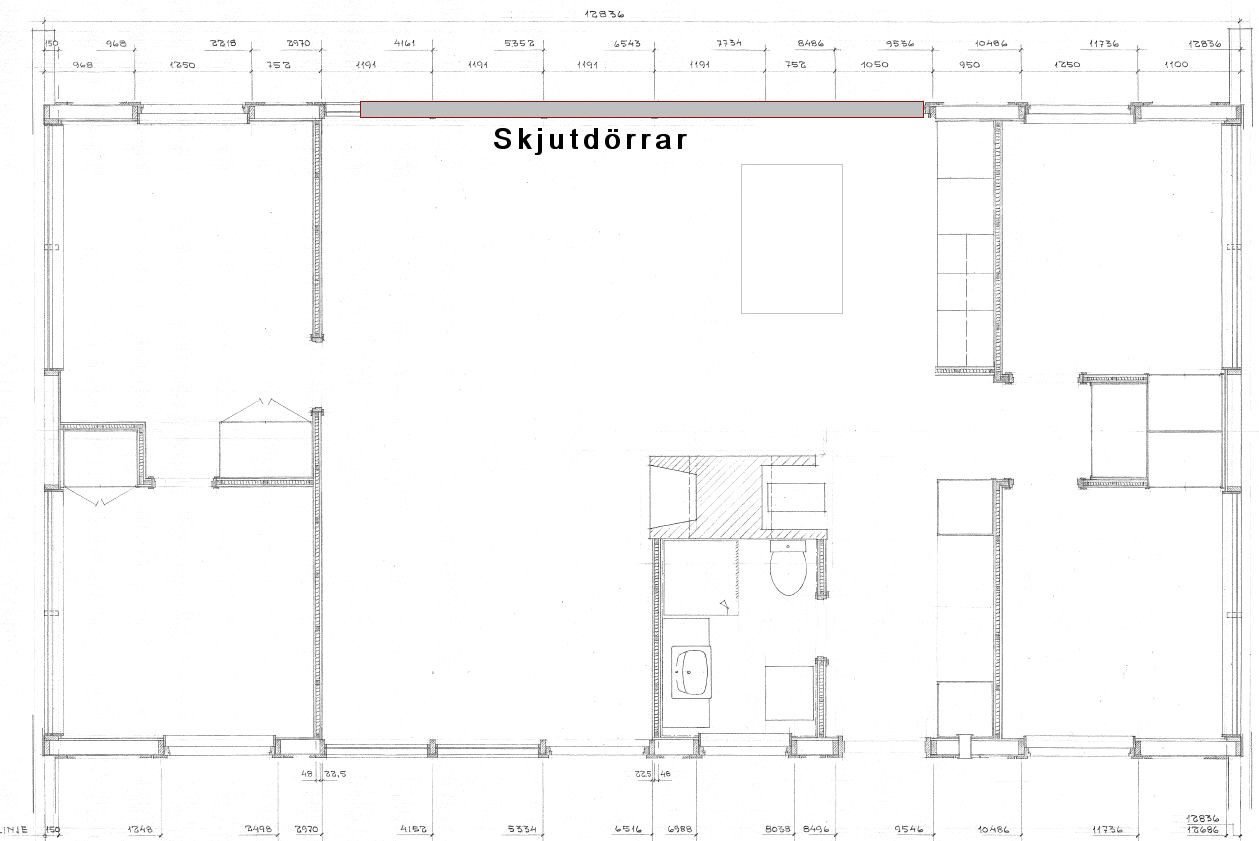
With that floor plan, I think your latest option with only two 3 m wide sections on two tracks is natural. Then it will be good to have a post in the middle. It won't be in the way no matter how you position the sections.
I'll check the price range of the different options...
The key to a four-door solution is that all four doors must be movable. To the left of the kitchen island, I want to be able to open as much as possible.....
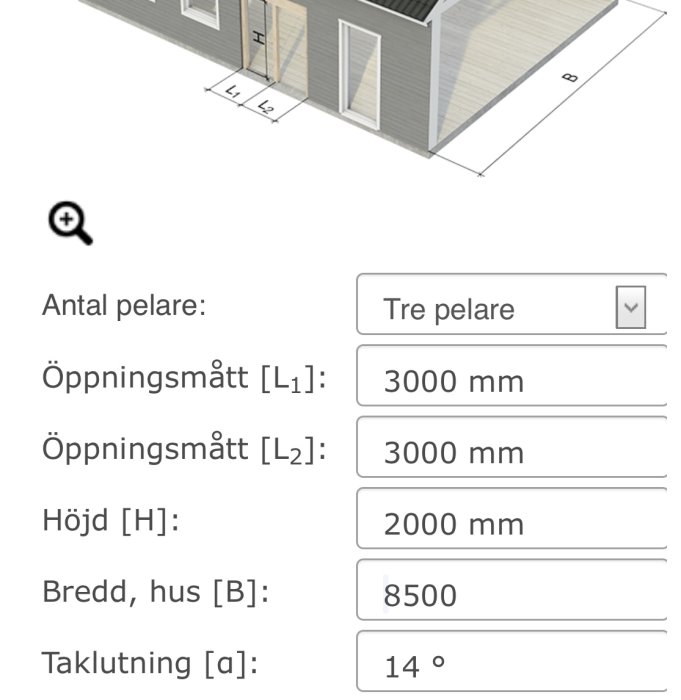
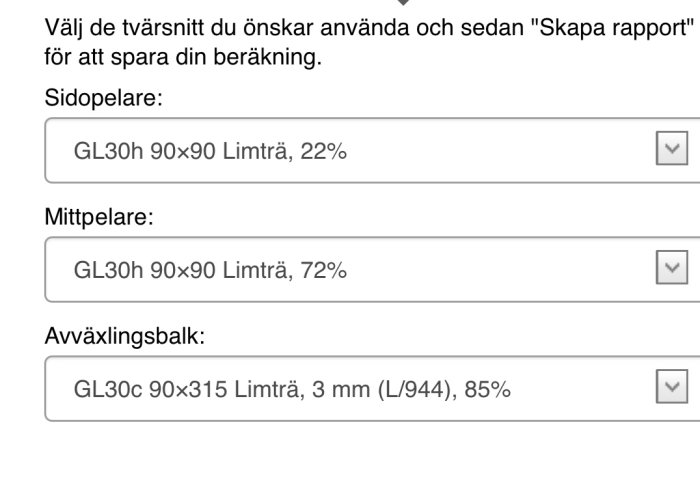
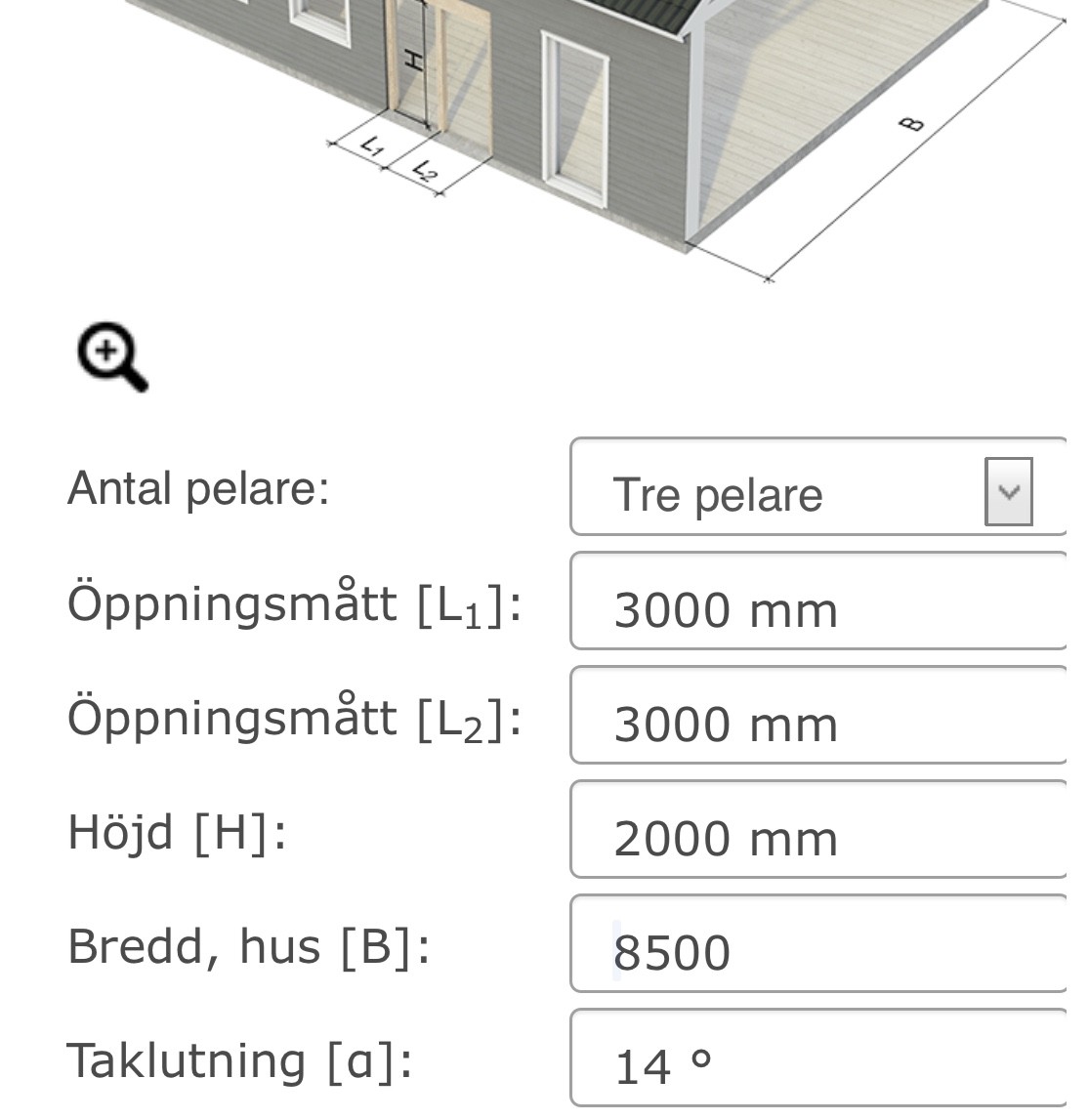
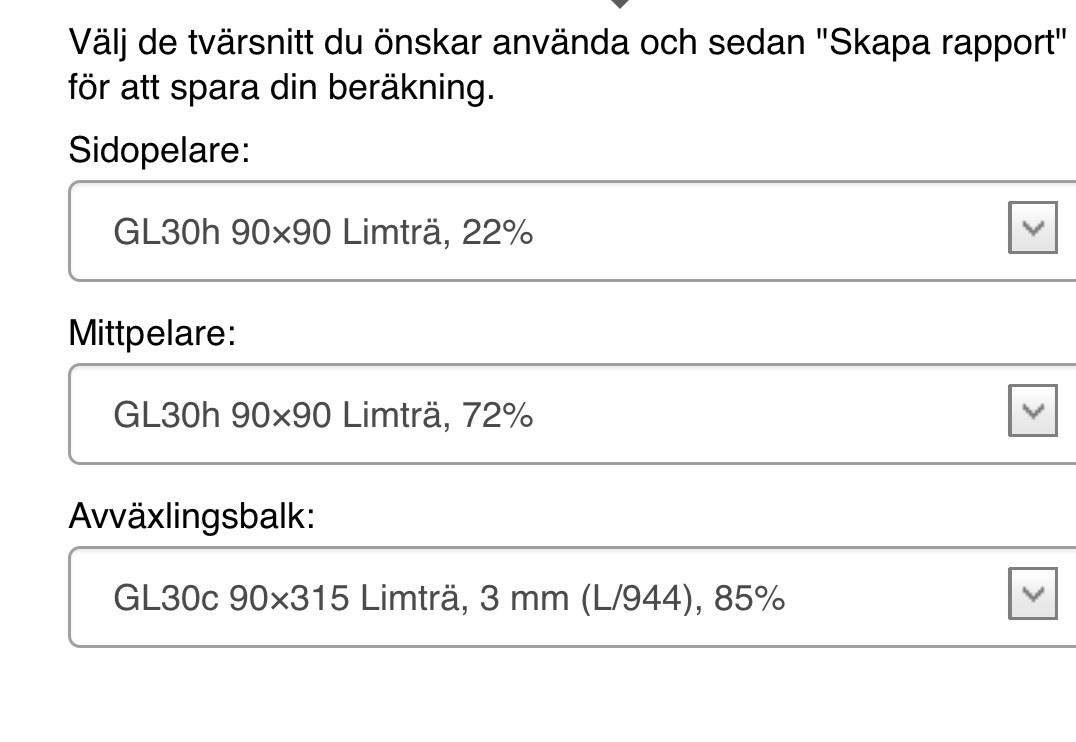
When I used that timber guide (which you don't recommend), I received the following suggestion for a beam:
What do you think?
In the guide, you can't specify a roof pitch of 0, does that matter for the calculation?
There is nothing wrong with these results. Pillars do not exist narrower than 90x90 mm. 90x315 results in a very small deflection at a 3-meter opening. It could probably be considered over-dimensioned but does no harm. Roof slope is irrelevant in this case when it is under 30 degrees (for shed roofs) and you are only interested in the support forces. The number of parts and the number of grooves are important details that must be chosen with regard to the desired combination possibilities.
With glulam, you avoid some of the issues associated with steel, such as thermal bridges and condensation. On the inside, you don't have to cover glulam at all if you don't want to. It's quite nicely exposed.