
3,269 views ·
9 replies
3k views
9 replies
Old concrete patio - a lot of moisture
We have recently bought a house with a larger concrete deck and an underlying crawl space.
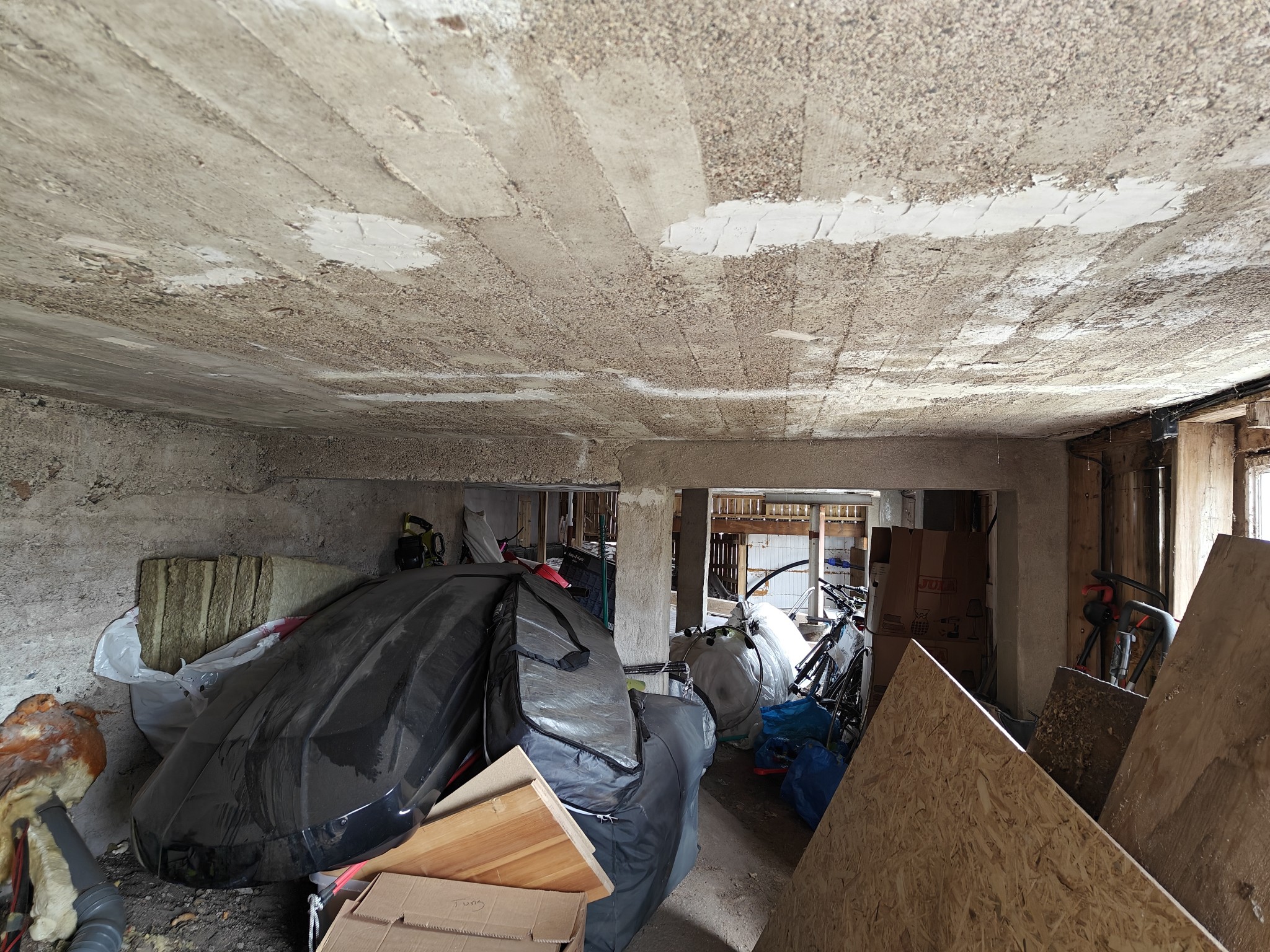
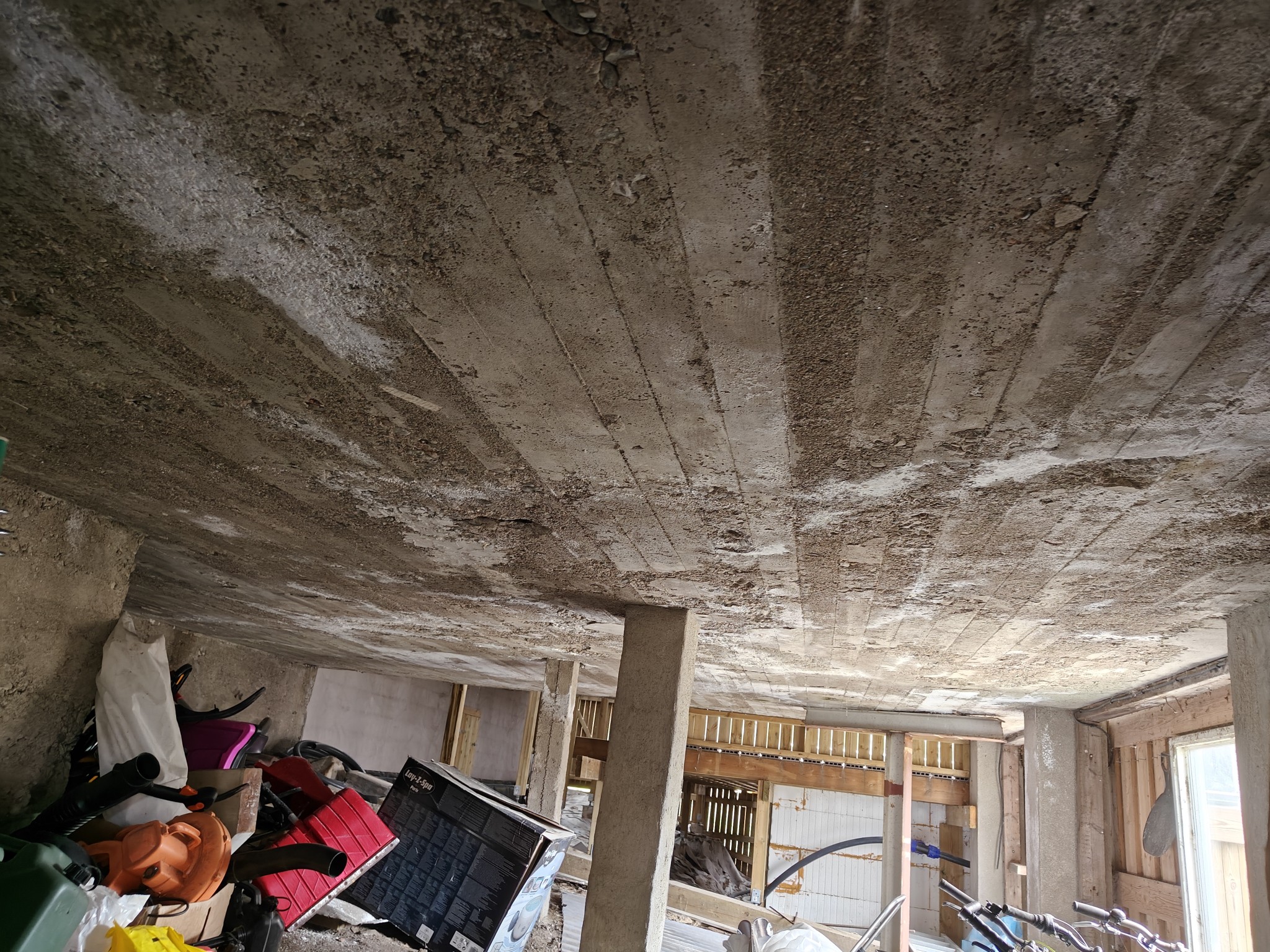
The house is from the 1940s and the underside of the concrete in the deck is starting to look worn with moisture stains here and there.
On top is wooden decking, which may not be the best (?) but is necessary for aesthetics.
To my question:
Is it possible to take measures for an extended lifespan? Would it, for example, reduce freezing/expansion if the concrete is protected from moisture?
For example, laying double layers of roofing felt once the concrete has dried in the summer?
The decking will be redone regardless.
The house is from the 1940s and the underside of the concrete in the deck is starting to look worn with moisture stains here and there.
On top is wooden decking, which may not be the best (?) but is necessary for aesthetics.
To my question:
Is it possible to take measures for an extended lifespan? Would it, for example, reduce freezing/expansion if the concrete is protected from moisture?
For example, laying double layers of roofing felt once the concrete has dried in the summer?
The decking will be redone regardless.

Know-It-All
· The Great North
· 1 218 posts
The constantly recurring salt deposits and wow what a mighty basement/storage! It also looks like some crack has been repaired? I see no problem with leaving it as it is. Is there a roof above the veranda?
Yes, it is a great space but requires a lot of digging to make it usable. The base consists of pure dust (!). It's being replaced with macadam now.
No roof exists above, and there's certainly very poor drainage. It's difficult to see as decking is on top. There are some repairs but nothing major, which is good.
Sounds like I can breathe out a little?

Mats-S
Construction veteran
· Sollentuna
· 3 664 posts
Mats-S
Construction veteran
- Sollentuna
- 3,664 posts
Yes, I don't see anything strange either (judging by the pictures), remember that it's an 80-year-old casting so you'll have to put up with some "cosmetic" blemishesL Lars_A said:

But don't make any moisture-sealing joints on the underside, it must be able to breathe as the construction is today.
Know-It-All
· The Great North
· 1 218 posts
As calm as can beL Lars_A said:Yes, it's a really good space, but it requires quite a bit of digging to make it usable. The base consists of pure dust (!). It's being replaced with gravel now.
There's no roof over it and it's almost certainly very poor drainage. Hard to see as there's decking on top. There are some repairs but nothing major, which is good.
Sounds like I can breathe a bit easier?

Very good suggestion! However, the house is extended in length and there is another terrace where this one ends, two steps up and built in composite decking. Either it will be composite decking or, as suggested, stone slabs.Jonatan79 said:
Great, THANK YOU!
The underside will, of course, not be moisture-proofed, I was thinking about the topside instead. But if it's unnecessary work, then there's obviously no point.
Hello again,
We've had some time to settle in, and it's starting to be time to do something more with the deck.
Right now, there are old and worn boards on the deck which I want to change.
I'm a bit interested in stone tiles as @Jonatan79 suggested above.
Is there any point in applying a moisture barrier on the top before laying tiles, and if so, what should be used?
The slope of the deck is a bit so-so, but it's hard to determine completely before the boards are removed. In that case, I suppose I'll have to build a frame with the appropriate slope and pour a thin layer?
As you can hear, I'm not knowledgeable in the area, but I'm willing to learn and fairly handy.
If anyone has thoughts and tips about the whole thing, please share 👍
We've had some time to settle in, and it's starting to be time to do something more with the deck.
Right now, there are old and worn boards on the deck which I want to change.
I'm a bit interested in stone tiles as @Jonatan79 suggested above.
Is there any point in applying a moisture barrier on the top before laying tiles, and if so, what should be used?
The slope of the deck is a bit so-so, but it's hard to determine completely before the boards are removed. In that case, I suppose I'll have to build a frame with the appropriate slope and pour a thin layer?
As you can hear, I'm not knowledgeable in the area, but I'm willing to learn and fairly handy.
If anyone has thoughts and tips about the whole thing, please share 👍


I happened to see this post and can just share that we have a similar deck where slate was laid on top. It looks great but unfortunately wasn't watertight so rain came in between the facade and in our case the storage and moisture got into the joists. Now there’s a waterproof layer and decking instead. So it's important to make sure you have a working waterproof layer.L Lars_A said:Hi again,
Now we've had some time to settle in and it's starting to be time to do something more with the deck.
Today there's old and worn decking on the deck which I want to change.
I'm a bit interested in stone slabs as @Jonatan79 suggested above.
Is there any point in placing a moisture barrier on the top before the slabs are laid, and if so what should be used?
The slope on the deck is a bit so-so, but it’s hard to determine fully before the decking is removed. In that case, I suppose I need to build a frame with the right slope and cast a thin layer?
As you can hear, I'm inexperienced in this area but willing to learn and fairly handy.
If anyone has thoughts and tips about it all, please share 👍
How did it go for you?
Click here to reply