
550 views ·
10 replies
550 views
10 replies
Problem attaching concrete anchors in old cast wall - how to solve?
I have a house from 1911. In the cold cellar, there is a space under the punch veranda where there is a poured wall partially underground. I am now planning to build a deck outside this section and thought of attaching a beam to the poured wall with concrete expanders. I assume the wall is original from 1911. I was prepared for some tough drilling into the concrete, but not at all. The drill went straight into the wall effortlessly even though I have a lousy hammer drill. In certain spots, it was so easy. In others, it came to a complete stop. So much so that I thought I hit reinforcement, but when the same thing happened in three places—well, not even I have that much bad luck. I guess they've cast stones into the wall, and my poor drill can't handle it. This will be resolved soon when I get an adapter delivered for a really powerful drill that I've borrowed.
Now to the problem. Where it was so easy to drill, the concrete expanders aren't holding much. I can tighten them somewhat but feel they're not gripping as hard as they should. I guess the concrete is crumbling in the hole when the expander starts to take.
What do you think about using anchor epoxy/chem anchor in the holes and then driving in the expander? Sure, it's not entirely right, you probably lose the expansion function, but I already have these (expensive) bolts...
Or should I try to use a plug and drive in a lag screw?
This is really annoying since this is the last thing to do before it's time for the fun part - putting up the framing and making it look nice!
Now to the problem. Where it was so easy to drill, the concrete expanders aren't holding much. I can tighten them somewhat but feel they're not gripping as hard as they should. I guess the concrete is crumbling in the hole when the expander starts to take.
What do you think about using anchor epoxy/chem anchor in the holes and then driving in the expander? Sure, it's not entirely right, you probably lose the expansion function, but I already have these (expensive) bolts...
Or should I try to use a plug and drive in a lag screw?
This is really annoying since this is the last thing to do before it's time for the fun part - putting up the framing and making it look nice!

Your foundation is an older type. At that time, cement was a significant cost, and thus it was used sparingly. It was called "procenta" with larger stones. A splash of concrete and then stones, and so on, resulted in quite a bit of space between the stones with questionable (soft/loose) concrete strength. Drilling between the stones should be done carefully so the drill doesn't create too large a hole. If drilling where there is stone, start with a narrower drill and then use one that fits the expander. Even then, don't press too hard, as it might shake and loosen the stone. Since the foundation is somewhat porous, you'll need to install more anchors than you initially thought. Place expanders where there is stone and at places between stones, using fully threaded rods with anchoring adhesive. The hole should be (with a 12 mm rod, approximately 16 - 18 mm; with a 16 mm rod, 20 - 25 mm). This ensures that the anchoring adhesive surrounds the entire rod. Try to estimate the thickness of the foundation and drill as deep as you dare, to create as large a bonding surface as possible.
PS Don't clamp the beam directly against the foundation; instead, place a piece of timber between the beam and the foundation, creating a gap. This is because debris always falls down and settles in between, preventing the wood from drying and causing it to rot faster.
This is my opinion based on personal experience. There are likely other methods as well.
PS Don't clamp the beam directly against the foundation; instead, place a piece of timber between the beam and the foundation, creating a gap. This is because debris always falls down and settles in between, preventing the wood from drying and causing it to rot faster.
This is my opinion based on personal experience. There are likely other methods as well.
Thanks for the response! What you're saying sounds entirely reasonable. I had planned to set expanders every 60cm. I have placed syllpapp between the bearing beam and the foundation wall. I want the bearing beam as close to the wall as possible to avoid the load coming out from the wall, thereby creating torque/leverage.
A little 12mm threaded rod and anchor compound sounds like a good idea. Annoying to have bought a bunch of concrete expanders though.
A little 12mm threaded rod and anchor compound sounds like a good idea. Annoying to have bought a bunch of concrete expanders though.
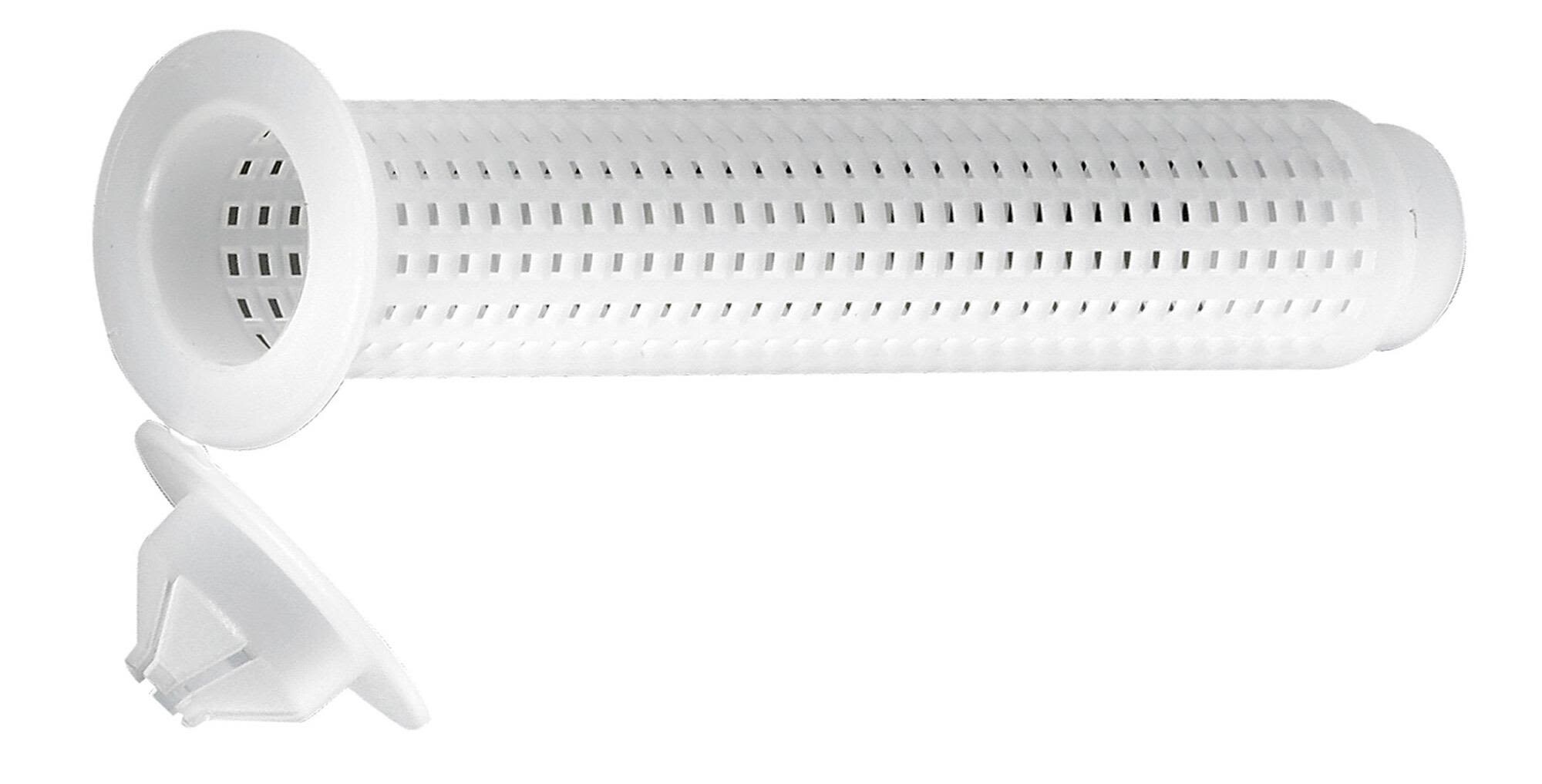


They are actually also sold in the forum's shop.C Christian Norder said:
https://shop.byggahus.se/products/perfohylsa-fast

The wall is not that thick, 20-25 cm. But the space inside is used, admittedly just for storage and such, but it would look pretty ugly with nuts and washers on the wall. Preferably not, then. It seems like using threaded rod and anchor adhesive is a sufficiently good solution. The load at the inner end of the wall won't be that high, and the load is only vertical. So with a four-meter bearer with eight to ten anchor points, it should hold well enough.
Right now, I am sitting and thinking about whether I should just use anchor adhesive and the existing M12 concrete expanders that I already have. It would solve the problem a bit faster and I can move forward with the construction. I could drill and fasten the expansion bolts before storm "Dave" reaches the Stockholm area. Then I'll secure everything tomorrow. Sounds tempting. I've already bought the bolts...
Right now, I am sitting and thinking about whether I should just use anchor adhesive and the existing M12 concrete expanders that I already have. It would solve the problem a bit faster and I can move forward with the construction. I could drill and fasten the expansion bolts before storm "Dave" reaches the Stockholm area. Then I'll secure everything tomorrow. Sounds tempting. I've already bought the bolts...
I did as I described above. I used expansion bolts but filled the holes with anchor compound. In one corner of the house, rainwater from a downspout had eroded the concrete so a large part of the corner was gone. I took the opportunity to fill in the corner once I got the support beam in place (with sill paper against the support beam). It was quite easy when I could use the support beam as a form. Now I'm waiting for the concrete to cure for a few days before tightening the bolts properly. As an extra precaution, I poured some buckets of stone dust in four places, packed it, placed a brick, sill paper on top, and then pushed a piece of pressure-treated wood onto the paper and under the support beam. If it gives way a little, there are four support points underneath to help keep the support beam in place. Overkill? Yes, probably and hopefully. A lot of work? No, definitely not, so why not?
Click here to reply