
1,048 views ·
4 replies
1k views
4 replies
New uninsulated conservatory with tiles
Hello!
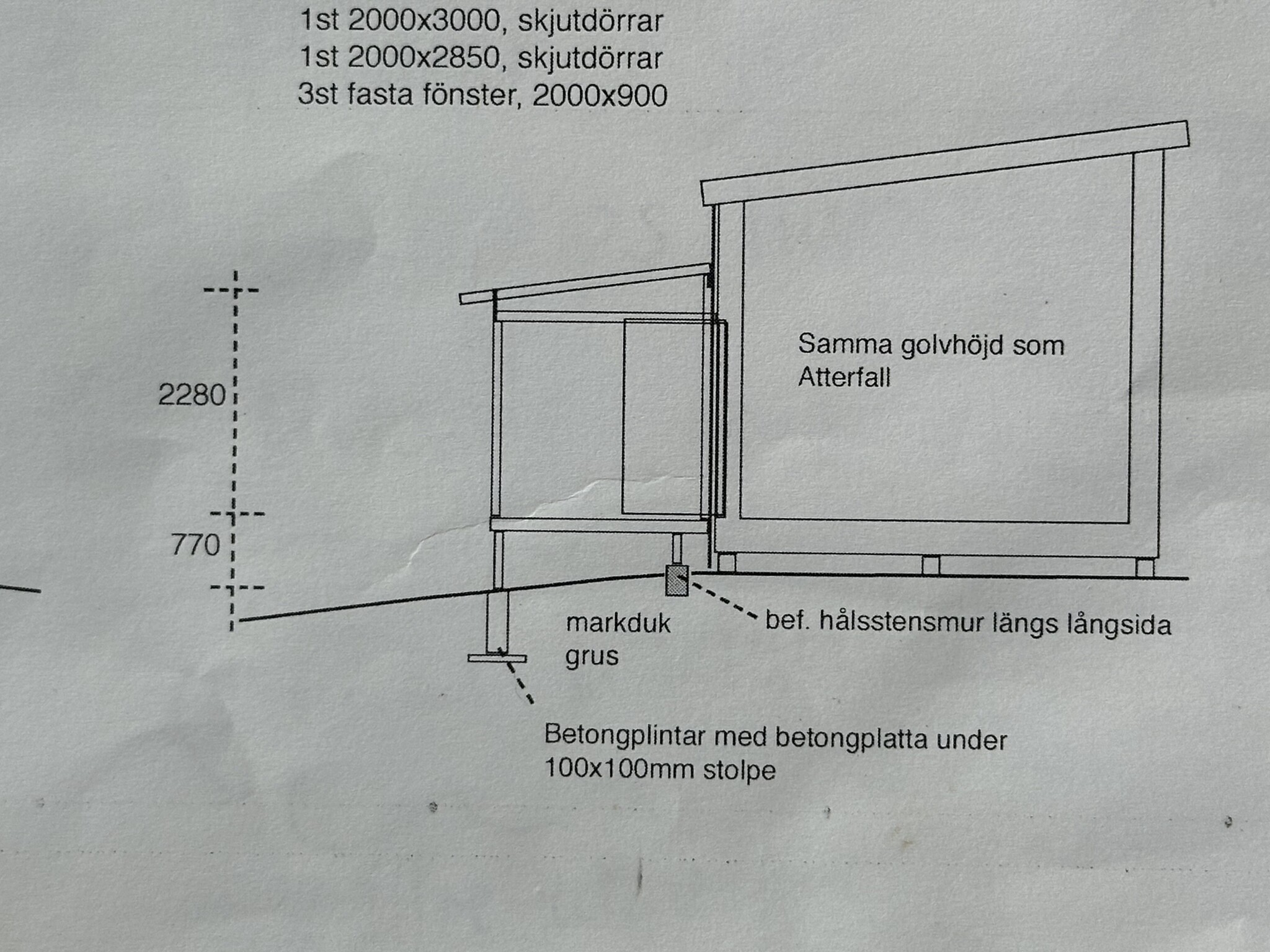
I'm going to start building a non-insulated glassed-in sunroom on pilings, 15m2 along the Atterfallshuset, which is also built on pilings with good ventilation.
I'm finished with drawings and dimensions, but I'm stuck because I want to have tiles in the sunroom.
I have laid tiles in the Atterfallshuset, even in the bathroom, according to the rules of the art, but there it's heated!
There are so many different opinions in existing threads.
How should a non-insulated floor be built to withstand moisture?
Floor joists 30cc like in the bathroom?
Moisture-resistant chipboard screwed with glue. Quality?
Primer
Floor gypsum, glued and with primer
Frost-resistant tiles
Plastic?
Regardless of whether I put plastic or not, the floor becomes sealed… Decking is a bad alternative since the sunroom will be used as a ceramics studio and wet-mopped almost daily. However, not in winter.
Will heat the room sometimes when there's a course.
Does anyone knowledgeable know?
I'm going to start building a non-insulated glassed-in sunroom on pilings, 15m2 along the Atterfallshuset, which is also built on pilings with good ventilation.
I'm finished with drawings and dimensions, but I'm stuck because I want to have tiles in the sunroom.
I have laid tiles in the Atterfallshuset, even in the bathroom, according to the rules of the art, but there it's heated!
There are so many different opinions in existing threads.
How should a non-insulated floor be built to withstand moisture?
Floor joists 30cc like in the bathroom?
Moisture-resistant chipboard screwed with glue. Quality?
Primer
Floor gypsum, glued and with primer
Frost-resistant tiles
Plastic?
Regardless of whether I put plastic or not, the floor becomes sealed… Decking is a bad alternative since the sunroom will be used as a ceramics studio and wet-mopped almost daily. However, not in winter.
Will heat the room sometimes when there's a course.
Does anyone knowledgeable know?
I would probably go with 15-20mm xps foam board glued on floor plywood. Level with 20mm self-leveling compound and then apply tiles. It becomes form stable without being affected by movements in the wood material.F Formgivare said:Hello!
I am going to start building an uninsulated glazed patio on piers, 15m2 along the Atterfall house, which is also built on piers with good ventilation.
Finished with drawings and dimensions, but got stuck since I want to have tiles in the patio.
I have laid tiles in the atterfall house, even in the bathroom, according to the rules, but there it is heated!
There are so many different opinions in existing threads.
How should an uninsulated floor be built to withstand moisture?
Floor joists 30cc as in the bathroom?
Moisture-resistant chipboard screwed with glue. Quality?
Primer
Floor gypsum, glued and with Primer
Frost-resistant tiles
Plastic?
Regardless of whether I put plastic or not, the floor will be sealed... Decking is a bad alternative since the patio will be used as a ceramics studio and wet-wiped almost daily. However, not in winter.
Will heat the room sometimes when there is a course.
Is there someone knowledgeable who knows?
Thank you for the response! Yes, it was a completely different method. Probably a better choice of material against moisture.
Thickness of the plywood?
Is 30cc required underneath or is 60 enough?
Thickness of the plywood?
Is 30cc required underneath or is 60 enough?
Click here to reply