
1,554 views ·
5 replies
2k views
5 replies
New Ceiling: What to do with a rule?
I want to install a new ceiling of the "Premium Ceiling" type from Forestia. The previous ceiling is quite a common style, looks roughly like "Regina" from Moelven, but I have no actual knowledge of exactly what kind of ceiling it is. It appears to be constructed of some kind of chip/flake/compressed wood.
I think I probably need a new ceiling joist, and I'm a bit unsure of how to proceed. I'm having a hard time finding guides on that.
I wanted to lower the ceiling as little as possible. I understand that if I build a wooden frame, the frame itself should be attached to the studs of the walls - but the new joists, how do I attach these? I don't think it's easy to find the old wooden joists.
How small can the joists reasonably be? As mentioned, I prefer to make it as small as possible, for example, something in this size:
https://www.byggmax.se/kortregel-45...0OTEyNC4xLjAuMTcyNzU0OTEyNC4wLjAuMzgxMzcwNjY3
I think I probably need a new ceiling joist, and I'm a bit unsure of how to proceed. I'm having a hard time finding guides on that.
I wanted to lower the ceiling as little as possible. I understand that if I build a wooden frame, the frame itself should be attached to the studs of the walls - but the new joists, how do I attach these? I don't think it's easy to find the old wooden joists.
How small can the joists reasonably be? As mentioned, I prefer to make it as small as possible, for example, something in this size:
https://www.byggmax.se/kortregel-45...0OTEyNC4xLjAuMTcyNzU0OTEyNC4wLjAuMzgxMzcwNjY3
If the ceiling you have now is even, then set the new ceiling on it.
Premium ceiling needs to have an incredibly even surface; I just installed it myself. I had to do a bit of putty work in certain seams to make it completely smooth.
Premium ceiling needs to have an incredibly even surface; I just installed it myself. I had to do a bit of putty work in certain seams to make it completely smooth.
A little extra background on that: To achieve an even ceiling, we previously tried first spackling, sanding, wallpapering with fiber fleece, and painting. In hindsight, I've read about others who attempted the same method, and the results seem questionable, as we now understand. But what we notice now is that what we previously thought was as even as the surface on a completely calm day is clearly not as even as we remember. I fear there might also be some risk that the previous ceiling might move.T Tjrex said:
With all this background, I'm wondering, how even is "very even"? And why did you have to spackle the seams? I understand the sensitivity against anything sticking out, but shouldn't the ceiling hide anything that "sticks in"?
What type of ceiling did you install your Premium Ceiling in? What material?
sparse. Maybe the nail heads stuck down at some places or the spacing was twisted not lying completely against the intermediate floor.F Fredrik Person said:A little extra background on that: To get an even ceiling, we previously tried to first filler, sand, wallpaper with fiber cloth, paint. I have read afterward about others who have tried the same method, and the results seem questionable we now understand. But, what we notice now is that what we previously thought was as smooth as the surface of a completely windless day is clearly not as even as we remember it. I fear there may be some risk that the previous ceiling is also moving.
With all this as a background, I wonder, how even is "roughly even"? And why did you need to filler the seams? I understand the sensitivity against something sticking out, but shouldn't the ceiling hide something that "sticks in"?
What kind of ceiling did you put your Premium Ceiling in? What material?
The end result was very good though.
Tip, I experienced that the roller "slid" when we painted, so we sprayed the ceiling instead.
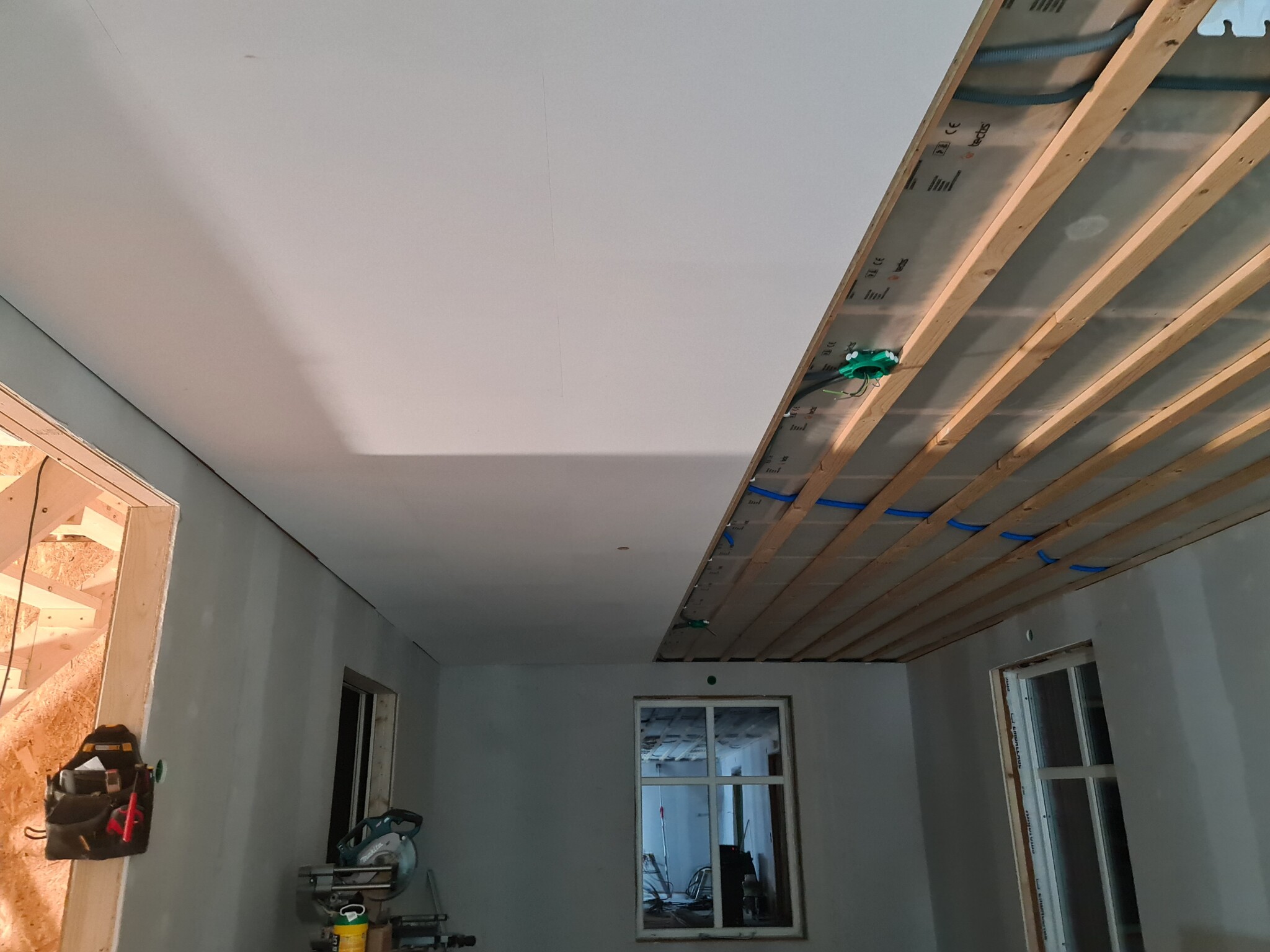
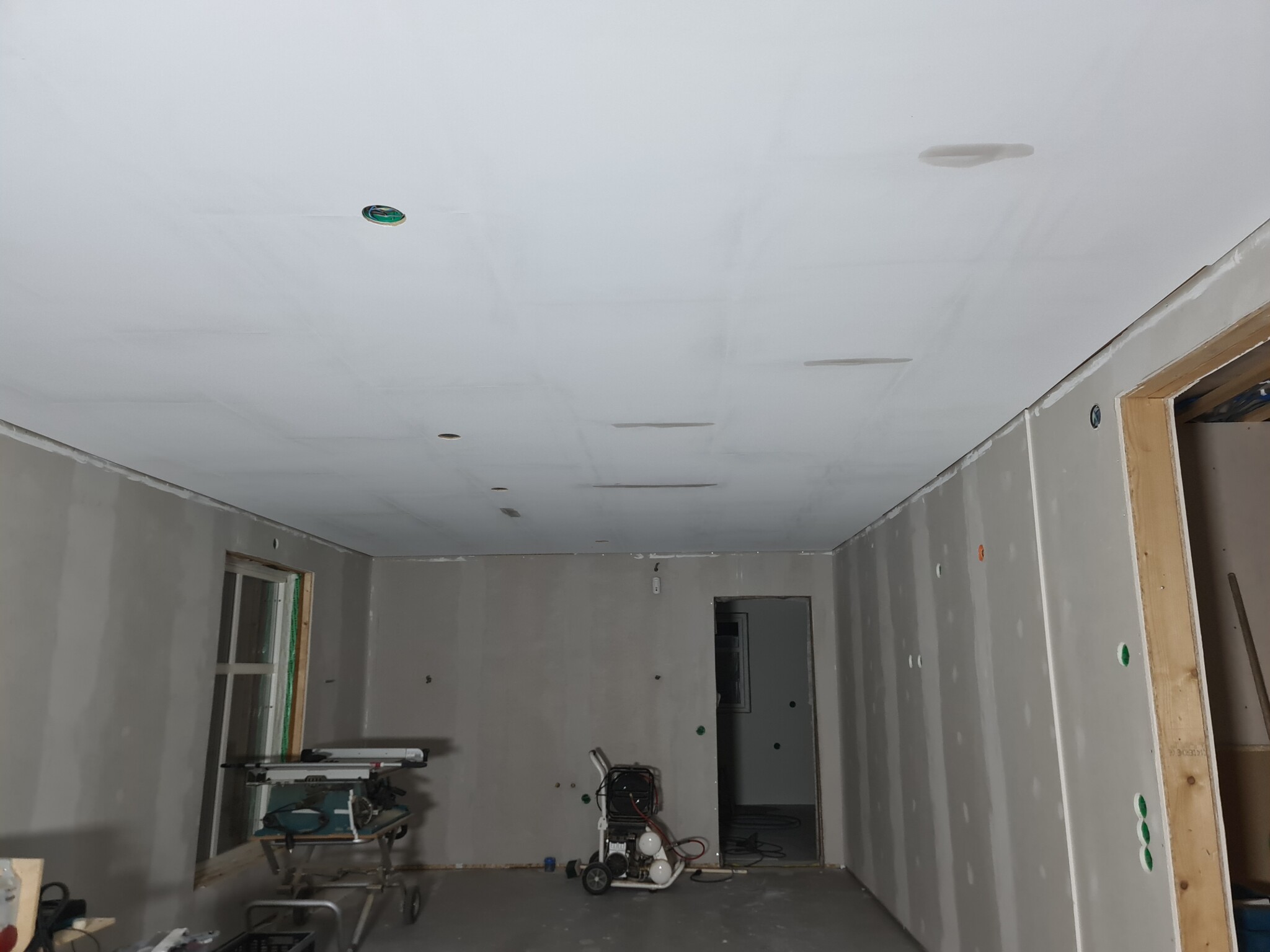
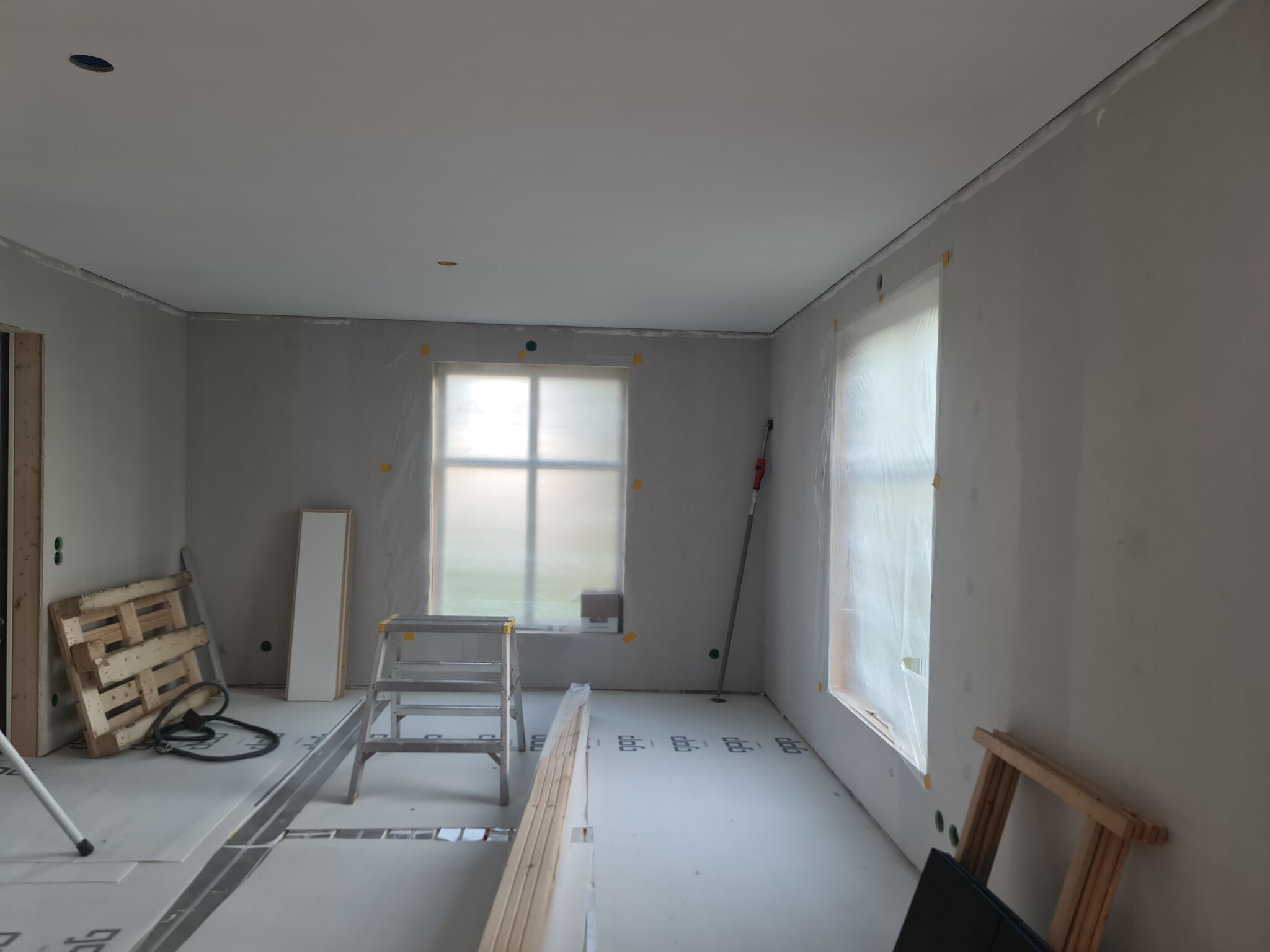
I thought you meant seams in the substrate, now I understand. Yes, it turned out really nice I must sayT Tjrex said:

I don't know if it really answers my questions though, I still feel like I'm wondering just as much.
Our current roof has irregularities of a few millimeters here and there, which is hard to do anything about now. I find it hard to imagine that it would be a problem?
But what I’m still most afraid of is whether the current roof is strong enough to support this ceiling? They are made of similar material.
Surely no problems. I believe the roof you have will rather even out the irregularities.F Fredrik Person said:
What happened to me in a few places was that the panels didn't fit together completely. The edges are sharp and even the slightest millimeter is visible afterwards.
If the roof that's currently in place is made of chipboard/MDF, it will hold, provided it's properly secured now, of course.
Click here to reply