
2,265 views ·
3 replies
2k views
3 replies
Moisture is rising in the gap between the floor and wall in the basement. How do I fix it?
Hello!
I live in a house with a basement, built in 1963 and renovated/extended in 1972.
When we moved in, the basement was furnished with framed interior walls, with (from outside to inside) insulation, chipboard, and wallpaper. Traces of moisture and hints of mold have of course been found, but absolutely no large amounts. The rooms I have renovated so far have been painted with the "right" paint directly on the wall, avoiding using wood constructions against the exterior walls. So far so good, and no new moisture damage has occurred.
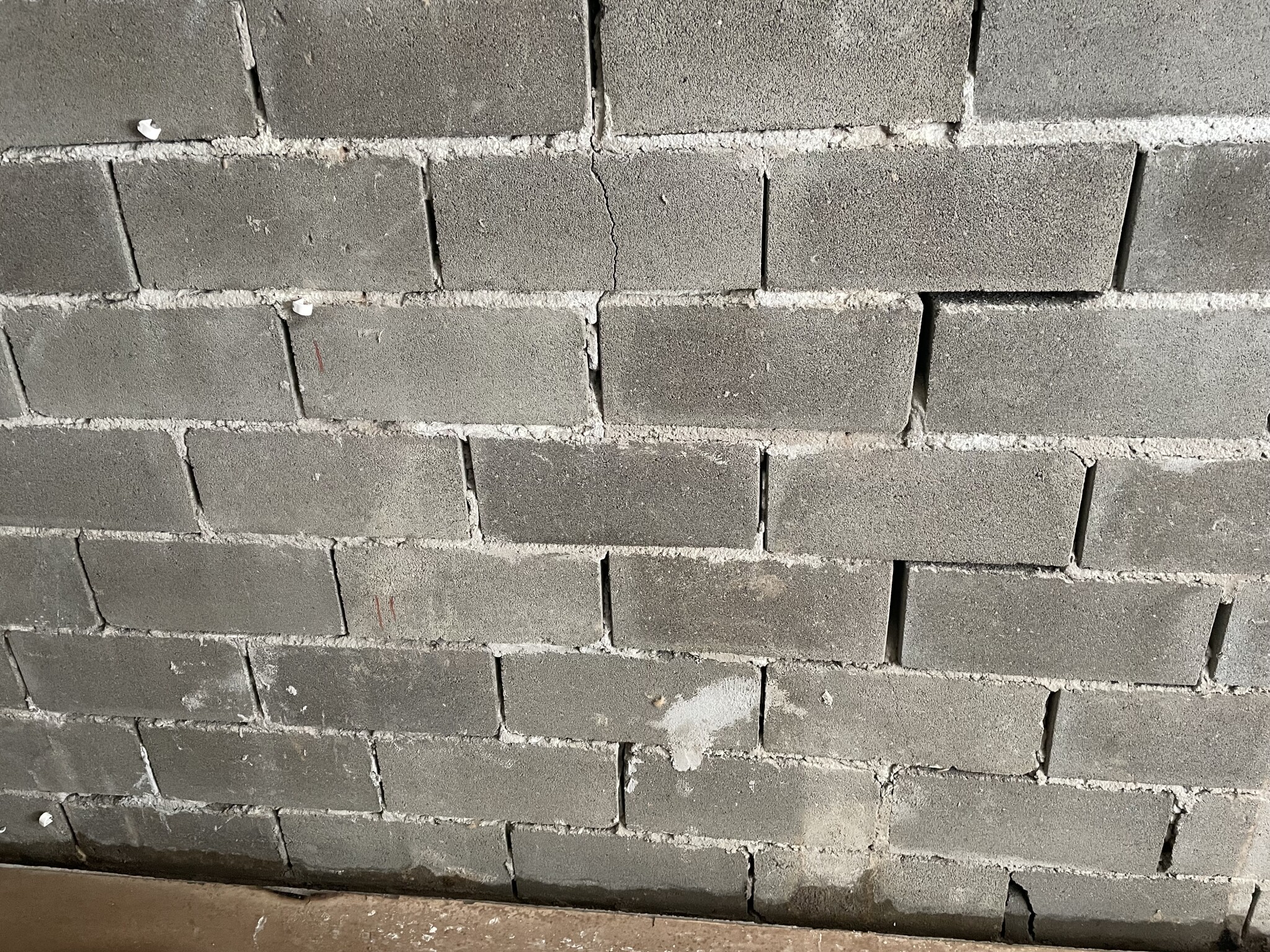
This weekend, I started demolishing the last room and discovered that when it was built, they seemed to have framed, insulated, and set chipboard on one of the exterior walls BEFORE the floor was cast, which means the framed interior wall went approximately 5 cm below floor level in the room. So there is now a gap between the floor and the wall after removing the framed interior wall. If you put your fingers into the gap, you can feel (from below upwards) moisture-proofing plastic film, polystyrene, and concrete on the cast floor.
There is only one wall/floor in the entire basement built this way. The rest is more typical.
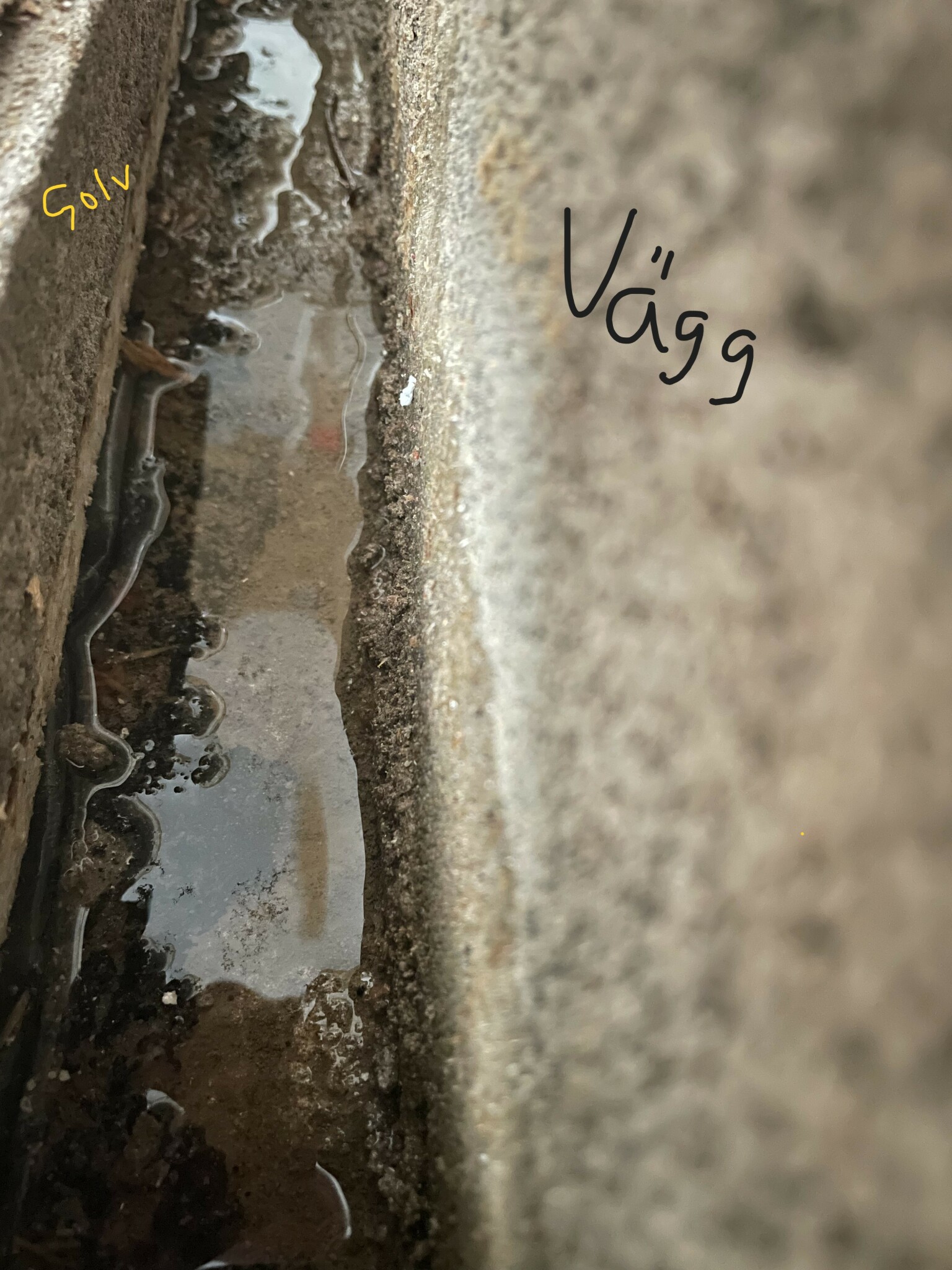
The problem is that in the gap between the floor and the wall, it is quite moist with small water pools, probably driven up from underneath.
The house has been relatively recently drained by a reputable company that has operated locally for about 30 years, so I don't believe there are any issues with the drainage or its execution.
The question is - what do I do now? If I fill the gap with something like concrete, the moisture will likely creep further up into it.
The last picture is a close-up inside the "gap" and clearly shows the water pooling.
I live in a house with a basement, built in 1963 and renovated/extended in 1972.
When we moved in, the basement was furnished with framed interior walls, with (from outside to inside) insulation, chipboard, and wallpaper. Traces of moisture and hints of mold have of course been found, but absolutely no large amounts. The rooms I have renovated so far have been painted with the "right" paint directly on the wall, avoiding using wood constructions against the exterior walls. So far so good, and no new moisture damage has occurred.
This weekend, I started demolishing the last room and discovered that when it was built, they seemed to have framed, insulated, and set chipboard on one of the exterior walls BEFORE the floor was cast, which means the framed interior wall went approximately 5 cm below floor level in the room. So there is now a gap between the floor and the wall after removing the framed interior wall. If you put your fingers into the gap, you can feel (from below upwards) moisture-proofing plastic film, polystyrene, and concrete on the cast floor.
There is only one wall/floor in the entire basement built this way. The rest is more typical.
The problem is that in the gap between the floor and the wall, it is quite moist with small water pools, probably driven up from underneath.
The house has been relatively recently drained by a reputable company that has operated locally for about 30 years, so I don't believe there are any issues with the drainage or its execution.
The question is - what do I do now? If I fill the gap with something like concrete, the moisture will likely creep further up into it.
The last picture is a close-up inside the "gap" and clearly shows the water pooling.

Last edited:


Kan själv!
· Trelleborg
· 19 990 posts
It is most likely groundwater that is seeping in, have you checked if there is water standing in the drainage?
Kan själv!
· Trelleborg
· 19 990 posts
It is important that the drainage can handle everything and that the water can flow away.
Hence my question if there was water in the drainage.
Hence my question if there was water in the drainage.
Click here to reply